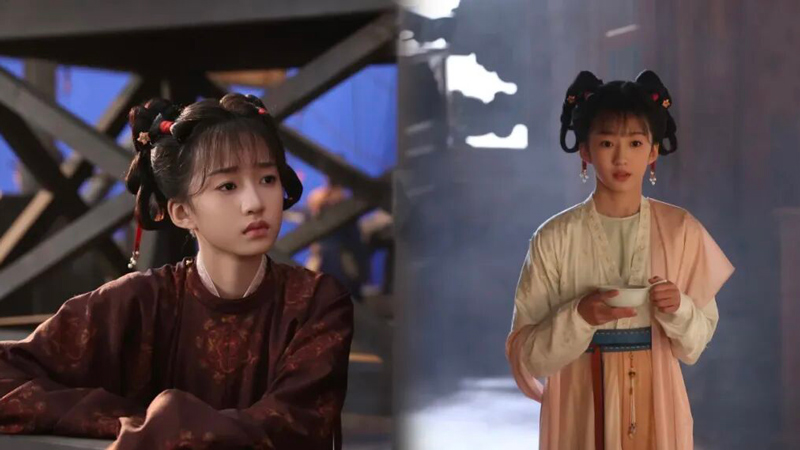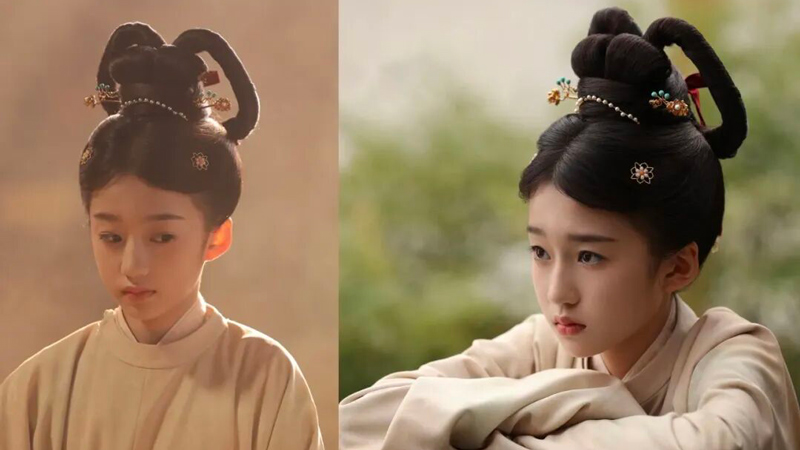
If you watch Chinese historical dramas, you have seen them. Perched on the heads of young heroines, often playful maids or princesses in their youth, are two distinct loops of hair. This signature style, simple yet instantly recognizable, has become a visual shorthand for youthful innocence and charm on screen.
From the determined Sun Taizhen (孙太真) in Swords into Plowshares (太平年) to various other characters, this hairstyle transcends individual stories, connecting audiences to a specific, girlish aesthetic rooted deep in history. But what is the story behind these loops? Their persistent presence is no mere costume designer's whim. It is a deliberate echo of an ancient Chinese hairstyle, a tradition repurposed for modern storytelling to visually telegraph a character's age and spirit before she even speaks.
Roots in Antiquity
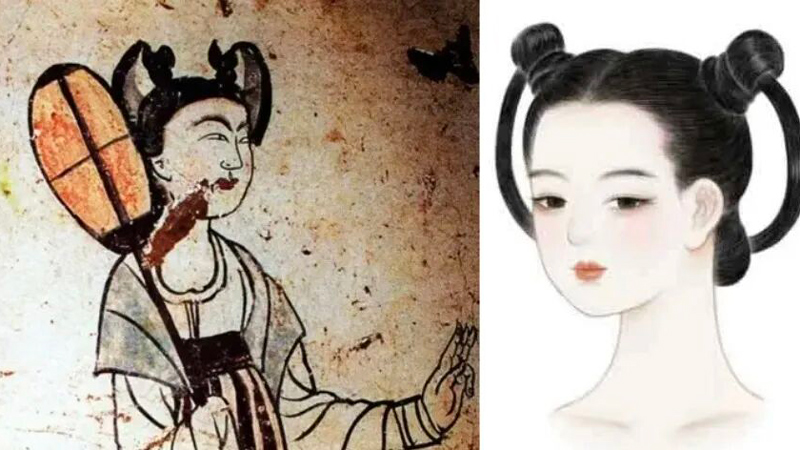
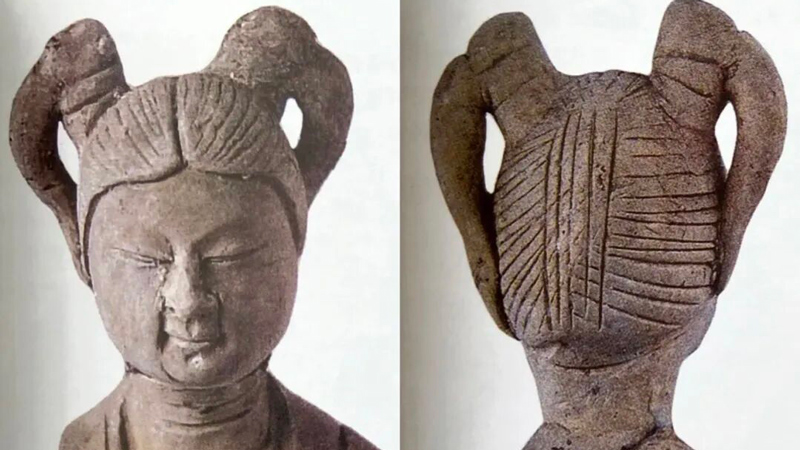
The style seen on screen finds its direct ancestor in the Shuang Huan Ji (双鬟髻), or "double-loop bun." Historical records and artifacts trace its popularity back to the early Tang Dynasty, and even earlier to the Northern and Southern Dynasties. The terms "huan" (鬟) and "huan" (环) were often used interchangeably, both referring to a ring or loop shape. Essentially, the hairstyle involved gathering hair into two bundles, twisting them into ring-shaped buns on the head—typically atop or on either side—and securing them with hairpins or wrapped strands.
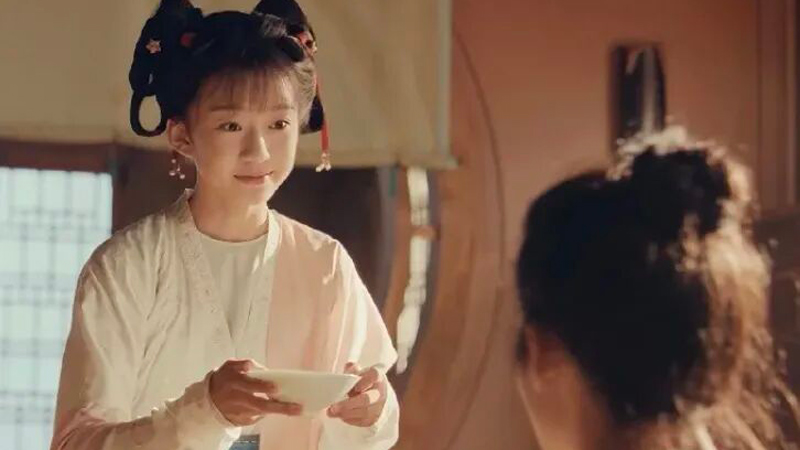
This was not a style for court ladies or mature women. Its primary domain was the world of young girls and serving maids. Its association with youth is historical, not invented. Period artwork, such as images from the Shosoin Repository which houses Tang Dynasty artifacts, clearly shows this style. Its influence even spread, seen in Japanese period productions like the drama Daibutsu Kaigen (大佛开眼), demonstrating the look's early cultural reach.
The hairstyle’s youthful air is also linked to a simpler variation called Guan Fa (丱发). This name comes from the hairstyle's resemblance to the ancient character "Guan," which depicts two decorative knots. As described in the "Dance Rhapsody" by Emperor Jianwen (简文) of Liang (梁), it was worn by "girls with hair just pinned," marking it as a rite of passage for young adolescents. Compared to the more formal Shuang Huan Ji, Guan Fa was often messier and featured two locks of hair left dangling behind the ears, amplifying its childish charm.
Modern Adaptations
In contemporary television, this ancient style is a versatile tool for character design. Its core remains, but subtle adjustments create distinct impressions. In the drama Flourished Peony (国色芳华), actress Yang Zi’s character wears the loops with minimal ornamentation—just a few simple combs. This results in a pure, modest, and understated look, reflecting a different facet of girlish charm than a more decorated version might.
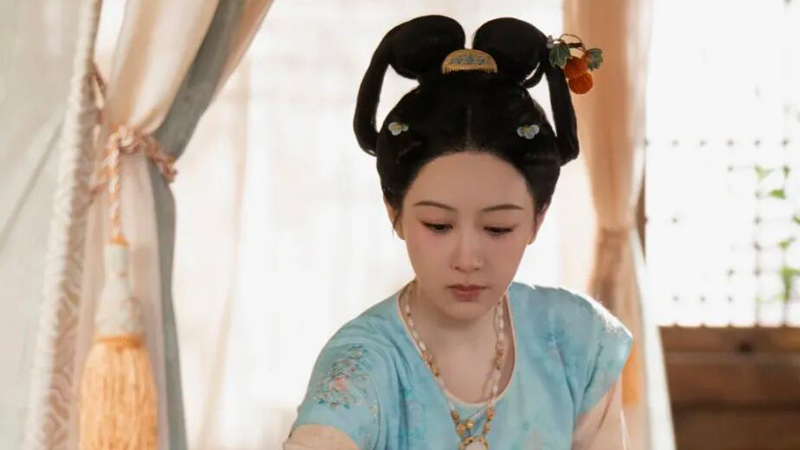
The positioning and treatment of the loops are key. When the loops are drawn close together and neatly arranged, the overall effect can lean toward a more composed, almost mature dignity. Conversely, when the loops are set wider apart, perhaps with looser strands, the feeling is immediately more playful, energetic, and impish. This demonstrates how directors and stylists use slight modifications to align a character’s appearance with her personality.
Another popular adaptation is the Shuang Chui Huan Ji (双垂鬟髻), or "double drooping loop bun." The defining feature here is the "droop." The loops or multiple rings of hair are deliberately arranged to fall downward, sometimes behind the ears like two tails. This introduces movement and a dynamic, playfulness that feels lively and spontaneous, perfect for portraying an active, curious young woman.
Screen to Practical Style
Beyond its cinematic appeal, this hairstyle offers practical inspiration. For those who find traditional updos too formal or aging, the twin-loop style presents a fresh, youthful alternative. Its fundamental technique is accessible: part the hair down the middle, create two high ponytails, twist each into a loop, and secure the ends. This basic method opens doors to personal creativity.
Parents, particularly, have found it a delightful option for children. It is less cumbersome than elaborate braids, protects hair from tangling, and perfectly captures a child's innocent spirit. The style works beautifully for cultural events, festivals, or simply as a charming everyday look, creating a tangible link to heritage.
The journey of the double-loop bun, from Tang Dynasty artifacts to the glowing screens of today, shows how traditional elements can find new life. It is more than a hairstyle; it is a visual language. When we see those two loops, we instantly understand a character's place in her world—her youth, her spirit, and often, her journey just beginning. This connection across centuries is the true power of such a deceptively simple design.