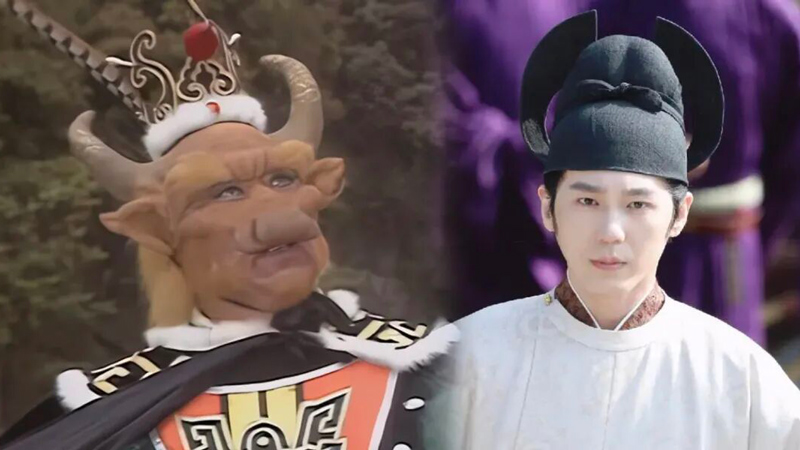
Viewers of the historical drama Swords into Plowshares (太平年) have been captivated by many details of its Five Dynasties and Ten Kingdoms setting. One particular costume choice, however, has sparked widespread curiosity and amusement online: the distinctive hats worn by characters from the Wuyue Kingdom (吴越国).
With two stiff, upward-pointing projections, they bear an uncanny resemblance to the horns of an ox, leading to playful comparisons to the mythical Bull Demon King. When the actor Bai Yu (白宇) appeared in one, the internet lit up. This was no isolated costume quirk. The repeated appearance of these hats signals a deliberate historical design choice, not a random fancy. Their story reveals a fascinating journey through power, ritual, and social order in ancient China.
The Hat of Authority
The official name for this headwear is the Chao Tian Futou (朝天幞头), or "Skyward Futou." Its defining feature is the two rigid "wings" or "feet" that stand erect. During the turbulent Five Dynasties period, this style was initially reserved for emperors and high officials. A portrait of Qian Liu (钱镠), the founding king of Wuyue, provides direct evidence of its royal use. Contemporary records note that rulers across the fragmented states competed with novel Futou designs, with wings curling up or folding down, shaped like fans or banana leaves. Wearing the skyward style was a visual claim to authority and prestige.
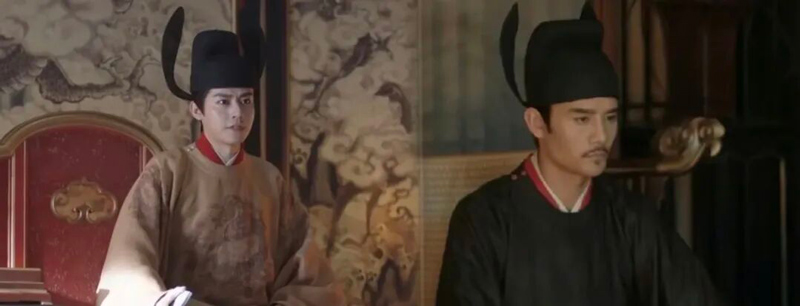
By the subsequent Song Dynasty (宋朝), the design had trickled down the social hierarchy. The rigid wings evolved into broader cultural symbols. While the imperial court maintained certain styles, the basic form was adopted for different purposes. For ceremonial guards and performers, the upward-pointing wings became part of a standardized uniform. This diffusion shows how a symbol of supreme power could be adapted for institutional use, transforming from a personal crown into a functional part of official regalia.
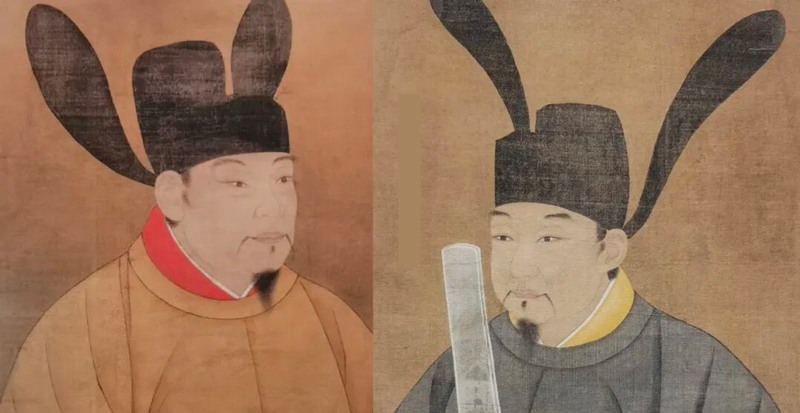
The very term Futou refers to a general category of headwear, a hat evolved from a wrapped scarf. Early versions in the Tang Dynasty were soft, with cloth tails hanging down. The shift to stiffened wings marked a significant sartorial evolution. The Wuyue kingdom, known for its stability and cultural preservation amidst chaos, likely adhered to and popularized these formal, structured styles. The hats in Swords into Plowshares are thus a nod to this specific historical moment when regional kingdoms cultivated distinct identities through such details.
Wings of Society
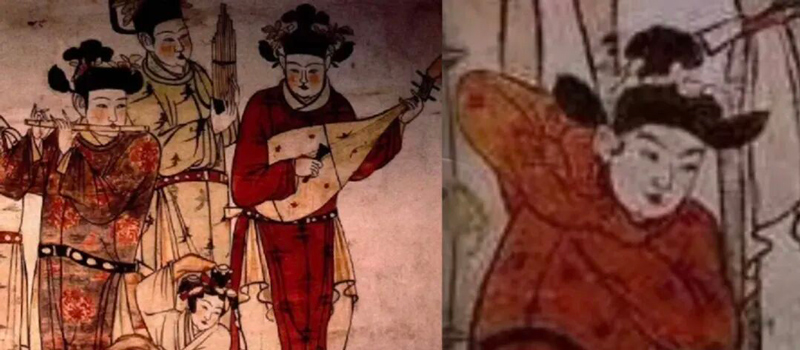
The story of the Futou is one of increasing complexity and codification. In the Song Dynasty, the shape, length, and angle of a hat's wings clearly communicated the wearer's status and profession. Officials in the highest courts wore the Zhan Jiao Futou (展脚幞头) with long, horizontal wings. Servants and clerks wore versions with curved or crossed wings. Scholars and top examination graduates had their own distinctive styles. Performers and musicians, like those depicted in murals from the Xuanhua Liao Tomb (宣化辽墓), wore ornate "flower-feet" skyward Futou. This elaborate system turned headwear into a precise social language.
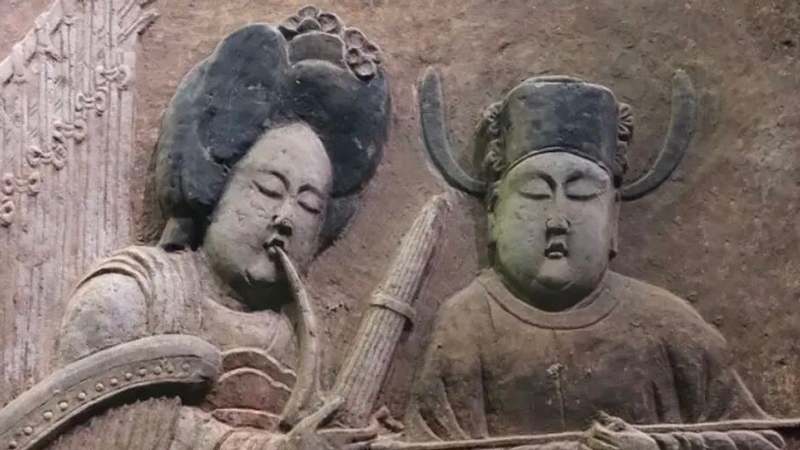
An amusing folk tale credits Song Emperor Zhao Kuangyin (赵匡胤) with inventing the long, horizontal "official" wings to prevent ministers from whispering to each other in court. Historical evidence, however, debunks this myth. Excavations, such as the tomb of Wang Chuzhi (王处直) from the Five Dynasties period, show that exaggerated wing designs predated the Song. The development was gradual, not a single emperor's decree. The wings were less about restricting gossip and more about projecting dignity and enforcing a visible, hierarchical order within the sprawling bureaucracy.
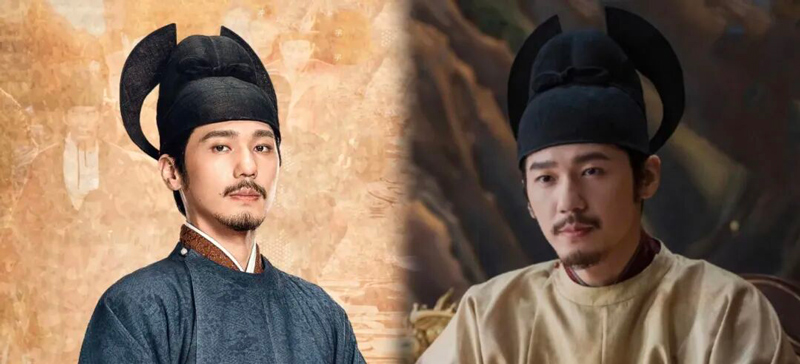
Looking back at the "bull horn" hats from Swords into Plowshares with this context, their meaning deepens. They are not mere oddities. They are a specific snapshot of Wuyue court fashion, sitting at a crossroads in the Futou's history. They represent the transitional period where a royal symbol began its journey into wider ceremonial use. The design is a testament to the intricate visual culture of the era, where every fold and angle carried significance. It seems the mythical Bull Demon King wasn't being ridiculous; he was just slightly ahead of the historical curve, sporting a style that once denoted real-world power and position.