-

Who Let Ju Jingyi Wear the Horse-Face Skirt Like That?
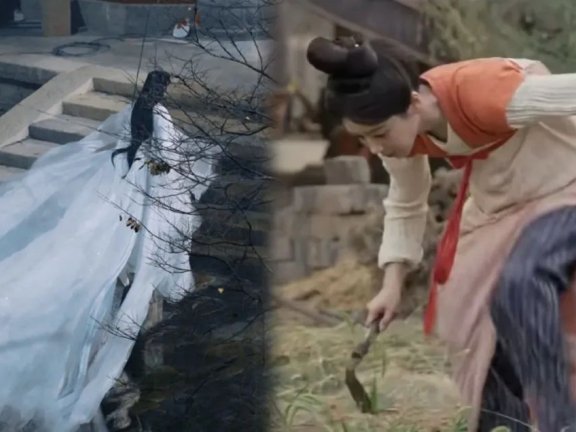
When the latest set photos from Ju Jingyi's new drama Wanhua Shijie (万花世界) hit the internet, the initial shock wasn't about her character, Su Lüxia (苏绿夏), but the costume itself. The styling team took the boldest possible route, stripping the traditional Mamian Qun (马面裙), or horse-face skirt, of its historical context and rebooting it as a purely modern fashion item. It was a full-on dark, edgy ensemble: a mid-length tailored jacket over the pleated skirt, cinched with a structured corset belt, all topped with a dramatic cape. That first image was a statement. It wasn't the gentle, noble lady of historical dramas; it was the cold, indifferent vibe of a powerful anti-heroine, and the contrast was brilliant. Many traditional Hanfu enthusiasts might balk at this. It completely disregards the usual pairing with a high-collared jacket or the formal layering rules. It's a stylistic revolt. But from a character design perspective, it's a masterstroke for a cyberpunk cultivator who looks fragile but is ruthlessly efficient. This bold deconstruction isn't disrespectful to history; instead, it's a groundbreaking moment for the garment. By throwing it into the fashion blender, the costume team created a look that's both extremely photogenic and surprisingly practical for…- 0
- 0
- 60
-
Guangzhou Mamianqun Art Museum Opens with 1,000-Plus Artifacts
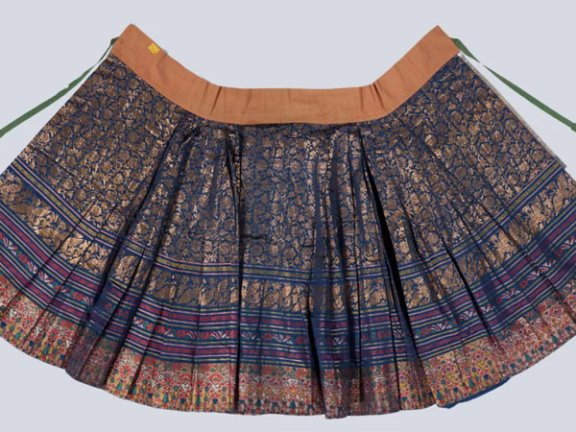
The Linqi Mamianqun Intangible Cultural Heritage Art Museum opened on July 24 in Guangzhou's Haizhu Creative Park, in the Haizhu District. Housed in a 3,000-square-meter space, the museum displays more than 1,000 antique pieces and over 300 Mamianqun (马面裙) skirts from founder Lin Qi's personal collection, spanning the Ming and Qing dynasties through the Republican era. It is the first Mamianqun ICH art museum in Guangzhou and the first in China named after its founder. Designed as a cultural space combining ICH exhibition, cultural exchange, aesthetic experience, and public events, the museum lays out the lineage of Eastern dress through systematic displays, with the stated goal of becoming a new landmark of Lingnan culture and a fresh vehicle for the creative transformation of Cantonese heritage. The opening drew the consuls general of seven countries posted in Guangzhou — the Philippines, Argentina, Laos, Pakistan, Thailand, Malaysia, and Colombia. At the event, a Cantonese cultural exchange base was formally established, and the first city-level ICH project for Mamianqun making technique in China was officially listed. In May this year, the Guangzhou municipal government published the ninth batch of municipal ICH representative projects, adding Mamianqun making technique to the list. Liao Weiyang (廖伟阳),…- 0
- 0
- 26
-
Caoxian Mamianqun Exports Jump 10x: 13 Billion Yuan
"Overseas orders for Mamianqun at the start of this year were about ten times what they were in the same period last year!" Hou Guodong, head of Shandong Caoxian Shengming Garments Co., told Xinhua in a report filed from Jinan and Nairobi on March 16. His company's trajectory mirrors the broader boom in Chinese Mamianqun exports. "In the past, we made whatever foreign clients asked for. Over the past year, we have been weaving international fashion elements into our Hanfu designs to spark new demand," Hou said. The firm has joined international Hanfu trade shows and cross-border e-commerce platforms, introducing more of the world to the pleated skirt. The Mamianqun, a signature silhouette of Hanfu, features flat front and back panels with knife-pleated sides; its name comes from the skirt's flat overlapping panels, which resemble the "horse-face" (mamian) gate towers of ancient Chinese city walls. It is among the most popular categories of the modern Hanfu revival. Caoxian County in Shandong Province — a landmark of both Mamianqun production and the Hanfu industry — offers the clearest numbers: 2025 Hanfu sales surpassed 13 billion yuan, with more than 2,800 Hanfu companies and nearly 100,000 workers, making the county one of…- 0
- 0
- 14
-
Hanfu Market Sales Surge 455%: Gen Z Drives Mamianqun Boom
In July 2026, industry analysis data released by the Chinese shopping platform Smzdm revealed explosive growth in the Hanfu market. During the first quarter of 2026, women's Hanfu transaction volume soared 455% year-on-year, far outpacing other apparel categories. The dual engine of Gen Z's cultural confidence and aesthetic spending is transforming Hanfu from a niche interest into a mainstream Guochao phenomenon. Gen Z Contributes 75%, Daily Wear Becomes Mainstream The latest figures show that Gen Z consumers account for 75% of all Hanfu spending. Young people are wearing Hanfu to work, shopping, and social gatherings — signaling a structural shift from ceremonial consumption to daily choice. In 2026, the volume of women's commuter-friendly Hanfu and modern-adapted everyday styles far exceeded traditional formalwear, proving that daily wear has become the strongest growth driver. Ming-style Mamianqun alone sold 860,000 units in a single month, while the "Hundred Birds Paying Homage to the Phoenix" long gown surpassed 530,000 units as a top-selling single item. Daily-wear designs are creating entirely new market increments rather than cannibalizing the traditional segment. According to the National Bureau of Statistics, online retail sales of clothing in China grew 11.6% year-on-year in Q1 2026, accelerating by 11.7 percentage points…- 0
- 0
- 38
-
Mamianqun Styling: Guide to Wearing This Hanfu Skirt Daily
The Mamianqun — a pleated skirt with flat front and back panels that originated in Ming-dynasty Chinese dress — has become the defining womenswear piece of the Neo-Chinese fashion movement. What was once confined to ceremonial settings is now a daily wardrobe staple for a generation that values visual identity as much as comfort. By mid-2026, one combination dominates city streets across China: a cream side-slit knit top paired with a silver-gray pleated Mamianqun and a light cardigan draped over the shoulders. The low-saturation palette reads clean without being flashy, and retailers report silver and light gray as the fastest-moving colors across both online and physical channels. This transition into an everyday garment follows a clear principle: treat the Mamianqun as a statement A-line skirt with unique paneling, not a historical artifact. Consumers who wear it daily combine no more than two Chinese-style elements in a single outfit. The informal rule — 30 percent classical, 70 percent modern — keeps the look from veering into theatrical territory. A small standing-collar shirt with jeans, or a water-ink print skirt with a plain white tee, applies the same logic in different proportions. The key is that the Chinese element remains the focal…- 0
- 0
- 43
-
Yangpu Library Hosts Chinese Mamianqun Exhibition in Shanghai
On June 26, 2026, the "Elegant Rhythm — Traditional Chinese Mamianqun Art Exhibition" opened at the Pingjiang branch of the Yangpu Library in Shanghai, blending book culture with traditional costume display. Curated jointly by the Yangpu District Library, the Shanghai Textile Museum, and the Nanjing Yunjin Museum, the exhibition treats the mamianqun, a pleated skirt with four overlapping front-and-back panels, as a vehicle for reading-oriented cultural programming. The show is organized around three sections tracing origin and evolution, structural features, and stylistic variations. By leading visitors through the mamianqun's transformation from Song dynasty xuanqun (a wrap-style predecessor) into the Ming-form pleated skirt and the more elaborate Qing-form pleated skirt, the curators position the garment as a continuous thread linking multiple dynasties of Chinese dress history. The headline pieces are two yunjin (Nanjing cloud brocade) court garments rotated on display from the Nanjing Yunjin Museum. The first is a green-ground zhuanghua (brocade) jifu (ceremonial court robe) reproducing the consort Xiaoduan example held by the Dingling Museum in Beijing, woven with gold-wrapped threads in dragon, floral, and cloud-bao motifs. The second is a red-ground "Hundred Birds Paying Homage to the Phoenix" zhuanghua jifu, designed by the post-1990s designer Gao Wenzhi and drawing…- 0
- 0
- 7
-
How to Choose the Right Mamianqun for Your Body Type
The mamianqun, or horse face skirt, has emerged as one of the most popular styles of Ming Dynasty hanfu among contemporary enthusiasts. This distinctive pleated skirt, characterized by its unique construction with smooth front and back panels and pleated sides, offers remarkable versatility for wearers of all body types. Understanding how to select the right mamianqun for your figure ensures you look and feel your best in this elegant traditional garment. Understanding Mamianqun Construction The mamianqun's design features two flat, rectangular panels at front and back—the "horse faces" that give the skirt its name—flanked by tightly pleated side sections. This construction creates a skirt that combines the dignity of formal dress with comfortable movement. The pleated sides expand when walking, creating a graceful, flowing effect while the smooth panels maintain a polished appearance. Historically, mamianqun ranged from knee-length to floor-length, with longer skirts indicating higher formality. Modern versions offer similar variety, allowing wearers to choose lengths appropriate for different occasions and personal preferences. Selecting by Height Taller Figures If you're blessed with height, you can successfully wear both shorter and longer mamianqun styles. Floor-length skirts showcase the full dramatic effect of the pleated sections and pair beautifully with formal occasions.…- 0
- 0
- 56
-
Mamianqun 2026 Design Trends and Styling Guide
The mamianqun, or horse-face skirt, has experienced one of the most remarkable revivals in contemporary fashion history. What was once a garment confined to historical reenactment circles and period dramas has, since 2024, become a bona fide global fashion phenomenon. The skirt's distinctive silhouette — characterized by its flat front and back panels flanked by knife-sharp pleats — traces its origins to the Ming Dynasty (1368–1644), when it served as a staple of Han Chinese women's formal and everyday attire. The name "horse-face" derives from the shape of the front panel, which resembles the long face of a horse when viewed head-on, though the Chinese term "mamian" actually refers to the architectural feature of a city gate's defensive bastion rather than an equine visage. By early 2026, the mamianqun had transcended its niche origins entirely. According to reports from Caoxian County in Shandong Province — now widely recognized as the production epicenter of China's hanfu industry — overseas orders for mamianqun surged roughly tenfold compared to the previous year. Brazilian cultural media companies began actively seeking distribution partnerships to bring Caoxian-made mamianqun to South American markets. Meanwhile, fashion influencers from Paris to Tokyo incorporated the skirt into street-style looks, demonstrating…- 0
- 0
- 45
-
Mamianqun: The Ultimate Guide to China’s Horse‑Face Skirt
If you have recently explored traditional Chinese fashion, you have likely come across the mamianqun (马面裙), also known as the horse‑face skirt. This elegant, structured pleated skirt is one of the most iconic and continuously worn pieces of Hanfu (traditional Han Chinese clothing), with a history spanning nearly 1,000 years. In this complete guide, you will learn everything about the mamianqun – from its Song dynasty origins and Ming dynasty golden age to modern styling tips, body type guides, and where to buy authentic pieces in the USA, Europe, and worldwide. Whether you are a Hanfu enthusiast, a fashion designer, or simply curious about Chinese cultural heritage, this article will help you understand why the horse‑face skirt has become a global fashion phenomenon, with billions of views on TikTok and Instagram. What Is Mamianqun? (Horse‑Face Skirt Definition) Mamianqun literally means “horse‑face skirt”. The name comes from the smooth, flat panels at the front and back of the skirt, which resemble the side profile of a horse’s face, hence the literal translation. Between these flat panels, the skirt has deep, structured pleats on both sides. Key characteristics of a traditional mamianqun: Two overlapping apron‑like panels (front and back) Pleated sides that…- 0
- 0
- 615
-
Decoding Ming & Qing Dynasty Mamianqun
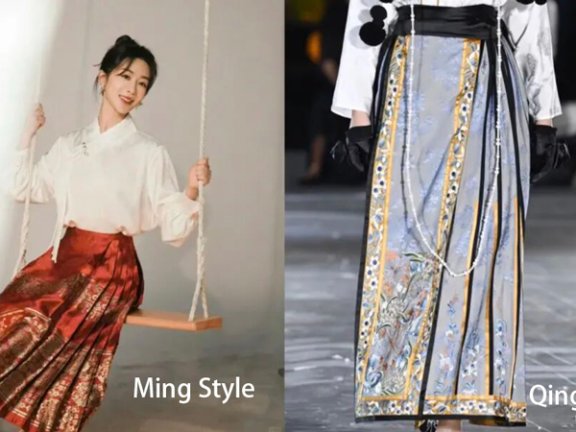
At first glance, the flowing skirts known as Mamianqun (马面裙) from China’s Ming and Qing dynasties appear nearly identical. Both feature the iconic flat front and back panels—the “horse-face” or Mamian—flanked by pleated sides. This similarity often leads modern viewers to see them as one and the same. Yet, to the trained eye, they speak different visual languages, each whispering secrets about the era that created it. You don't need a history book to tell them apart. Instead, focus on four key details: the behavior of the pleats, the character of the Mamian panel, the philosophy of its patterns, and the finish of its waistband. These elements transform the skirt from a mere garment into a legible text, revealing a profound shift in aesthetics and worldview between two defining dynasties. Reading the Pleats The most immediate clue lies in the pleats. A Ming dynasty skirt typically employs what experts call "live pleats." These pleats are secured only at the waist and the hem, leaving the middle section free. As the wearer moved, the pleats would swing open and close dynamically, creating a sense of lightness and fluidity. The pleats themselves were fewer in number and spaced wider apart, contributing to…- 0
- 0
- 110
-
Why the 500-Year-Old Mamianqun Is Today's Ultimate Fashion Statement
Walk down any modern city street in China, from Shanghai's Bund to The Forbidden City, and you'll likely spot a surprising silhouette: the Mamianqun (马面裙). With its distinctive flat front panels and flowing pleated sides, this Ming Dynasty-era skirt has leaped from museum displays and history books into the heart of contemporary wardrobes. It represents more than a cyclical fashion trend; it is a vibrant, living symbol where deep cultural heritage intersects with personal style. This skirt's journey reveals how a garment can transcend its original era to become a powerful medium for identity and aesthetic expression in the 21st century. A Design Born from Function The name Mamianqun originates from a unique architectural feature. Mamian refers to the rectangular, projecting bastions on ancient Chinese city walls, which the skirt's broad, unadorned front panel visually resembles. This core design principle—structured panels meeting dynamic pleats—emerged during the Ming Dynasty. The skirt is ingeniously constructed from two identical panels of fabric joined at a single waistband. When worn, these panels overlap at the front and back, creating four "gates" or openings: two prominent, flat rectangular sections at the front and back, flanked by pleated sides. This architecture served a profoundly practical purpose.…- 0
- 0
- 86
-
Hanfu and Mamianqun: Traditional Attires Become Viral Hits
In eastern China’s Anhui Province, ancient aesthetics are rewriting modern economic narratives. Tax data reveals a 7.4% surge in textile and apparel sales from January to May 2025, driven by the explosive popularity of mamianqun (horse-face skirts) and Hanfu attire. This resurgence isn’t mere nostalgia; it’s a cultural reawakening merging heritage craftsmanship with digital innovation, positioning Anhui at the forefront of China’s "guochao" (national trend) movement. Stitching Success The mamianqun, characterized by its pleated panels and symbolic motifs, has transcended historical reenactments to dominate mainstream fashion. Social media influencers and festivals like the Hefei Hanfu Carnival amplified its visibility, transforming local workshops into supply chain hubs. Artisans now blend traditional dyeing techniques with AI-assisted pattern design, cutting production costs by 30% while preserving authenticity. Anhui’s textile factories report 40% higher export orders for silk-blend fabrics, catering to Southeast Asian and European markets. Provincial tax incentives for heritage crafts further enabled small businesses to scale rapidly. As one Hefei designer noted, "Young consumers seek identity, not costumes—they’re investing in wearable history." Heritage Reimagined Beyond textiles, Anhui’s intangible cultural heritage fuels diverse industries. Ceramics infused with Longkiln techniques saw 8.5% revenue growth, while bamboo-woven handbags and lacquerware suitcases boosted box retail sales…- 0
- 0
- 134
-
Why Do Historical Dramas Feature Long Trailing Skirts?
In modern historical dramas, it's common to see characters wearing skirts with extravagant long trains. This naturally raises questions: Are these designs purely for cinematic effect, or were they practical in daily life? Did ancient people really wear such garments without worrying about dirt? Some netizens humorously remark that these skirts could double as mops. Not All Hanfu Had Long Trains First, let's clarify that not all Hanfu (traditional Chinese clothing) features long trains. While there are indeed styles with trailing hems, these were typically reserved for formal occasions or ceremonial wear, not everyday attire for commoners. Even nobles didn't wear such cumbersome skirts daily—they were reserved for grand, formal events. Exceptions Due to Fashion Trends However, there were exceptions driven by fashion trends. During certain periods, especially in the mid - to - late stages of dynasties, affluent families in society embraced extravagant styles, including wide - sleeved robes and floor - length skirts. This phenomenon, often associated with the 'decadent luxuries' of a dynasty's decline, involved garments worn infrequently, frequently changed, and maintained with the help of servants—thus minimizing concerns about cleanliness. Practicality in Daily Wear For daily wear, practicality was key. Historical artifacts reveal that the average…- 0
- 0
- 169
-
A Buyer’s Guide to Mamianqun Fabric
The Mamianqun, or horse-face skirt, has surged from historical relic to modern wardrobe staple, bridging centuries of Chinese craftsmanship with contemporary fashion. Yet as demand grows, so does the market’s mix of authentic artistry and mass-produced imitations. This guide illuminates how to discern quality craftsmanship, from fabric authenticity to structural integrity, ensuring your purchase honors this garment’s rich legacy. Material Mastery: Decoding Silk and Synthetics At the heart of every genuine horse-face skirt lies its fabric. Traditional Mamianqun relied on natural fibers—Ming artisans favored sangzhi (mulberry silk) for its luminous drape, while Qing workshops prized kesi tapestry silk for intricate embroidery. To test authenticity, rub the fabric gently: true silk generates subtle static, unlike synthetic mimics. Burn a loose thread—real silk curls into ash with a feather-like scent, while polyester melts into hard beads. Modern blends (e.g., 70% silk + 30% cotton) offer a middle ground, balancing historical reverence with daily durability. Beware of vendors advertising “100% silk” at suspiciously low prices (under ¥500). Many substitute synthetic blends, identifiable by their plasticky sheen and poor breathability. Hangzhou-based Silk Reverie uses plant-dyed organic silk, reviving Ming dye techniques with nettle greens and pomegranate rinds—a choice that marries tradition with eco-consciousness. The Four-Panel Litmus Test A true Mamianqun’s…- 0
- 0
- 925
-
The Modern Mamianqun, Streetwear Staples
Once confined to historical reenactments and museum displays, the horse-face skirt has galloped into global streetwear. Today’s Mamianqun renaissance blends reverence for tradition with bold reinvention, transforming this Ming-era icon into a symbol of cultural fluidity. From Tokyo’s Harajuku district to New York Fashion Week, the skirt’s four-panel silhouette is rewriting the rules of cross-cultural style. The Mamianqun’s journey to modernity began with subtle adaptations. Designers first softened its structure for daily wear: Lighter Fabrics: Replacing heavy brocades with linen blends for summer-friendly versions. Adjustable Waistbands: Incorporating hidden elastic or drawstrings to accommodate diverse body types. Modular Design: Detachable outer panels allow wearers to switch between minimalist and ornate looks. Shanghai-based label Ming 2.0 sparked a trend with their “Commuter Mamianqun,” featuring water-repellent silk and pockets discreetly hidden in pleats. Its viral TikTok campaign (#MamianqunInMotion) showcased cyclists weaving through Beijing’s hutongs, skirts fluttering like ink paintings come to life. The horse-face skirt’s architectural lines have inspired unexpected crossovers: Punk Rebellion: Tokyo designer Yuri Takahashi pairs black leather Mamianqun with metallic chain belts, slashing outer panels to reveal neon underskirts. Bohemian Rhapsody: Los Angeles brand East Meets Dress layers lace-trimmed horse-face skirts over denim, accessorized with Navajo turquoise jewelry. Techwear Integration: Seoul’s Hanbok Futurism collective embeds LED…- 0
- 0
- 365
-
The Hidden Language of Mamianqun Embroidery
Every stitch on a horse-face skirt whispers secrets. For centuries, Mamianqun artisans encoded cultural values, social status, and cosmic beliefs into embroidered motifs, transforming fabric into a visual lexicon. These symbols—ranging from imperial dragons to humble butterflies—reveal how clothing became a canvas for China’s collective imagination. Imperial Dragons and Cosmic Order The dragon motif, reserved for royalty and high-ranking officials, evolved dramatically between dynasties. Ming-era Mamianqun featured five-clawed dragons (long) encircling skirt panels, their bodies coiled in perfect Fibonacci spirals to represent celestial harmony. A 1589 imperial consort’s skirt in the Forbidden City archives shows dragons chasing pearls amid cloud bands, symbolizing the emperor’s mandate from heaven. Qing artisans reimagined this motif under Manchu rule. Horse-face skirts for nobility incorporated mang dragons—four-clawed hybrids blending dragon and serpent features—to subtly assert Manchu identity. The 1783 “Dragon-Tide” skirt commissioned by Empress Dowager Chongqing pairs mang dragons with crashing waves, a nod to Qing naval ambitions. Floral Codes – From Peonies to Lotus Flowers served as social shorthand. Ming commoners favored peonies embroidered in indigo thread, their layered petals symbolizing wealth accumulation. Nobility preferred lotus motifs in silver-gilt thread, each flower’s eight petals mirroring the Bagua trigrams. A surviving Qing-era horse-face skirt from Suzhou tells a marital story through flora: pomegranates…- 2
- 1
- 295
-
Crafting a Traditional Horse-Face Skirt – Threads of Time and Technique
To create a traditional horse-face skirt is to converse with centuries of artisans. This process, honed during the Ming Dynasty and refined in the Qing era, transforms raw fabric into a cultural statement. Far from a simple garment, each skirt embodies calculated geometry, symbolic motifs, and generational wisdom—a wearable archive of Chinese craftsmanship. Material Selection Traditional skirts begin with fabric choices steeped in regional logic. Ming artisans preferred luo silk, a lightweight yet durable weave that allowed pleats to hold their shape without stiffness—ideal for Jiangnan’s humid climate. Qing tailors often opted for kesi tapestry silk for outer panels, its slit-tapestry technique enabling photorealistic embroidery. Modern recreations face ethical dilemmas: while purists source wild mulberry silk from historic Zhejiang farms, eco-conscious brands like Vermillion Phoenix now use organic hemp dyed with tea leaves to mimic antique hues. Pattern Drafting: Geometry in Service of Grace The four-panel template follows strict proportional rules. A typical Ming skirt for a woman of 165cm height requires: Two outer panels: 50cm wide x 105cm long Two inner panels: 30cm wide x 105cm long Waistband: 8cm wide x 110cm (allowing overlap) Historic pattern books like the Yuanyang Pu (1627) reveal secret adjustments: a 3° outward flare on outer panels to enhance the “horse face”…- 4
- 1
- 716
-
Ming vs. Qing Dynasty Horse-Face Skirts
The horse-face skirt’s journey through China’s dynastic eras reveals not just changing aesthetics but seismic cultural shifts. Between the Ming and Qing dynasties, this iconic garment transformed from a study in Confucian restraint to a manifesto of imperial grandeur, mirroring the philosophical and political currents that reshaped the nation. Ming Dynasty: Elegance Through Restraint The Ming era (1368–1644) elevated simplicity to an art form. Horse-face skirts from this period favored clean lines and subtle symbolism, reflecting the dynasty’s revival of Han Chinese traditions after Mongol rule. Dominated by solid hues like indigo, russet, and ivory, these skirts derived beauty from precision tailoring rather than overt decoration. The most elaborate Ming examples featured narrow lan (襕)—decorative bands at knee level—embroidered with understated geometric patterns or small floral motifs. A mid-16th century skirt from a Nanjing tomb exemplifies this ethos: its unbleached hemp fabric bears a single band of silver-thread cloud designs, a nod to scholarly ideals of humility and harmony with nature. Qing Dynasty: Opulence as Political Language With the Manchu conquest in 1644, the horse-face skirt became a battleground for cultural negotiation. Qing rulers preserved the Han garment’s structure but infused it with nomadic sensibilities. Skirts exploded with color, featuring entire landscapes…- 0
- 0
- 310
-

The Architectural Genius of the Horse-Face Skirt
The horse-face skirt (mamianqun) is more than a garment—it’s a feat of engineering that has captivated scholars and designers for centuries. Its enduring appeal lies in a harmonious blend of form and function, anchored by two defining elements: the ingenious four-panel system and an evolving language of pleats. This article explores how these structural innovations shaped the skirt’s identity across dynasties, transforming practicality into artistry. The Four-Panel System At the heart of the horse-face skirt lies its signature four-panel design (si qunmen), a revolutionary concept perfected during the Ming Dynasty. The structure consists of two wider outer panels positioned at the front and back, complemented by narrower inner panels along the sides. When fastened, the outer layers elegantly overlap the inner ones, revealing only two decorative “horse face” sections inspired by the defensive bastions of ancient city walls. This modular system served both aesthetic and practical purposes. The overlapping panels ensured modesty during movement—a critical consideration in Confucian-influenced societies—while allowing wearers to adjust the skirt’s volume for different occasions. Historical records from Jiangnan workshops reveal that affluent Ming households often commissioned interchangeable outer panels, enabling a single skirt to transition seamlessly from daily chores to ceremonial events through strategic fabric substitutions. The Evolution of…- 1
- 0
- 172
-
The Historical Evolution of the Horse-Face Skirt
The horse-face skirt (mamianqun), with its distinctive overlapping panels and intricate pleats, stands as a timeless symbol of Chinese fashion ingenuity. For nearly a millennium, this garment evolved alongside dynastic shifts, social norms, and artistic innovations. Today, it’s experiencing a global renaissance, embraced by Hanfu enthusiasts and haute couture designers alike. In this article, we unravel its remarkable journey from the Song Dynasty’s utilitarian xuanqun to the Qing Dynasty’s lavish pleated masterpieces. 1. Song Dynasty Origins: The Birth of the Xuanqun (10th–13th Century) The horse-face skirt’s story begins in the Song Dynasty (960–1279), an era marked by economic prosperity and technological advancements in textile production. Practical Design for Active Lifestyles The early prototype, called xuanqun (旋裙, “rotating skirt”), featured a two-panel split design that allowed freedom of movement. Unlike later elaborate versions, it prioritized functionality: Worn by working-class women for tasks like horseback riding and farming. Lightweight fabrics like silk gauze ensured breathability. Minimal pleating focused on ease of movement rather than decoration. Archaeological Evidence A pivotal discovery came from Huang Sheng’s Tomb (Fuzhou, 1243 CE), where a well-preserved xuanqun was unearthed: Made of sheer silk with simple knife pleats. Waistband secured with fabric ties, lacking the overlapping panels of later designs. 2. Ming Dynasty Standardization (14th–17th Century) The Ming Dynasty (1368–1644) transformed the xuanqun into…- 0
- 0
- 396
-

The Guide to Selecting Your Mamianqun Horse-Face Skirt
Horse-face skirts, also known as "Mamian Skirts," are a timeless and iconic part of traditional Chinese clothing. Originating from the Song Dynasty and popularized during the Ming Dynasty, these skirts have evolved from simple functional garments to sophisticated fashion statements that blend cultural heritage with modern style. Whether you're a seasoned Hanfu enthusiast or just starting your journey into the world of traditional Chinese attire, this guide will help you navigate the intricacies of choosing the perfect horse-face skirt. Understanding the Structure and Design A horse-face skirt consists of two main pieces that overlap at the front, creating four skirt doors (two on each side). The outer skirt doors are often decorated, while the inner ones may have minimal or no embellishments. The sides of the skirt are pleated, and the waistband is typically made of white fabric, symbolizing longevity and marital bliss. This design not only adds aesthetic appeal but also provides practicality, allowing for ease of movement. Key Features to Consider Skirt Length Shoe-On Style: Ideal length is leg length + 7 cm, ensuring a balanced look without compromising mobility. Long Style: Opt for leg length + 9-10 cm for a more flowing silhouette that complements various occasions.…- 1
- 0
- 784
-
Finding the Perfect Hanfu Mamian Qun: A Guide to Choosing the Right Style for You
Recently, the popularity of Mamian Qun (horse face skirt) shows no sign of waning. On November 23rd, at the opening night of VOGUE Forces of Fashion, Tong Yao's appearance in a Mamian Qun caught the attention of netizens. Mamian Qun are gradually integrating into our vision and lives. In light of this trend, I believe many people are eagerly longing to own a horse-face skirt, so let us follow the Hanfu Shidai explore the details to consider when selecting and styling a horse face skirt. I. Selection Stage Step 1: Size First and foremost, a suitable size that fits and contours to the body curves is crucial for a perfect outfit. Similar to a suit, one can choose to follow the size chart or opt for made-to-measure when selecting a Mamian Qun. Whether based on the size chart or personalized tailoring, the primary measurements to consider are height, waist circumference, and hip circumference. These factors will influence the choice of skirt length, waist length, and hem circumference. If we choose to purchase online, merchants often provide a size chart for customers to make their selection. By referring to the table, one can choose accordingly based on their own size…- 1
- 0
- 3k
-
8 Modern Mamian Qun That Will Wow You
The Mamian Qun, or the horse-face skirt, is a traditional Chinese hanfu dress that has a long history and a rich culture, and its elegant and graceful style. However, in recent years, the Mamian Qun has undergone some changes and innovations, thanks to the creative efforts of some designers who have given it a modern twist. In this article, we will introduce you to eight modern Mamian Qun that are stunning and fashionable. These dresses combine the essence of tradition with the elements of innovation, creating a new trend of Chinese dress that you don’t want to miss. Style 1 It features a simple design with a piece of leather buckle, which not only adds to the aesthetic appeal but also helps to keep the dress in place. The fabric used in this Mamian Qun is not prone to wrinkles, making it an ideal choice for those who prefer a neat and polished look. The pleat style is stable, ensuring that it retains its shape even after multiple washes. Furthermore, this Mamian Qun particularly striking in the way it reflects light, displaying a golden sheen that catches the eye and adds a touch of luxury. Style 2 This…- 1
- 3
- 2.3k
-
The Mamianqun: History, Construction, Features
So the Mamianqun, or 馬面裙, or horse-faced skirt, has been blowing up lately especially because of the Dior controversy—here's an in-depth dive into the history, construction, and features of the famous horse-face skirt. A BRIEF HISTORY OF THE MAMIANQUN The mamianqun or horse-faced skirt is a skirt that first originated somewhere close to the Song dynasty worn by high-class courtesans (who were like celebrities and fashion icons tbh) in the form of colorful pleated silk. It’s named this way because of its resemblance to the mamian fortress, which has stairs on either side (like the pleats) and a door in the front and back (like the skirt doors). The ‘doors’ sides of the fortress were known as the *horse faces* or mamian/馬面 because these were the faces of the fortress where the horses would pass through. It became extremely popular in the following Ming dynasty and stayed popular through the Qing dynasty through Manchurian rule—it’s been around for a long, long time! Mamianqun are more convenient for movement and offer a regal, classy aesthetic as well as a very recognizable and unique silhouette. Even Princess Diana wore one once! BASIC CONSTRUCTION OF A MAMIANQUN The Skirt Doors From the…- 7
- 12
- 15.7k
Mamianqun













Scan to open current page
-
$CouponsLimitation of use:Expired and UnavailableLimitation of use:
before
Limitation of use:Permanently validCoupon ID:×Available for the following products: Available for the following products categories: Unrestricted use:Available for all products and product types