On April 25th, 2026, the stage of the Huizhou Culture and Arts Centre will host a theatrical event years in the making. Veteran actress Liu Xiaoqing (刘晓庆) brings her iconic performance in The Legendary Beauty (风华绝代) to the city. Tickets go on sale March 8th at 11:00 AM. This is not merely a play; it is a collision of two extraordinary lives separated by a century, united by charisma, resilience, and an indomitable spirit. At its heart is Sai Jinhua (赛金花), a name that once stirred the imagination of an entire nation. She was a woman who navigated the treacherous waters of the late Qing Dynasty, from the status of a concubine to an influential figure in Beijing's high society, and even an unofficial diplomat during the Boxer Rebellion.
Portraying such a complex, controversial, and captivating figure requires more than just acting talent; it demands a life lived with similar depth and fire. In Liu Xiaoqing, the production has found its perfect vessel. The following exploration delves into why this role is a career-defining masterpiece for Liu, the visual artistry that brings the era to life, and the sweeping narrative that has captivated audiences across China.
The Soul of a Legend
Walking onto the stage of The Legendary Beauty, Liu Xiaoqing does not simply perform a character; she inhabits a soul. The play was meticulously crafted by director Tian Qinxin (田沁鑫) with Liu in mind, recognizing a profound synchronicity between the actress and the historical figure. Both women have navigated the peaks and valleys of public life with a tenacity that is rarely seen. Sai Jinhua’s life was a tapestry of extreme highs and devastating lows—from the splendor of the "Jinhua Study" to the squalor of a prison cell. Liu Xiaoqing, with her own legendary career spanning decades and her well-documented personal triumphs and setbacks, brings a lived-in authenticity to the role that is palpable.
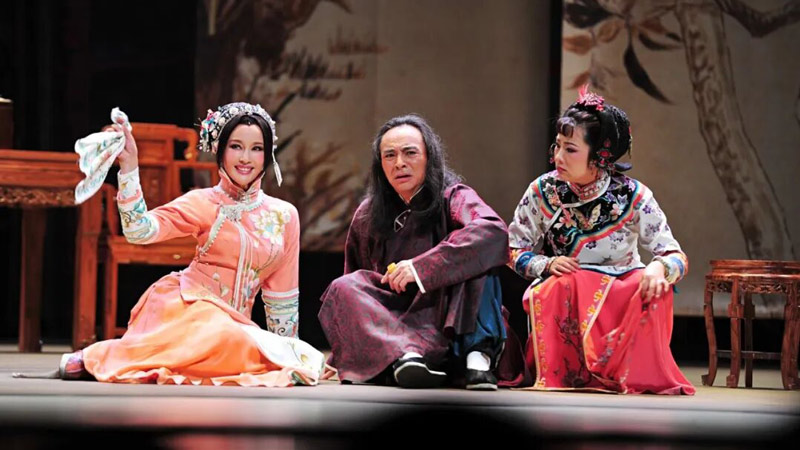
It is in the nuanced details that Liu’s performance truly transcends. A flicker in her eye conveys the shrewd calculation of a businesswoman one moment and the vulnerable longing of a woman in love the next. The measured cadence of her speech, the proud tilt of her chin, the graceful flutter of a fan—every gesture is imbued with the character's unique history. Audiences who have witnessed the production speak of being utterly captivated, losing themselves in the story. They are not watching Liu Xiaoqing pretend to be Sai Jinhua; they are witnessing Sai Jinhua's struggles, her joys, and her defiance through the vessel of a master interpreter. It is a performance where the line between actor and role blurs, creating a truly unforgettable theatrical experience.
A Visual Feast
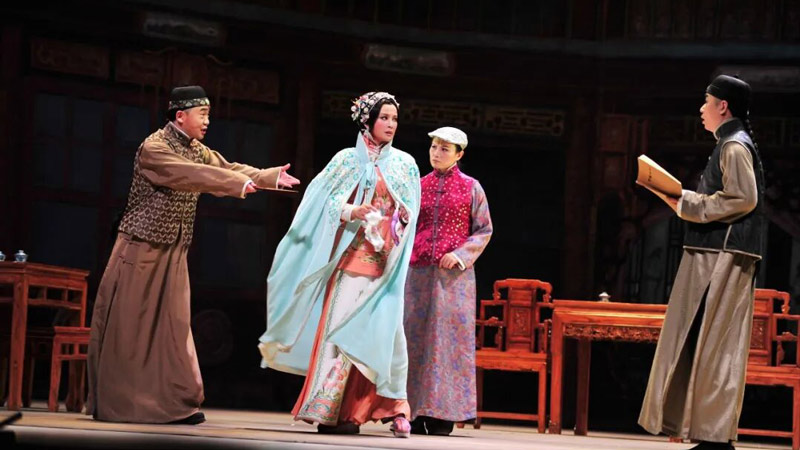
The magic of The Legendary Beauty extends far beyond its lead performance, enveloping the audience in a meticulously recreated world. The moment the curtain rises, the stage transforms into a sensory portal to the past. The design team, led by costume designer Zhao Yan (赵艳) and makeup artist Mao Geping (毛戈平), has created a visual language that is as integral to the storytelling as the dialogue itself. Zhao Yan designed six exquisite costumes for Liu Xiaoqing, each one a work of art that marks a different phase in Sai Jinhua's journey. From the opulent robes of a celebrated courtesan to the more subdued attire of her later years, the clothing tells a silent story of change and circumstance.
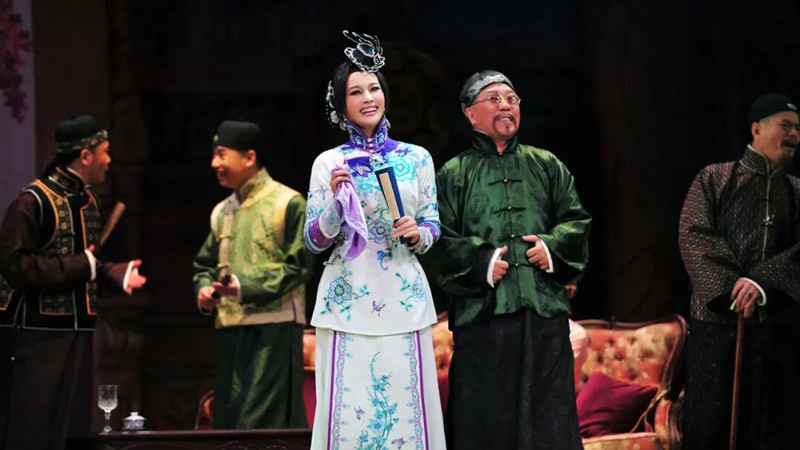
Complementing these costumes, Mao Geping’s makeup artistry is nothing short of transformative. His work does not just beautify; it defines character. The elaborate hairstyles and flawless makeup applications are so striking that they earned the production the prestigious Golden Lion Award for Best Styling. The costumes themselves have achieved a life of their own, with a set valued at over ten thousand yuan being exhibited internationally at a commemorative event for Mei Lanfang in Moscow. This level of detail ensures that every visual element, from the furnishings of the "Jinhua Study" to the smallest accessory, is authentic and immersive, allowing the audience to step fully into the world of late 19th-century China.
A Life on Stage
The narrative of The Legendary Beauty is as sprawling and dramatic as the era it depicts. It opens in Shanghai as Sai Jinhua, recently widowed from a high-ranking official, defies convention by opening her own salon. Her establishment quickly becomes a hub for the city's elite, where she mingles with powerful figures like Ronglu (荣禄) and crosses paths with idealistic revolutionaries. However, this newfound success attracts unwanted attention. Forced out of Shanghai by a jealous prince, she simply relocates to Beijing, where her star rises even higher. This period of prosperity is violently shattered by the Boxer Rebellion and the subsequent invasion by the Eight-Nation Alliance.
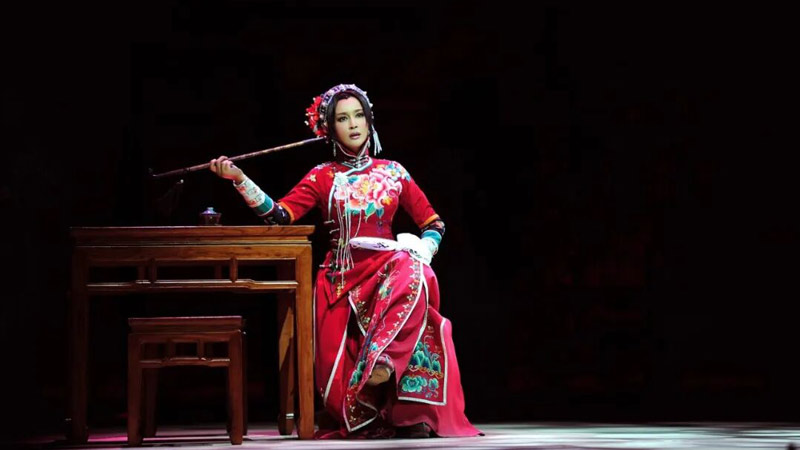
In the chaos, Sai Jinhua's life takes another extraordinary turn. Her ability to speak German, a skill acquired during a diplomatic posting to Europe, brings her to the attention of the aging statesman Li Hongzhang (李鸿章). He asks her to negotiate with the Allied commander, Count von Waldersee. The play touches upon the legendary—and heavily mythologized—story of how she used this connection to plead for the city and its people, potentially saving countless lives.
Yet, her service to the nation earns her no lasting gratitude. In a cruel twist of fate, she is later arrested and imprisoned by the very government she aided. The final act of the play follows her release, her fall from grace, and her eventual, poignant redemption. In a powerful finale, she finds a measure of happiness with a long-lost love, stepping into a new chapter not as a courtesan or a diplomat, but as a bride, proving that a legendary beauty can find her own happily ever after.