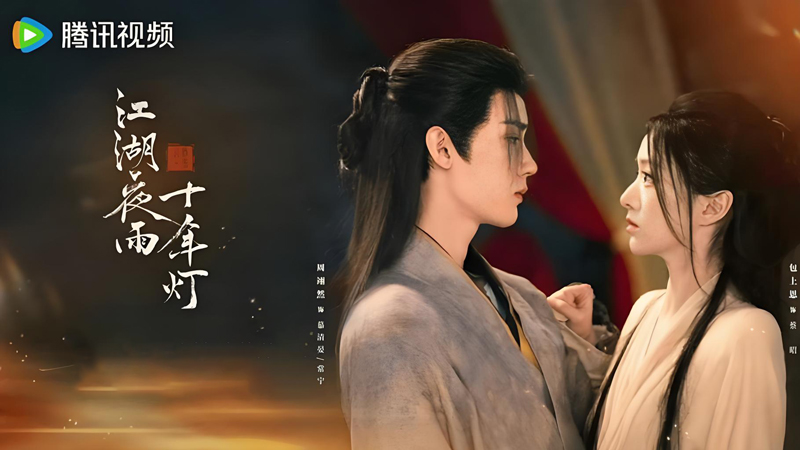
In the episodes of the TV series Generation to Generation (江湖夜雨十年灯), the character Sun Ruoshui (孙若水) has ignited fierce debate among viewers. She is not the ultimate villain pulling the strings from the shadows, nor is she a power-hungry schemer openly vying for control. Instead, she is a mother who poisons her own son. This act of ultimate betrayal forces us to confront a deeply unsettling question: What drives a mother to such cruelty, and is she a monster born or a monster made?
More Than Just Greed
Sun Ruoshui’s actions are shocking. To secure her position as the leader’s wife in the Li sect, she poisons her son, Mu Qingyan (慕清宴), and her husband, Mu Zhengming (慕正明). When confronted, she shows no remorse. On the surface, she appears to be a woman consumed by vanity and a lust for power. However, to label her merely as "greedy" is to miss the deeper, more tragic layers of her character. Her villainy is not a simple character flaw; it is a survival mechanism, forged in a toxic environment.
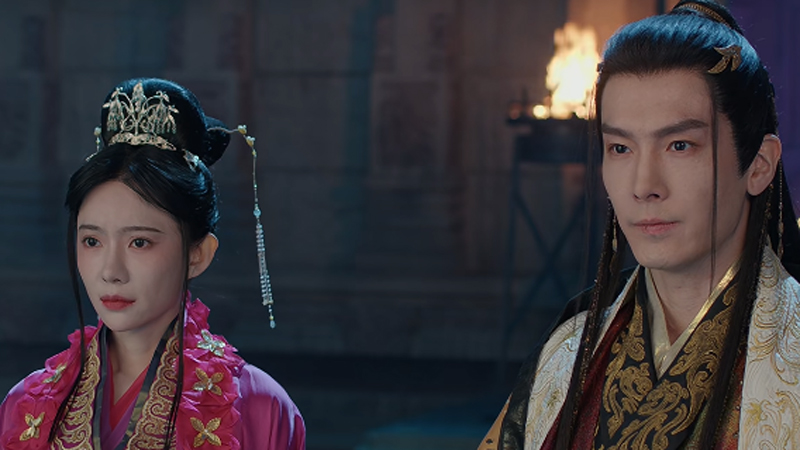
Her backstory reveals that she was originally a spy for the Nie family. Nie Hengcheng (聂恒城) planted her in the Mu household by having her pose as the daughter of the family's benefactor. She was mediocre, or mediocre and weak, making her the perfect tool. For her, Mu Zhengming was never a partner but a stepping stone, a "tou ming zhuang" (投名状), or a pledge of loyalty to prove her worth to the Nie family. She performed devotion for five years, and Mu Qingyan was not a child born of love, but the product of her successful mission.
This origin is critical. Sun Ruoshui was raised in the darkness of the Nie household, a place where people were tools, emotions were weaknesses, and survival depended on utility. From the very beginning, her world was devoid of unconditional love. Her understanding of relationships was purely transactional. When Mu Zhengming left for five years, she was left alone with a child she never truly wanted—a living reminder of her "mission" and a potential obstacle to her future.
The Poisoning of a Son's Love
The most heartbreaking scene is not the poisoning itself, but the moment Mu Qingyan's love for his mother truly dies. It dies not when the poison takes effect, but when Nie Zhe (聂喆) cruelly exposes her true nature. He reveals that she has always been a tool, a plaything for him. The respect he shows to another woman, Ruxin (如心), is a stark contrast that highlights Sun Ruoshui’s fundamental flaw: she has no convictions of her own. She drifts, attaching herself to whoever offers the most power, and in doing so, loses any claim to dignity or humanity.
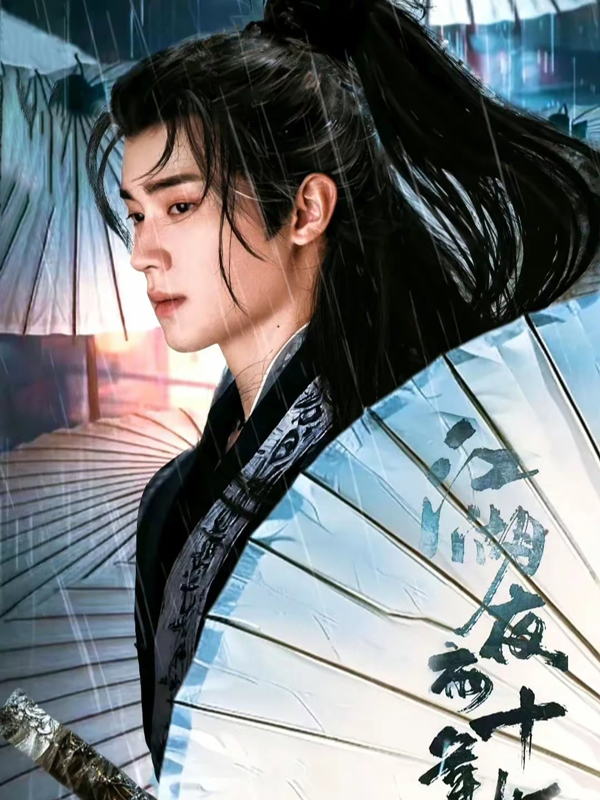
For Mu Qingyan, his mother becomes a ghost. She is alive, but the woman he thought he knew is gone, replaced by a stranger who sees him as an obstacle. His chilling words to Cai Zhao—that he will lock her up after killing Nie Zhe, providing for her but never forgiving her—speak to a wound that cannot heal. This is not anger; it is the cold, hard wall of trust shattered beyond repair. He can no longer see her as his mother; she is simply his prisoner, a consequence of her own choices.
This betrayal is more profound than any enemy's sword. It attacks the very foundation of his identity. If the person who gave you life can take it away, what is sacred? Sun Ruoshui’s actions ripple outward, not just poisoning her son's body, but corrupting his understanding of family and love. She has successfully traded her son's adoration for a hollow title, and in doing so, has created a void in him that will be difficult to ever fill.
Can Evil Be Excused by Environment?
Sun Ruoshui forces us to ask a classic question: is she inherently evil, or is she a product of her circumstances? Some viewers might point to characters like Xiao En (肖恩) and Ku He (苦荷) from the hit series Joy of Life (庆余年). In their desperate quest to find the Temple, they faced such extreme conditions that they resorted to cannibalism. Were they born evil? Or did the terrifying need to survive strip away their humanity, layer by layer? This comparison suggests that Sun Ruoshui, raised in the poisonous Nie household, may have never had a chance to be anything else.
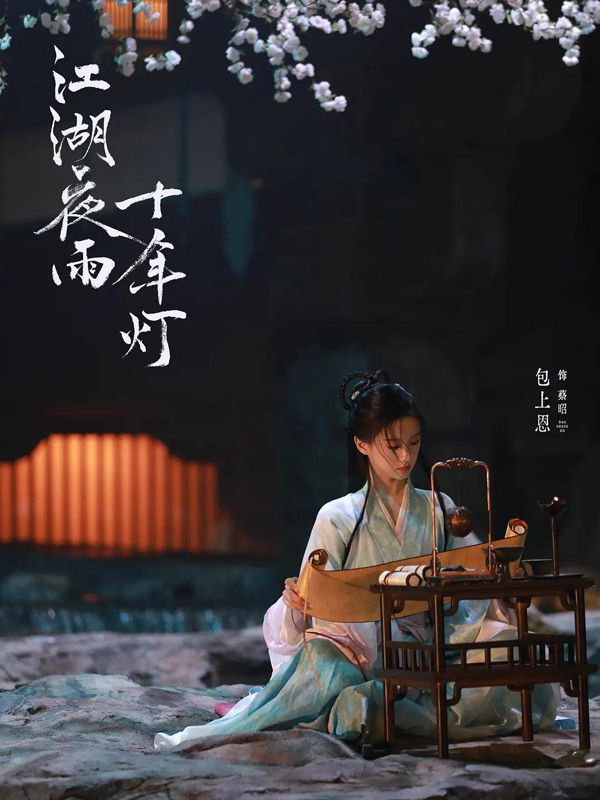
Her actions are a distorted form of survival. Every betrayal—poisoning her husband and son—is another "tou ming zhuang" offered to Nie Zhe, a desperate attempt to prove her continued usefulness and secure her place. She is trapped in a cycle of fear and greed, unable to see that the very acts she commits to ensure her survival are the ones that doom her. She cannot comprehend Ruxin's strength, because Ruxin's power comes from within, while Sun Ruoshui's has always come from the men she clings to.
In the end, Sun Ruoshui is not just a character in a drama; she is a mirror reflecting a dark truth about human nature. She is a cautionary tale of how a toxic environment can twist a person's soul until they become unrecognizable, even to themselves. She is not a monster for the sake of being a monster. She is a person who, in her relentless pursuit of safety and status, lost the very things that make us human: love, loyalty, and the sacred bond between a mother and her child. Her story leaves us not with a feeling of hatred, but with a profound sense of sadness for a woman who had everything to gain and lost it all by choosing wrong, every single time.