Cai Pingshu (蔡平殊) spent her life chasing two things that could never coexist: the love of a man deemed evil and the approval of a world that called itself good. In the end, she destroyed the first to earn the second, only to discover the second was never worth having. Her death is officially recorded as a suicide. But the real killer was an idea she could never quite kill—the voice inside her that wanted to be a hero, a lover, and a saint, all at once.
How a Young Girl’s Dreams Became a Prison
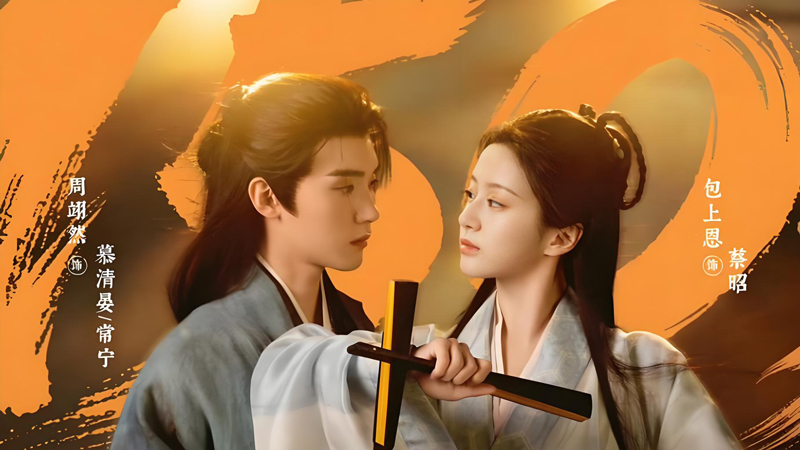
As a teenager at Luoying Valley (落英谷), Pingshu was different. She was not just another disciple practicing sword forms in the morning mist. She was ambitious. She wanted her name to echo across the rivers and lakes, not as someone’s sister or wife, but as a singular force. When she met Mu Zhengyang (慕正扬), the young prince of the heretical Li Sect (离教), she saw no demon. She saw a boy who looked at her like she was the only star in a dark sky.
For a brief moment, Pingshu believed she had cracked the code of the martial world. She had a brother in the orthodox factions and a lover among the outcasts. She thought she could be the bridge. She did not realize that bridges are meant to be walked on, and sometimes, broken. The elders of the Northern Dipper Six Sects did not want peace. They wanted victory. And a girl in love with the enemy was either a fool or a traitor.
Her intelligence became her trap. She understood the politics, the history, the danger. But understanding a cage does not mean you can unlock it. When whispers reached her that Mu Zhengyang was practicing forbidden arts, the seed of doubt was already planted. Not by others, but by her own hunger for a clean, righteous identity. She could not be the girlfriend of a monster. So she chose to be the hero who stopped one.
The Day She Killed Love to Save a Lie
The moment her sword pierced Mu Zhengyang’s chest, Pingshu was not just killing a man. She was killing her own judgment. She was proving to the crowd that she belonged to them. The blood on her hands was the price of admission to a club that only existed in her head. He did not fight back. He did not curse her. He just looked confused, as if the sword hurt less than the betrayal.
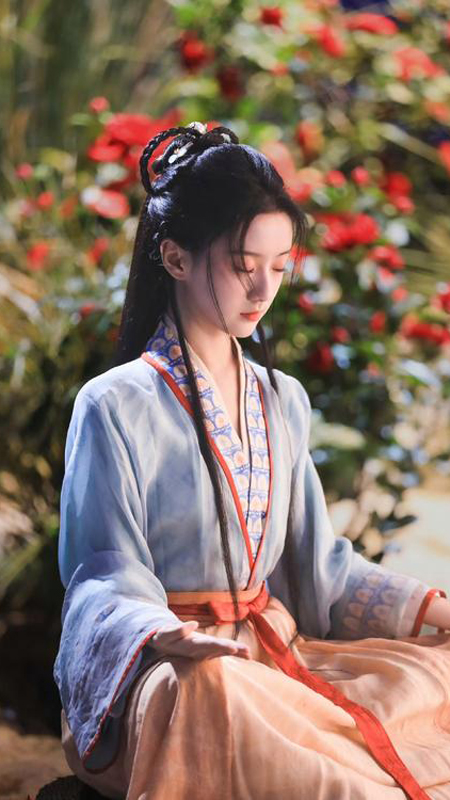
Later, the truth came out in fragments. The rumors were manufactured. The evidence was forged. The man she loved had been innocent. But by then, her lover was ash, and the world had moved on. There was no trial for the liars. No apology for the widow. There was only the next threat: Nie Hengcheng, a villain so vile that even the so-called righteous needed a weapon to stop him.
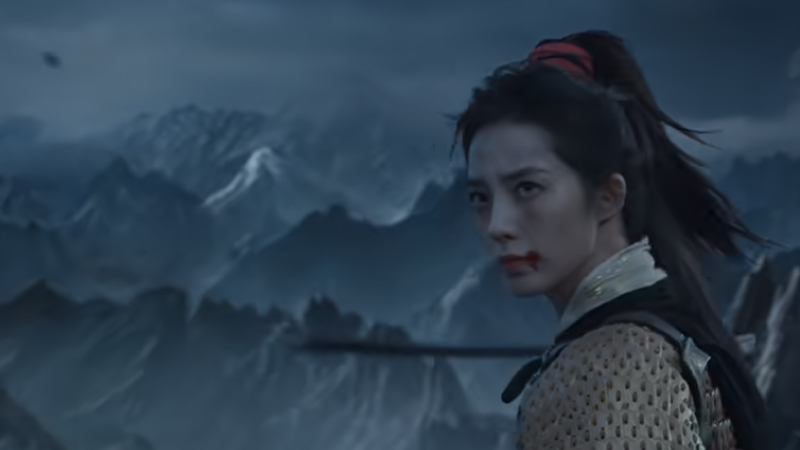
Pingshu volunteered to become that weapon. She studied Demonic Art of Heavenly Destruction, a cursed technique that burns the user’s very life force. She killed Nie Hengcheng (聂恒城), yes. But the victory cost her everything. Her meridians were shattered. Her strength was gone. At thirty, she became an invalid, coughing blood in a quiet room while younger heroes took credit for her sacrifice.
The worst part was the silence. When Yin Dai (尹岱), a minor player, claimed the glory for killing Nie Hengcheng, the entire martial world nodded and looked away. They did not want to remember a woman who had loved a heretic, even if she died to save them. Pingshu waited for someone to speak up. Her brother was quiet. Her sect was quiet. The world she had sacrificed love for simply erased her.
A Woman Who Could Not Forgive the Woman in the Mirror
Pingshu did not die because Yin Dai stole her credit. She did not die because Nie Hengcheng cursed her. She did not even die because Mu Zhengyang was gone. She died because she looked in the mirror and saw the person who had pulled the trigger. The person who cared too much about what strangers thought. The person who wanted to be perfect so badly that she destroyed something real.
In her final hours, she must have replayed that moment a thousand times. If she had just trusted him. If she had just walked away from the sects. If she had been willing to be called an outlaw’s woman. But she was not. She wanted the title of Heroine more than she wanted the man who loved her. And the universe, cruel as it is, gave her exactly what she asked for.
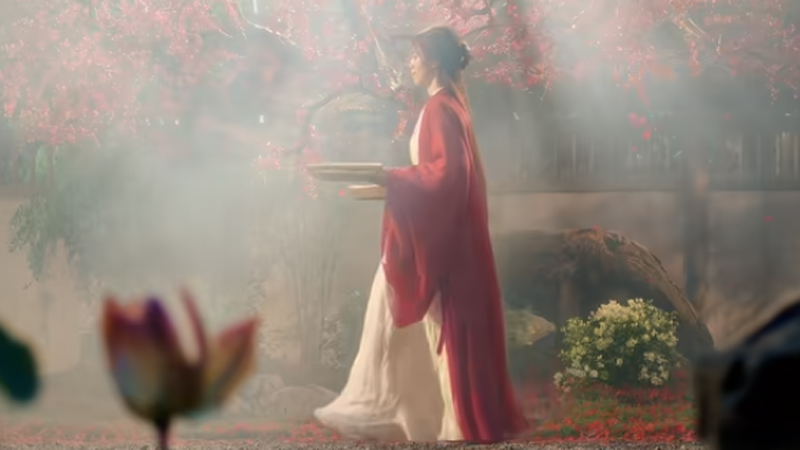
Her story is tragic not because of the villains who opposed her, but because of the victim inside her. The part of her that whispered: You can have it all. You can be good and loved. You can kill your lover and still be pure. It was a lie, but it was her lie. She owned it. And it killed her.
When she finally lay down to die, she was not escaping pain. She was going to find Mu Zhengyang, to apologize. In death, she hoped to find the forgiveness she could never give herself in life. But one wonders, if she met him on the other side, would he recognize the woman who stabbed him? Or would he see the girl who once believed she could bridge heaven and hell, and failed because she forgot to bring a light?