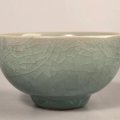
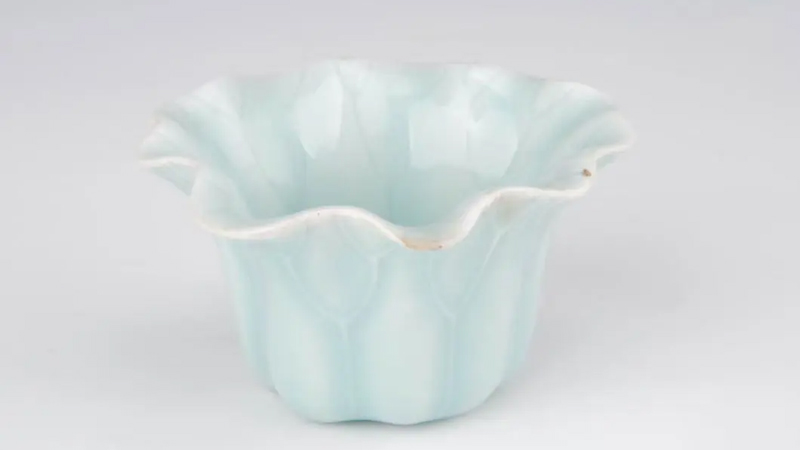
A cup shaped like a curling lotus leaf rests in a collection. Crafted in the Qianlong kiln (乾隆窑), the Dongqing Glazed Lotus Leaf Pattern Cup (东青釉荷叶纹杯) displays a muted gray-green hue, free from firing marks. Its surface veins appear stirred by a soft pond wind.
The three Guan sisters (关氏三姝) donated it to the Ba Gui treasure house (八桂宝库). The glaze's crackled texture holds knowledge from generations of kiln workers. A raised lotus seedpod at its center reflects a literati's quiet resolve. Morning light grazing the surface reveals the artisan's historic pursuit of unity with the natural world.

1. Dongqing Glaze: A Quiet Shade of Jade
The story of Chinese porcelain is often told in brilliant blues and stark whites, but its soul resides in quieter hues. Among these, the subtle glow of Dongqing glaze holds a special place. It is a color that does not shout but whispers, a soft, greyish-green that captures the essence of a tranquil moment. This specific celadon tone, achieved through centuries of refined technique, represents a peak of artistic restraint. Its value lies not in intricate painted scenes, but in the profound depth of its color and the flawless, glass-smooth surface of the glaze. To understand Dongqing is to appreciate a philosophy of beauty found in understatement and the mastery of fire and earth.
1.1 The Color of Serenity
Dongqing glaze, whose name evokes the east and the color of youth, is a distinct branch of the celadon family. Its character is defined by a gentle green tone, often compared to the first leaves of spring or the serene shade of jade. The effect is not a solid, opaque color, but a translucent, luminous layer with a soft, internal light. The thickness of the glaze contributes to its visual depth, creating a sensation of looking into a calm, green-tinted pool. This is a color that feels alive and breathing, changing slightly with the angle of light and the gaze of the viewer.
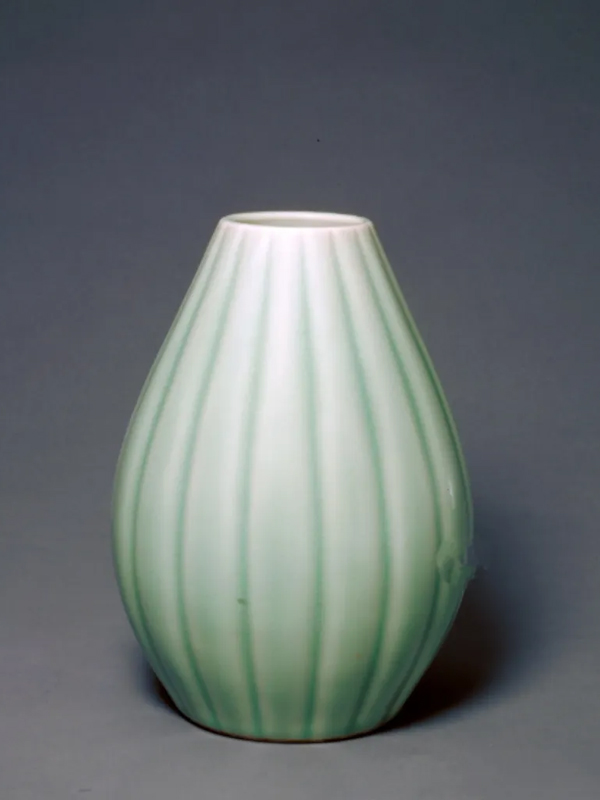
The creation of this specific shade was a chemical ballet perfected over generations. Iron oxide within the clay body acted as the primary coloring agent, transforming in the searing heat of the kiln's reduction atmosphere. This process, which limits oxygen, coaxes the iron into producing a spectrum of greens rather than reds. The precise outcome—a balance between grey, green, and blue—depended on the exact mineral composition and the potter's expert control over the kiln's environment. A slight variation in temperature or timing could shift the glaze from the desired Dongqing to a related hue like powder blue or bean green.
While its origins trace back to earlier kilns, it was during the Qing (清) dynasty, particularly under the Yongzheng (雍正) Emperor's reign, that Jingdezhen (景德镇) artisans achieved an unparalleled consistency. They mastered the recipes and firing conditions, turning the unpredictable nature of the kiln into a reliable tool. The resulting Dongqing pieces from this era exhibit a flawless, even color and a surface that feels almost soft to the eye. This technical triumph allowed the pure, unadorned beauty of the glaze itself to become the sole focus of the artwork.
1.2 Form Follows Nature
The vessels chosen for Dongqing glaze often drew inspiration directly from the natural world, creating a perfect harmony between color and form. A celebrated example is the lotus leaf-shaped cup. Such a piece does not merely depict a leaf; it becomes one. The deep body of the cup mimics the natural curve of a leaf, with an irregular, slightly rolled rim that suggests organic growth rather than rigid manufacture. The pure white porcelain body provided a perfect canvas, ensuring the translucent Dongqing glaze would glow with its intended color.
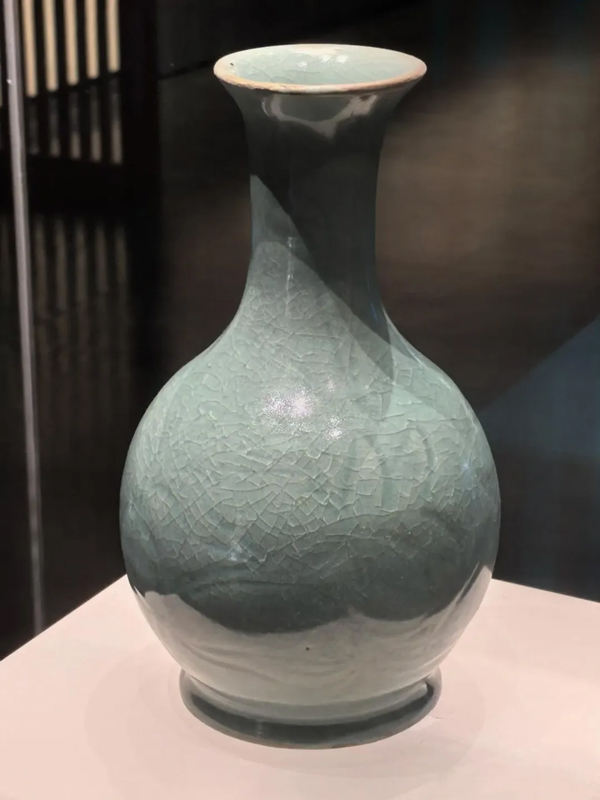
Decoration on these pieces was typically integrated and subtle. Instead of painted patterns, artisans used shallow carving, incising, and applied slip to create texture. For the lotus leaf cup, veins were delicately scored into the clay, radiating naturally across the surface. At the center of the cup, a small, three-dimensional lotus pod was often sculpted, adding a touch of playful realism. This approach emphasized texture and form over color contrast, allowing the viewer to appreciate the piece through touch as well as sight.
This design language was deeply symbolic. The lotus plant, rising pristine from muddy waters, represented purity and integrity in Chinese culture. By shaping a cup as a lotus leaf and coating it in the serene, water-like Dongqing glaze, the potters infused the object with a profound cultural meaning. It was a vessel for both physical and spiritual refreshment, a daily reminder of elegant virtues. This connection to scholarly ideals and naturalistic beauty created a timeless artistic statement.
1.3 Mastery of Fire
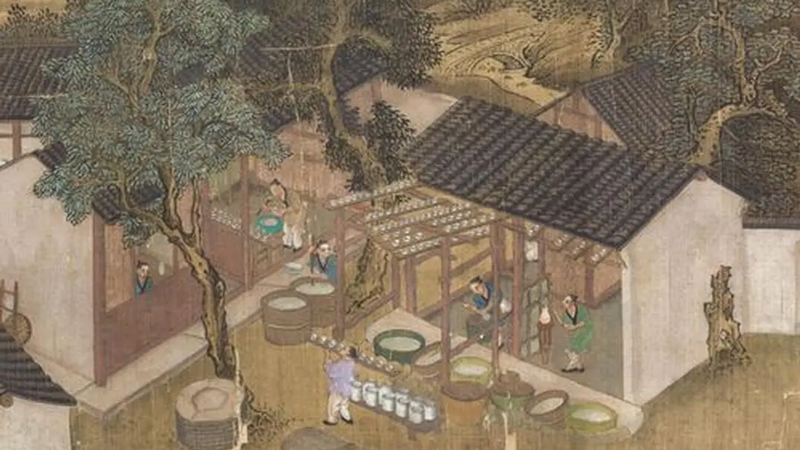
The journey of a Dongqing glaze piece from raw clay to finished masterpiece was arduous and fraught with risk. The process began with the meticulous preparation of the porcelain body, which had to be exceptionally pure and fine. The glaze, a secret slurry of local minerals, was applied in multiple layers. This was a critical step; too thin a coating would lack depth, while too thick a one could run or crack during the firing, ruining the piece.
The true magic and terror occurred inside the dragon kiln. Firing Dongqing glaze required a high-temperature reduction atmosphere, a delicate state where oxygen levels are carefully controlled. The potters had to skillfully manipulate the fire, starving it of air to force the chemical transformation that produces the coveted green tones. This stage was a gamble. The slightest error in temperature control, the briefest influx of oxygen, could turn the serene green into a dull grey or an unattractive muddy color. A successful firing was a small victory against the elements.
This technical challenge made Dongqing ware primarily the domain of imperial kilns. The resources of the Jingdezhen facilities, tasked with supplying the court, were necessary to absorb the high rate of failure. Later, during the Qianlong period, artisans began experimenting by adding gilding or familie-rose enamels over the Dongqing base. Yet even these decorated pieces rested upon the foundational achievement of a perfectly fired, flawless glaze. Each surviving Dongqing object is a testament to a potter's skill, patience, and silent conversation with the flame.

2. The Dongqing Glaze: A Porcelain Symphony
In the quiet corners of tea ceremonies and scholarly studies, a particular ceramic piece often captures attention. The Dongqing Glaze Lotus Leaf Pattern Cup stands out not for loud proclamation but for its subtle dialogue between human craft and natural inspiration. This object embodies centuries of refinement, where every curve and hue tells a story beyond mere utility. It invites holders to pause and appreciate how simple materials can evoke profound tranquility and cultural continuity.
2.1 Resonant Tones
When tapped gently, the cup produces a clear, lingering sound reminiscent of a distant chime. This acoustic quality stems from its dense ceramic body and even glaze application, techniques honed over generations. Artisans achieved this by meticulously balancing clay density and firing temperatures, creating a vessel that sings with a soft, penetrating tone.
This sonic character connects to older traditions where ceramics were valued for their auditory pleasures. In moments of tea drinking, the ring complements the serene environment, enhancing the sensory experience. It turns a routine act into a meditative practice, aligning with ideals that prize harmony in everyday objects.
The sound also reflects a pursuit of perfection in material unity. Each component—clay, glaze, heat—works in concert to produce this effect. It is a testament to skill that transforms functional items into sources of auditory beauty, echoing historical aspirations for excellence in humble forms.
2.2 Verdant Colors
The glaze showcases a soft greenish tint, blending shades like fresh spring leaves after rain. Iron compounds within the glaze interact with kiln conditions to yield this serene palette. Under light, the surface reveals subtle crackles that add depth without overpowering the gentle luminosity.
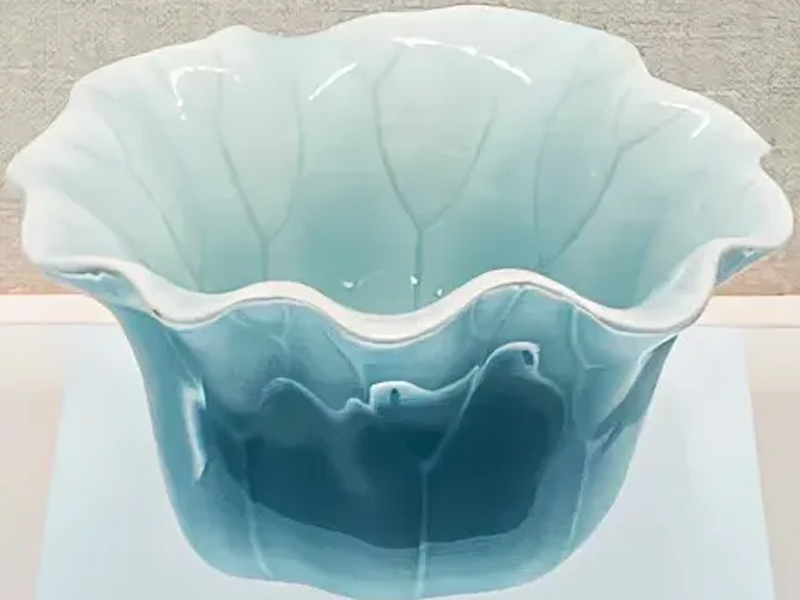
This coloration draws from natural motifs, particularly the lotus plant, symbolizing purity and renewal. The hue shifts slightly with viewing angles, mimicking the play of light on water or foliage. It captures a fleeting moment of nature’s beauty, preserved in ceramic form for repeated admiration.
Achieving such consistency required precise control over oxidation levels and cooling processes. Potters in Jingdezhen mastered this, ensuring each piece met high standards of visual appeal. The result is a glaze that feels alive, changing with its environment while maintaining its essential character.
2.3 Lotus Forms
Its shape imitates a lotus leaf, with edges curled inward as if caught in a gentle breeze. Detailed veins trace the surface, adding texture that is both visual and tactile. This design not only serves aesthetic purposes but also improves grip, making it practical for daily use.
Crafting such intricate forms demands expert carving and molding skills. Artisans sculpt the clay to mirror organic patterns, ensuring symmetry and flow. The rolled rim, for instance, prevents drips while evoking the delicate structure of natural leaves.
Beyond functionality, the lotus motif carries cultural weight, often associated with integrity and elegance. It reflects a philosophy where objects should inspire virtue through their appearance. This cup becomes a small reminder of ideals that transcend its material existence.
2.4 Deeper Meanings
This ceramic work bridges the gap between utility and artistic expression. It fits comfortably in the hand for drinking, yet its design encourages contemplation. The integration of natural elements into a man-made item highlights a belief in unity between humanity and the environment.
Symbolism is woven into every aspect, from the lotus representing resilience to the glaze echoing water and growth. These elements collectively speak to values like simplicity and moral clarity. They transform the cup into a conduit for reflection on larger life principles.
The balance achieved here is not accidental; it results from intentional choices in material selection and decorative approach. This harmony ensures that the object serves both physical needs and spiritual inclinations, embodying a holistic view of craftsmanship.
2.5 Historical Echoes
Originating in the Song Dynasty, Dongqing Glaze ware began in folk kilns before gaining imperial favor. During the Yongzheng and Qianlong eras, court workshops in Jingdezhen refined it with new techniques like gold tracing. This period saw the glaze evolve into a symbol of refined taste.
The Lotus Leaf Pattern Cup itself emerged as a design for honoring officials, implying commendation for upright conduct. Its persistence through dynasties shows how art intersected with governance and social values. It became a staple in collections, valued for its dual role in ceremony and aesthetics.
Over time, innovations in firing and decoration allowed for greater variety without losing core identity. The cup’s enduring appeal lies in its ability to adapt while preserving traditional essence. It stands as a tangible link to past practices and philosophies.
Today, it continues to inspire contemporary artisans who draw on its legacy. The historical journey of this piece illustrates how cultural artifacts can transcend their origins, remaining relevant across centuries. It serves as a benchmark for quality and meaning in ceramic arts.

3. The Lotus Cup: A Ceramic Journey Through Ages
In the quiet halls of museums and the vibrant studios of modern artists, a simple ceramic form tells a story of centuries. The Dongqing Glaze Lotus Leaf Cup is not merely an object but a witness to the flow of Chinese history, its surface reflecting changes in taste, technology, and thought. This piece, shaped like a curled leaf, carries the whispers of dynasties, from the serene minimalism of the Song to the bold experiments of today. Its evolution is a map of cultural shifts, where each era left a distinct mark on the glaze and form, transforming it into a living chronicle of artistry that continues to inspire new generations of creators and admirers alike.
3.1 Song Simplicity
During the Song Dynasty, ceramics reached a peak of understated elegance. Artisans at the Longquan Kiln (龙泉窑) drew inspiration from earlier traditions like the Yue Kiln (越窑), developing the Fenqing glaze, a soft, powdery blue that evoked the sky after rain. This hue was achieved through meticulous control of firing temperatures, resulting in a thin, even layer that embodied a Zen-like calm. The cup's form, often simple and functional, mirrored the period's philosophical leanings towards nature and introspection.
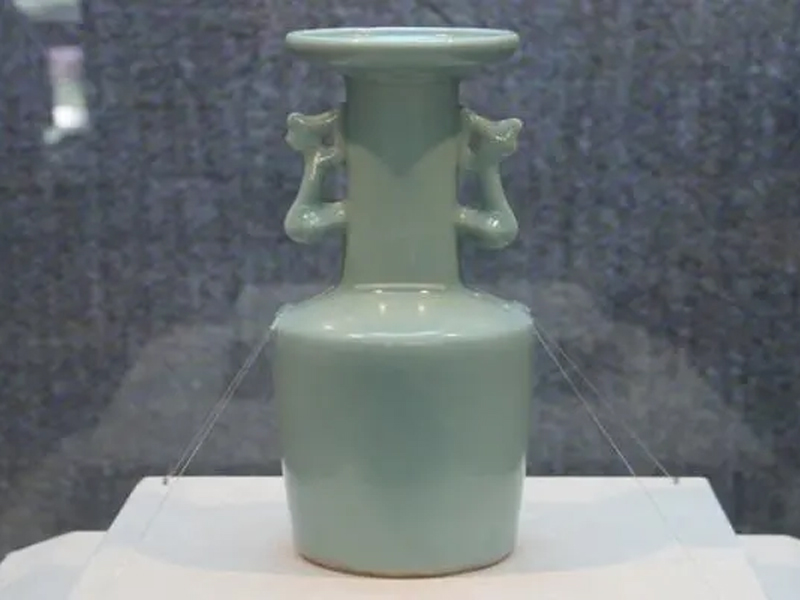
Techniques involved careful clay preparation and ash glazes, creating pieces that felt light yet durable. The Lotus Leaf Cup from this time typically featured subtle curves, imitating the gentle fold of a leaf, with no excessive decoration. This approach highlighted the natural beauty of the material, making each piece a meditation in clay. Collectors and scholars today still admire these works for their purity and timeless appeal, seeing them as benchmarks of ceramic art.
Influence from Buddhist and Daoist ideals encouraged a focus on essence over ornament. The glaze's color, reminiscent of misty mountains or quiet waters, became a symbol of inner peace. This era set a foundation that would be built upon and challenged in later centuries, establishing a legacy of refinement that remains influential in East Asian aesthetics.
3.2 Yuan Innovations
The Yuan Dynasty brought waves of change through increased trade and cultural exchange. Islamic motifs began appearing on ceramics, introducing relief styles like carved lotus petals that added depth and complexity. The Dongqing glaze shifted towards greener tones, and artisans experimented with adding ground agate to the mix, aiming for a "plum green" effect. However, this often led to issues with glaze running during high-temperature firings, requiring new balancing acts in the kiln.
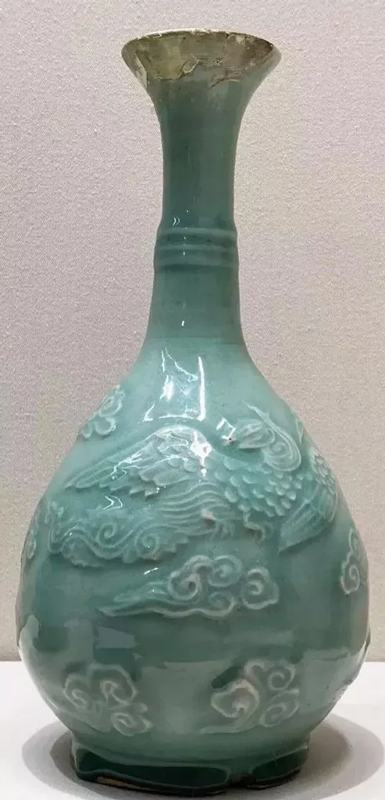
This period saw a blend of local and foreign elements, as Mongol rule facilitated connections across Asia. Ceramics became more ornate, with cups featuring intricate patterns that told stories of distant lands. The Lotus Leaf Cup adapted, its surface now a canvas for narratives that merged Chinese nature themes with Persian-inspired designs. This fusion reflected a society in flux, eager to incorporate outside influences while maintaining its identity.
Technological adjustments included thicker glazes and improved kiln structures to handle the new compositions. Despite challenges, these innovations enriched the ceramic palette, paving the way for future developments. Pieces from this time are valued for their dynamic energy, capturing a moment when art bridged continents and cultures.
3.3 Ming-Qing Opulence
Under the Ming and Qing courts, ceramics became instruments of political expression. The Dongqing glaze turned grayer, and designs grew lavish, with stacked lotus patterns and raised feet. A protective underglaze was applied, and hidden carvings often carried messages of integrity, subtly weaving moral lessons into the art. Yet, this opulence sometimes overwhelmed the cup's organic lines, revealing tensions between decoration and form.
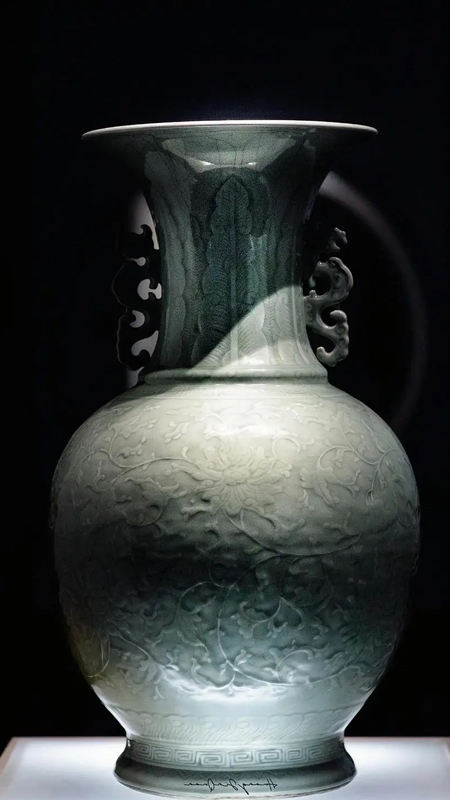
Imperial patronage drove production towards grandeur, with workshops striving to outdo each other in brilliance. The Lotus Leaf Cup was transformed into a symbol of status, its once-natural curves now framed by elaborate motifs. This shift mirrored the era's social hierarchies, where art served both aesthetic and didactic purposes, reinforcing courtly values through everyday objects.
Critics of the time noted that excessive ornamentation could detract from the piece's inherent grace. Still, these centuries produced masterpieces that showcased technical prowess, with glazes achieving new levels of luminosity. The legacy here is one of contradiction—beauty born from constraint, where the cup's story became intertwined with the politics of its day.
3.4 Modern Shifts
In the Republican era, attempts like the Lang Kiln Green (郎窑绿) glaze and crackle patterns emerged, though they found limited market success. Contemporary artists, however, broke free from tradition, incorporating wood-firing techniques that yielded unpredictable effects like "sky blue" and "moon white" variations. Some even used Kintsugi, the Japanese method of repairing cracks with gold, to give old pieces new narratives and highlight their history.
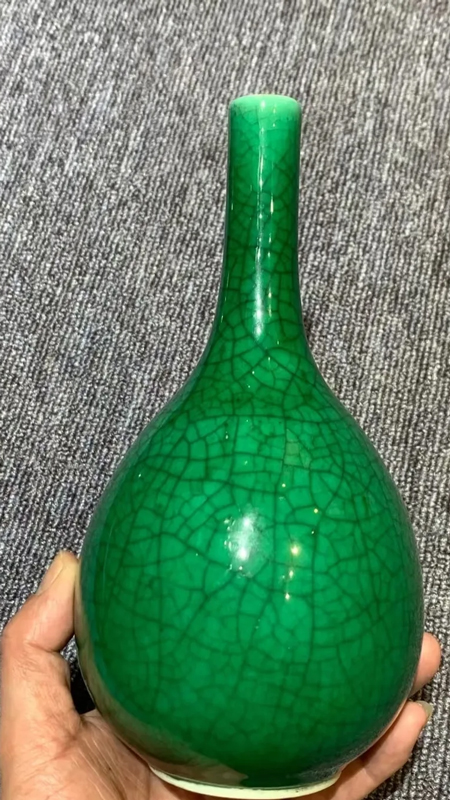
This period embraced individualism, with potters exploring personal expression over mass production. The Lotus Leaf Cup became a medium for experimentation, its form reshaped to reflect modern anxieties and hopes. Artists played with textures and colors, creating works that spoke to issues of sustainability and identity, thus connecting past craftsmanship with present concerns.
Galleries and collectors began valuing these innovative approaches, seeing them as a revival of ceramic arts. The cup's evolution now includes digital influences, where its image is reimagined in virtual spaces, ensuring its relevance in a fast-paced world. This era proves that tradition can thrive through adaptation, not just preservation.
3.5 Today's Lens
Photographers have seized upon the Dongqing Glaze Lotus Leaf Cup as a subject for deconstruction. Through macro lenses, its crackled surface transforms into star maps or abstract landscapes, while digital editing allows the green hues to flow like ink in a classical scroll. This visual reinterpretation turns the object into a cultural messenger, bridging eras and mediums.
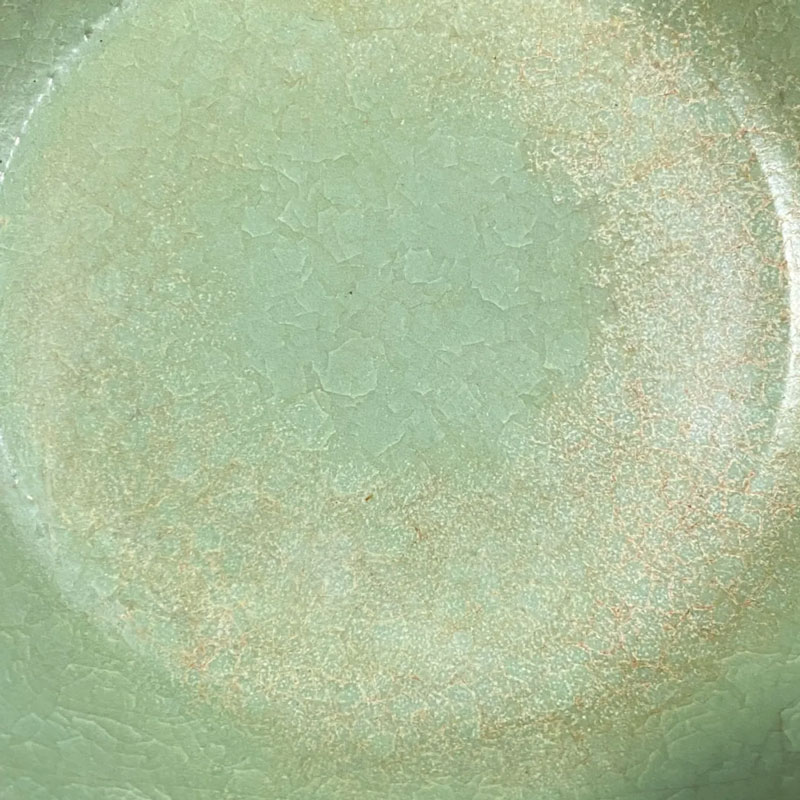
In studios and online platforms, these images go viral, sparking conversations about heritage in the digital age. The cup's lotus patterns, once symbols of purity, now resonate with themes of resilience and transformation in contemporary art. This fusion of old and new attracts diverse audiences, from historians to social media enthusiasts, all finding meaning in its glazed surface.
Ultimately, the Lotus Leaf Cup's journey illustrates how art endures by evolving. It stands as a testament to human creativity, a small vessel that carries the weight of history while sailing into the future. Its story reminds us that beauty is not static but a continuous dialogue between maker, object, and viewer across time.
4. Celadon Ceramics: A Millennium of Influence
The Longquan Kiln in China created celadon glazes that shaped ceramic history. Their methods spread to kilns like Yaozhou (耀州) and Jingdezhen, leading to styles such as crackle ware. This art moved from local workshops to global recognition.
4.1 Tea and Trade Routes
These ceramics were essential in Song dynasty tea practices. Designs like the rolled rim became standard in Chinese tea sets for generations.
Overseas, the celadon glaze gained fame in Europe. It affected German porcelain and Japanese tea rituals, blending with wabi-sabi ideas.
Variations like Ge Kiln (哥窑) crackles show how techniques evolved through cultural exchanges.
4.2 Modern Adaptations
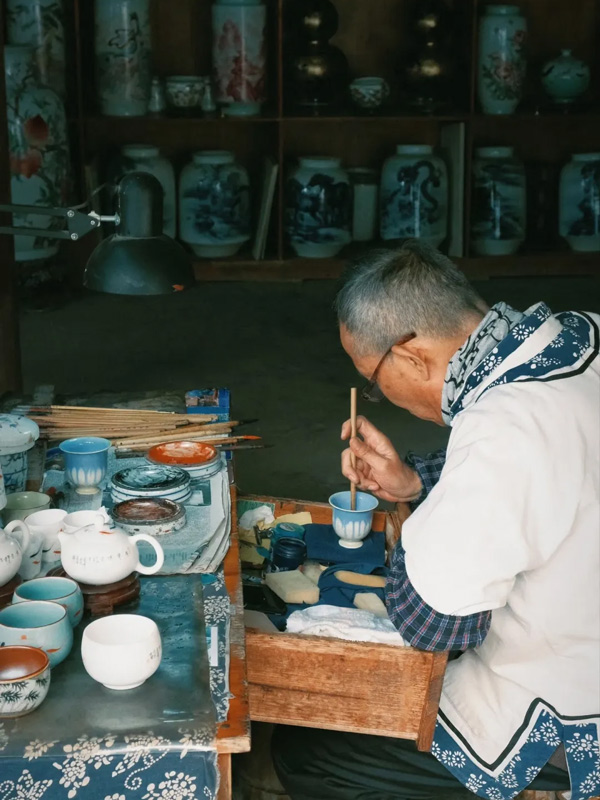
Today, celadon appears in minimalist designs, with high sales. Yet machine production risks losing handcraft skills, posing questions about tradition's place now.

Summary
The Dongqing Glazed Lotus Leaf Cup is a celebrated example of Chinese porcelain, renowned for its understated beauty and deep cultural significance. Originating from kilns like those in Jingdezhen, it reached its peak during the Qing dynasty, particularly under the Yongzheng and Qianlong emperors. The cup is characterized by its serene, grayish-green Dongqing glaze—a translucent celadon tone achieved through a precise, high-temperature firing process that requires expert control.
Its form is intricately modeled after a curling lotus leaf, featuring delicate veins and often a raised lotus seedpod at the center. This design harmonizes color and form, drawing direct inspiration from nature and symbolizing purity and scholarly virtue. More than a utilitarian object, the cup embodies a philosophical pursuit of unity with the natural world. Its evolution from the Song Dynasty to modern times reflects centuries of technical refinement and artistic tradition, making it a timeless artifact of Chinese ceramic art.