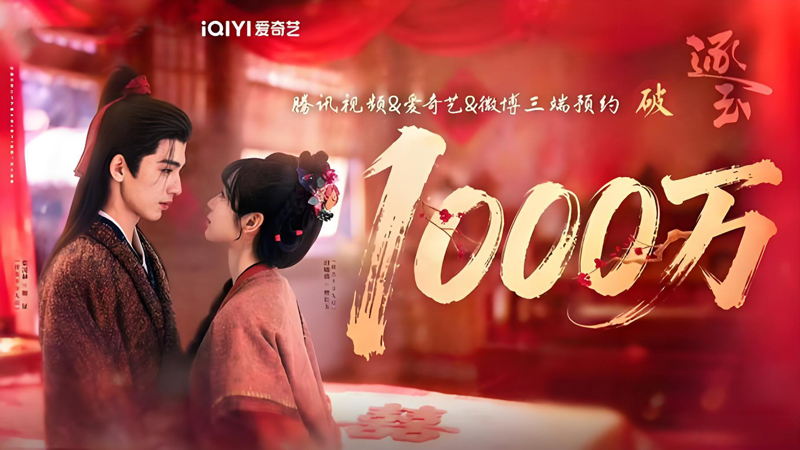
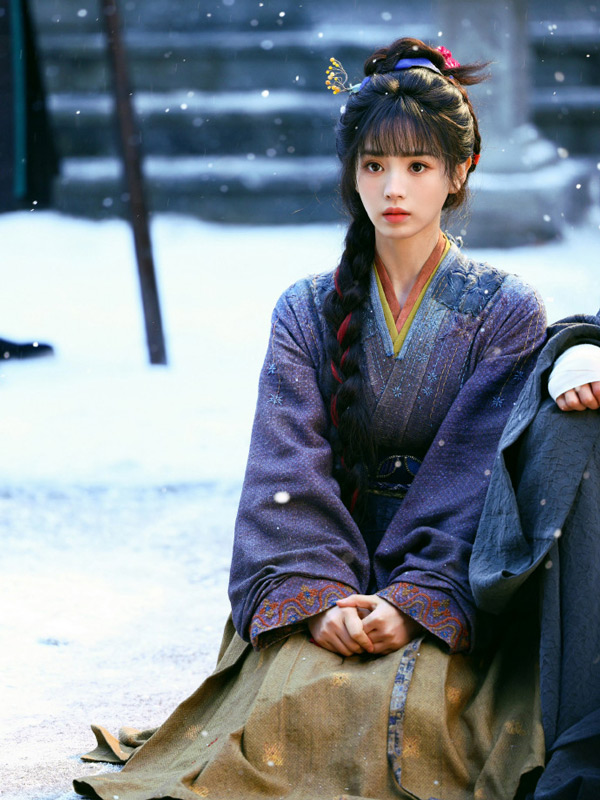
In the landscape of Chinese historical romance dramas, the character of Fan Changyu (樊长玉) from the series Pursuit of Jade (逐玉) has ignited fresh conversations. Portrayed by Tian Xiwei (田曦薇), she is a butcher's daughter whose skill in slaughtering pigs sets her apart from typical female leads. This unique portrayal has drawn mixed reactions. Some applaud her as a resilient "wild grass" heroine—rooted in everyday life and thriving against odds. Others, however, critique her moments of low self-worth, particularly when she appears insecure beside the male protagonist.
Such debates underscore a pivotal question: what do contemporary audiences seek in the heroines of these dramas? Should these characters adhere to traditional ideals of grace, or should they embrace authenticity, flaws and all? Fan's role suggests a shift towards more grounded female figures, but it also reveals the challenge of balancing realism with dramatic appeal. As the genre evolves, the demand for compelling and credible heroines grows louder.

1. A Blade Forged in Courage
In a landscape where martial arts tales often follow predictable paths, a different kind of hero emerges from the snow. She carries a butcher's knife, not a legendary sword, and her strength is measured in the quiet confidence of someone who has learned to stand on her own. This is the story of a young woman whose actions speak louder than any lineage or destiny ever could.
Butcher's Daughter, Warrior's Edge
The character of Fan Changyu immediately sets herself apart with a simple, grounded truth: she can fight. This isn't a vague boast or a costume she puts on for special occasions. The narrative takes care to show us its roots. We learn her father taught her the blade, not for glory, but for the practical work of butchering pigs. This skill translates directly into her ability to defend herself and others. Her competence is not just stated; it is demonstrated through events and fine details that build a believable and capable person.
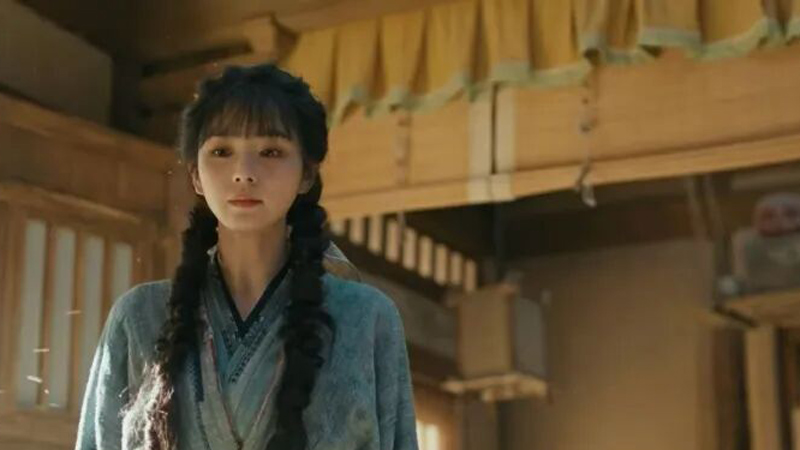
One particular scene crystallizes this perfectly. Before confronting a group of local bullies, Fan Changyu calmly instructs her younger sister to turn around and count to ten. It is a moment of absolute control, a familiar beat in the genre often reserved for the lone male hero, the one who faces down a crowd with nothing but cool confidence. The words echo those spoken by the protagonist in the film Blades of the Guardians (镖人), a classic moment of masculine empowerment. Here, they are spoken by a young woman in a cloth coat, and they carry the same weight. It signals a fundamental shift in narrative focus. She is not a damsel waiting for rescue; she is the one in command of the situation.
Three Rescues and a Debt
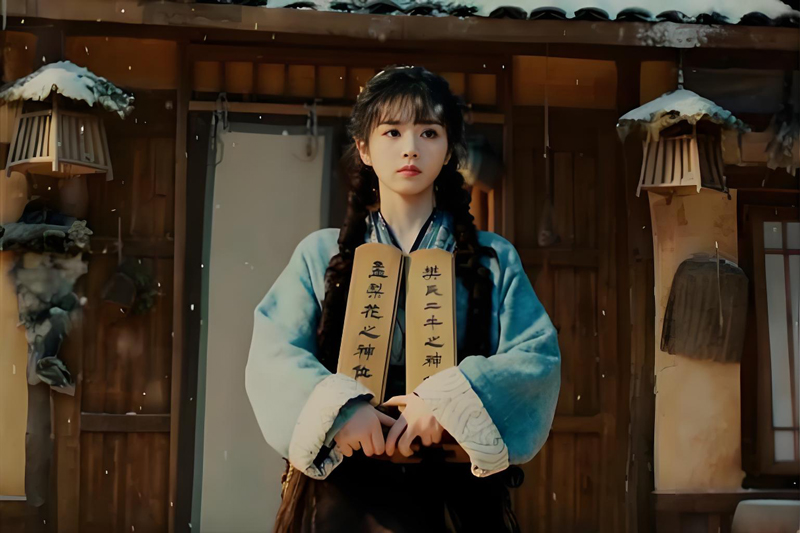
Fan Changyu's capability is not theoretical. It has direct consequences for the male lead, whom she saves not once, but three times. The first rescue feels almost like fate—her simple kindness compels her to help a stranger left for dead in the freezing snow. If that initial act seems like a narrative convenience, her subsequent actions prove it is simply part of her character.
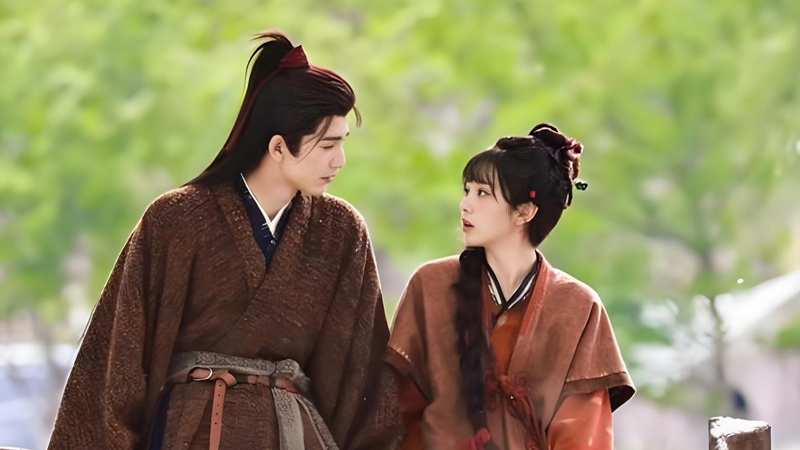
The second rescue requires quick thinking. When officials come to search her home for the fugitive, she hides him in the pigsty. To throw the searchers off, she has her sister hide in the cellar and deliberately makes noise, drawing their attention and clearing that hiding place. Then, she places foul-smelling pig entrails in front of the sty, knowing the officers will have no desire to search further. It is practical, clever, and uses her knowledge of her own world.
The third rescue is a complete reversal of the classic trope. The male lead, weakened and bleeding, is cornered by enemies. At the last moment, Fan Changyu returns. In that instant, he is the one looking up at her with new eyes, the one whose heart is captured. And when he collapses, it is her back that carries him away from danger. The debts of gratitude are entirely one-sided.
Building a World Beyond the Hero
A character's true measure is often taken in spaces where the main romantic interest is not present. Fan Changyu's interactions with the local troublemaker, Jin Yuanbao (金元宝), and his friends reveal another layer of her personality. Hired by a rival to destroy her shop's stove, the clumsy attempt fails. Instead of punishment or banishment, Fan Changyu puts them to work.
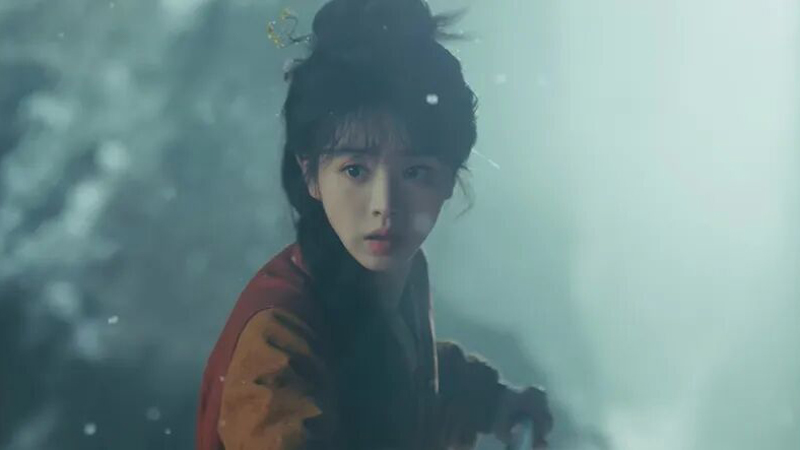
They are not villains, but people down on their luck, each with their own burdens. After half a day's labor, she pays them their exact wage for the time worked—not a penny more. When Jin Yuanbao tentatively asks if they can come back, her answer is immediate and clear: they are welcome to work, but not to cause trouble. This simple scene is far from the typical dramatic rescue or romantic setup. It establishes her independent social sphere. These men are not tools for a love triangle or foils to highlight the hero's virtues. They are there to interact with her, to witness her fairness, her toughness, and her straightforward nature. They respond to her authority, which is earned, not granted.
In the public sphere, away from the male lead, she is decisive and self-assured. Whether facing gossip, hired thugs, or potential allies, she remains unshakeable. She does not seek to prove anything; she simply acts according to her own code. This confidence is not performative; it is the natural expression of someone who knows her own skills and her own worth. It is the quiet authority of a person who has always been capable of handling what comes her way, building a life and relationships on her own terms, long before any hero stumbled into her snow-covered yard.


2. Strength Lost in Love
The latest period drama Pursuit of Jade has sparked intense debate, not for its costumes or sets, but for the two very different women it presents as one. On one side, audiences see a butcher who is confident and commands respect in her village. On the other, the same character shrinks with self-doubt and hides her skills the moment a romantic interest appears. This split portrayal has left many viewers puzzled and frustrated, raising a simple question: why does a strong woman have to become small to fit into a love story?
A Heroine Divided
In the public spaces of her life, the female lead is clearly capable. She handles a butcher knife with skill, negotiates business, and stands her ground with the people in her community. She is someone who has built her own life. Yet, when the story shifts to her private moments with the male lead, her personality seems to melt away. She stammers over simple proposals and hides her profession as if it were a shameful secret.
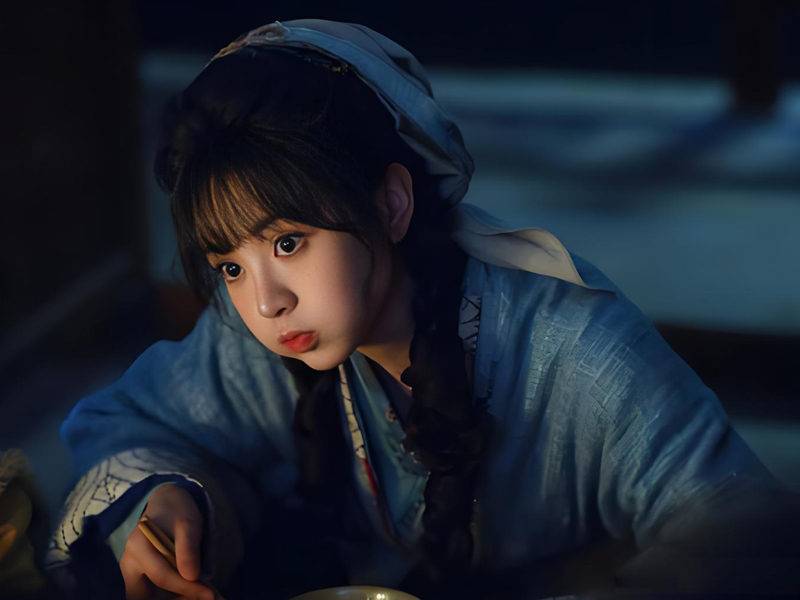
This shift is most obvious in a key scene about marriage. In the original story, she directly asks the man to marry into her family to save her home. In the drama, she cannot even speak the words. She hesitates, looks away, and the man has to offer the solution himself. Even on the day of the wedding, when she insists he does not have to change his surname to match hers, her defiance feels like a fragile performance rather than a genuine belief.
This inconsistency creates a character that feels like two different people. The strong, public woman and the insecure, private woman do not merge into one believable person. Instead, they highlight a troubling pattern: female strength is often shown as acceptable only when it serves a purpose outside the home, but it must be hidden or toned down to secure a romantic relationship.
Cheap Laughs, High Cost
The show tries to explain this fracture by using it for comedy. It relies heavily on the contrast between what the audience knows—that she is a skilled butcher—and what she pretends to be in front of the man: a delicate, helpless girl who claims she could never possibly kill a pig. The joke is that she is lying, and the audience is in on it.
On the surface, this is a simple and effective trick for light entertainment. The laugh comes easily because the gap between her real life and her acted life is so wide. But looking closer, the foundation of this joke is shaky. It builds humor on the idea that a woman who butchers animals is inherently unfeminine and ridiculous. The punchline relies on the audience agreeing that being "delicate" is the normal and desirable state for a woman.
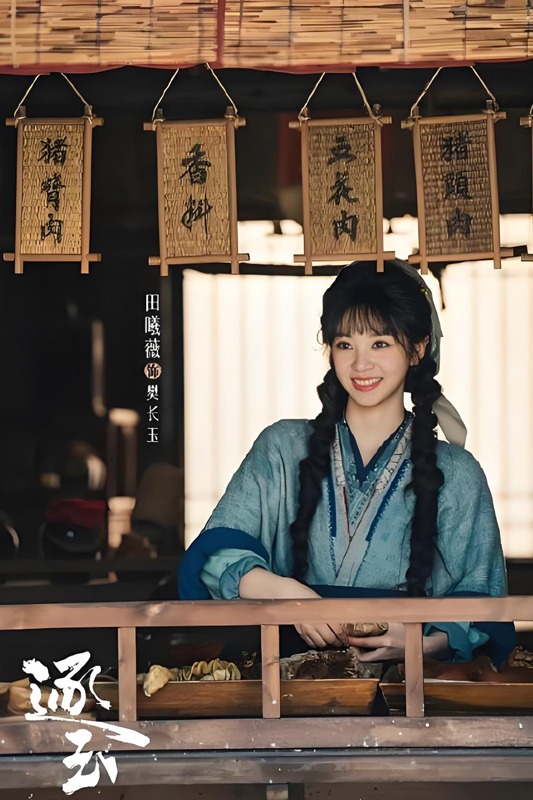
By asking the heroine to perform this act of pretending to be weak, the drama asks her to participate in making her own real skills the butt of the joke. The comedy does not come from her wit or her strength, but from her awkward attempt to hide them. This choice reveals a deeper unease within the story itself. It suggests that a woman can be admirable in a crowd, but to be lovable in private, she must first make herself smaller and apologize for what she truly is.

3. Romance Rules the Fantasy World
In the world of Chinese television, a specific genre has risen to dominate viewership and spark endless online discussions. This is the realm of ancient costume idol dramas, known as Gu’ou (古偶). These shows blend historical settings with modern idol aesthetics, creating a space where romantic fantasy takes center stage. The primary goal is not historical accuracy or profound social commentary, but to deliver an intoxicating emotional experience centered on the lead couple's relationship.
Every element, from the plot to the character design, becomes a tool to serve this singular purpose. This logic explains many creative choices in recent productions, including the show Pursuit of Jade, where narrative decisions that might seem inconsistent in other genres make perfect sense within its specific framework. The story bends to the will of the romance, prioritizing the connection between its stars above all else.
Love First, Story Second
The most telling sign of this genre's influence is how the romantic storyline is accelerated. In the original novel of Pursuit of Jade, the male lead's role was initially smaller, and the female lead's affection developed slowly. The television adaptation, however, thrusts them into a romantic dynamic from the very beginning. By the second episode, he dreams of her saying she will "raise pigs to support him." This dream is a direct and early signal of their destined connection, a classic Gu’ou move. The original context, where this vision was born from a humorous and unromantic encounter with a poorly made bowl of noodles, is stripped away to make room for pure romantic sweetness.
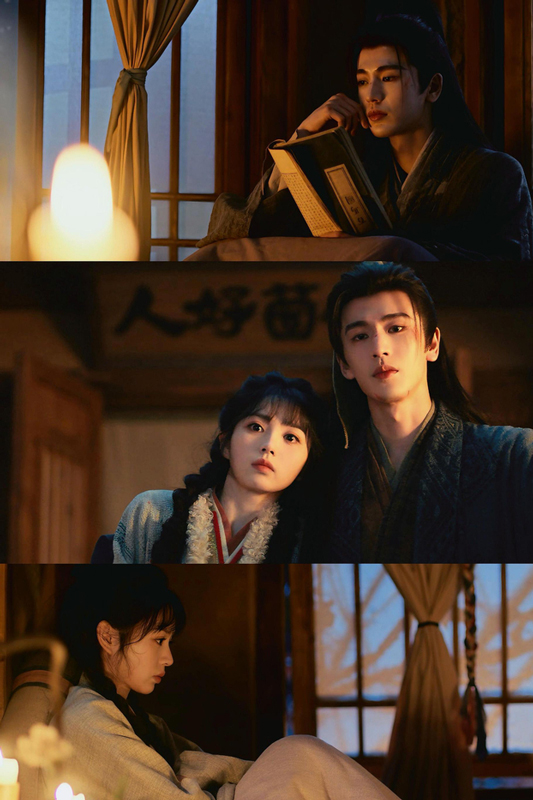
This structural change is a standard practice in the genre. When two stars of equal fame are cast, their screen time and narrative importance must be balanced. This often translates into adding scenes for the male lead, ensuring the romance feels mutual and fully developed. The story's original pace is sacrificed to establish the central couple's bond as quickly and powerfully as possible, hooking the audience with the promise of their love story. The goal is to make viewers invest in "them" before anything else, setting the stage for every subsequent plot point to be viewed through the lens of their relationship.
The Perfect Couple's Playground
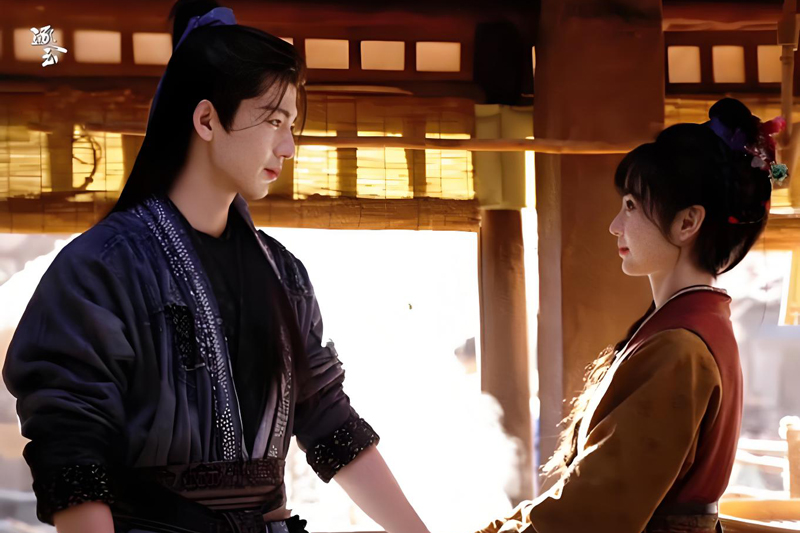
The genre's focus on the central pair reshapes every character interaction, particularly the female lead's moments of triumph. In Pursuit of Jade, the heroine is portrayed as exceptionally capable, fully able to handle confrontations on her own. Yet, the narrative consistently inserts the hero into these scenes. He throws a pebble or a chopstick from afar, secretly backing her up. From a pure storytelling perspective, his intervention is completely unnecessary; her strength is clearly established. However, within the logic of Gu’ou, these moments are essential. They are not about adding practical help, but about creating shared, intimate beats that visually cement their connection.
These "secret help" moments become private language between the couple, tiny demonstrations of his devotion that the audience is privileged to witness. They reinforce the idea that he is always watching, always protecting, even when she doesn't need it. Similarly, her character trait of being somewhat uneducated is not developed for character depth, but is highlighted as a source of his affection. What could be a flaw is repackaged within the romance as something endearing and attractive. The world revolves around them, and everything is filtered through the prism of their growing love, transforming ordinary or even negative traits into romantic catalysts. His feared reputation as the Marquis of Wu'an (武安侯), a man rumored to be brutal, isn't a moral puzzle to solve. It's a backdrop for her unconditional faith in him, a faith based on emotion rather than evidence.
Beauty Serves the Fantasy
This absolute prioritization of the emotional core extends to the very look and feel of the show. The most universally praised aspects of Pursuit of Jade are the visuals: the actors are strikingly beautiful, and the cinematography is designed to capture them in the most flattering light. The production quality is focused on creating a visually pleasing fantasy where the leads are not just characters, but idols to be adored. Every frame is composed to enhance their appeal, ensuring that the audience finds them captivating. This focus on aesthetics is a direct result of the genre's goals; beautiful people in beautiful settings falling beautifully in love is the fundamental product being sold.
In this constructed world, themes of social progress or historical critique become mere set dressing. They are not the point. A concept that might seem outdated or problematic isn't there to provoke thought, but to provide a scenario where the hero can protect the heroine, or where she can demonstrate her unique understanding of him. These elements are tools, not truths. Their sole function is to accelerate the emotional journey, to create more opportunities for viewers to "savor the sweetness" of the central romance. The narrative's ultimate aim is to ensure the couple falls in love faster and more intensely, and that the audience falls in love with them doing it. All other considerations, from plot consistency to character logic, are secondary to building this perfect, consuming fantasy.

4. The Unasked Question in Costume Romance
Watching recent Gu’ou dramas often feels like observing a tug-of-war. On one side, scripts sprinkle in sharp dialogue about female independence. On the other, the plot still insists that the heroine’s emotional journey must circle back to the hero. This contradiction is not accidental but built into the genre’s current structure. The drama Pursuit of Jade becomes a useful mirror for this dilemma, showing how creators try to hold two opposing ideas at once and often drop both.
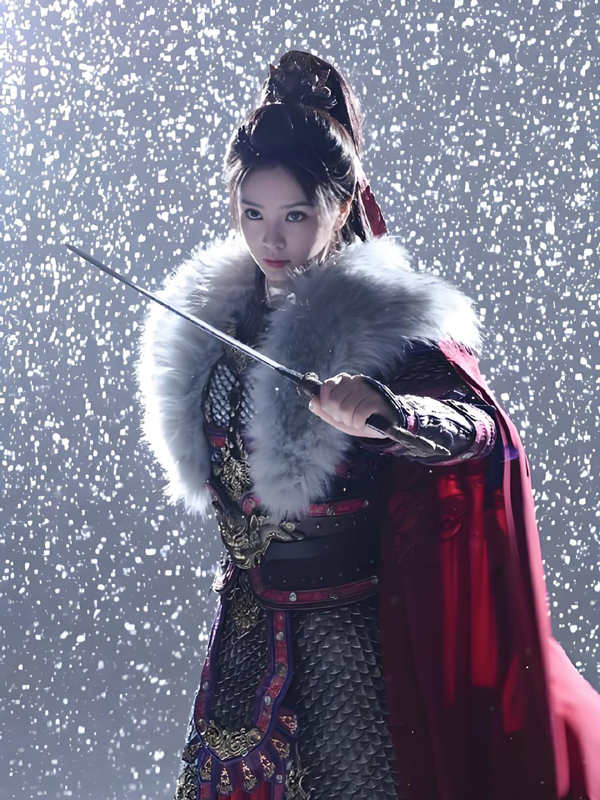
The scene where the heroine, a butcher, confronts those who destroyed her stove is charged with potential. She marches in, backed by her people, knife in hand. The crowd cheers her nerve. It feels like a moment of pure, unassisted agency. Then, the carriage ride happens. She turns to the male lead and asks if he finds her vulgar. He reassures her. In that single question, the energy shifts. Her victory, which she secured alone, suddenly seems to need his validation to feel real. The strength shown in the street evaporates into doubt the moment she is alone with him.
This pattern is common. A heroine might win a battle, solve a problem, or speak truth to power. But afterward, the camera cuts to the hero’s approving gaze, or she worries about his opinion. It creates a strange loop where her achievements are framed not by her own satisfaction but by how they are perceived by the man. The story wants her to be strong, but it cannot imagine that strength existing without a male witness to confirm it. This is not a character flaw written into the heroine; it is a structural flaw in the storytelling.
Audiences react to this in split ways. Some see the doubt and call it weak writing. Others focus on the hero’s gentle response and label it romance. The same scene supports two readings because it is built on a compromise. The creators wanted the feminist moment but also wanted to preserve the traditional dynamic where the hero is the emotional center. By trying to please both sides, they created a scene that feels satisfying to neither group entirely. One group sees a heroine who undermines herself; the other sees a hero who fixes her mood.
The choice for Gu’ou seems simple on paper. Either commit to telling a love story between two people, flaws and all, and let the romance carry the weight. Or commit to a heroine whose self-worth is not borrowed from her partner, even if that means some viewers lose interest. The industry keeps dodging this choice. It adds progressive lines to conservative plots, hoping the mix will pass unnoticed. But the patchwork shows. Until creators decide which story they are actually telling, heroines will remain stuck in that carriage, asking for reassurance instead of enjoying their win.