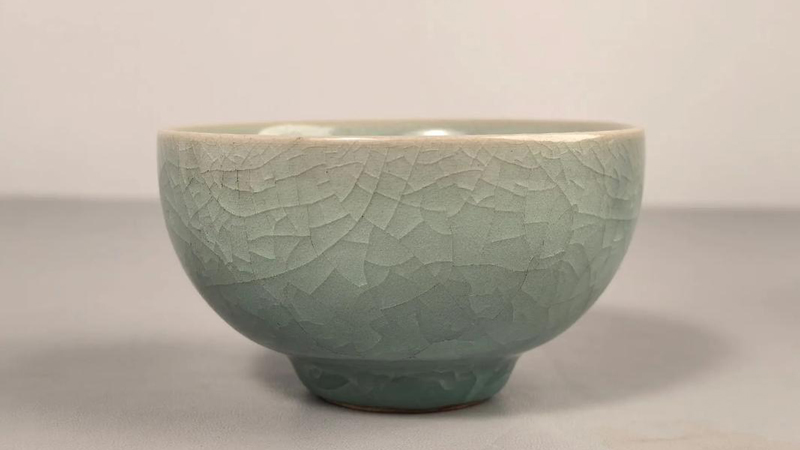
In a quiet corner of a museum, a bowl glows with a soft green light, like a piece of frozen spring. This is Longquan (龙泉) celadon, a treasure from Zhejiang province that has captivated people for over a thousand years. Its beauty is not loud, but deep. While many try to copy its serene elegance, true Longquan celadon holds secrets that modern workshops struggle to unlock. Its value lies in a perfect combination of unique earth, masterful glazing, and firing techniques that border on alchemy. This is the story of what sets this porcelain apart and why its deepest secrets remain guarded by time itself.
The Glaze
The soul of Longquan celadon is its glaze, specifically the legendary Fenqing (粉青) and Meiziqing (梅子青). Fenqing resembles polished jade, a soft, greyish-green that feels both gentle and profound. Meiziqing is more vibrant, echoing the color of a fresh, ripening plum. Achieving these colors was not accidental. It required a precise recipe of local raw materials and a lime-alkali glaze formulated to be viscous at high temperatures, preventing it from running. Modern replicas often use different chemical compositions, resulting in a color that can look superficially similar but lacks the inner glow and subtle, complex hue variations.
This glaze demands a perfect storm inside the kiln. The potters of old had to control the temperature and atmosphere with incredible precision. A reducing atmosphere, where oxygen levels are carefully limited, was essential to transform the iron oxide in the glaze into its greenish form. Too much oxygen, and the green would turn yellow or brown; too little, and the glaze would turn smoky and dark. Recreating this specific reducing environment in a modern, controlled kiln is surprisingly difficult. The result is often a glaze that looks right at first glance but feels flat and lifeless compared to the luminous depth of an original piece.
The Clay Body
Beneath the glorious glaze lies the foundation: the clay body. The clay used in Longquan kilns was special, with notably low levels of iron and titanium. This resulted in a whiter base compared to clays from other famous kilns like Yue (越窑). When fired, this clay became exceptionally fine, dense, and heavy, yet it retained a slight translucency. Finding a modern equivalent for this specific clay composition is nearly impossible. Even with similar raw materials, replicating the exact firing process to achieve the same texture and density has proven to be a significant challenge for imitators.
The relationship between the clay body and the glaze is a marriage perfected over centuries. In genuine pieces, the glaze clings to the body uniformly, with no cracking or peeling. This perfect bond is a testament to the harmonious formula and firing cycle developed by ancient masters. Modern copies frequently fail in this aspect. The glaze might shrink differently from the body during cooling, leading to a network of fine cracks or, in worse cases, causing sections of the glaze to flake off entirely, revealing the failure of this delicate union.
Artistic Decoration
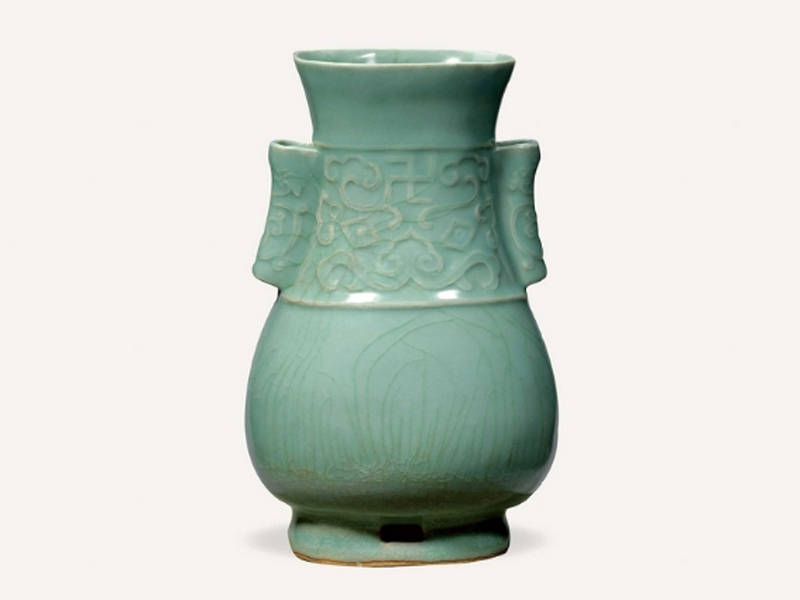
The decoration on classic Longquan ware was never an afterthought; it was carved by hand with fluid, confident strokes. On early Southern Song pieces, one might find slender lotus petals etched with graceful, flowing lines. Later, the same petals became fuller and more robust, with a pronounced central ridge. This handiwork gives each piece a unique, living energy. In contrast, many modern fakes use stamps, stencils, or mechanical engraving. The lines from these methods appear stiff, uniform, and lack the spontaneous vitality and slight imperfections that reveal the human hand.
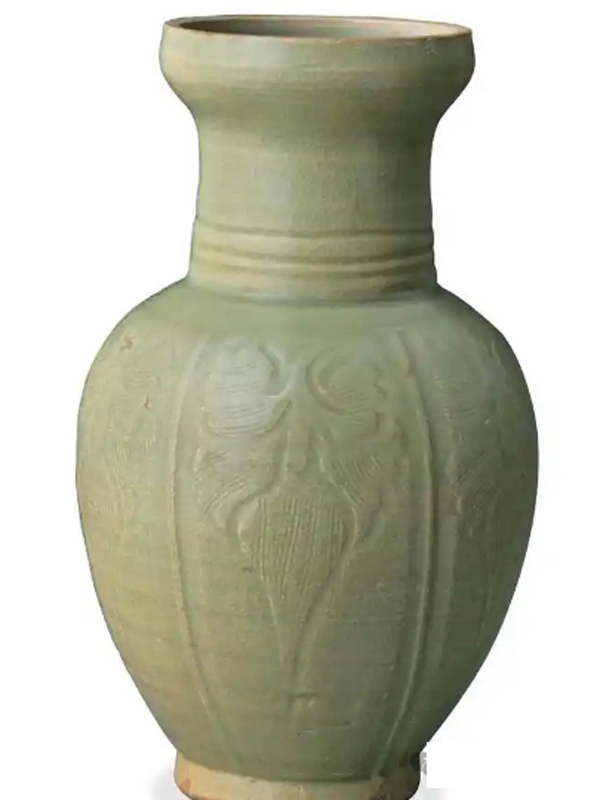
Furthermore, the decoration was always in dialogue with the shape of the object. On a vase, a simple band around the neck might balance an elaborate motif on the belly, creating a sense of harmony and purpose. The artisans saw the object as a whole. Imitations often miss this holistic design philosophy. The decorations can feel randomly applied—either too busy and overwhelming or too sparse and insignificant. They decorate the surface but do not enhance the form, missing the sophisticated aesthetic unity of the originals.
Form and Shape
From daily bowls to ritual vessels, Longquan celadon forms are known for their balanced proportions and elegant, flowing silhouettes. A Southern Song Liding censer, for instance, mimics ancient bronze tripods with its three sturdy legs and clean, sharp ridges known as Chujin (出筋). The shape is both monumental and graceful. Counterfeits often betray themselves through clumsy forms. The lines can be rigid, the proportions awkward, and the overall feeling is one of mechanical reproduction rather than artistic creation. They have the shape but not the spirit.
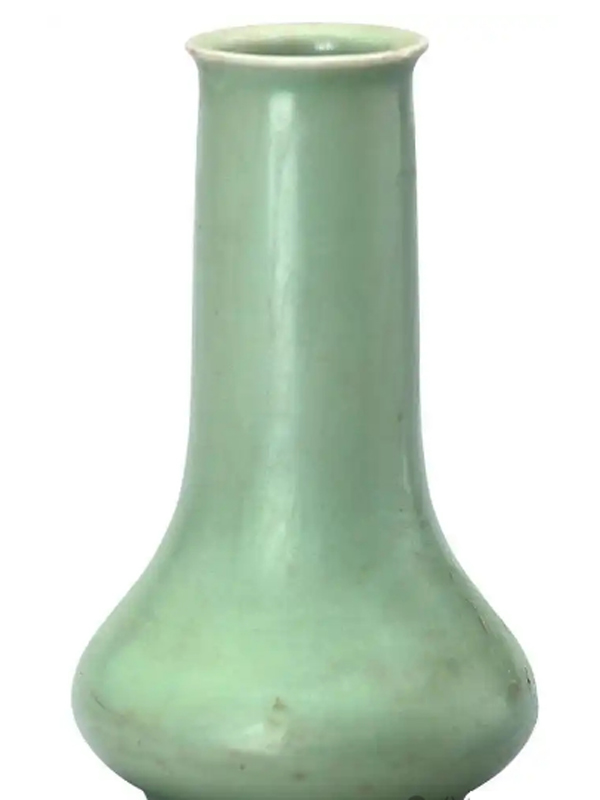
These forms are also a historical record. Northern Song pieces were influenced by neighboring kilns, resulting in a heavier, more robust body. The Southern Song era, however, saw a shift towards thinner, more refined, and classically inspired shapes, reflecting the cultural tastes of the time. A modern forger can copy a shape from a picture, but without a deep understanding of the cultural and historical context that breathed life into that form, the replica remains an empty shell. It lacks the cultural DNA that makes an antique truly authentic.
Firing Techniques
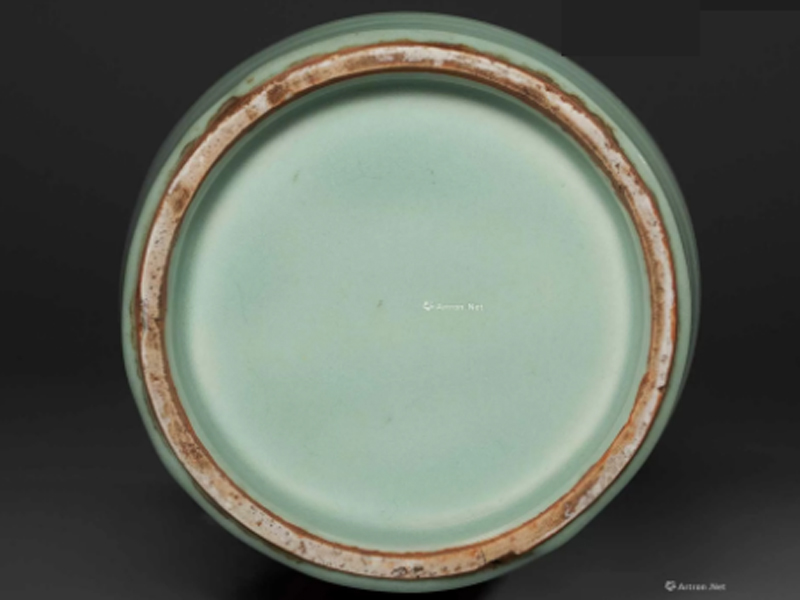
The final, telling clues are often found on the base. The firing method left distinct marks that experts use for identification. In the Southern Song period, pieces were supported on clay pads or rings, leaving irregular, reddish-brown spots on the foot ring, sometimes called an "iron foot" or "cinnabar foot." Yuan dynasty pieces show more prominent ring marks, while Ming pieces display a characteristic orange-red "russet iron" tone on the unglazed foot. These tiny, unglazed areas tell a story of how the piece was fired, and mimicking these accidental, centuries-old marks with perfect accuracy is incredibly difficult.
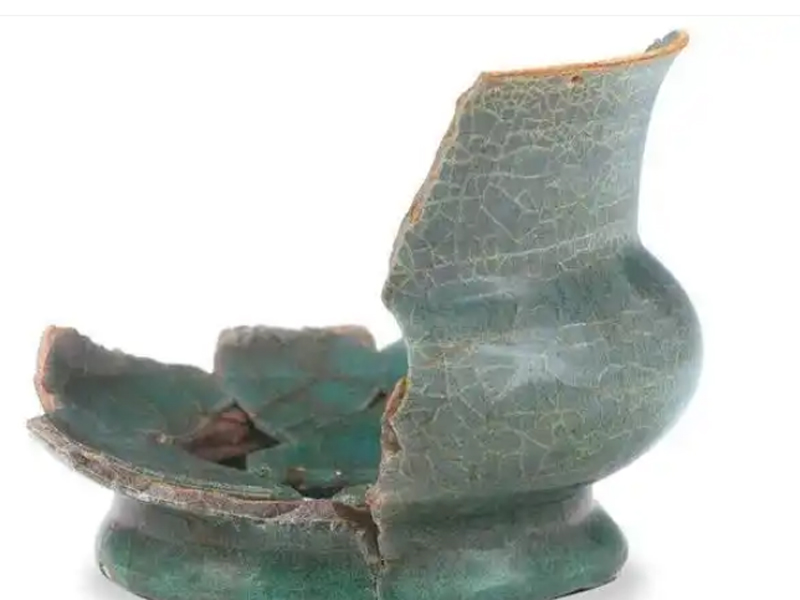
Some exquisite Southern Song pieces with dark-bodied, thick glazes used a technique where the entire piece, including the base, was glazed. They were then supported on tiny spikes for firing, a complex and risky method. This "full-glaze" support firing required exceptional skill to prevent the piece from sticking to the kiln furniture. Modern attempts to replicate this technique often fall short, either leaving overly perfect spike marks or failing to achieve the flawless glaze coverage on the base. It is in these hidden, technical details that the true masters of Longquan still speak the loudest.