Running Script offers a dynamic approach to Chinese calligraphy, blending speed with structured form. It developed as scribes sought quicker methods for documentation and artistic expression. Over time, practitioners refined its flowing lines, creating pieces that feel both spontaneous and deliberate. This style allowed individuals to imprint their personality onto each character, moving beyond rigid norms. Its adaptability made it a medium for cultural exchange, influencing artistic practices in neighboring regions. Today, it stands as a vibrant part of China's artistic legacy, studied for its technical grace and historical role in communication.

1. Script Origins
The development of Running Script began during the Han Dynasty (汉代), a period marked by administrative expansion and cultural exchange. As documentation needs grew, scribes sought a middle path between the strictness of official scripts and the speed of cursive forms. This practical demand fostered a writing style that balanced clarity with efficiency, allowing ideas to flow onto silk and paper with renewed grace.
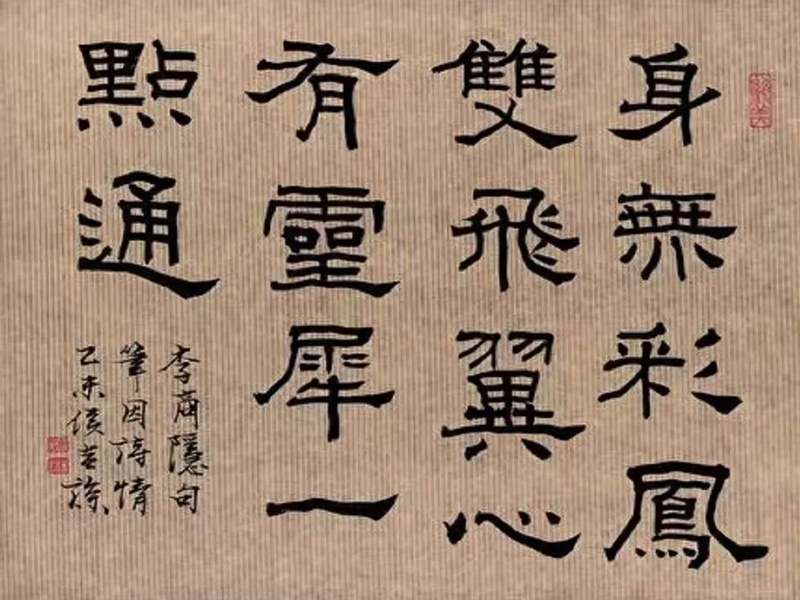
Calligraphy theorist Zhang Huaihuan (张怀瓘) later defined this style in his work Shu Duan (书断). He noted its creation by Liu Desheng (刘德昇), emphasizing its role as a moderated version of standard script. Running Script avoids the rigid structure of regular script while sidestepping the abstraction of full cursive. Its characters connect with subtle links, creating a visual tempo that feels both deliberate and spontaneous.
This script quickly gained favor for its adaptability. Scholars and officials adopted it for drafts and personal correspondence, appreciating how it captured thought in motion. The brush dances across the surface, leaving trails that are legible yet expressive. It became a testament to the writer's skill and emotional state, turning each document into a potential work of art.

2. Artistic Progression
Over centuries, Running Script evolved through the hands of master calligraphers. Each dynasty added layers to its identity, refining its forms and applications. The Tang Dynasty saw it mature into a respected discipline, with artists exploring its potential for both function and aesthetic display. It was during this era that its principles were systematically recorded and taught.
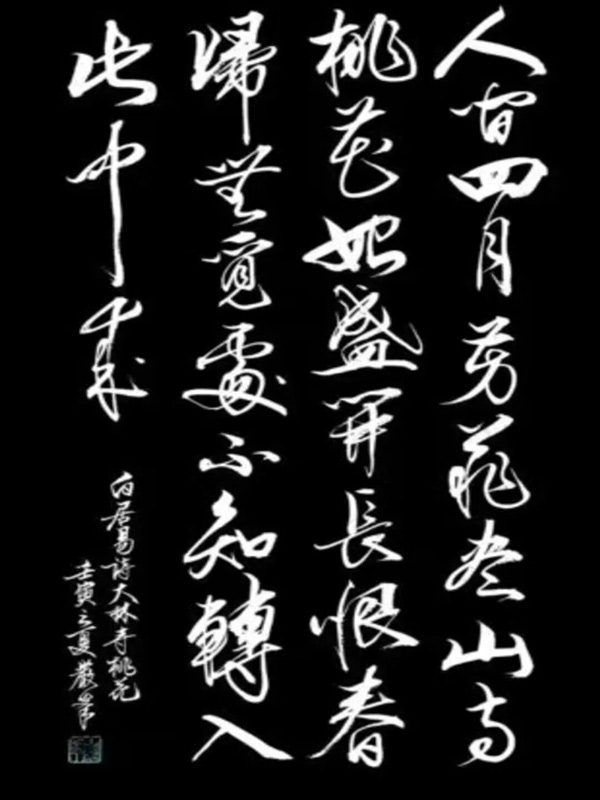
Later periods witnessed further stylistic shifts. Some practitioners emphasized fluidity, allowing characters to lean and sweep with dramatic flair. Others preferred restraint, focusing on clean lines and balanced composition. These variations demonstrate the script's capacity to reflect individual temperament while maintaining its core identity as a bridge between order and freedom.
Today, Running Script remains a vital part of calligraphy practice. Its influence extends beyond traditional scrolls to modern design and digital media. The script's inherent flexibility allows it to adapt to new contexts, proving that a form born from practical needs can endure as a symbol of cultural continuity and artistic innovation.

3. Xing Shu: A Living Script
Xing Shu, often described as running script, occupies a unique space in Chinese calligraphy. It flows with a rhythm that sits between the precise, static form of regular script and the wild, abstract nature of cursive. This style is not merely about writing; it is about capturing motion and emotion in ink. Its development mirrors the intellectual and cultural shifts across Chinese history, reflecting how artists used the brush to express personal spirit within a structured tradition. The story of Xing Shu is a narrative of individual voices emerging through disciplined practice, a dance of ink that has evolved over centuries.
3.1 Wei-Jin: The Script Finds Its Voice
During the Wei-Jin period (魏晋时期), a new cultural freedom took root. Intellectuals, influenced by Daoist and Xuanxue (玄学) philosophies, valued personal expression and a connection to nature. This environment allowed Xing Shu to mature from a practical writing style into a recognized art form. The brushwork became less constrained, embracing a fluidity that mirrored the era's pursuit of spiritual liberation. Calligraphers began to see the page not just as a surface for text, but as a field for dynamic composition.
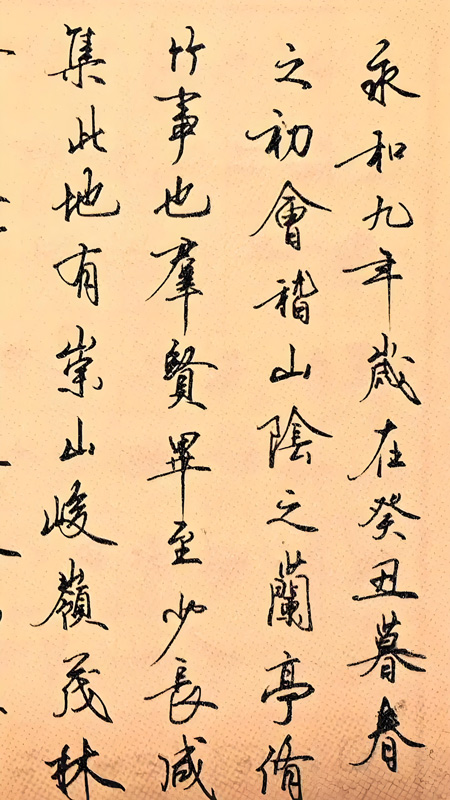
The master Wang Xizhi (王羲之) defined this period. His work, particularly the Orchid Pavilion Preface (兰亭集序), is considered a pinnacle of the art. The characters in this piece are not uniform; they lean, stretch, and contract in a natural, seemingly spontaneous manner. Thin, delicate lines might twist into firm, confident strokes, all connected by an invisible energy. This piece does more than record an event; it conveys a feeling of a spring day, of scholarly camaraderie, and a subtle melancholy towards life's transience.
Wang Xizhi's son, Wang Xianzhi (王献之), pushed the boundaries further. His style introduced a more continuous and daring approach. In works like the Duck Head Pill Note (鸭头丸帖), the connections between characters are more pronounced, creating a sweeping, energetic momentum. His brush rarely left the paper, resulting in a composition that feels like a single, breathless gesture. This innovation expanded the emotional range of Xing Shu, proving it could convey both refined elegance and powerful intensity.
3.2 Tang: Structure and Passion
The Tang Dynasty (唐代) was an era of imperial strength and cultural consolidation. The court, especially under Emperor Taizong, actively promoted calligraphy, establishing standards and venerating masters like Wang Xizhi. This official endorsement helped systematize Xing Shu and spread its practice more widely. The Tang approach often blended the freedom of running script with the disciplined structure of Kaishu (楷书), creating a balanced yet expressive style.
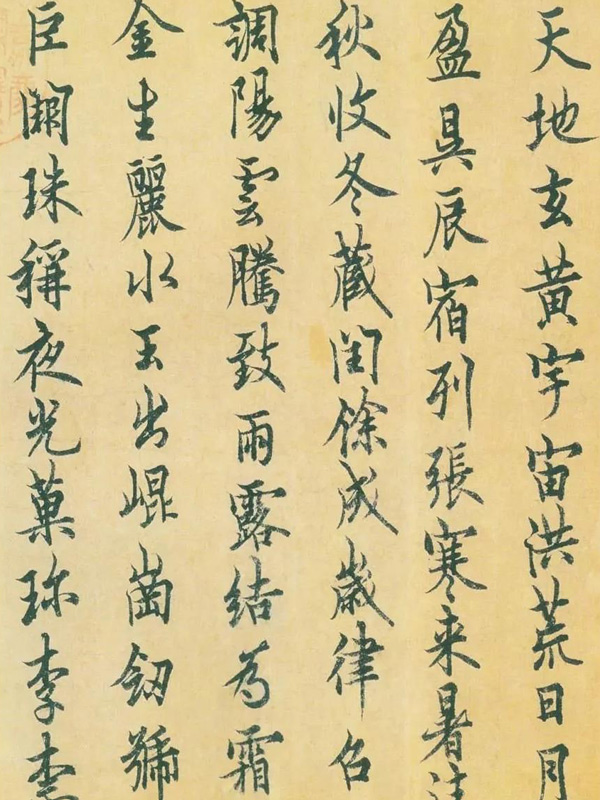
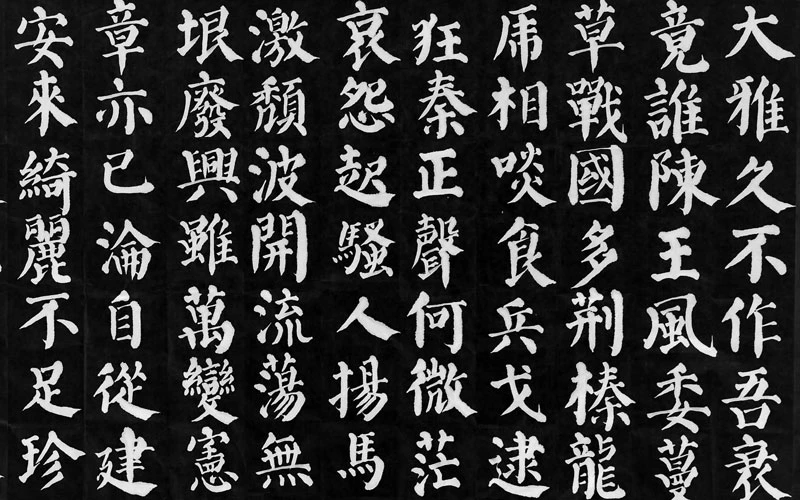
Ouyang Xun (欧阳询) exemplified this fusion. His Xing Shu, as seen in the Zhang Han Tie (张翰帖), is known for its precision and strength. The characters stand with a architectural solidity, each stroke placed with calculated intention. Sharp angles and clean transitions give his work a sense of order and control, demonstrating how Xing Shu could be both fluid and rigorously composed. His influence provided a counterweight to more unrestrained forms.
In contrast, Yan Zhenqing (颜真卿) infused the script with raw, personal emotion. His Manuscript for the Necrology of My Nephew (祭侄文稿) is a visceral response to personal tragedy. The brushwork is turbulent; ink splatters, characters blur, and the line weight shifts dramatically from thick, dark pools to dry, scratchy streaks. This was not a carefully planned piece, but an immediate outpouring of grief and anger. It stands as a powerful testament to how Xing Shu could become a direct channel for a calligrapher's deepest feelings.
3.3 Song: The Idea Takes Precedence
The Song Dynasty (宋代) witnessed a shift in artistic priorities. With a thriving scholar-official class, the focus moved from technical perfection to the expression of personal intent and cultivated individuality. The concept of "Shangyi" (尚意), or "prizing idea," became central. Calligraphers sought to let their inner character and momentary inspiration guide their brush, valuing spontaneity and unique flavor over flawless imitation.
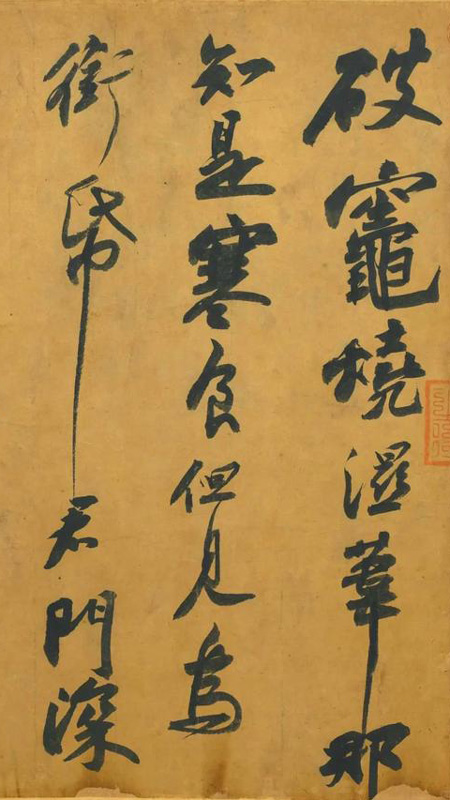
Su Shi (苏轼), a monumental literary figure, was a leading proponent of this philosophy. His Cold Food Observance Poem (黄州寒食帖) was written during a period of political exile. The characters are plump and irregular, sprawling across the paper with a deliberate clumsiness. The composition is uneven, with large and small characters jostling for space, reflecting a mind unconcerned with conventional beauty. The work feels deeply personal, a record of his resilient spirit and unpretentious nature.
Huang Tingjian (黄庭坚) developed a highly distinctive style that complemented this trend. His brushstrokes are long and extended, like "long spears and large halberds." In the Poem on the Hall of Pine Winds (松风阁诗帖), strokes radiate outward, creating a bold, expansive visual rhythm. He manipulated space within and between characters to achieve a striking, sometimes unsettling, balance. His work represents a conscious effort to innovate formally, using the script's structure to create a powerful and immediate visual impact.
3.4 Yuan to Qing: Weaving the Threads
The later dynasties of Yuan, Ming, and Qing were periods of reflection and synthesis. Artists looked back to the great masters of the Jin and Tang, seeking to recapture their spirit while also integrating new influences. This was not mere replication, but a thoughtful process of blending different historical styles to forge something both familiar and new.
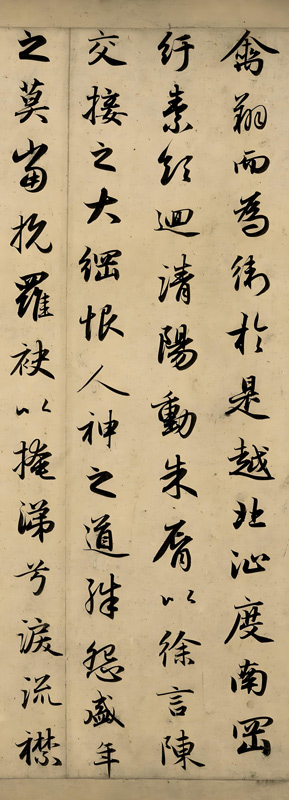
Zhao Mengfu (赵孟頫) of the Yuan dynasty championed a return to ancient models. His Xing Shu, as in the Ode to the Goddess of the Luo (洛神赋), is characterized by a sweet, rounded elegance and harmonious structure. The lines are smooth and controlled, evoking the refined grace of Jin masters like Wang Xizhi, but with a distinct, personal softness. His work served as a crucial link, preserving classical ideals for future generations.
In the Ming dynasty, scholars like Wen Zhengming (文徵明) perfected a clean, meticulous style. His script is orderly and refined, with each stroke executed with careful clarity. Another Ming master, Dong Qichang (董其昌), pursued an ethereal quality. He used a lighter touch and paler ink, creating compositions that feel spacious and tranquil, as if the characters are floating. His theoretical writings further cemented the intellectual underpinnings of calligraphic practice.
The Qing dynasty introduced a significant new element with the rise of Epigraphy. Scholars began studying ancient bronze and stone inscriptions, leading calligraphers to incorporate the rugged, weathered qualities of Beixue (碑学) into their work. Artists like He Shaoji (何绍基) and Zhao Zhiqian (赵之谦) created a hybrid style. Their Xing Shu retained its fluid movement but gained a textured, muscular strength, blending the script's inherent grace with the primal power of ancient carvings.

4. Research on Works of Running Script
Chinese calligraphy stands as a unique form of artistic expression, where the movement of the brush captures not only words but the very spirit of the writer. This art form bridges personal emotion and technical skill, creating works that resonate across centuries. The creations of certain masters exemplify this fusion, offering windows into their inner worlds and historical moments. Their manuscripts reveal how individual experience shapes aesthetic principles, moving beyond mere writing to become profound statements of human feeling.
4.1 Orchid Pavilion Preface
In the 4th century, Wang Xizhi brought together a group of scholars at a gathering that would become legendary. During this event, he produced Orchid Pavilion Preface, a piece that defines elegance in Chinese script. Its creation during a spring festival reflects a moment of cultural refinement and intellectual exchange among friends. The setting influenced the work's light and graceful character, marking it as a high point of artistic achievement.
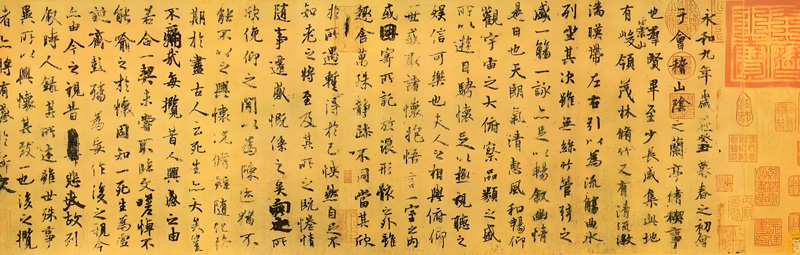
Technically, the piece demonstrates a mastery of brushwork with both centered and tilted strokes. Each character shows variation in thickness and direction, contributing to a dynamic visual flow. The structure avoids rigidity, allowing characters to interact naturally across the composition. This careful arrangement gives the impression of spontaneous creation, yet every element is thoughtfully placed to maintain harmony.
The legacy of this manuscript lies in its balanced approach to form and freedom. It has served as a model for generations, illustrating how control and fluidity can coexist. Viewers often note its ability to convey a sense of joy and serenity, encapsulating the ideal of artistic effortlessness. Wang Xizhi's work continues to inspire those who study the possibilities of ink and paper.
4.2 Manuscript for the Necrology of My Nephew
Yan Zhenqing (颜真卿) lived through the turmoil of the An Lushan Rebellion (安史之乱), a period of intense conflict in the Tang Dynasty. His Manuscript for the Necrology of My Nephew (祭侄文稿) was written in memory of a relative who died in the uprising. The text is a raw expression of grief and anger, composed under the weight of personal loss. This context infuses the work with a powerful emotional charge that distinguishes it from more composed pieces.
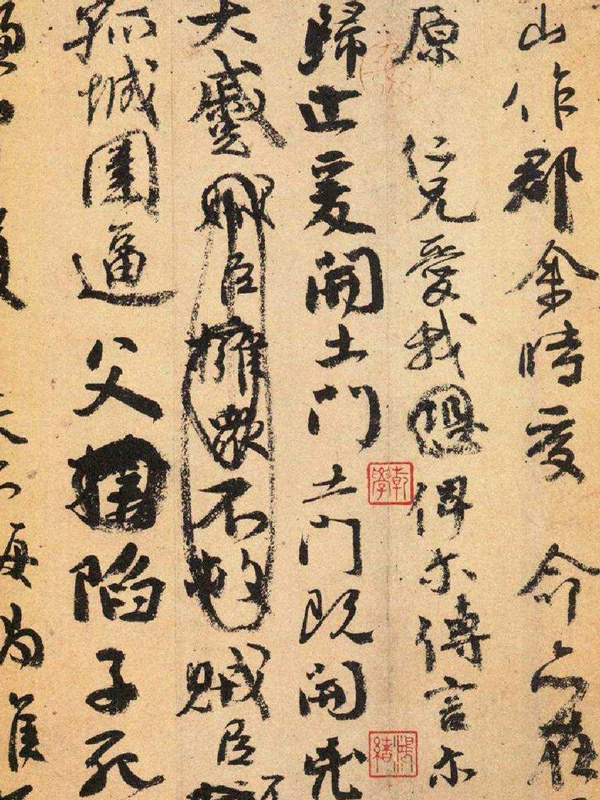
From a technical view, the brushwork shifts dramatically from restrained to vehement. Initial characters are orderly, but as emotion builds, the strokes become thick, rapid, and interconnected. Areas of ink splatter and corrections appear, documenting the writer's distress without apology. These features do not weaken the piece; instead, they amplify its authenticity and dramatic intensity.
This manuscript is celebrated for its honest portrayal of sorrow. The irregular sizing and placement of words mirror the unpredictability of human feeling. It shows how calligraphy can serve as a direct record of psychological states, challenging conventions of beauty. Yan Zhenqing's work remains a touchstone for understanding the link between personal trauma and artistic innovation.
4.3 Cold Food Observance
Su Shi, a prominent figure of the Song Dynasty (宋朝), faced political exile that deeply affected his outlook. While in Huangzhou (黄州), he wrote Cold Food Observance (黄州寒食帖), a poetic reflection on his isolation during a traditional festival. The work merges his literary and calligraphic talents, expressing melancholy and resilience. Its creation during a low point in his life adds layers of meaning to each character.
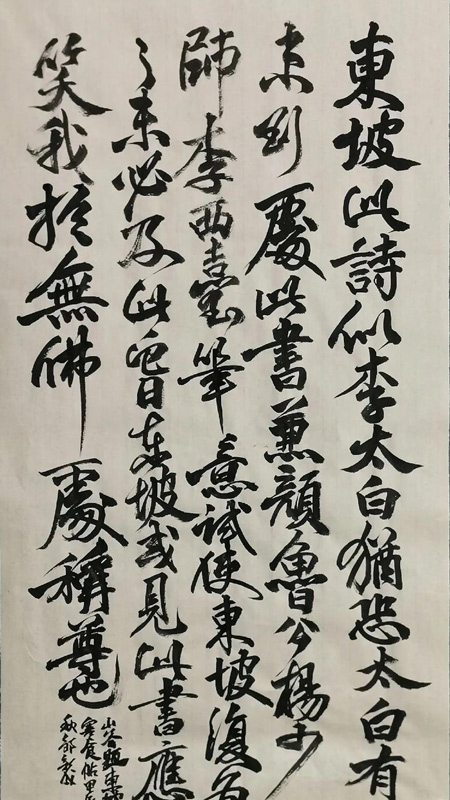
In terms of technique, Su Shi employed a style that favors pressure and slant, producing a distinctive "pressed" effect. Characters vary greatly in size, with some dominating the space while others recede, creating visual rhythm. This approach rejects strict uniformity, prioritizing emotional expression over formal perfection. It aligns with the Song preference for conveying inner intention through art.
The arrangement of the text feels organic, with gaps and clusters that guide the eye unevenly. This layout enhances the sense of personal narrative and fleeting thought. Su Shi's work exemplifies how adversity can fuel creativity, resulting in pieces that are both intimate and universally relatable. His influence persists in discussions about individuality in artistic practice.

5. The Flowing Beauty of Running Script
In the realm of Chinese calligraphy, Running Script, or Running Script, stands out for its unique blend of speed and grace. This style bridges the gap between formal scripts and cursive writing, offering a visual rhythm that feels both spontaneous and deliberate. It captures the energy of the brush in motion, making it a favorite among artists and enthusiasts alike. Unlike more rigid forms, Running Script allows for personal expression while maintaining readability, which has helped it endure through centuries. Its appeal lies in how it mirrors the flow of thought and emotion, turning written characters into dynamic art.
5.1 Dynamic Expressions
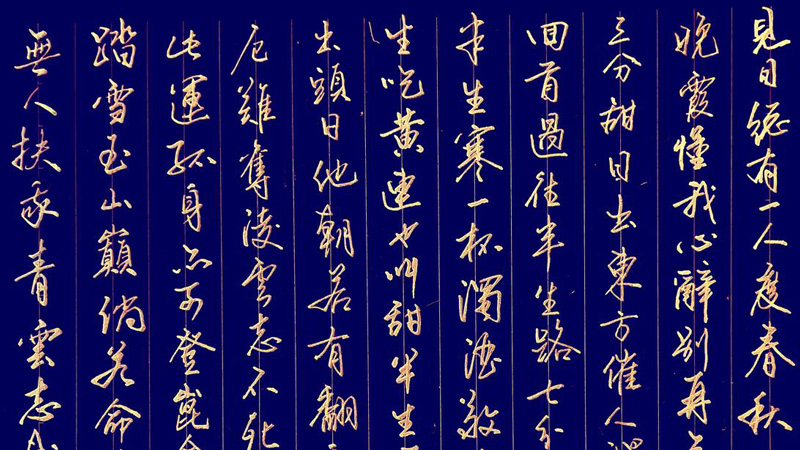
One of the key traits of Running Script is its fluid connectivity. Strokes often link through subtle extensions, like Qiansi (牵丝), where lines taper into fine threads that join characters seamlessly. This technique gives the script a lively, uninterrupted quality, as if the brush never leaves the paper. Each movement builds on the last, creating a sense of rhythm that can quicken or slow with the calligrapher's intent. This flow makes the writing appear natural and effortless, drawing viewers into its graceful pace.
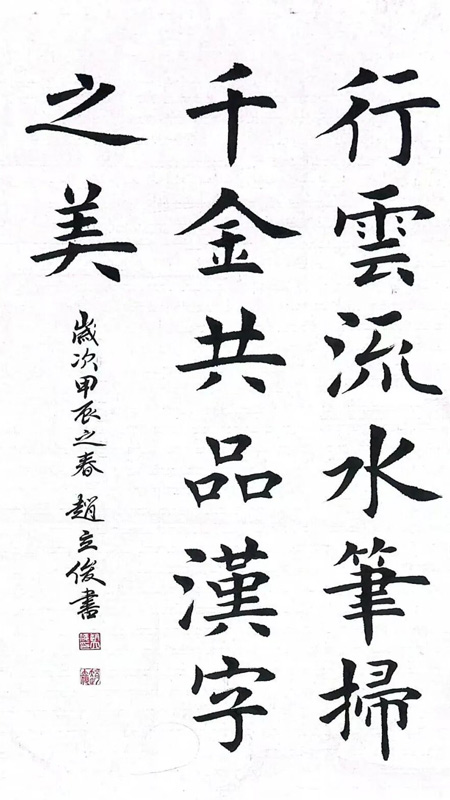
Variation is another hallmark of this script. Artists can adjust the thickness, angle, and spacing of strokes to suit their mood or message. Some sections might be densely packed, while others spread out freely, allowing for a play of light and shadow. This flexibility means no two works are exactly alike; each piece reflects the creator's unique hand. It is this capacity for change that keeps Running Script fresh and engaging, inviting endless reinterpretation.
Running Script manages to appeal to a broad audience. Its clarity makes it accessible to everyday readers, yet its depth offers experts room for analysis. People can enjoy the smooth, sweeping lines without needing specialized knowledge, while scholars might study the nuances of its execution. This dual nature has made it a common choice for everything from personal letters to public monuments, bridging divides between different groups.
5.2 Cultural Echoes
As a carrier of tradition, Running Script has preserved historical narratives and artistic values. Through works, it has recorded eras and ideologies, serving as a window into past societies. Calligraphers have used it to convey philosophical ideas or personal reflections, embedding cultural truths into each line. This role ensures that older wisdom remains alive, passed down through generations in a form that is both beautiful and meaningful.
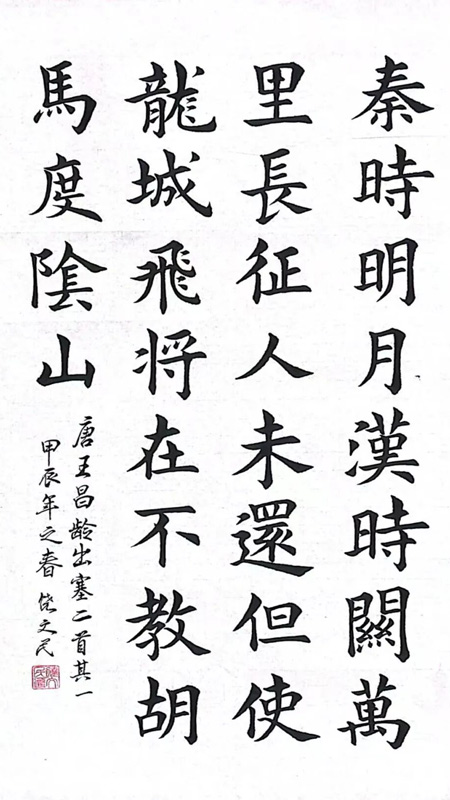
The influence of Running Script extends beyond China's borders, shaping artistic practices in places like Japan and Korea. In Japan, it evolved into Gyosho, where local artists adapted its principles to their own contexts. This exchange enriched regional art forms, fostering dialogue and mutual appreciation. Such cross-cultural journeys highlight how artistic ideas can travel, adapting and growing in new environments.
In daily life, the aesthetics of Running Script have left a mark on various domains. Its emphasis on balance and movement can be seen in garden designs, where pathways curve like brushstrokes, or in paintings that emulate its loose structures. This script has taught people to value elegance in simplicity, influencing how beauty is perceived and created. Its legacy shows how a single art form can ripple outward, touching many aspects of culture.
Final Words
Running Script began in ancient China as a fluid writing method. It grew through dynastic shifts, merging speed with structure. Each character dances on paper, revealing a balance of control and spontaneity.
This script carries deep cultural echoes, not just as art but as a living practice. Its lines connect generations, adapting to modern tools while keeping its soul intact. Today, Running Script inspires new forms of expression, from digital designs to personal mindfulness, showing how tradition can evolve without losing its core.