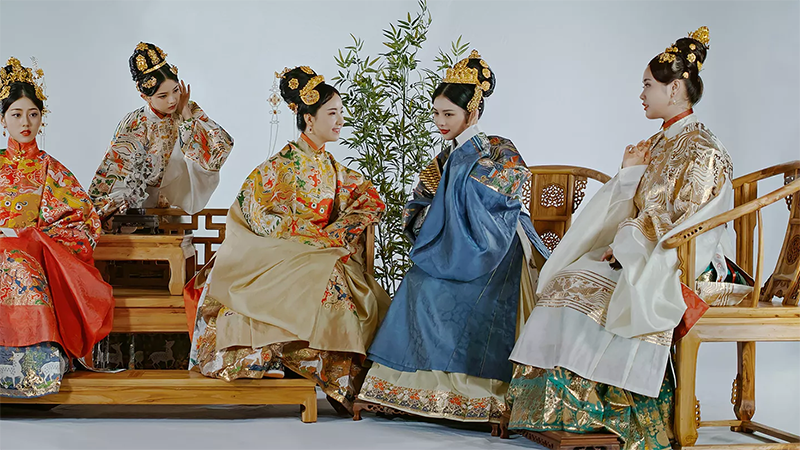
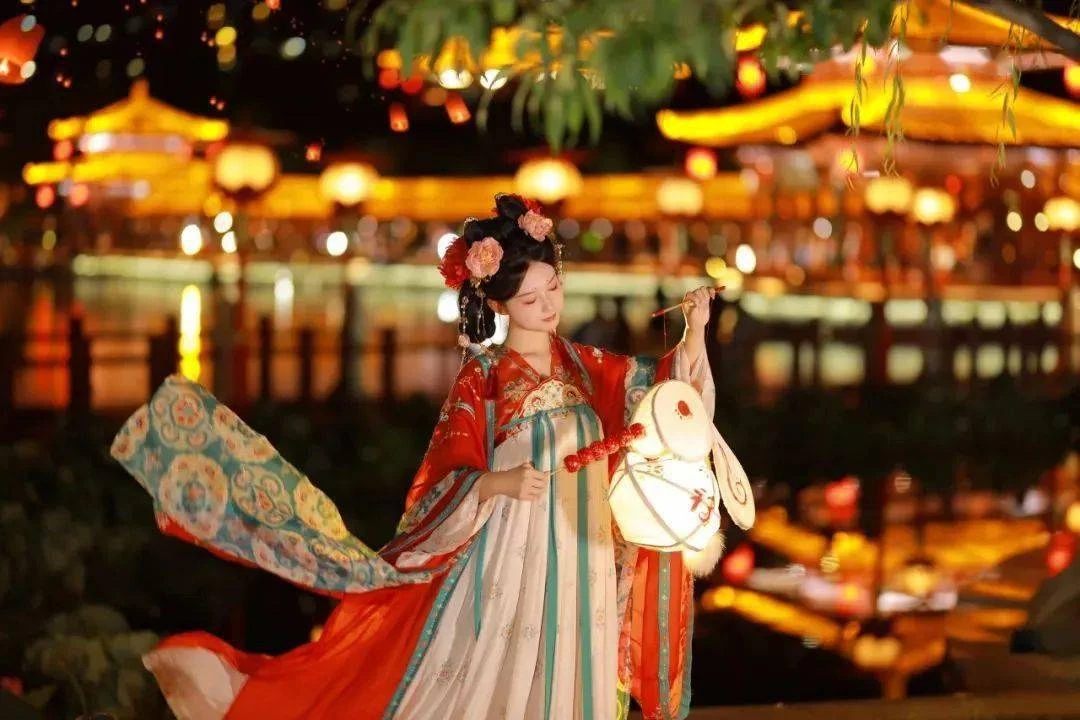
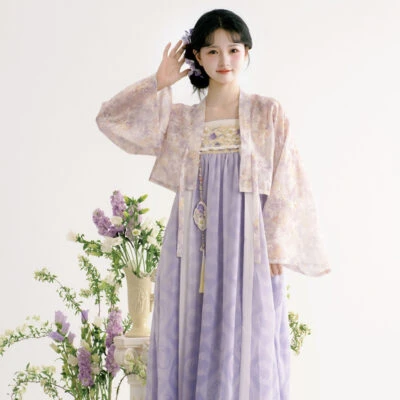
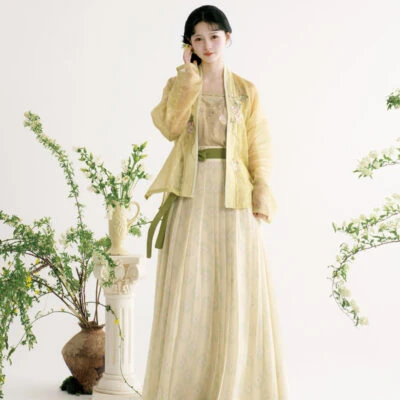
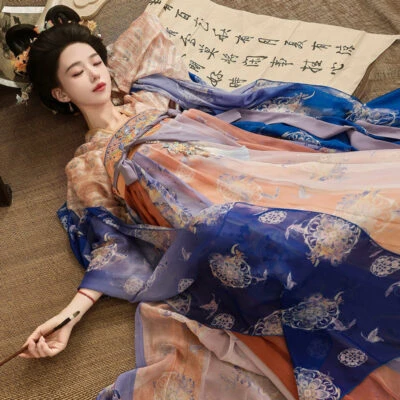
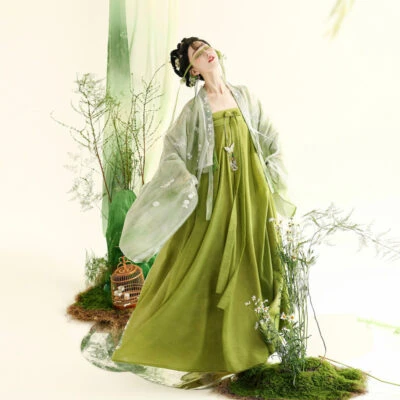
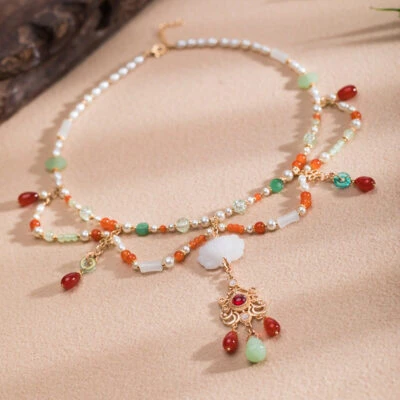
Hanshang Hualian, an eighteen-year-old Hanfu label founded in Guangzhou in 2008, announced on October 6 that it is suspending its store. Founder Xiao Ru (小若) released a farewell video on her personal account the same day, and the brand’s official account posted a suspension notice pointing to a price war in the industry. The decision closes the online shop first and leaves the brand’s three Beijing stores trading as normal.
Suspension, and the Clearance That Followed
“Farewell, everyone. Hanshang Hualian is leaving,” Xiao Ru said in the video. “If spring comes again, I hope we meet.” The written notice was more specific about why. “These two years the industry has become more and more competitive, and price competition has made it unusually hard to hold on to a brand,” it read. “If we simply follow the current, it becomes very hard to keep research and design, careful pattern-making and staff welfare where they should be.” The company said it would rest and reconsider. Clearance began at 8 p.m. on October 8 across the Taobao store, while stocks last. Because the discounts are steep, the notice said, orders carry no shipping insurance and non-quality returns are not accepted, though after-sales service for items already sold is unaffected and is expected to run to the end of November.
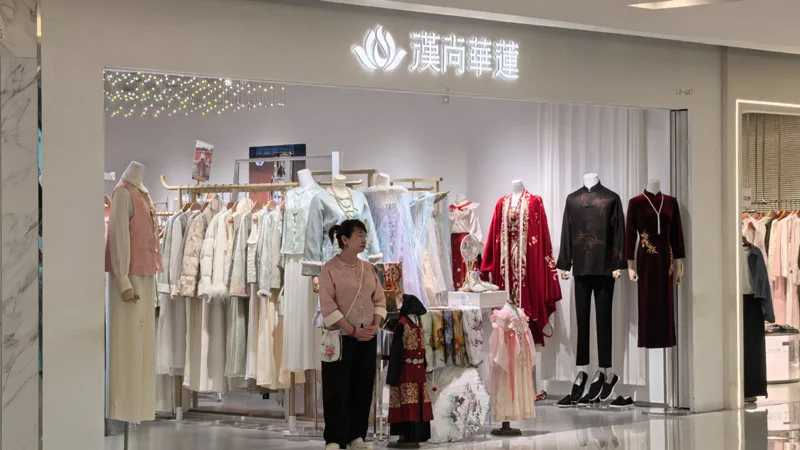
Reaction from wearers was not uniformly sad. “I was a little surprised,” said Zhu, an enthusiast who asked to be identified only by her surname. “Hanshang Hualian is one of the older names in Hanfu. I assumed an old brand would have an edge.” Offline, the picture is different from the online shop. The brand operates three stores in Beijing, and reporters visiting the apm branch on the afternoon of October 9, which was the brand’s first in the city, found it open and carrying no clearance material. Staff said the store is directly operated and run separately from e-commerce. The apm branch has moved from a larger space on the third floor, which it took in May 2024, to a smaller unit on the fourth. Hanfu now occupies a single rack of mostly classic designs, and the rest of the shop is given over to new Chinese style clothing. Staff at the brand’s Hanguang store gave the same account of a separate operation and separate stock.
Why Buyers Did Not All Say Goodbye
Comments under the notice clustered around two complaints. The first was design. “I had not looked at your shop in ages, and opening the homepage felt like going back to 2018,” one buyer wrote. Earlier pieces such as Longmu (Dragon Mother) and Jiaoren Lei (Mermaid’s Tears) once sold well, but recent releases were seen as falling behind. Longmu, a modified Tang-style chest-high Ruqun (齐胸襦裙) known for heavy dragon embroidery, cost around 1,000 yuan when it first appeared; with Hanfu still a small niche then, its cut and decoration were genuinely new, and it remains a house classic even though it no longer stands out in today’s market.
Price was the second complaint. Some buyers argued the label charged a premium for ordinary fabric and finish. On the Taobao store, the most expensive item listed, a 15th-anniversary red wedding set, carried a clearance price of 1,299 yuan against a list price of 2,888 yuan. In the apm store, staff quoted about 1,500 yuan for a white new Chinese top with a pink skirt, and about 1,700 yuan for a red Hanfu set with finer work. One buyer recalled being offered a new Chinese top with a Mamianqun for about 1,000 yuan when the store first traded in 2024, buying only the top for more than 400 yuan, and finding it too short to pair with anything: “It has never been out of the box.” The clearance itself drew scrutiny too. Several buyers noted that the advertised “from 20 percent” applied to few items, that prices were restored to list a day or two before the clearance began, and that the final prices landed close to earlier promotions, in some cases higher. “I checked my April purchase history,” one wrote. “It is not far off your clearance price.”
Older Brands Feel the Shakeout
Warning signs had appeared a year earlier. In October 2025, nearly ten established Taobao Hanfu shops including Ziyi Mingtang and Mingjing Huafu announced closures, several of them more than a decade old. In November that year Xiao Ru posted a video about the wave, saying she had “mixed feelings” watching old shops go and acknowledging that Hanshang Hualian had kept its classic designs but that sales were not encouraging.
The wider market is not shrinking, however. iiMedia Research puts China’s Hanfu market at 19.11 billion yuan in 2025 and 24.18 billion by 2027, with 34.56 percent of consumers wearing Hanfu in daily settings. Caoxian county in Shandong, the largest production base, recorded 4.775 billion yuan in online Hanfu sales in the first half of 2026, up 9.2 percent year on year and more than half the national total. Buyers comparing identical fabric and construction found a Mamianqun selling for 400 to 500 yuan from brands outside the county and just over 100 yuan for the Caoxian version. New entrants keep arriving: as of May this year, business registry data counted 7,449 Hanfu-related companies in China, more than 60 percent of them founded within the past three years, with the largest group, 42.53 percent, aged one to three years. Hanshang Hualian built its reputation on design, and industry observers say that in a market now reshuffling this quickly, older names that stand still are the ones most exposed.