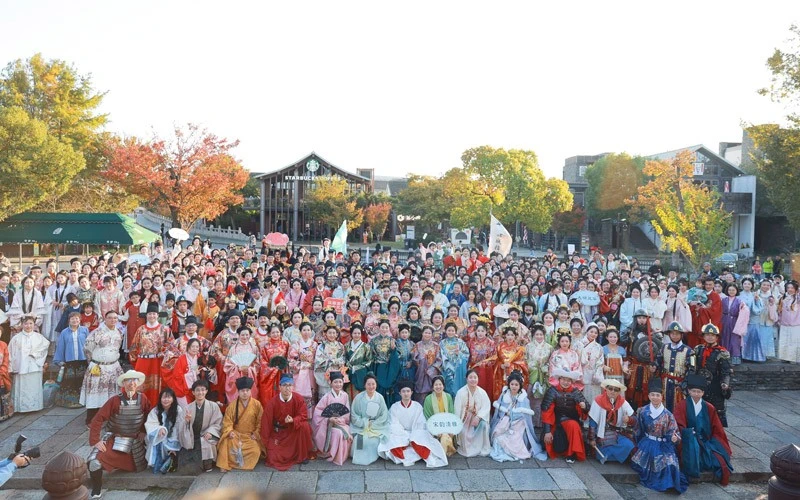
On November 22 the queue at Guangfulin moved in blocks, and the blocks were chronological. Tang went first, then Song, then Ming, with an armour column and the university societies behind. The occasion was the Shanghai leg of the 2026 Global Hanfu Link-up, held at the Guangfulin Cultural Relics Site in Songjiang, and it coincided with the Hanfu walking day that wearers across the country have set aside for themselves. No tickets were sold for it. No programme was printed.
Six civic and campus groups turned out, among them Shuipei Fengshang, a Shanghai wearers’ group, and the Hanfu associations of Fudan University, Tongji University and Shanghai University. Participants brought their own clothes and walked the park’s main circuit past ordinary weekend visitors.
Where the Queue Passes the Sunken Museum
Half the work is done by the site itself. A museum sits below the surface of the lake, Fuling Pagoda stands on the bank, and white-walled grey-tiled courtyards run along the water. Columns of people passed between them, the wide sleeves of the Tang block, the narrow line of the Song, the flat skirt panels of the Ming, all moving against grey and white walls that were already there when the clothes were not.
Ms Dong, one of the wearers, said walking here was less a photo stop than a conversation with the history of the ground underfoot. She added that the group preferred Hanfu to enter ordinary life rather than stay a polished stage performance, which is where a walking day differs from a ticketed festival: no seating, no running order, no audience except whoever happened to be in the park that Sunday.
Telling Tang from Song from Ming at a Glance
Splitting the queue by dynasty has become standard practice at Chinese dress events, and the reason organisers give is practical on both sides. For participants, a column of one period means the photographs work. For onlookers, it hands over a reading method without a caption.
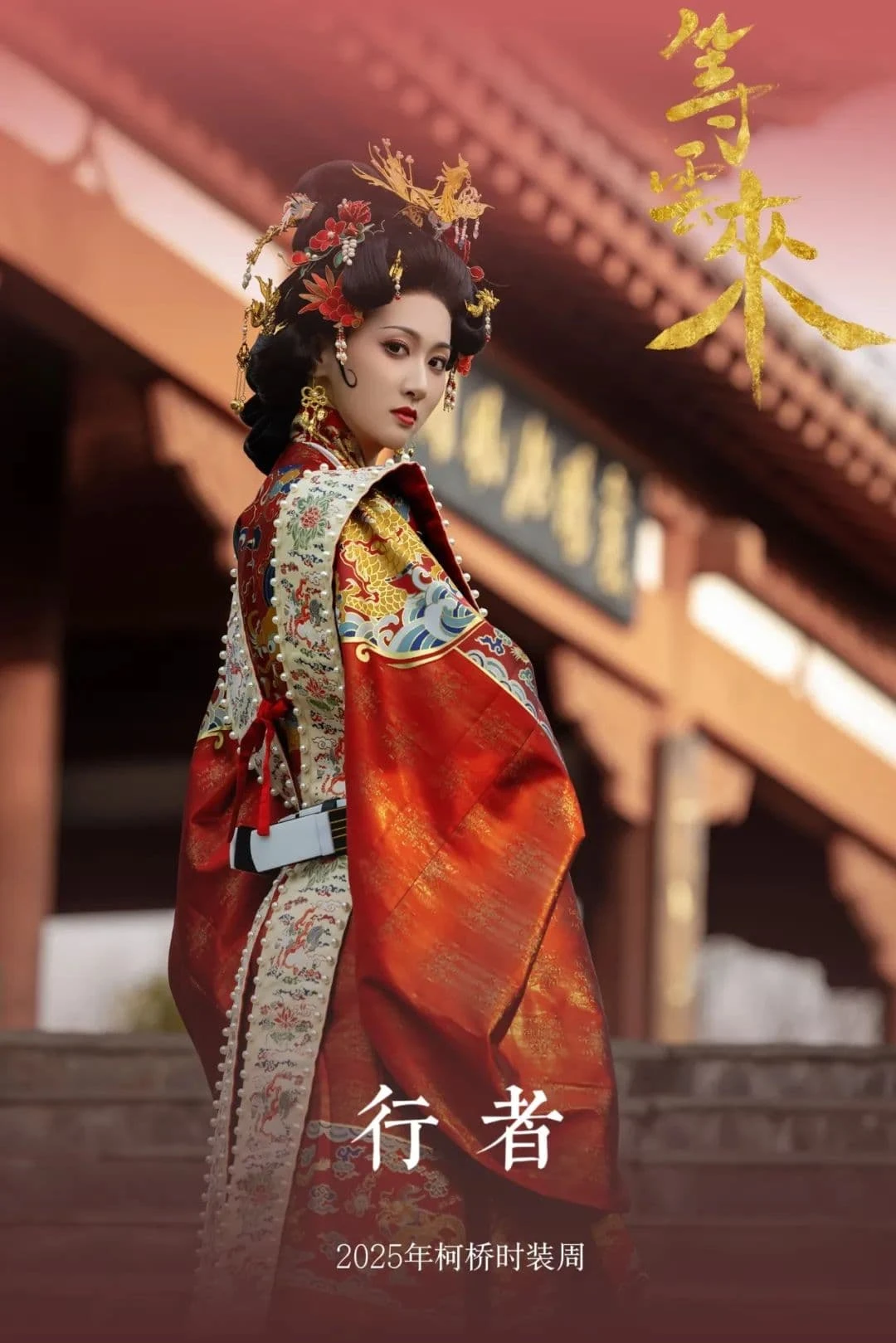
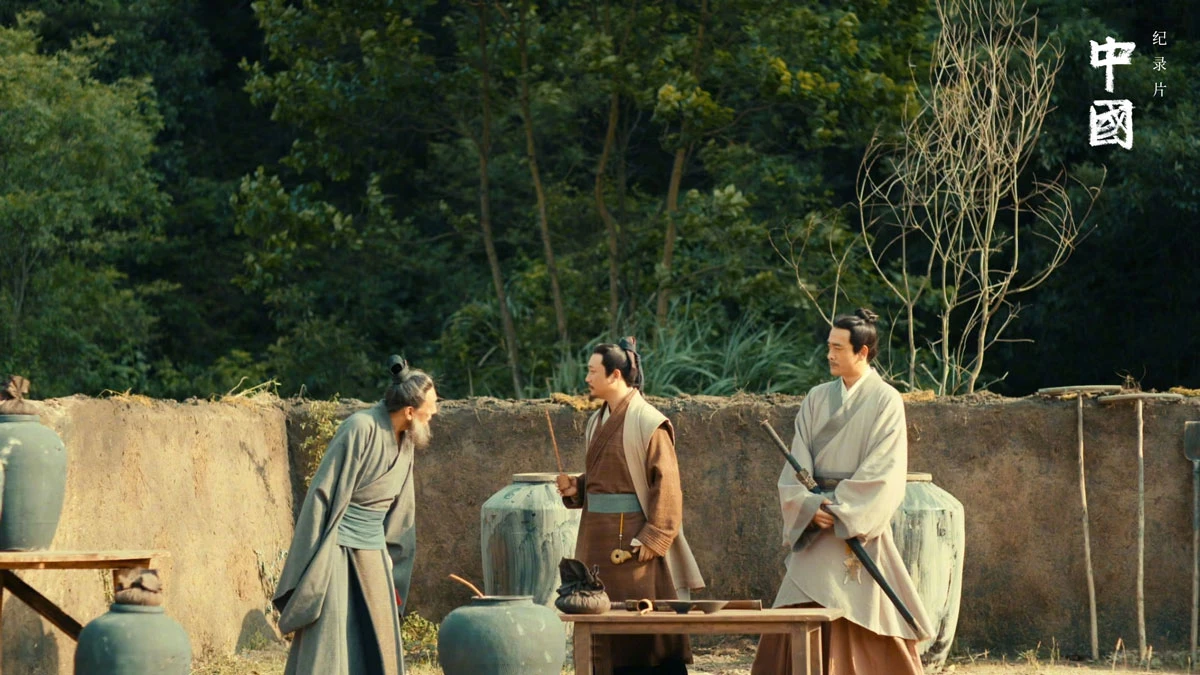
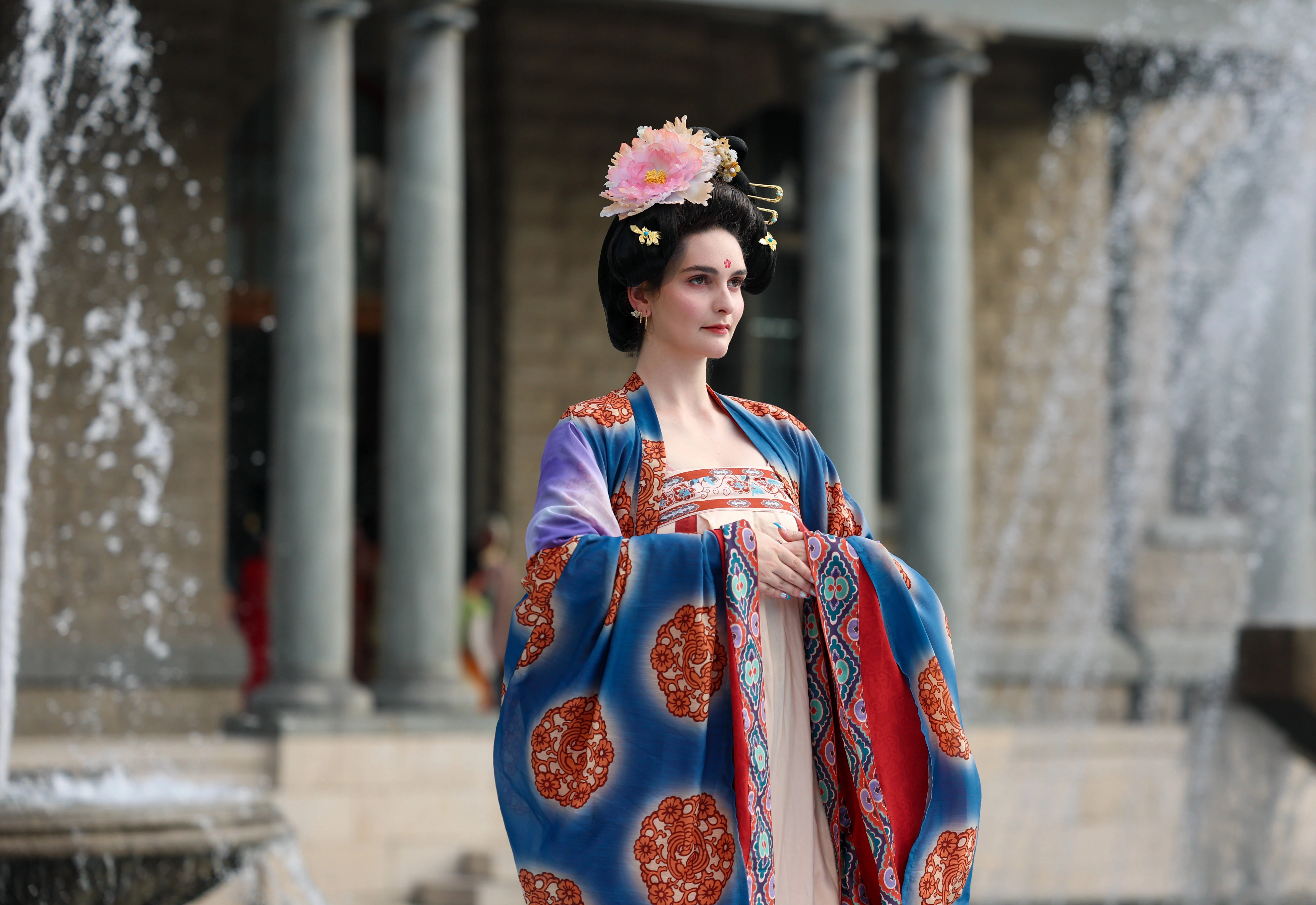
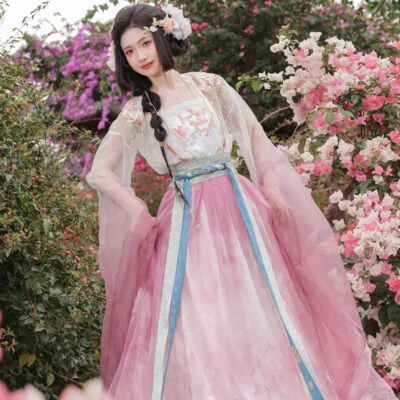
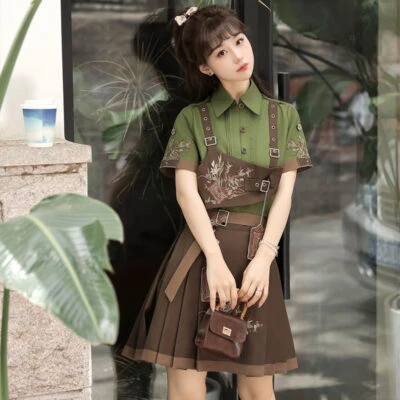
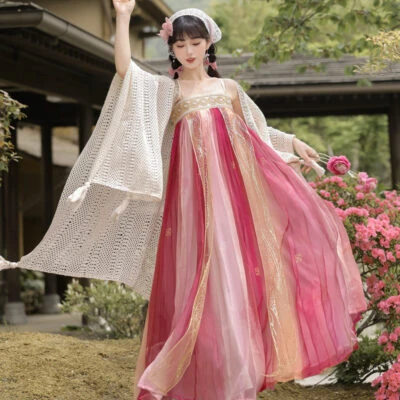
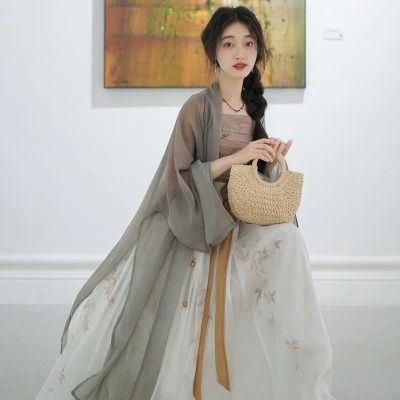
Three types of Hanfu in the queue differ mainly in outline. Tang dress in the women’s block is usually the Qixiong Ruqun, with the waistband tied above the bust and a Pibo draped over the arms, which lifts the centre of gravity into the chest and shoulder. The Yuanlingpao runs on a separate track, a round-collar robe worn by men and women, its cuffs cut close and tidy. Song dress is built around the Beizi, a straight-collared jacket with side slits that falls below the knee, layered over a chest band and a long skirt, and the whole line reads narrow and vertical. Ming dress pairs a jacket or shirt with a Mamianqun, whose two flat panels sit at the centre front and back with pleating carried at the sides; a Bijia often goes over the top, and sleeves are either the wide pipa cut or a straight one.
From a distance three things decide the identification: where the waistline sits, whether the hem is wide or narrow, and whether the skirt has a flat panel down the middle. Everything else is detail that only matters up close.
Armour walked as its own column for a different reason. It is not daily dress; its forms are argued from excavated pieces, murals and tomb figurines, and wearing it means binding, bearing weight and making noise with every step. Put it inside a line of Ruqun and jackets and both halves lose. Separate it and the lacing of the plates becomes legible.
Stalls That Finish the Look
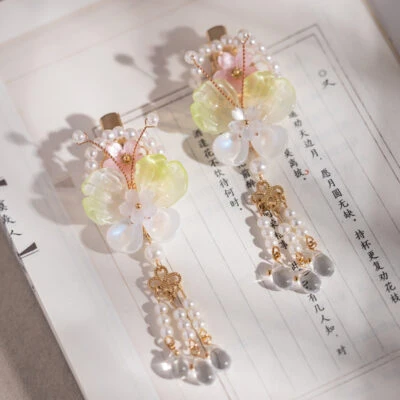
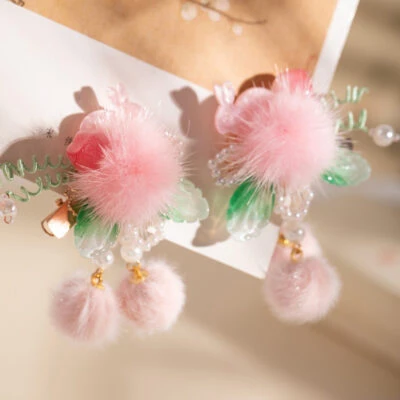
Beside the parade, a market ran through the same courtyards. Its six directions covered tailoring, velvet flowers and hairpins, incense and tea, round fans and sachets, period makeup, and photography. Between them they account for everything a walking day needs around the garment itself: a robe that fits, hair that holds, something in the hand, and someone to record it.
Two business models sit side by side in that row. The velvet flowers, fans and sachets are handwork, and customers make them themselves. Tailoring and styling sell hours of a skilled person’s time. Grouping them together stretches the act of getting dressed into a chain of five links, and a missing link shows.
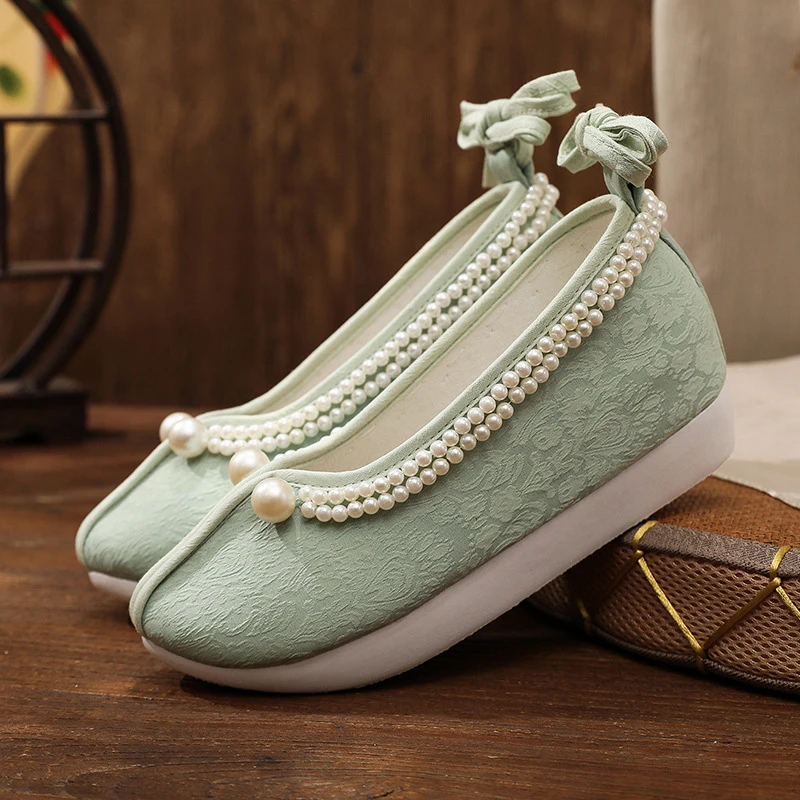
At the bottom of that chain sits the walking day itself. One correctly formed garment, a pair of shoes that match, hair put up, and the wearer is out the door. The market is what can be added on top, and both options were available in the same park on the same afternoon.