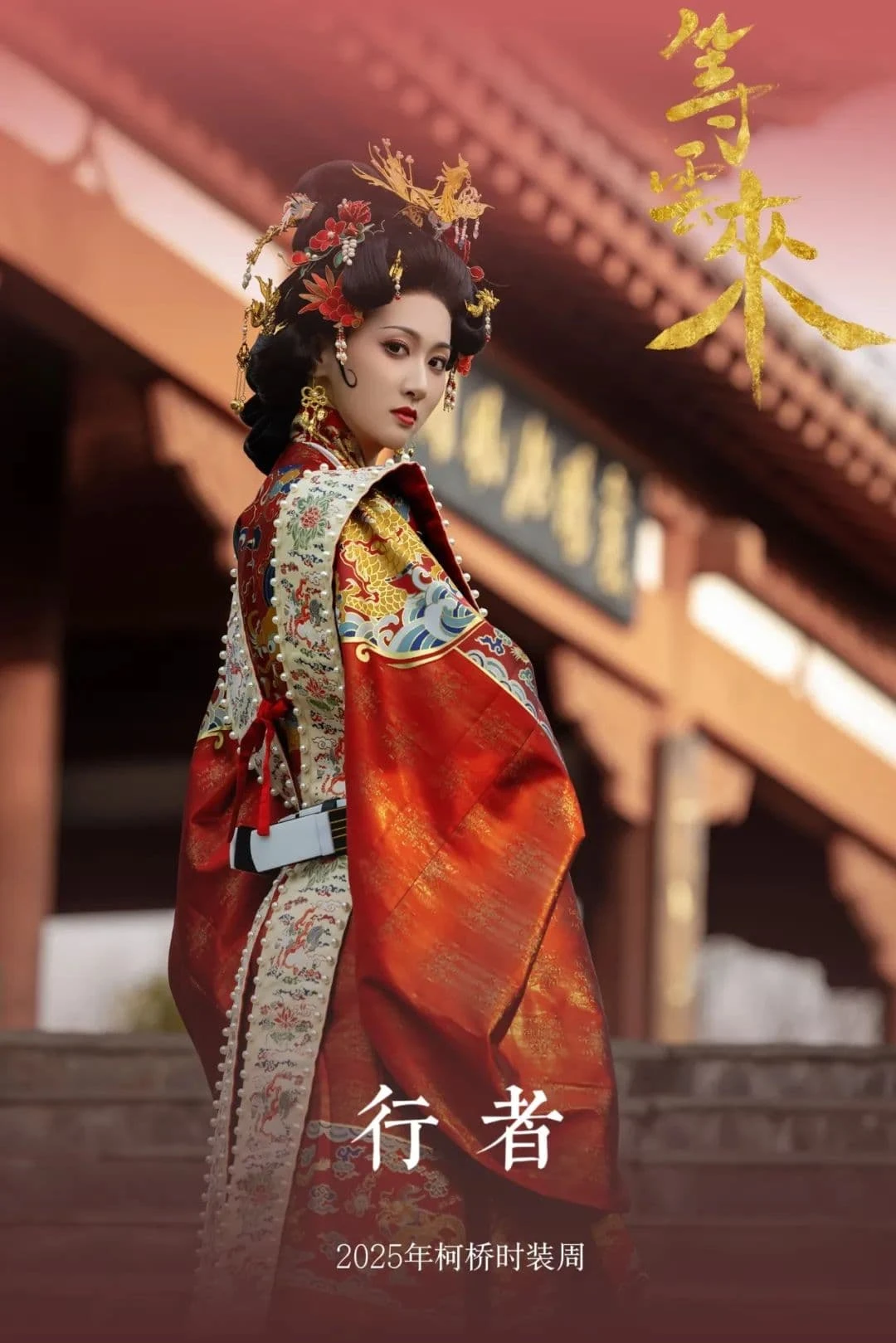
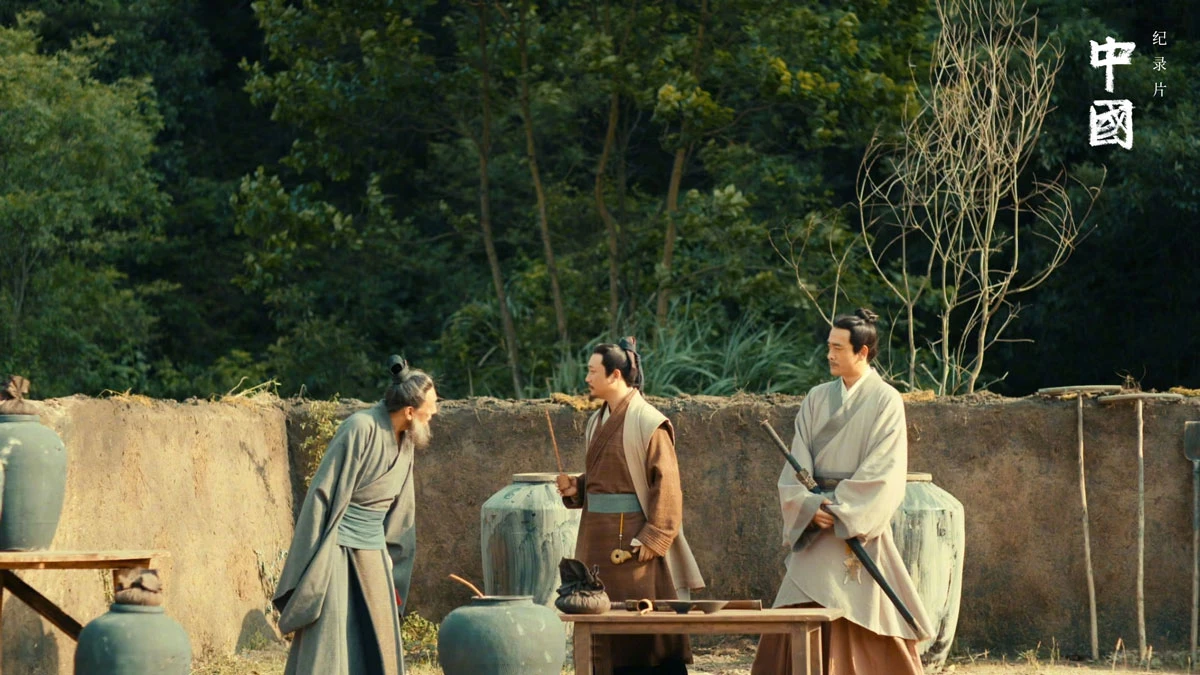
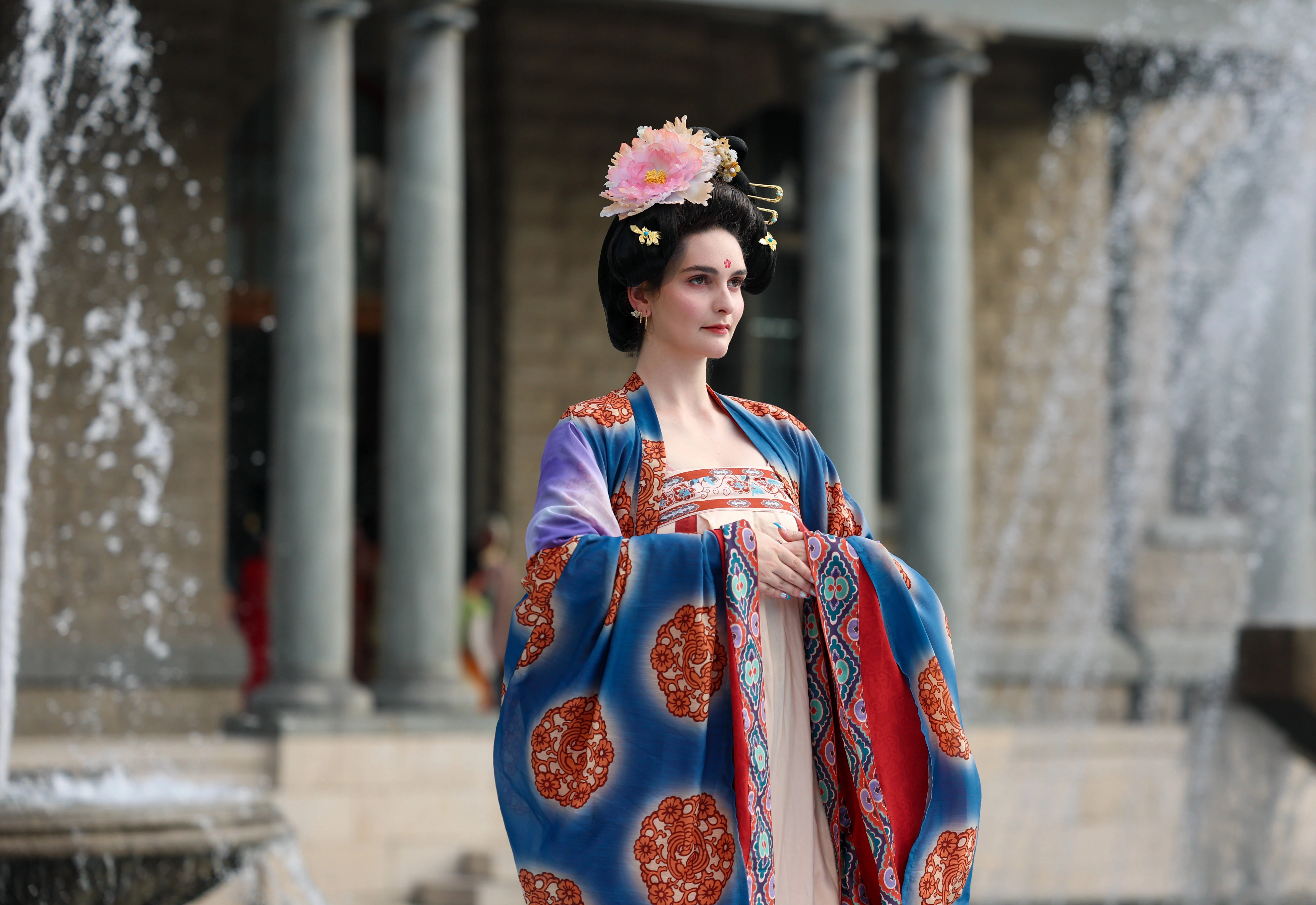
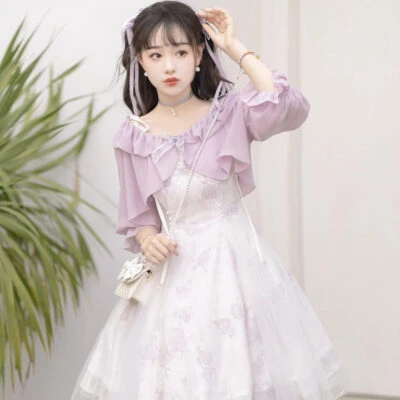
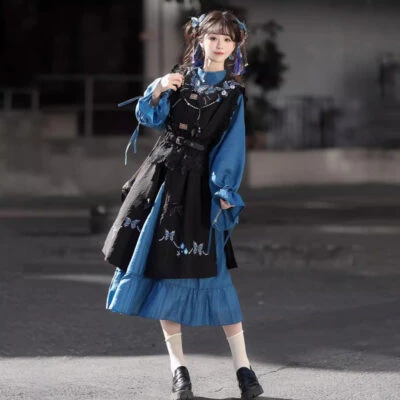
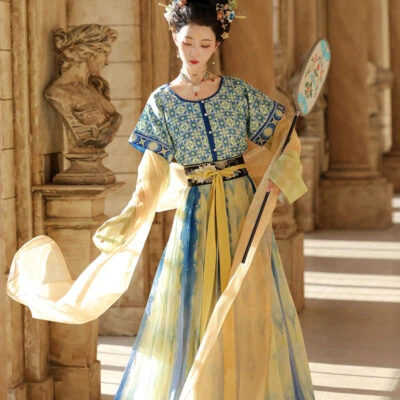
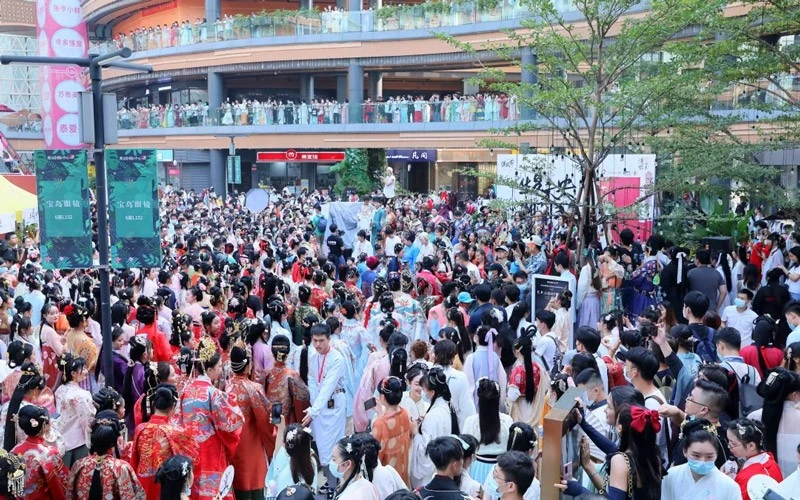
Twenty-three years after the Hanfu movement began, the Hanfu Festival China Guangzhou returns on November 28 and 29 to Lingnan Impression Park in Panyu. This year’s theme is Spark into Torch, Robes Returning from the Four Seas, and the organising body is Hanfu Guangdong, known among wearers as Hanyue. The change worth watching sits in the parade: the nine colour columns no longer follow dynasties. Each one now carries a piece of the city.
| Dates | November 28 and 29, 2026 (Saturday and Sunday) |
| Venue | Lingnan Impression Park, Panyu District, Guangzhou |
| Theme | Spark into Torch, Robes Returning from the Four Seas |
| Organiser | Hanfu Guangdong (Hanyue) |
| Tickets | Visitors: 30 yuan on the 28th, 42 yuan on the 29th, 60 yuan for both days. Parade members: 30, 30 and 48 yuan. Students and children between 1.2 and 1.5 metres: 20, 20 and 35 yuan |
| Registration | Through the Hanfu Guangdong Hanyue WeChat account; column applicants submit flat-lay photos of the garments and styling references for review |
| Columns | Guests, festival ambassadors, themed groups, sponsor companies, universities, cities |
Nine Colours, Nine Pieces of Guangzhou
Red is Vermilion Rampart, and it points at Zhenhai Tower, built in the Ming period, its red walls sitting on the ridge of Yuexiu Hill. Applicants for that column are asked for red garments in a correct form. Orange is Sunset on the Pantang Water, taken from the evening light over Liwan Lake and the Pantang channel; Pantang is the oldest water village in the city, and its five crops, lotus root, water chestnut, water caltrop, wild rice stem and arrowhead, still grow in that water. Yellow is Golden Grain of the Five Rams, and it reaches for the founding legend: five immortals arrived on five coloured rams carrying rice ears and gave the grain to the people, which is why Guangzhou is also called Ram City and Grain City.
Green is Mulberry Dike and Pond, the delta cycle in which mulberry leaves feed silkworms, silkworm waste feeds fish, and pond mud feeds the mulberry again. Blue is Sails on the Pearl River, for the estuary where the maritime silk route set out. Purple is Dream of Nanyue, and it has the hardest evidence behind it. Zhao Tuo took Lingnan in 203 BCE and made Panyu his capital; the kingdom ran five rulers across ninety-three years and survived in a few lines of the Records of the Grand Historian until 1983, when the tomb of a Nanyue king was found at Xianggang and the city’s dated history moved back by two thousand one hundred years.
Pink is Porcelain Powder, drawn from the rouge glaze of Canton enamel, the overglaze ware that fused Chinese motifs with overseas taste and left through the same estuary. White is Morning Mist on Baiyun Mountain. Black is Old Ink of Gambiered Gauze, which means Xiangyunsha, the Lingnan silk dyed by repeated soaking in dioscorea juice and then coated with river mud from the delta to fix the colour, coming out black, lustrous and hard-wearing.
Compressing a city into colour blocks does something worth naming. Geography, history, export trade, farm produce and one craft are each compressed into a single colour, and then people in robes are asked to line up by colour. A visitor does not need to read Lingnan history to know which stretch of Guangzhou they are standing in. They only need to see the block of colour around them.
Who Walks in Which Column
Ten further columns run alongside the nine. The formal group asks for correct forms worn in full: women in Xiapei, or a gold-woven round-collar jacket with Xiapei over it, or the long robe with Xiapei; men in an official’s robe, a Yuanlingpao or a rank-badge surcoat with a red sash, and headwear is compulsory for men. The arms group displays armour and military dress, and applicants submit both a flat-lay and a worn photograph. Military dress is limited to the Tang, Song and Ming, armour to the Qin, Han, Tang, Song and Ming, and studio costumes and screen armour are refused outright.
One column takes looted objects as its subject, drawing colour, ornament and silhouette from pieces now held outside China; its name translates as Hard Crossing Homeward. Another works from the Mogao Caves murals, turning wall pigment and figure into an outfit. A third divides the twenty-four solar terms into spring growth, summer lengthening, autumn harvest and winter storage, a cycle UNESCO listed in 2016. The lantern column borrows its name from a line in Xin Qiji’s Lantern Festival lyric about a jade pot turning its light while fish and dragons dance all night, and requires a traditional lantern in hand.
Bluntest of all is the labour column, which translates as I Am Not Competing Anymore. Its brief asks for garments with little ornament, cut for ordinary work and market life, simple in shape, with no piled accessories and no stage makeup. Beside it sits a fashion column that holds the crossed collar closing to the right, hidden ties instead of buttons and a centred seam, then hands the garment over to commuting, street photography, travel and sport. A parent-and-child column and a column for wearers over 45 complete the set; the last one asks anyone over 60 to bring a younger companion.
The Dress Code Written into the Sign-Up Form
Recruitment rules state the technical boundary without hedging. Qing-era dress cut in the Manchu manner, robes closing to the left and studio costumes are barred from the festival. Divine-being costume, the strapless hezi dress, cloud collars, Wei-Jin style and similar pieces described as Han elements rather than correct forms cannot register for the parade. Men may not parade in women’s dress or in wigs, though real long hair is fine; pregnant applicants and anyone in poor health are advised against joining; under-15s need a guardian.
That document explains why only one formal column exists. The stated aim is to keep types of Hanfu in daily life, at mass scale and in ordinary use, so the formal slot is limited and the other colour columns do not welcome large formal dress or heavy styling. Anyone set on full regalia can join the walking group or go independently, where no such limit applies. In practice the notice splits the event into two entrances with two different thresholds.
Where the Parade Has Been Held Before
Columns have anchored the main venue since 2019. The site has moved repeatedly: an international centre in 2020, Haizhu Lake Park in 2021, Baiyun Mountain in 2023, the Guangdong Hanfu Festival on the same mountain in 2024, Yunxi Botanical Garden in 2025, and now a rebuilt Lingnan village by the river. Each move changes the route. A garden, a mountain path, a lakeside and a shopping complex each decide what shape a column can hold.
First-timers need to keep two things apart. A column parade is formed inside the venue, grouped by theme and walking a fixed circuit. A Hanfu walk gathers people from different districts, moves through the streets and arrives at the venue, with no colour rules and looser requirements on form. The university column parades on the afternoon of the 29th, with its captain handling registration, contact, garment review and on-site organisation.