Fifty old qipao, most of them bought secondhand and cut open within a week of arriving, are how Wan Chunling learned what a side seam does. The fourth-generation inheritor of a family method of hand-made qipao works from a shop on Gutian old street in Chengyang, Qingdao, where cloth, finished dresses, Pankou and old embroidered panels are kept in separate drawers.
One Piece of Cloth, One Side Seam
The disagreement with most modern qipao starts at the cutting table. The old method is one-piece flat cutting: no darts, no Western partitioning, no seams drafted in to build a curve. Shape comes from pressing, stretching and shrinking the cloth until a flat plane takes on a body’s arc, and from handwork in the edging, the piping, the appliqué and the embroidery. The body keeps ease. It sits close without gripping, which is the visible difference from the fitted version sold as an improvement.
Labour is on another order. Wan puts the full sequence above a hundred steps; in an earlier interview with Qilu Evening News she gave 34 body measurements, more than 100 production steps, and at least a month for one bespoke dress, none of which can be skipped. A finished piece shows no topstitching. Edges are set in by hand, using rolled binding, inserted piping, decorative bands, embroidery and Pankou.
What Fifty Old Dresses Taught Her Hands
The trade came from home. Her grandfather worked in a spinning mill in the old city; her aunt made clothes by hand, and Wan watched her cut and sew for the family, including the starching and the closures, and wore small qipao sewn for her. She worked in a towel factory first, then joined a Chinese garment workshop as an apprentice, and for years drafted patterns and made garments at night after her children were asleep.
Old clothes are what made her take the method apart. She bought and dismantled old qipao, fur, padded coats and hats, more than fifty qipao among them. “Opening an old garment is like talking to a tailor from the past, because every stitch has their thinking in it.” Panel joins, pressing, rolled edges and closures turn a single dress into a reference sheet, and none of that is learnable from photographs.
In 2020 she opened her own studio. The motive was control: to hold the whole sequence from the first conversation and measurement to the fitting, to hear what a wearer says after a month, and to correct the pattern accordingly. A production line has no such step, and what cannot be corrected keeps repeating.
Keeping the Cut, Changing the Pattern
Three things stay: one-piece flat cutting, shape built by pressing, and the handwork set of binding, piping, appliqué and embroidery. The pattern itself moves. She adjusts it for contemporary bodies and habits, borrowing Western structural logic while keeping the Chinese skeleton, taking folds out of the underarm and adding comfort for a working day. She also developed a contrast double-piping technique, and uses appliqué as ornament on the body of a dress.
“An old-method qipao has to live now, which means fitting modern bodies and modern life.” The logic holds together. Flat cutting keeps a pattern from being cut apart by seams, and pressing gives a waist that is implied rather than cinched. How much room sits under the arm is a parameter, and parameters change when the person wearing the dress changes. In March 2026 a client from Singapore, in Shanghai for work, travelled to the shop and chose a lustrous aubergine silk; because the client was young, Wan added lace at the mandarin collar.
Clients by Post, Apprentices by Chance
The shop sits out of the way and clients find it anyway. Buyers fly to Qingdao to be measured in person; overseas clients post their own cloth, and the finished dress goes back by post. To let distant clients see how a dress hangs, the studio streams, not as a sales channel but as a window onto finished work. It has made close to 10,000 garments for more than 1,000 clients.
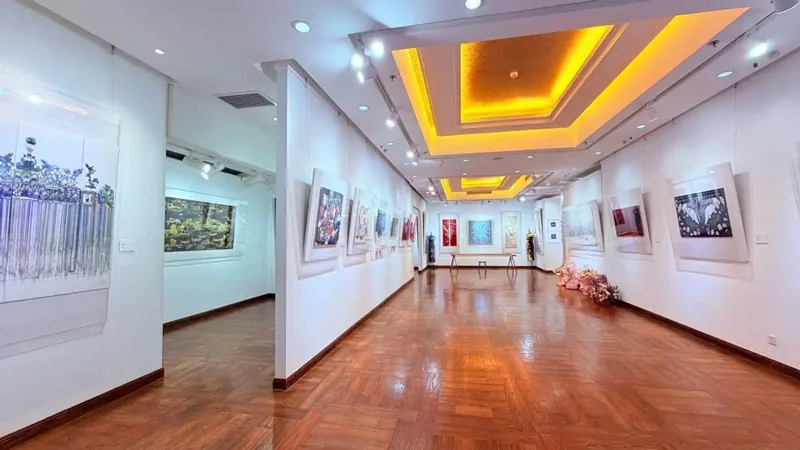
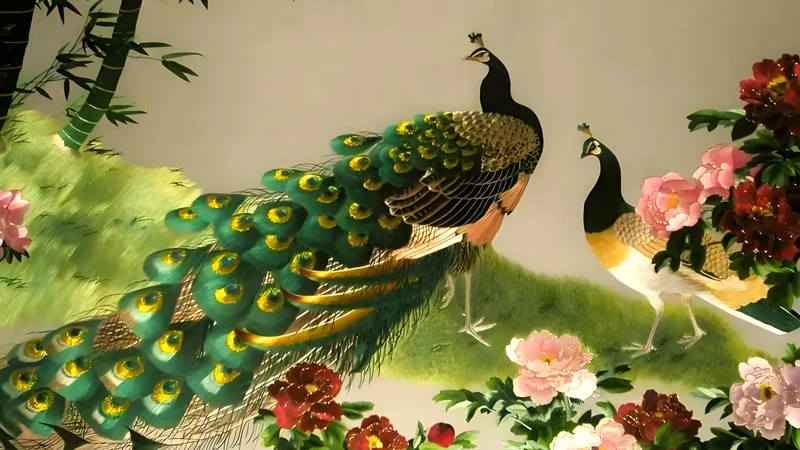
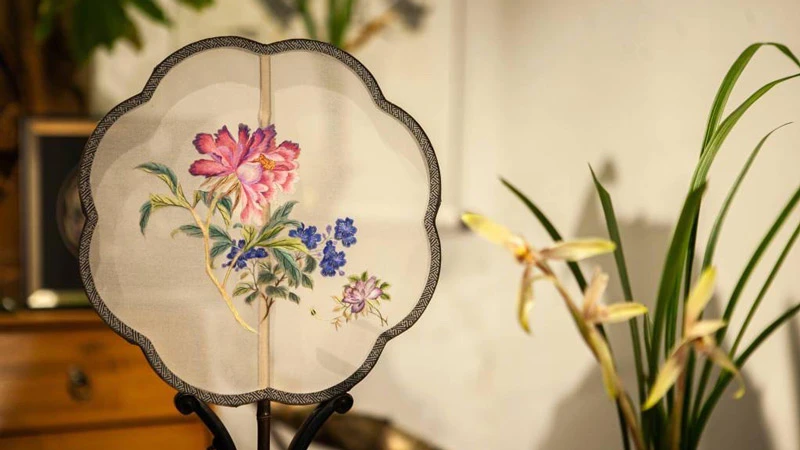
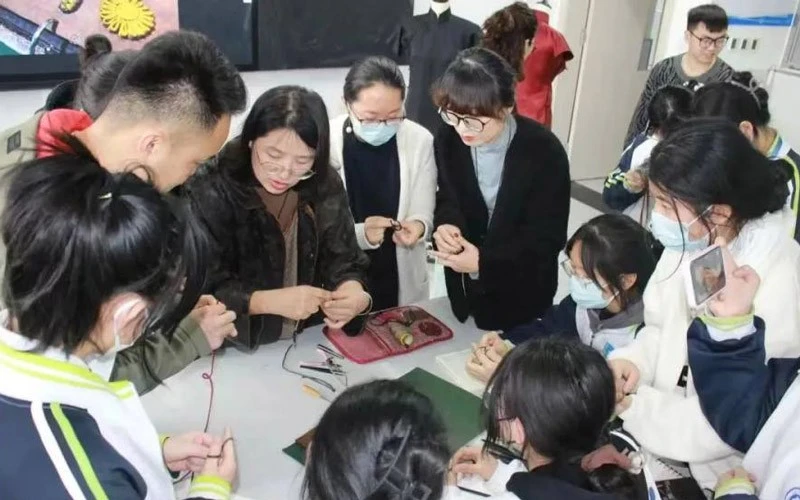
People are the hard part. The work is slow and repetitive, and apprentices leave across the trade; Wan no longer insists that anyone follow her. What she wants now is to put the needlework itself on view. The studio’s tea room already holds old embroidered panels and embroidered objects, and is to become a small exhibition space for women’s needlework.
“I do not expect everyone to become a maker, but I hope more people can read an old-method qipao, and read the aesthetic that sits inside Chinese needlework.” That points to a different route. Once a buyer can tell flat cutting from dart cutting, the extra labour in pressing stops reading as sentiment and starts reading as cost, and cost is the only lever that keeps a hand trade staffed. A piece of chinese traditional dress is priced by the people who can see what is in it.