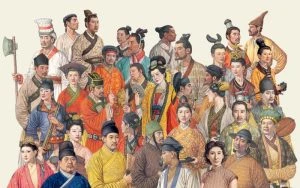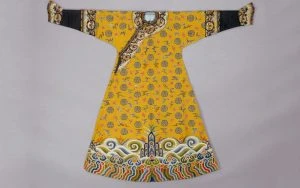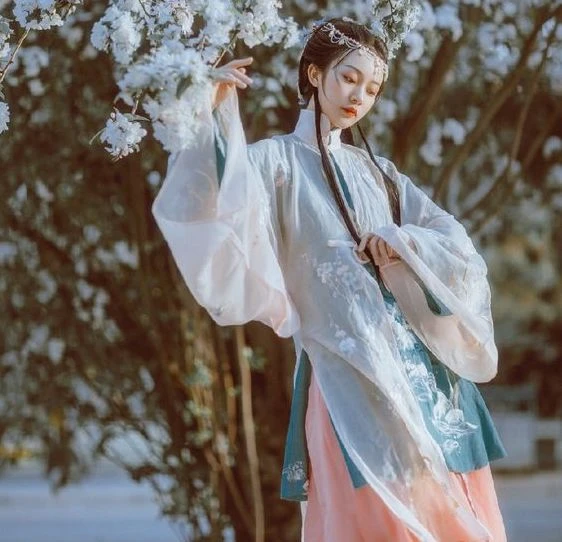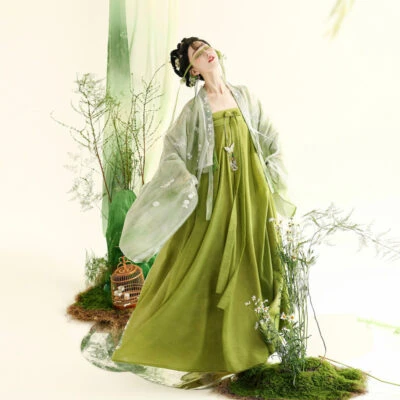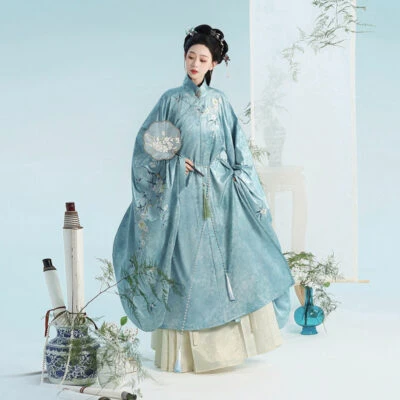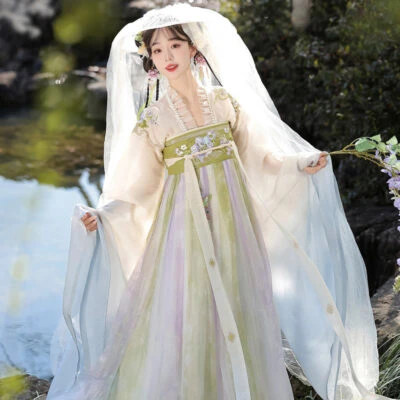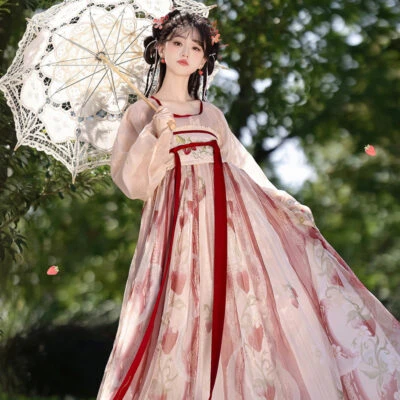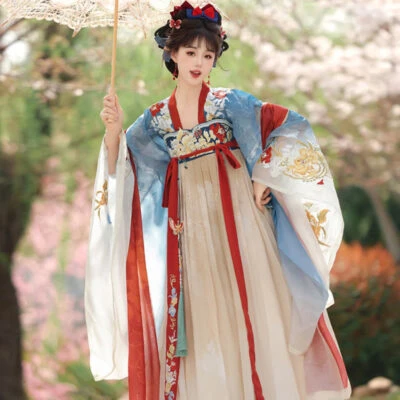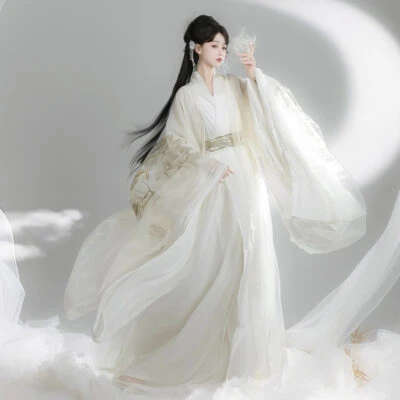
As a treasure of China’s thousand-year heritage, Hanfu is shining brightly in modern times. Among all styles, Ming-style Hanfu stands out for its stately and luxurious charm, winning the hearts of countless Hanfu lovers. For new beginners, learning the classic authentic silhouettes of Ming Hanfu is the first step of your Hanfu journey. Today we will walk you through Ming-style Hanfu.
Ming-style Hanfu Silhouettes
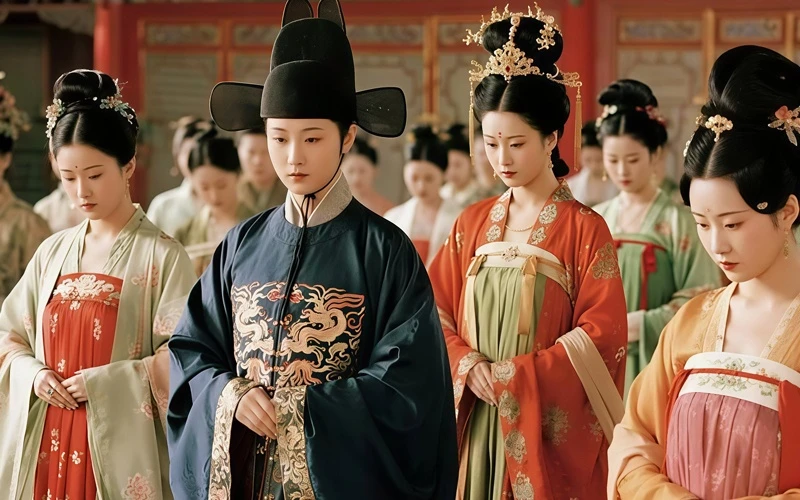
Ming-style Hanfu refers to Han garments worn in the Ming Dynasty. The clothing system was re-established by Emperor Zhu Yuanzhang (朱元璋), following the principle of inheriting traditions from Zhou and Han dynasties while drawing essence from Tang and Song dynasties.
Common women’s garments of the Ming Dynasty include shan (blouse), ao (lined jacket), xiapei (霞帔), beizi, bijia (比甲) and mamianqun.
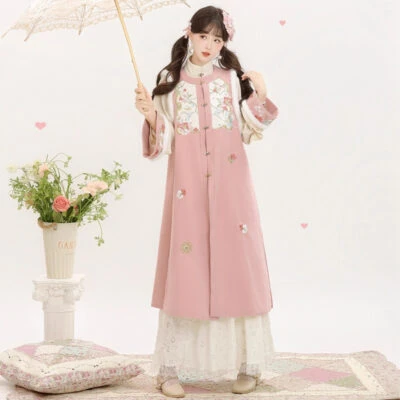
Four of the most popular styles are ao, pifeng (披风), bijia and mamianqun.
Ming shan and ao are mainly divided into cross-collar and straight front-opening. Collar types include straight collar, round collar and shuling (竖领, standing collar); square collars are less common. Pipa sleeves are a typical sleeve shape for Ming garments.
Outfit Layering & Matching
The general rule for Ming women’s layering: long inner tops pair with long outer coats, short inner tops pair with short outer coats; pieces reaching past the knee count as long.
Layering sequence for tops:
1. Hanshan (undergarment)
2. Shan or ao (single-layer = shan; lined = ao)
3. Pifeng or bijia
Layering sequence for bottoms:
1. Kun (closed-crotch trousers)
2. Ku (open-crotch trousers)
3. Skirt
Early Ming: Straight duijin shan / ao + mamianqun, layered with bijia, pi’ao or pifeng. Famous artifacts include the plain gauze mamianqun with narrow skirt gate and duijin jiaochao robe from Lady Qian’s tomb of the Yongle reign.
Mid-Ming: Straight dajin short shan / ao + mamianqun. Round-collar shan / ao became popular during the Jiajing reign. Long ao features one-piece cut with side slits and no gathers under the arms. A round-collar robe should reach the instep, covering or slightly revealing the skirt hem. In early Jiajing, straight dajin shan/ao grew larger; wide, rounded sleeves trended.
Wanli reign: Standing-collar long shan / ao paired with mamianqun. By the Chongzhen reign, pifeng worn over long shan/ao gained popularity. Pifeng was casual wear for Ming women; it only evolved into formal costume in the Qing Dynasty. A well-made pifeng has sleeves long enough to cover the elbow.
- Bijia
Bijia, also known as a vest, can be round-collared, square-collared or straight duijin. It is sleeveless or short-sleeved with side slits.
It is a sleeveless, collarless duijin waistcoat with side slits falling below the knee, longer than modern waistcoats. It usually reaches the hips or knees, and some nearly touch the ground. This style originated in the Song Dynasty as a long sleeveless overgarment. It boomed in the Yuan and Ming dynasties and later spread to Mongolian regions.
According to History of Yuan Dynasty: “A new garment was created: front panel without overlapping placket, rear panel twice as long as the front, no collar or sleeves, fastened with two loops. Named bijia, convenient for horse riding and archery, widely imitated.”
- Ming Pifeng
Pifeng is a duijin outer robe worn by both men and women in the Ming Dynasty. It developed from Song and Yuan beizi. Its defining changes include a fitted waist and flared hem, a design believed to be influenced by West and Central Asian costumes.
- Ming Standing Collar
The standing collar emerged in the mid-Ming and became extremely common in the late Ming. It differs from modern standing collars: Ming standing collars have square collar corners, usually plain, fastened by one or two pairs of toggles. The front opening uses frog fasteners or ribbons.
- Mamianqun
Also called pleated horse-face skirt. It features two separate skirt panels sharing one waistband. Scholars trace its origin back to the Song two-panel skirt. Skirts decorated with woven or embroidered hem bands are named lanqun.
Two main pleat types: trumpet pleats (trapezoid pleats) and parallel pleats. Trumpet pleats usually match wide skirt gates, while parallel pleats pair with narrow skirt gates (this is a common convention, not a strict rule). Unlike Qing mamianqun, Ming versions did not focus heavily on decorating the front horse-face panel; decorations often blended with the skirt hem band.
Now you know more about Ming-style Hanfu. Which silhouette is your favorite?