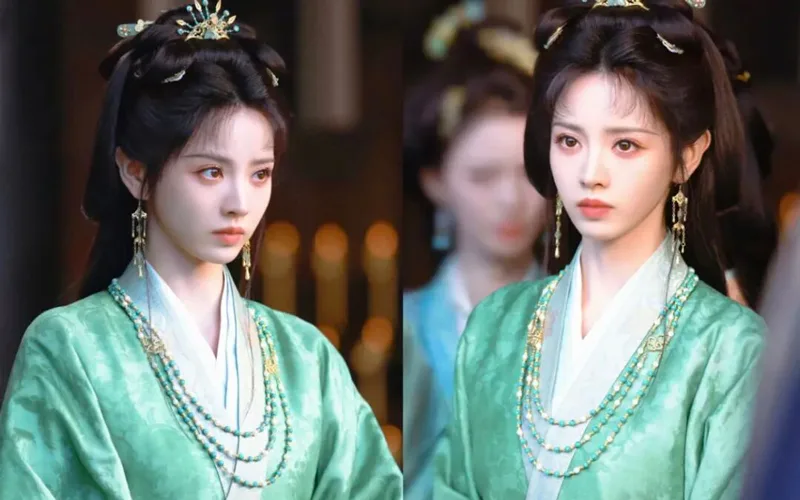
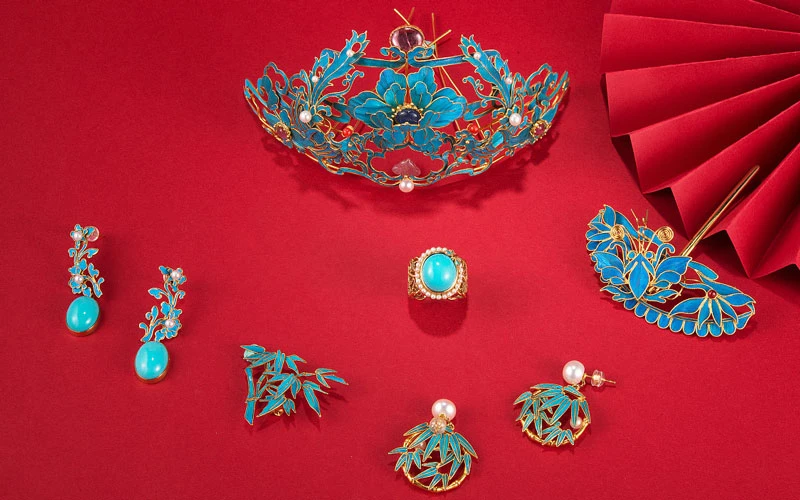
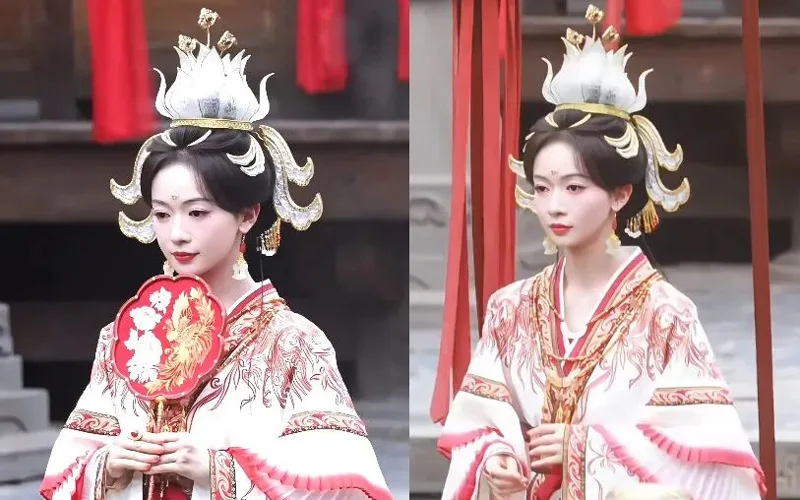
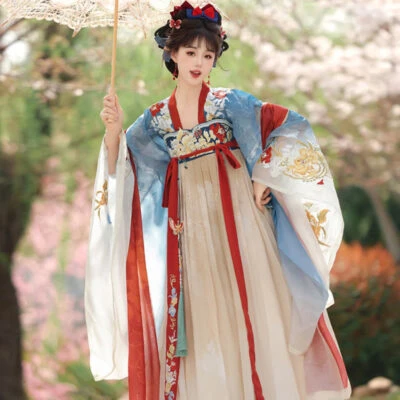
1. Ji (笄, Hair Pin)
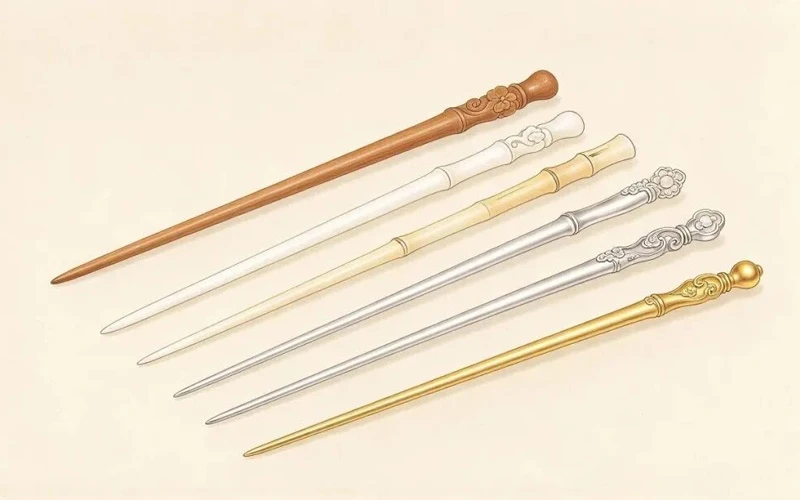
Ji is the earliest form of hair ornament. It is a straight, slender pin, originally made of bone, bamboo or wood, and later crafted from jade, ivory, gold and silver.
It appeared in the Neolithic Age and is the ancestor of zan and chai. It was used to fasten hair buns or hats, worn by both men and women.
It carries important ritual meaning: the Ji Ceremony. When a girl turns 15, she receives this ceremony. An elder uses a ji to tie up her hair, marking her coming of age and eligibility for betrothal. The zan later evolved from ji with more elaborate decorations on the top.
2. Zan (簪, Ornamental Hairpin)
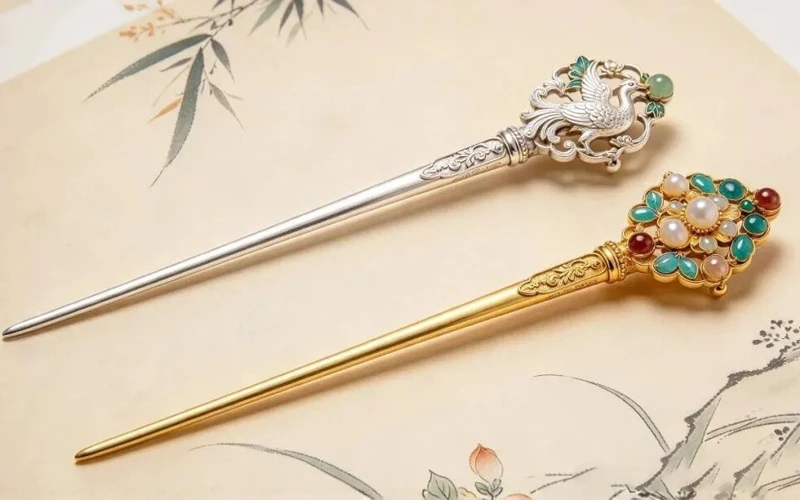
Zan is a decorated version of ji, also known as jade scratch head. It has a single long shaft. Different from plain ji, the head of zan is richly carved with flowers, birds, beasts and inlaid with pearls and kingfisher feather.
It developed from ji. After the Han Dynasty, the name ji was gradually replaced by zan. It mainly holds hair buns and focuses more on decoration. Both men and women wore zan, while women’s styles are more delicate.
A well-known story says Emperor Wu of the Han used his concubine’s jade zan to scratch her head, hence the elegant nickname jade scratch head.
3. Chai (钗, Hair Fork)
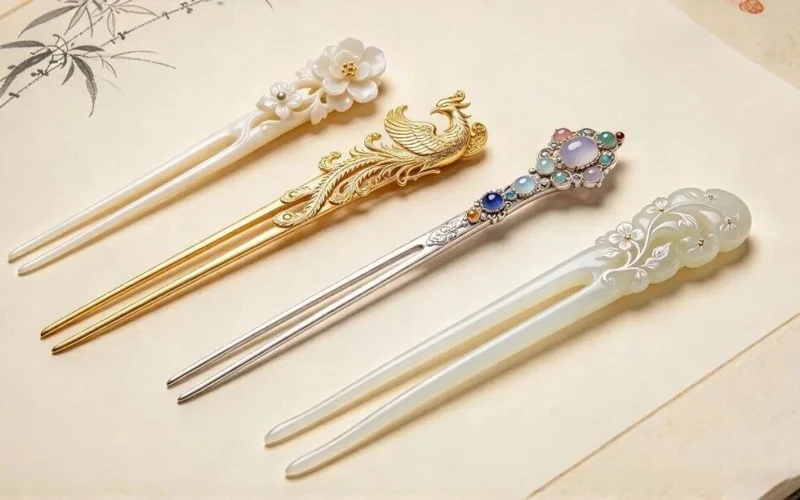
Chai features two parallel prongs, shaped like a fork. Its head is carved with flowers and phoenixes, inlaid with gems and decorated with kingfisher feather. The double prongs grip hair more firmly for complex hairstyles.
A simple rule: single prong is zan, double prongs are chai. It can be inserted vertically, horizontally, diagonally or upside down; noble ladies often wore multiple chai for formal occasions.
It carries romantic symbolism. Lovers would split a golden chai when parting. Each kept one half, hoping to reunite someday. The line from Song of Everlasting Sorrow (长恨歌) describes this custom: Half the hairpin is kept, the other half is given away.
4. Buyao (步摇, Swaying Hair Ornament)
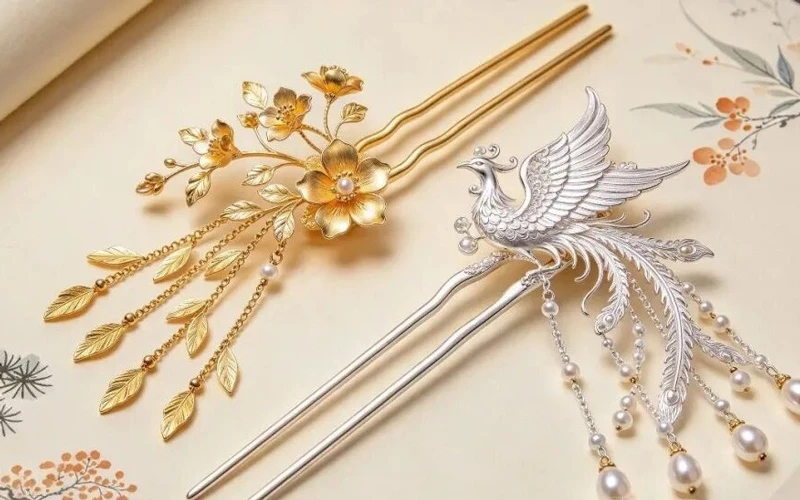
Buyao is built on the base of zan or chai, with movable branches, phoenix figures and hanging golden leaves, pearl tassels. Its signature feature is swaying when the wearer walks.
It originated in the Han Dynasty and was originally a royal ornament. Book of the Later Han: Records of Chariots and Robes (后汉书・舆服志) records the empress’s buyao, made of golden branches set with white pearls and bird patterns.
There are two main types. Chai-style buyao, popular in Tang and Song, is what Bai Juyi wrote about: cloud-like hair adorned with golden buyao. The buyao crown, common in Wei-Jin and Northern Dynasties, looks like a golden flower tree that sways as one moves.
5. Dian (钿, Flat Floral Ornament)
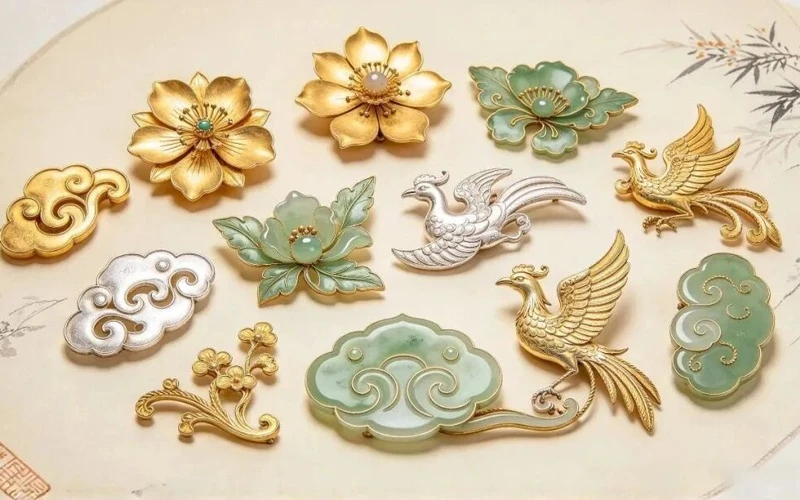
Dian is a flat decorative plaque, and it may not have a long pin. It has two categories.
Hair dian: flat pieces shaped like flowers, birds or clouds, made of gold, jade or shell. Some have short pins to insert into buns; others are stuck on with adhesive or ribbons.
Facial dian: the floral mark on the forehead, a makeup decoration instead of hairwear.
We name them by materials: gold dian, kingfisher dian, shell dian. Dian often pairs with chai, called chai-dian. The line from Song of Everlasting Sorrow “Fallen flower plaques lie on the ground, untouched” refers to these delicate ornaments.
Brief rule: single-prong plain pin is ji, single-prong decorated pin is zan, double-prong fork is chai, swaying ornament is buyao, flat plaque is dian.