A costume drama pastry scene often triggers a snarky comment: “No oven? Must be time travel.” That joke says more about us than about ancient cooks. Old recipe books show a busy kitchen without electric heat: charcoal basins, iron lids, steamers, oil woks, ice cellars. Tang and Song cooks made layered pastries, tea creams, and a frozen dessert. Their secret was not a machine. It was a wider set of heat sources, a sharp eye for texture, and a stubborn appetite for good food. The oven was useful, but it was never the whole story. Once you drop that assumption, the old kitchen becomes far more inventive than most viewers expect.
1. Fire Above and Below
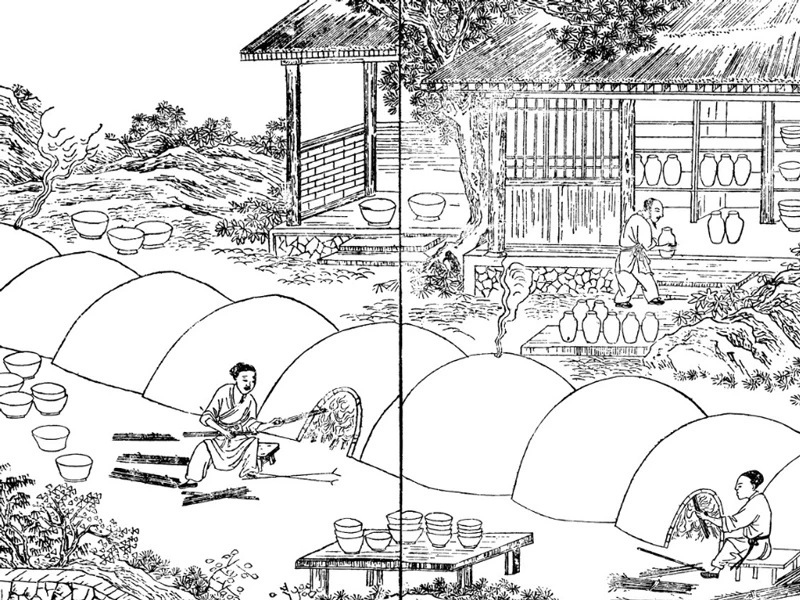
Ancients did bake, but their method was wilder than a modern oven. In Kaifeng, street bakers used a flat pan with a heated iron lid. Heat came from above and below. No thermostat, no timer; the cook read the dough by touch and smell. The result was a crisp radish-shred pancake with a tender center. It sounds simple, yet the control was all in the wrists and the coals. This was not a compromise. It was a different grammar of heat.
Yuan Mei (袁枚), a food writer, recorded a “flower-edge mooncake” in Recipes from the Sui Garden (随园食单). Two charcoal basins were clamped around the cake, top and bottom, and the remaining heat did the work. Today a chef might call it a wood-fired oven. In that kitchen, it was ordinary. The cake browned, the filling warmed, and the cook judged the moment by sound and scent rather than a dial.
This is the first correction to the “no oven” myth. The oven was never a prerequisite. A pan, a lid, a basin of coals, and a cook who knew when to flip were enough. The tools were simple; the control was human. That matters because we often mistake equipment for skill. A modern oven can hide a shaky hand. A charcoal basin cannot.
2. Steam, Oil, Ice
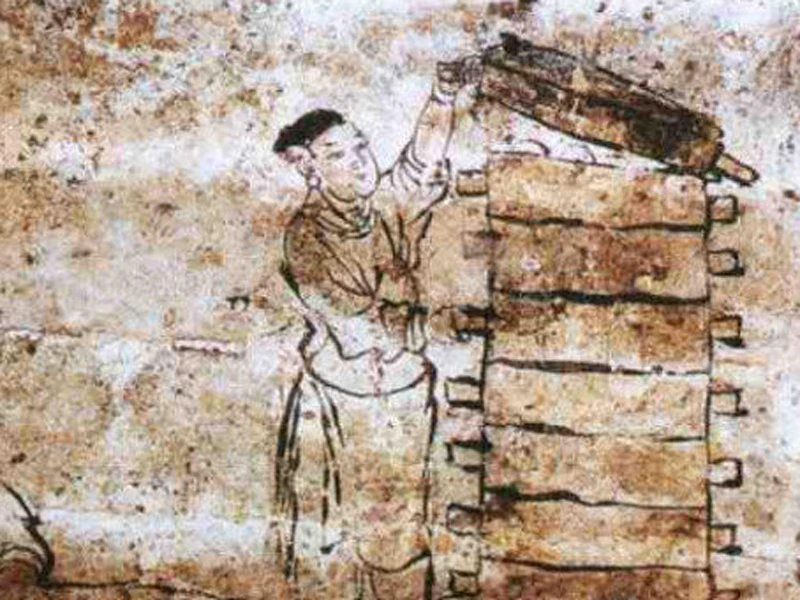
Steam runs deep in Chinese cooking. Dream of the Red Chamber (红楼梦) describes lotus-root starch and osmanthus cake, plus date-and-yam cake, all steamed. Liu Laolao (刘姥姥) was amazed by them, and no wonder: the texture depends on gentle, even moisture. Push such a cake into an oven and you ruin the soft chew. Aiwowo (艾窝窝), an old northern snack, takes steamed sticky rice, cools it, wraps filling inside, and serves it without further heat.
Frying gave pastries their glamour. The layered lotus-flower pastry is not baked; it is fried. A water-oil dough wraps an oil paste, gets folded and rolled again and again, then shaped around filling. Low-temperature oil puffs the layers and sets them like petals. The same logic explains crisp rice sticks, fried dough twists, and cat-ear cookies. The wok was the original proofing cabinet and browning unit in one. It also gave cooks a stage: the oil showed exactly when the layers opened.
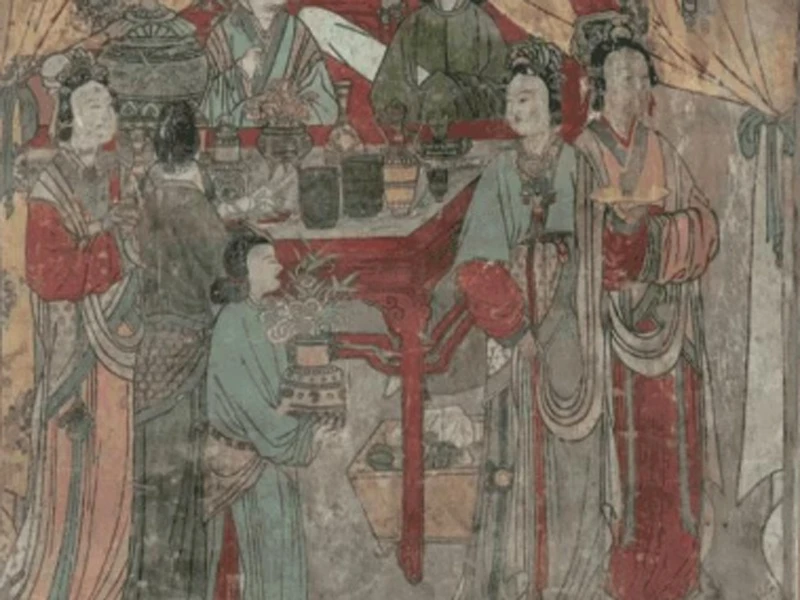
Cold was another heat-free tool. A Tang dessert called Su Shan (酥山) heated cream until soft, drizzled it into a mountain shape on a plate, then chilled it in an ice cellar. It was not ice cream, but it was close enough to make summer bearable. No oven, yes; a fridge, sort of. The dish also shows how quickly ancient cooks borrowed from other trades: ice storage, dairy work, and plate presentation all met in one sweet.
3. Cream and Lard
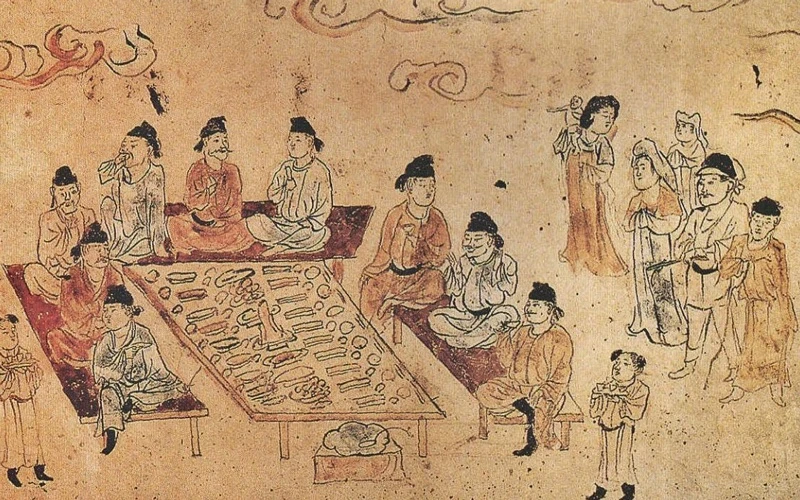
The key ingredient was su, a cream made from cow and sheep milk. Essential Techniques for the Welfare of the People (齐民要术) explains how to heat milk, let it rest, skim the skin, and simmer it down. The longer it cooked, the more precious it became. The finest grade was called Tihu (醍醐). This was not a luxury only for palaces. Dairy skills spread through everyday cooking, and cooks treated su as both food and technique.
Song cooks turned su into drinks and decorations. They melted it into tea powder and hot water for a rich tea cream, a Song-style milk tea. They also made Dishui Baoluo (滴酥鲍螺) by dropping su into cold water until it set into small snail-shaped curls. Fussy? Yes. Delicious? Probably. The point is that dairy was already in the kitchen, waiting for a clever hand. No imported oven needed to make it work.
For flaky pastry, early cooks used milk su. They later found lard more stable at room temperature and better at building layers. Lard became the quiet hero behind wife cakes and egg-yolk pastries. The lesson is not “ancients were clever.” It is that we are trained by our tools. We assume pastry means oven. They had a pan, a stove, coals, steam, oil, and ice, so they tried everything. Next time a drama shows a delicate pastry, hold the snark. The limit was rarely the kitchen. It was imagination.