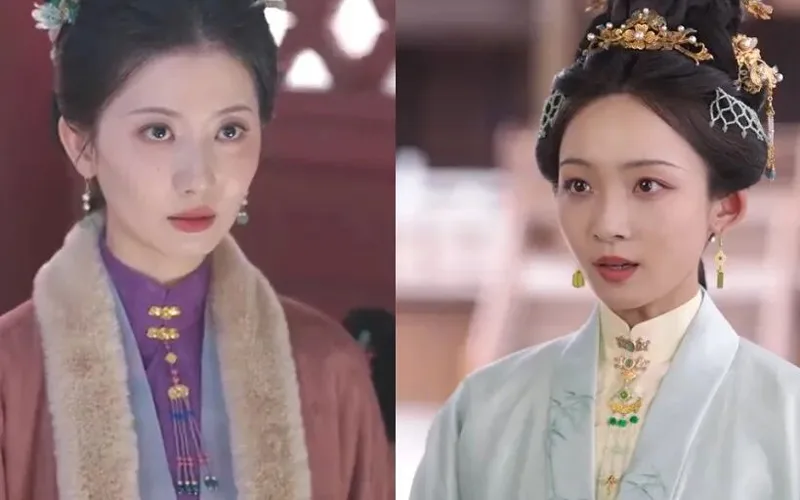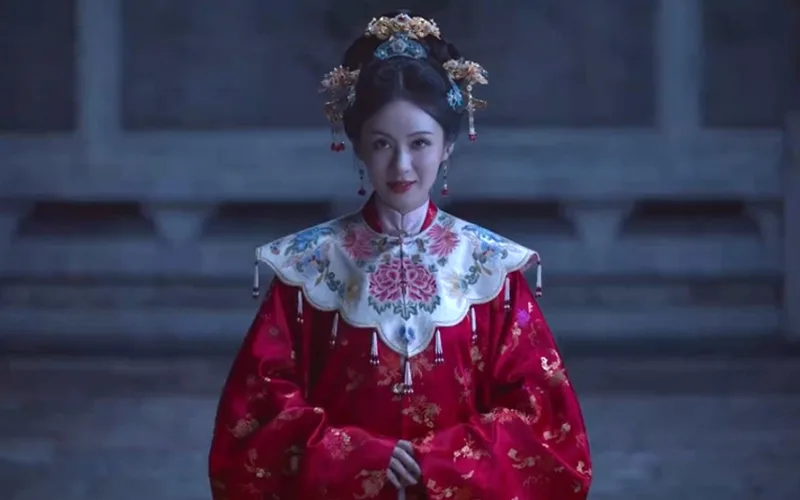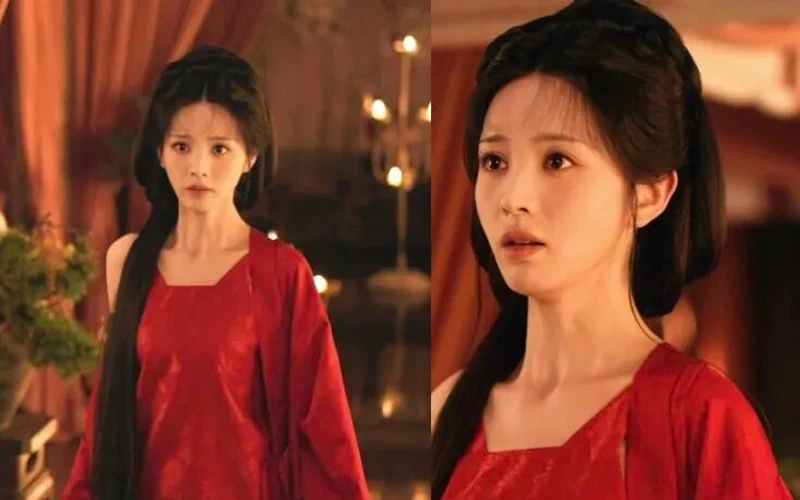
Viewers of Where the Mask Ends (嫁金钗) noticed two small “cat ears” on Tian Xiwei’s chest wrap. In a costume drama, the detail looks almost too modern, like a strapless bra with tiny handles. Is it decoration? A costume mistake? The answer sits in a real garment from Southern Song China. Those ears were not made to look cute. They solved a practical problem: how to hold a smooth silk wrap in place without straps cutting, slipping, or tearing the cloth.
Not Just Cloth
“Chest wrap” is a broad English label, much like the Chinese term people use for many undergarments. It does not describe one fixed pattern. A common early form was a long piece of cloth wrapped around the torso, with two ties at the ends drawn around once and knotted. The cloth stayed put through structure and tying, not through friction alone. Modern “ancient-style” versions often add shoulder straps because they are easier to wear. Yet for many women, the strapless wrap was the normal choice.
Still, straps did exist. A well-known example comes from the tomb of Huang Sheng (黄昇) in Fuzhou (福州). Excavated in 1975, it shows a shoulder-strap, open-back design close to the undergarment seen in the drama. Huang Sheng was the daughter of a high-ranking scholar and the wife of an imperial descendant. She died at seventeen. Her small garment survived to explain a detail that puzzles modern viewers.
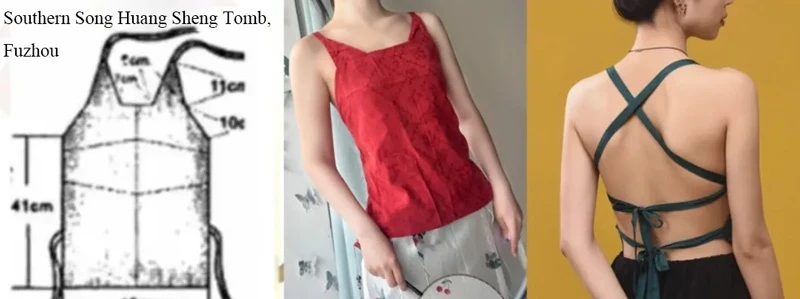
The piece matters because it is an early surviving example of a strapped chest wrap. Later patterns often follow its basic logic. It also breaks a simple assumption: ancient undergarments were not all one flat rectangle with no fit. Some were cut, layered, and tied with care. The “cat ears” are part of that construction, not a random flourish.
Tiny Structural Triangles
The China National Silk Museum describes the Huang Sheng wrap as about 55 centimeters long and 40 centimeters wide. Two layers of plain silk hold a little silk floss. Ribbons sit at the top and waist, each more than 30 centimeters long. The shape is roughly rectangular, but the top corners each carry a small isosceles triangle. The ribbons attach there. In records, the “cat ears” have a plain name: tie ears.
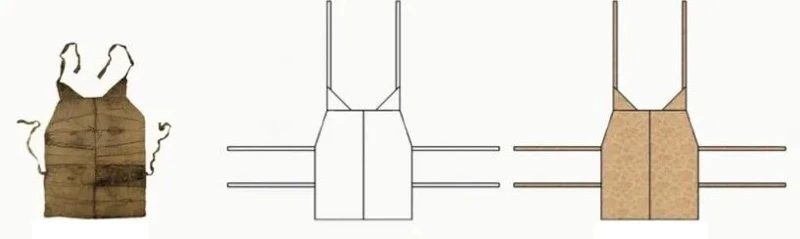
Why add triangles? Plain silk is thin and slippery. If a tie is sewn straight onto the edge, a pull can twist the edge or pull threads. The small triangle becomes a load-bearing patch. The tie fastens to it, spreading force over a wider area. Pulling feels even, and the edge keeps its shape. The triangle also sits near the collarbone and shoulder, helping the wrap follow the body. It covers the chest, stays over the abdomen, and resists rolling.
This is quiet engineering, not ornament. A tiny shape turns soft cloth into a stable garment. It also shows how much thought went into fit before elastic, hooks, or molded cups. The next time the “ears” appear on screen, they deserve a second look.
Old Bra, New Use
Ancient cutting also valued material. A bolt of silk was measured by width, and leftover pieces were expected to do a job. The two triangles look like decoration, but they are structural parts that use very little cloth. That is why the design lasted. It answered a wearing problem without wasting expensive fabric.
The detail is roughly eight hundred years old. It belonged to a seventeen-year-old woman’s undergarment, not a fantasy costume. Today, pattern copies call the feature a tie ear. Similar ideas appear in camisole tops and strap designs. The look can seem new, but the logic is old: spread the pull, protect the cloth, keep the shape.

Foreign fashion labels may not connect the shape to clothing from that era. That is all the more reason to know it ourselves. A small “cat ear” on a drama bra is not a gimmick. It is a clue to how people solved daily problems with cut and thread. Would you wear a modern top with this cat-ear detail?