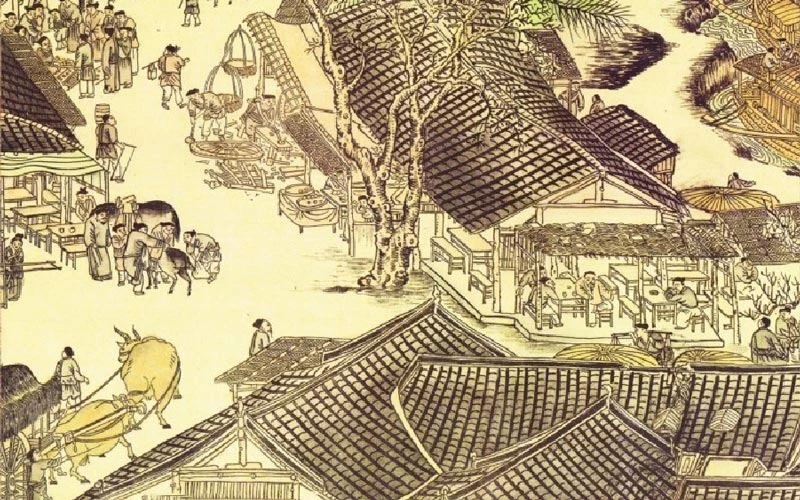
Modern people freeze before four bins and ask a small, anxious question: which one? Ancient streets had no plastic wheels, no color-coded signs, and no laminated rules. Did people simply toss waste into the road? Records say no. Old cities turned garbage into a public-order problem, a paid job, a court fight, and farm fertilizer. A melon seed could cost a hand. A bucket of night soil could start a turf war. Old scraps could feed next year’s grain. The story has three trails: punishment, collection, and soil.
Hands and Faces
In Shang Dynasty , tossing ash or fruit pits into the road brought a harsh penalty recorded in Writings of Master Han Fei (韩非子): cut off the hand. Zigong (子贡), a student of Confucius, questioned the severity. The teacher replied that dust could anger a passerby, spark a fight, and drag clans into a feud. The logic feels extreme, but the rule was serious. Garbage was a public-order problem, not a private habit.
Qin Dynasty law under Shang Yang (商鞅) kept the idea but changed the mark: ink and tattoo on the face. An offender could keep throwing waste, but carried visible shame. Tang Dynasty moved to sixty heavy blows. Officials who saw illegal dumping and did nothing shared the punishment. That detail matters. Enforcement was not only on a sweeper or a household; a supervisor had skin in the game. A clean street required officials to act, not just post notices.
These penalties sound cruel. Yet they reveal that old cities already understood a basic point: waste becomes conflict when it lands in shared space. A road was market, travel lane, and neighbor’s front step. Trash there was not “away”; it was on someone else. Law made the cost personal. Modern fines echo that logic with less blood.
Sweepers and Fees
Zhou Dynasty had the Wolf-Chaser Unit, a crew of seventy-six. They cleared roads and kept pedestrians out of work zones. Think street cleaner plus traffic guard. This may be the earliest recorded professional sanitation office in Chinese sources. The job title sounds fierce, but the task was ordinary: move waste, manage crowds, keep passage usable. Public cleaning needed people and budget, not just a rule book.
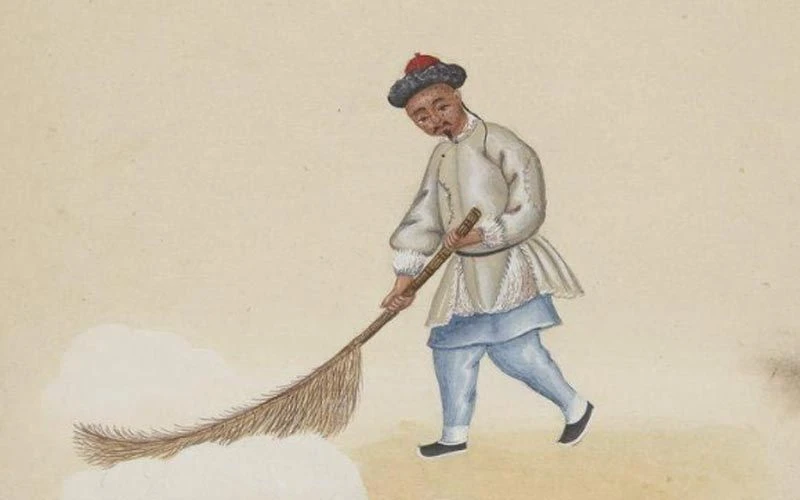
By Song Dynasty, big cities Kaifeng (开封) and Hangzhou (杭州) had hundreds of workers under street offices. Pay included cash and a blue uniform. Morning crews swept, drained puddles, and repaired street order. In spring, channels were dredged; mud went by boat to open land outside the city. A wage and uniform made cleaning a job, not a favor. City life depended on invisible shifts before shops opened.
Household waste also became business. Many Hangzhou homes lacked toilets; night-soil collectors came at each home. They held routes and customers, and poaching could end in court. Why fight over buckets? Human waste was fertilizer, and fertilizer sold. Pei Mingli (裴明礼) in Tang times reportedly grew rich by buying discarded things, storing them, and selling later. Trash had a price when someone saw use. Rubbish was not only a nuisance; it was inventory.
Back to Soil
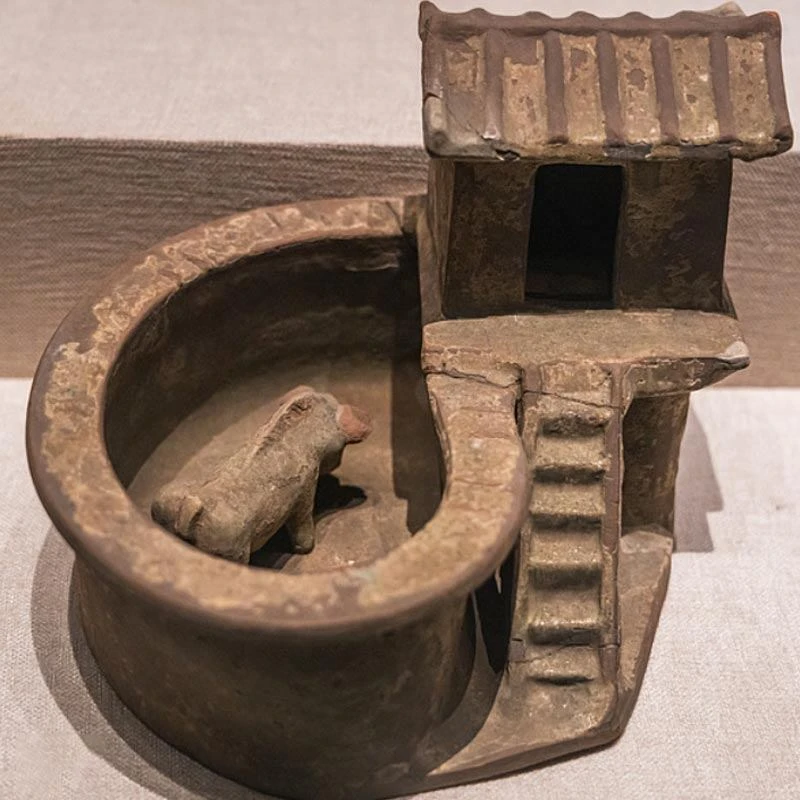
Most ancient waste was food scraps and excrement. Before chemical fertilizer, farms needed both. Shang farmers already used manure. Han Dynasty toilets were often built with pig pens: people used the latrine, pigs ate leftovers, pig manure composted, and fields received the mix. It sounds messy, but it closed a loop. Waste did not leave the economy; it re-entered as soil food.
Ming Dynasty and Qing Dynasty cities had mature links with the countryside. Collectors took night soil and swill out of town, sold to farmers, and returned with cash, firewood, or grain. Rag-and-bone men handled cloth, metal, and broken tiles. What could not be sold went into pits or fires. Archaeologists’ ash pits are old landfills, quiet evidence of daily sorting. No green bins, but repeated reuse.
So old China had no wheelie bins, yet waste never vanished. It became fertilizer in fields, ink on a face, a fine, a wage, a court case. The four-bin quiz at home feels modern, but old cities asked similar questions: What can return to soil? Who carries it? Who pays? Their answers were harsher and smellier. Still, they remind us that “away” is always a place, and someone always deals with it.