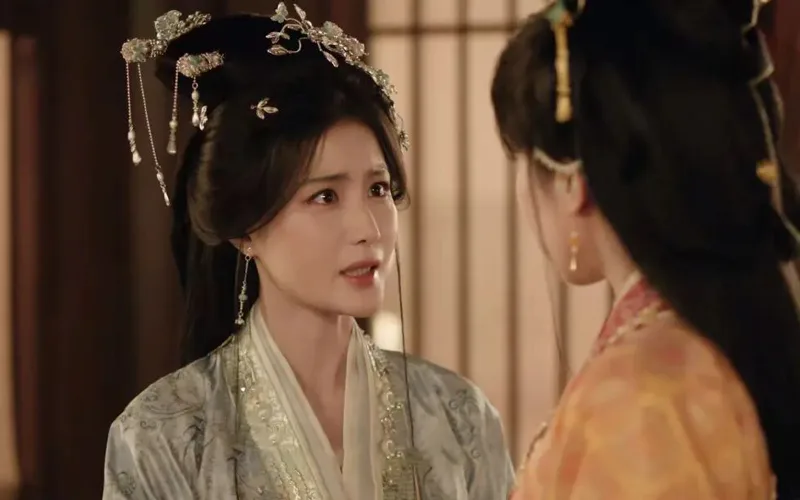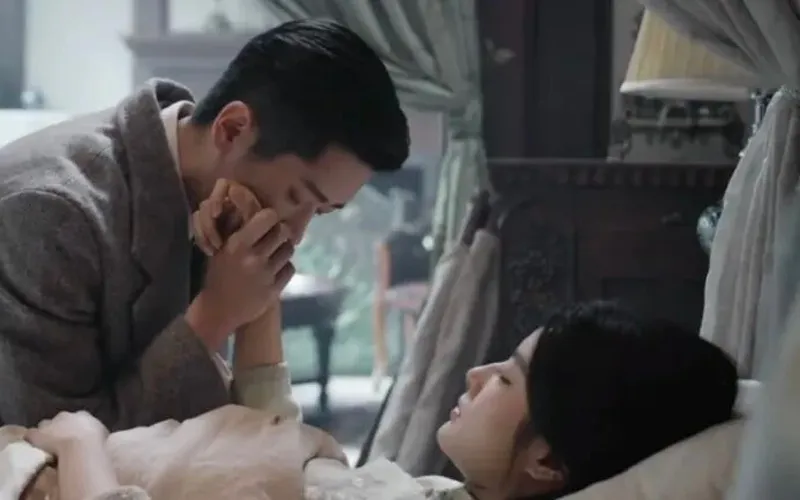
After the gate of Fengtai (枫台) opens, Ye Pingjun (叶平君) does not run far. She walks back toward Yu Changxuan (虞昶轩), the man who once kept her close and then let her go. Viewers ask the obvious question: has she fallen for him? The answer is smaller and sadder. She has learned what he hid. Changlong (昌隆) tells her about the rainy night doctor, the kneeling before the commander for Jiang Xuetin (江学廷). Gratitude and regret pull her forward. Love has not arrived yet. She wants a clean apology, a spoken thank-you, and a quiet ordinary space beside a man she misread. That is the first clue.
Spoken Thanks
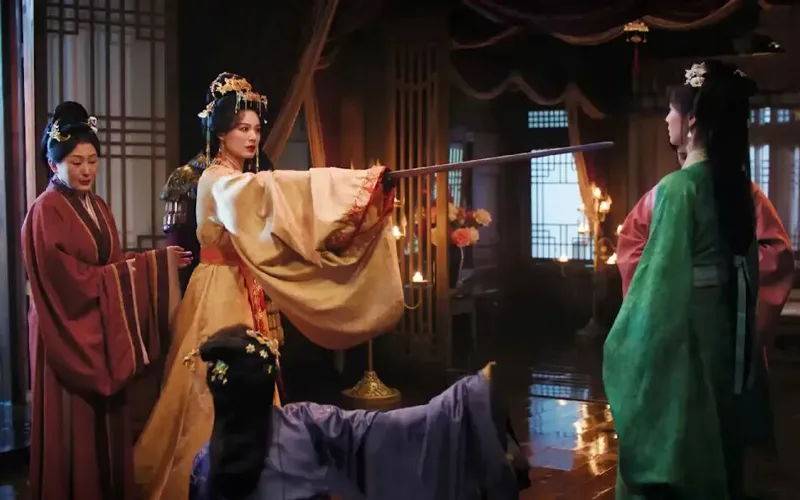
Inside Fengtai, she acted on half-truths. She raised a gun for Jiang Xuetin and pulled the trigger; the chamber held no bullet, yet the choice cut Yu Changxuan deeper than metal. Later, beside fireworks, he spoke of keeping their bond for life. She answered with a wrist cut, a desperate exit that proved how little she trusted him. Those scenes explain her discomfort now. She was not merely cold; she was working with wrong information. Changlong’s account rearranges the past. The doctor, the rain, the kneeling, the commander’s reluctant mercy—each detail turns her old anger into a debt. She wants to stand before him and say the plain words: I am sorry; thank you.
She also prayed for him when he led troops out. That detail matters. Prayer was not romance; it was a promise she made to herself. If he came back alive, she would speak without pride. When he returns, she tries twice to meet him. Both times he refuses, calling her an unrelated person. The phrase sounds cruel. It is also a lock he builds around himself. He fears that one look will restore his old possessiveness. She does not know that yet. She only knows she owes him a face-to-face sentence, and he keeps the door closed.
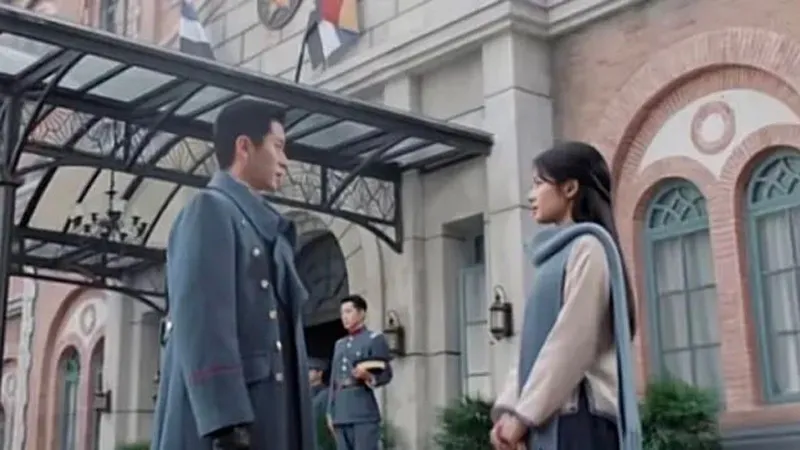
Her wish is not to become his lover. It is to stop being his enemy by mistake. A thank-you would return a piece of his dignity. An apology would return a piece of hers. The two acts are small, but they matter because she once aimed a gun and once aimed a blade at the space between them. Now she wants to aim words at the truth. If he listens, the past can lose one sharp edge. If he does not, she still must try. That need explains her first return.
Timing matters here. She has just left a place that felt like a cage. Her body remembers the locked gate; her mind remembers the gun and the blade. A person in that state does not leap into a new romance. She needs small, steady acts: thank the man who saved her mother’s doctor; apologize for the shot; ask him to stop treating her as a stranger. Each act returns a piece of her own judgment. Romance would be too large and too fast. Gratitude, regret, and ordinary courtesy fit the size of the moment. That is why her footsteps point toward him without becoming a love chase.
Ordinary Distance
The second reason is less dramatic: she wants a normal distance. Yu Changxuan is a capable soldier and a difficult man. He knows how to take, not how to ask. Still, she can imagine a greeting at a gate, a nod on a street, a short exchange about weather. No hiding, no chasing, no forced closeness. After Fengtai, she has her freedom and her fiancé, Jiang Xuetin. Her heart has no room for a fast new passion. She is not rushing toward love; she is trying to repair a human connection that fear and rumor broke.
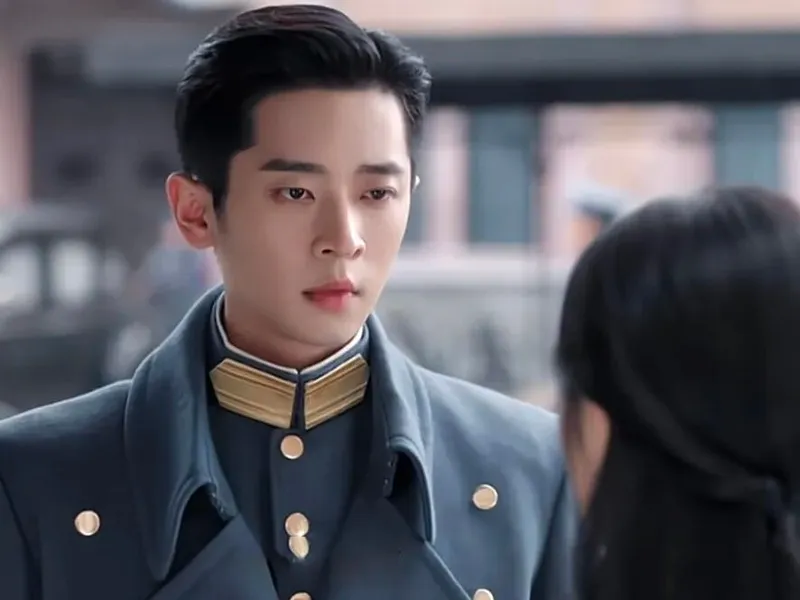
He cannot accept that middle ground. One glimpse of her wakes the old hunger to own, to keep, to decide. Distance is his only discipline. So he calls her unrelated and turns away. The words are harsh because they must be. If he softens, he will repeat the same mistake. She hears rejection; he practices restraint. Both are hurt by the same sentence, though neither can say it plainly. This is why her approach looks strange to viewers. She is not chasing a lover. She is testing whether two people can stand near each other without old roles snapping back.
The show hides its answer in that gap. Ye Pingjun moves toward Yu Changxuan because gratitude needs a voice and guilt needs a door. She also wants to see if the man who once trapped her can now let her stand free. Love may come later, or not at all. For now, she seeks a thank-you, an apology, and a simple human distance. He refuses because he cannot trust himself. That refusal is not proof of her love. It is proof of his unfinished control. The audience misses the point when it reads her steps as romance. Her steps are repair.