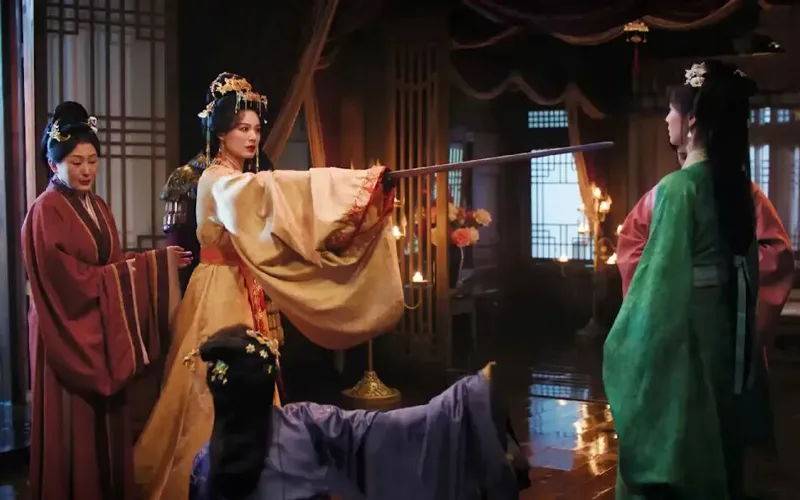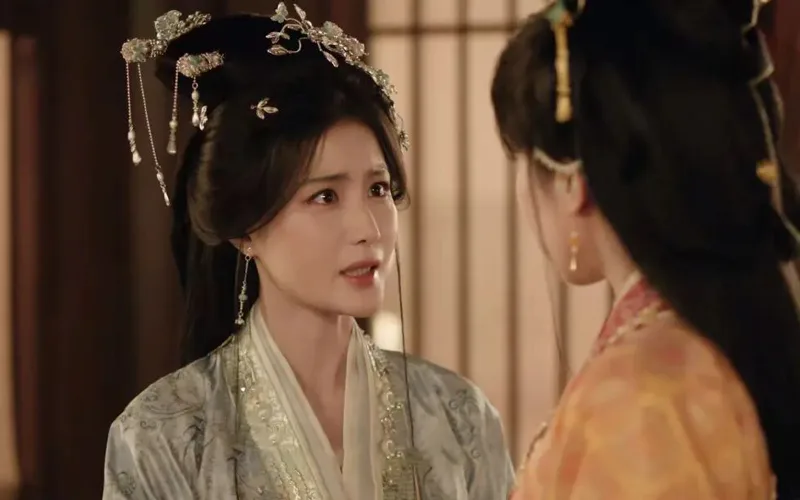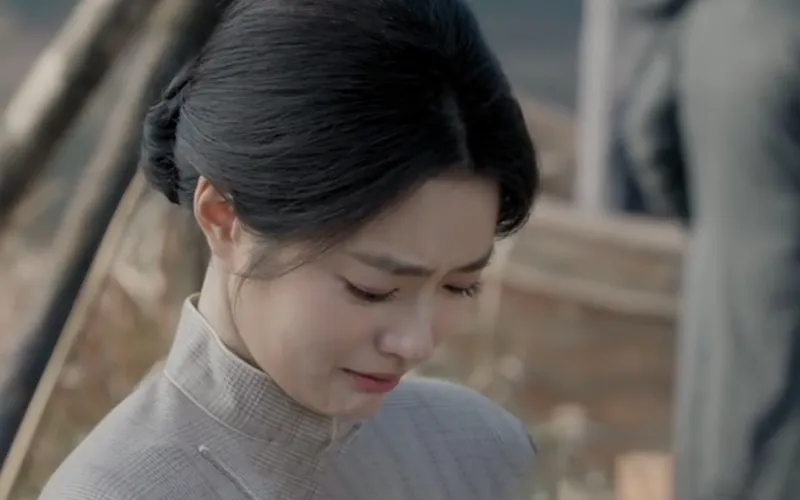
In its final episode, The Lament of Autumn (玉簟秋) does something few Republican-era romances dare: it turns a forced-love story into a war story, then refuses to soften the bill. Yu Changxuan (虞昶轩) and Ye Pingjun (叶平君) finally speak plainly. He asks whether she blames him. She answers that wherever he goes, he will not go alone. He says only she has ever lived in his heart. She promises that she and Xiao Yuer (小鱼儿) will wait at home. The words sound warm. They are also the last ordinary exchange before the guns take over. No treaty can make that promise safe. The audience knows better. Their private war ends; the public one begins.
Love Under Fire
Before the troops move, Yu Changxuan reports to Dong Yu Kou (东御口). Ye Pingjun heads for the rear with Xiao Yuer, Yu Jinxuan (虞瑾萱), and Jun Minru (君敏如). There is no grand goodbye, no promise that tomorrow will be kind. The show simply splits them: he faces the front, she carries the family away. Cheng Lei (丞磊) and Xu Ruohan (徐若晗) play this parting with restraint. Their eyes do more than speeches. In a chaotic era, love is not a shelter; it is a reason to keep moving. The camera does not linger on tears. It lingers on distance. Each step takes them farther from the life they wanted.
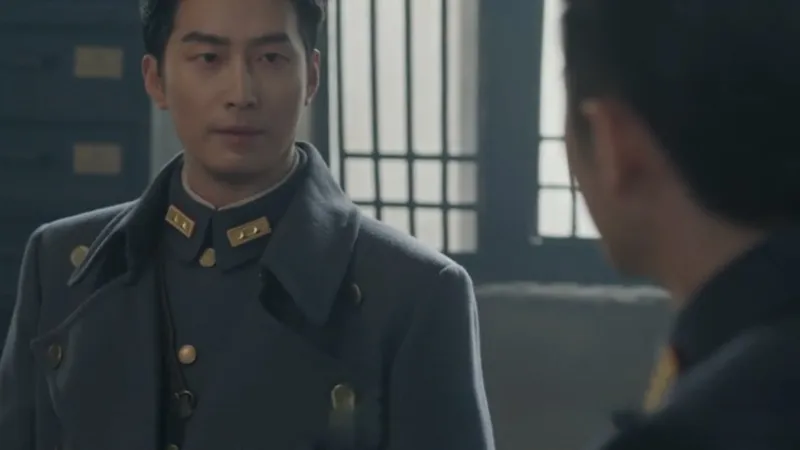
At Wu Bei Kou (武北口), Dou Rao (窦饶) enters as Xiao Beichen (萧北辰), once an enemy of Yu Changxuan. His line lands hard: if the land is broken, everyone is a routed soldier, no matter where they stand. The two men join forces. Yu Changxuan says that standing shoulder to shoulder, they share one name: Chinese soldier. Behind them is the country. Old grudges lose their weight in that sentence. This is not a speech about personal glory. It is a door closing on private anger and opening on duty. The scene works because it stays plain. No flag-waving needed. The camera lets the silence carry the shift.
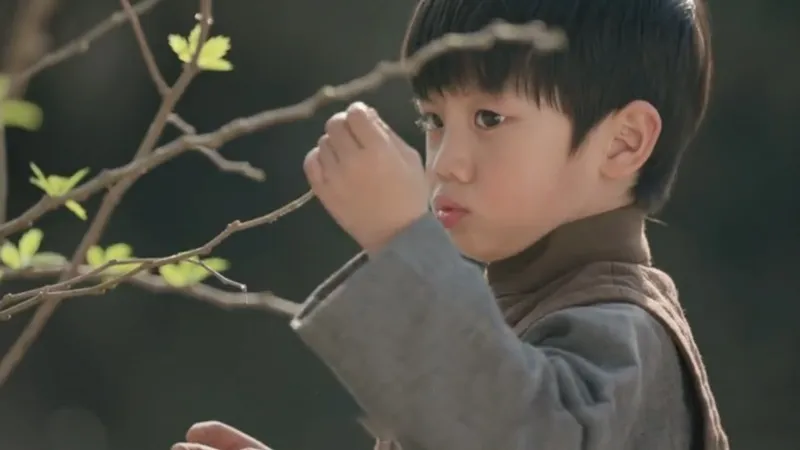
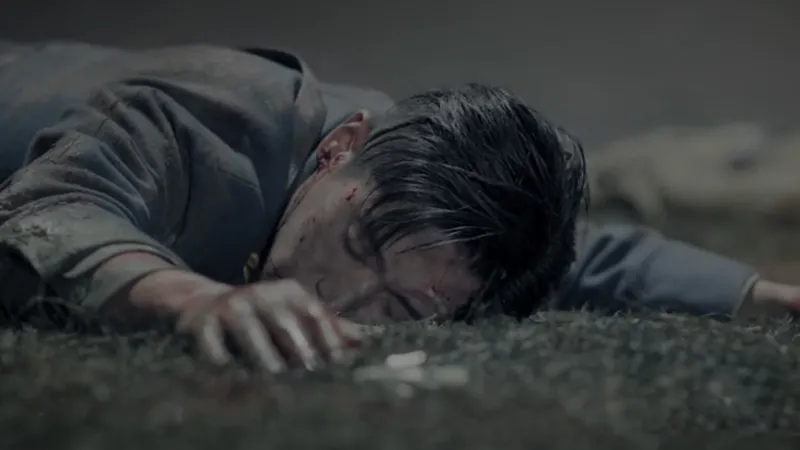
Yu Zhongquan (虞仲权) does not stop his son. He asks, “You are going?” Yu Changxuan answers, “I am.” Years of father-son distance do not melt in a long talk. They dissolve in a shared line of fire. Before they part, Yu Zhongquan finally says the boy he worried about has become his pride. The praise arrives late. Too late. Father and son die at Dong Yu Kou. Gu Ruitong (顾瑞同) and Li Boren (李伯仁) do not return either. The Yu house pays its bill in full. No speech can repair the years. The battlefield does not offer repair. It offers only one clean moment. That moment lands because it is small.
Hall of Sacrifice
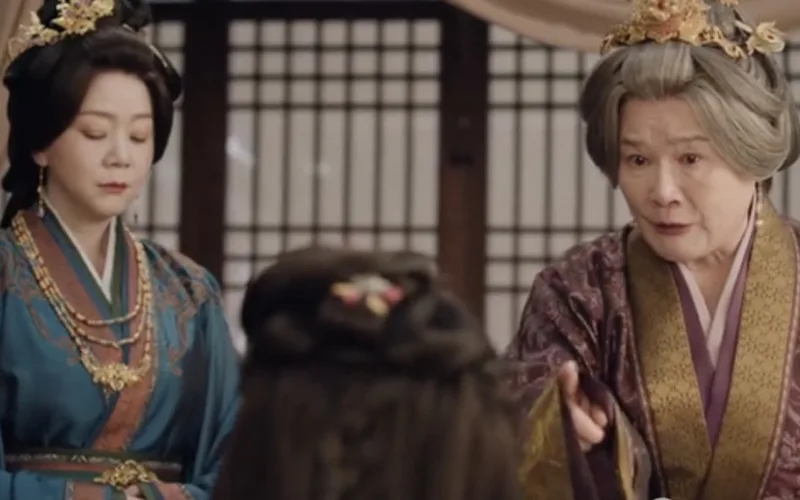
In the rear, Zhao Baoru (赵宝茹) pays the servants and tells them to live, however hard survival becomes. She knows the mansion cannot hold. She empties the family gold into military funds and refuses to leave a coin for the Japanese. Xu Fan (徐帆) plays her without theatrical weeping. Zhao Baoru is not a broken widow. She reads the room, counts the cost, and chooses. When the invaders offer her a way out, she answers that she will not shame her husband and son’s blood. Then she dies with the enemy in the Yu ancestral hall. Her calm is scarier than shouting.
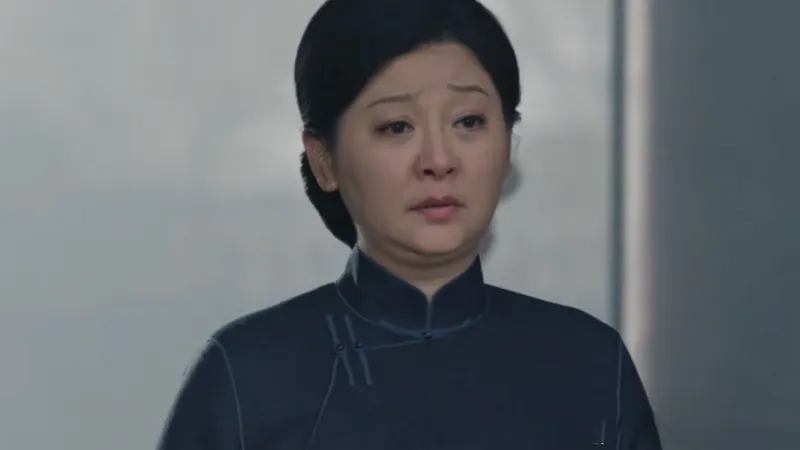
Her choice gives the finale its hardest question. Who is the real force in the Yu family? The men go to the front and die as soldiers. The women stay behind, carry children, bury pride, and protect the last door. Ye Pingjun waits with Xiao Yuer. Zhao Baoru turns the ancestral hall into a final stand. Neither woman is written as a decoration. They are the ones who make the family’s sacrifice mean something after the guns stop. The show does not call them heroes. It lets their actions speak, and that choice is stronger. No speech needed. The family name survives through their nerve, not their comfort.
The Lament of Autumn may begin as a controlling CEO romance, and its critics have a point. Yet the ending does not pretend the early fantasy was enough. It pushes the couple apart, kills the father and son, and lets Zhao Baoru choose death with clear eyes. The show earns its patriotic turn because it makes the cost specific: a promise at home, a late word from a father, a hall with no way out. Love does not save everyone here. It gives them a reason to stand. That is why the final hour stings. The ending is harsh, but it is not empty. It leaves scars on purpose.