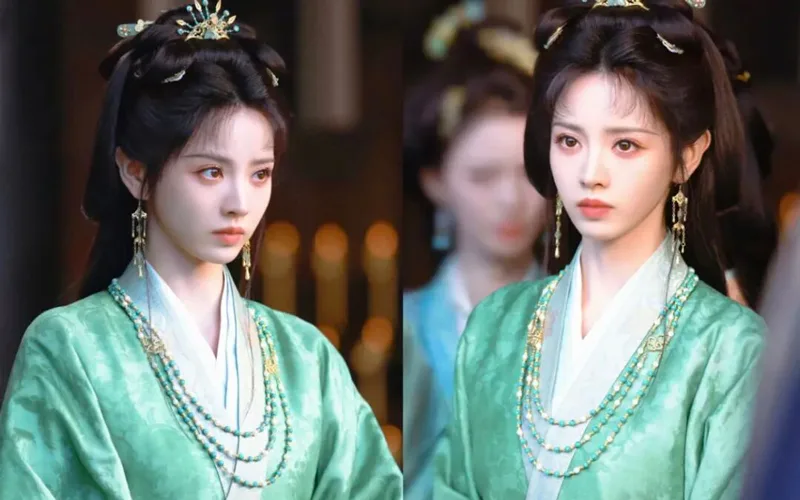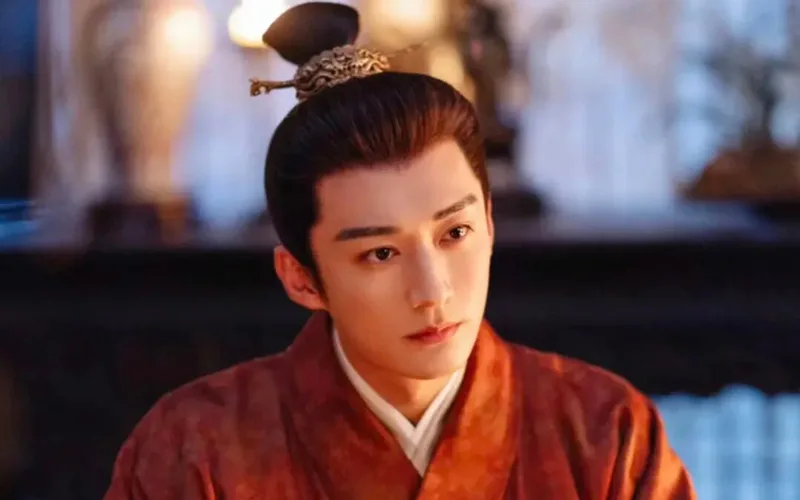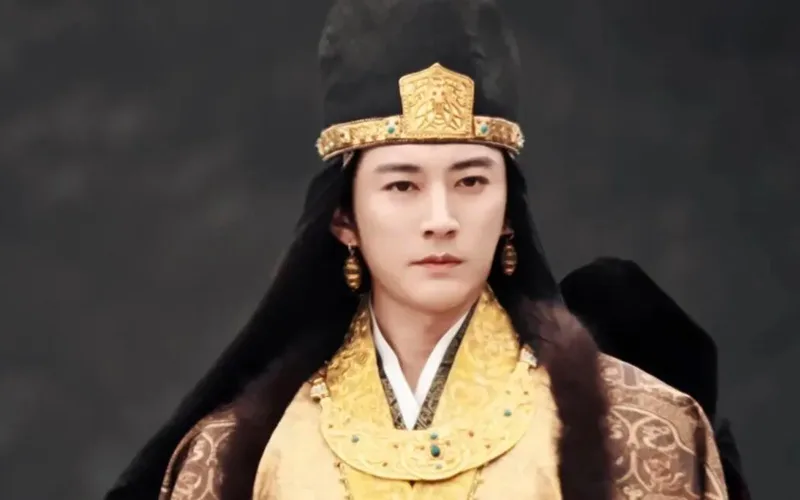
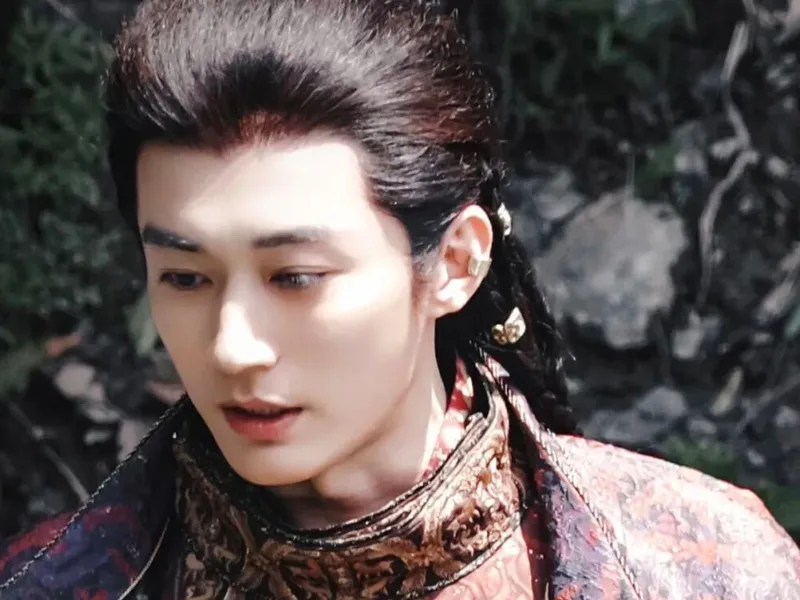
When photos of Liu Xueyi (刘学义) as Tuoba Jun (拓跋濬) in the historical drama Jiangshan Datong (江山大同) appeared, many viewers stopped at one small detail: a gold earring. Their first thought was simple. Did men in ancient China really wear earrings? The image felt odd, almost like a modern stylist’s mistake. Yet the choice is not random. It points to the Xianbei (鲜卑) court of the Northern Wei, a time when grassland habits and Central Plains rules lived side by side.
That little ring opens a door onto a court that had not yet become a fully Confucian dynasty. It also asks viewers to unlearn a habit: judging a fifth-century ruler by later costume rules. Costume choices in historical drama often become tests of memory, and this one is unusually productive. A single accessory can carry more history than a whole costume.
Steppe Status
Tuoba Jun ruled during the Pingcheng (平城) era, before the court moved to Luoyang (洛阳) and pushed full sinicization. In that stage, Xianbei nobles still carried many steppe traditions. Han Confucian ritual expected gentlemen to avoid ornament; earrings were linked to women’s dress, especially after the Tang. For Xianbei men, however, gold earrings were not a strange fashion. They were a long-standing sign of rank, wealth, and protection. A noble man could wear one without breaking his own society’s rules. The ring was less about beauty than about who he was and which network protected him. In court politics, appearance was a form of speech, and his earring spoke clearly.
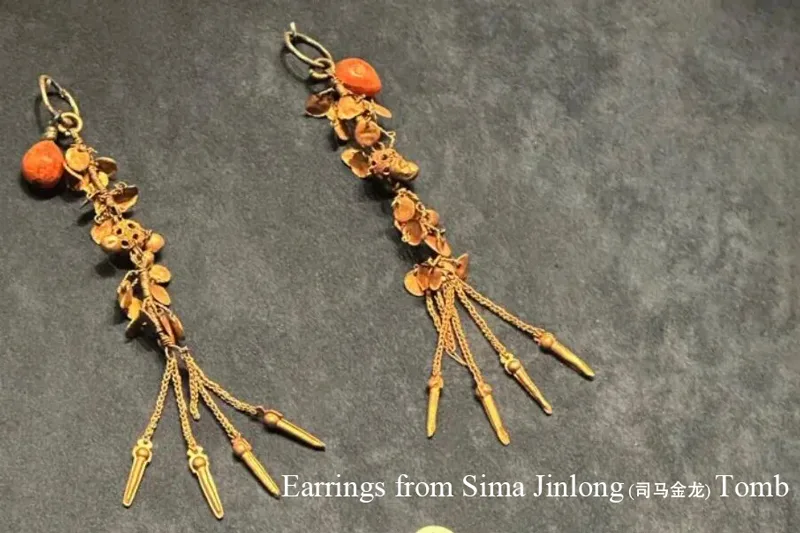
The steppe setting matters. Xianbei groups traded and fought with Xiongnu (匈奴) and Western Regions peoples, and Eurasian jewelry habits entered their daily life early. In tribal politics, a man rode, fought, and spoke at councils. Gold on his body proved family strength and carried a wish for safety. Male burials support this. At Yihe Nao’er (伊和淖尔) and San Dao Wan (三道湾) in Inner Mongolia (内蒙古), Xianbei graves have yielded earrings, including those of noble warriors. These finds are not only female grave goods. They show that the accessory belonged to a male world of horses, rank, and ritual protection. For a warrior elite, jewelry could travel with the body and remain useful in the next world. The grave goods make a quiet argument against modern assumptions.
By the Pingcheng period, styles split by class. Common warriors wore simpler pieces. Emperors and high nobles chose more elaborate work, often mixing Central Asian and Western Regions techniques. A gold earring from a Northern Wei tomb in Datong shows this clearly: a gold ring, gold wire, agate, turquoise, openwork gold beads, and tiny bells that sounded with movement. Hammering, filigree, and granulation appear in the piece. It looks far from the plain early steppe spiral. The jewelry was still male status wear, but its language had become richer and more cosmopolitan. Even the sound of the bells may have announced a wearer before his face was seen. That mixture suits a ruler whose court still balanced horse-country customs with borrowed bureaucracy.
Changing Style
The earlier Xianbei phase, around Shengle (盛乐), favored clean spiral motifs in gold foil or gilt copper. Such shapes were practical for riders. They did not catch on clothes. After the court settled in Pingcheng, noble earrings grew more complex, with more pendants, amber, amethyst, and glass beads, and larger sizes. Men’s pieces stayed broader and less fussy than women’s. For Tuoba Jun, the design logic is easy to follow. He is an emperor of a mixed court, not a Tang scholar, and the earring fits that in-between world without turning him into a decorative figure. It gives him weight, not glitter. The shift was not a simple matter of taste; it followed military, political, and ritual needs.
Custom did not last forever. When Emperor Xiaowen (孝文) moved the capital to Luoyang and pressed thorough sinicization, Xianbei men’s earrings faded fast. Nobles began to reject steppe habits in public. A man wearing such jewelry could be read as improper under the new ritual code. Tuoba Jun’s own reign also included sinicization, but with a softer hand; it prepared the ground for Xiaowen’s later reforms. In the drama, his later look drops the earring, and the change matches the story’s era. Costume here is not decoration for its own sake. It marks a political shift, and the missing earring says as much as the first one did.
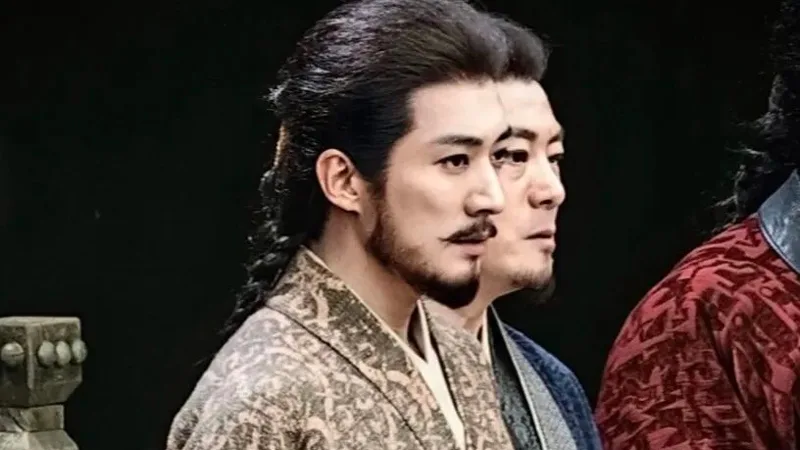
Criticism of the look often comes from familiarity with post-Tang and Song costume dramas. Later ritual codes have hardened into a default rule: ancient men cannot wear earrings. The Northern Dynasties were different. Hu (胡) and Han customs collided, mixed, and borrowed from each other. Dress and jewelry had no single standard. The earring makes that unsettled Northern Wei visible before it fully turned into a Central Plains dynasty. It also shows how Huaxia (华夏) expanded through contact and blending, not through one fixed costume. Seen this way, the earring is not a gimmick; it is a small visual clue about a regime in motion. Does the look work for you?