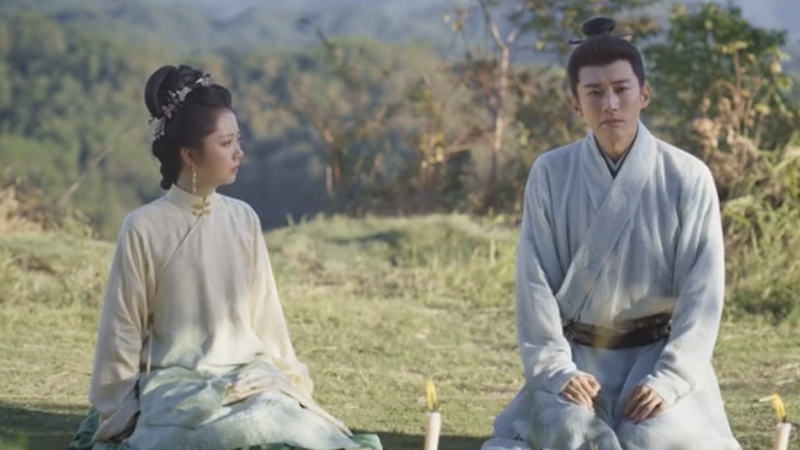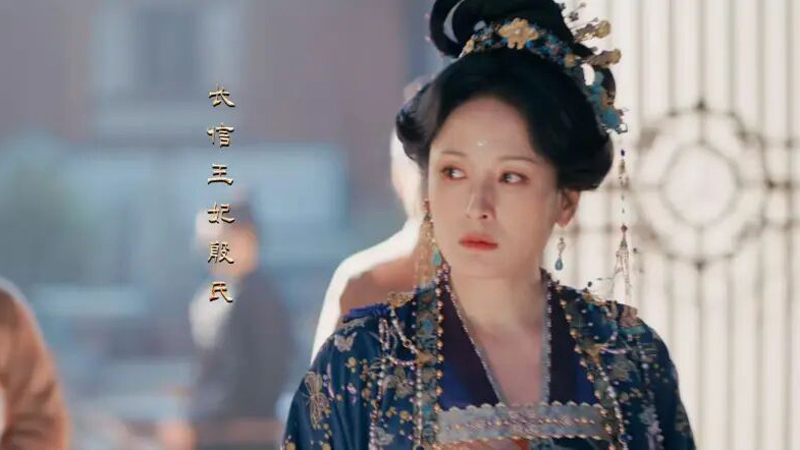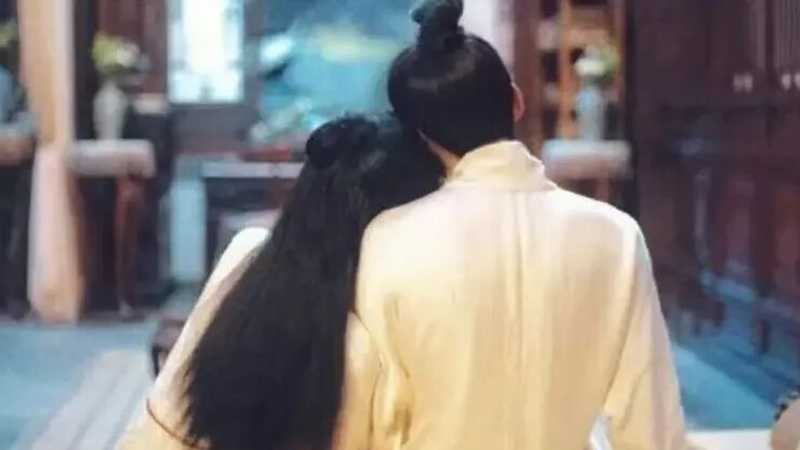
Viewers who finished Against the Current (兰香如故) often describe the same reaction: quiet sobbing, then anger, then a strange tenderness. Xu Lanxiang (许兰香) dies in her eighties. Her children are nearby. Her later years are stable, even kind. By ordinary measures, her story closes well. The detail that refuses to leave is smaller and sharper: the person she holds at the end is not Lin Jinqi (林锦岐). It is a worn sachet. Why does her last breath belong to an object, not the man who adored her?
The answer is not that she loved him less. It is that love came after the wound. Her first loyalty belongs to Shen (沈) family, a name crushed by injustice long before she learned how to live under another name. The finale is not only a romance; it is memory refusing to die.
A Red Thread
Lin Jinqi’s devotion is hard to dismiss. Near his own death, he visits Yue Lao Temple (月老庙) and asks for a red thread. He winds it around Xu Lanxiang’s wrist, his voice shaking. At betrothal, he says, she was Shen Jialan (沈嘉兰); at marriage, she became Xu Lanxiang; but the thread ties the same woman. Do not mistake her, he begs. He also wishes for another life together as husband and wife. It is a scene built to break hearts, and it does. A love this sincere should dominate any final memory. Yet the story keeps pointing elsewhere. The red thread comforts the woman she became. It cannot answer for the girl she was before the Shen house fell.
That girl had a different name and a different sky. Born Shen Jialan, she was a legitimate daughter of a once-proud household. False charges wiped out her family. Her birth mother spent her last strength shielding her. Her adoptive mother Xue (薛) gave her a chance to escape, then raised her with steady care. The old sachet hidden in her sleeve came from Xue’s hands, stitched one needle at a time. Inside rests a token from her birth mother, along with one word: live. Mothers and clan are not background in her life. They are the bone beneath every choice, the reason she can smile while carrying a knife-shaped memory.
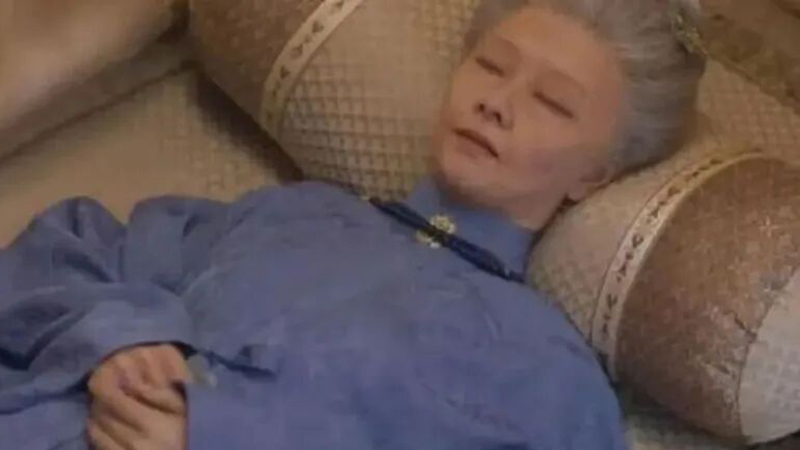
The Shen case is not a problem a good husband can solve. Her ancestors angered an emperor. The injustice hardened into stone. No one in that generation could overturn it. She can build a warm home, raise children, grow old with respect, and still wake to the same unfinished sentence: her family has no vindication. The love of Lin Jinqi gives her shelter, but it does not give her justice. That gap explains the sachet. It is not a rival to romance. It is a claim older than romance, pressed against her palm when words fail.
Some viewers read the red thread as proof that love wins. The show is crueler and more honest. Love can heal a person without replacing her history. Lin Jinqi knows the names, but he meets Xu Lanxiang after the fire. He cannot return Shen Jialan’s mother to her, cannot unmake the false charges, cannot make an emperor confess. His thread ties a future. Her sachet ties a past. Both are real. Only one can be carried into death without explanation.
The Old Sachet
In old age, Xu Lanxiang turns to writing. She uses the name Shen Ruguo (沈如故), a quiet disguise with memory inside it. Every woman in her plays is called Tanniang (昙娘). She writes The Shen Family Chronicle (沈家记), then lets street songs and stage whispers carry what courts buried. She understands imperial power. She knows an edict will not fall because a woman grieves. So she chooses slower weapons: repetition, melody, public memory. If the play keeps being sung, the Shen story will not disappear. This is not nostalgia. It is strategy. Her ink is a second sachet, sewn from paper, holding a family name for strangers to inherit.
Lin Jinqi walks beside her through many storms. He builds a harbor strong enough for her later years. Still, he never entered the airless room of her youth, the season when her family was erased and survival meant becoming someone else. At fifty, worn down by years of labor, he dies peacefully in her arms. More than thirty years follow. She keeps an empty room, watches relatives and friends leave the world one by one, and lets grief settle into ink. Tenderness remains, but it is not the whole architecture of her soul. It is a lamp in the hallway, not the foundation under the house.
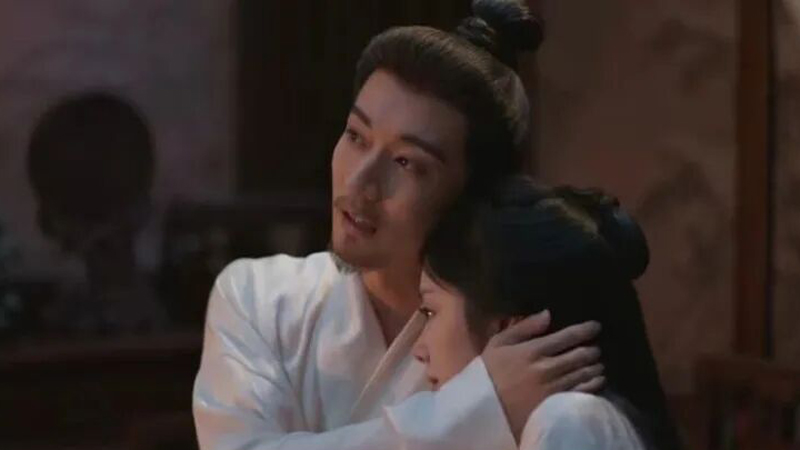
The finale’s deepest blow is not that she chooses family over husband. It is that she never gets to see the scales turn. She dies holding the old sachet, calm and unfinished. The imperial edict that clears the Shen name never arrives in her lifetime. One hundred thirteen years later, waves of ordinary people sign petitions. The court finally reverses the case and rebuilds the graves. She guarded and wrote for a lifetime, yet missed the one moment she waited for. That is why the ending leaves a stone in the chest. Love saved her days; bloodline and honor kept her awake.
What remains after the credits is not a question of who loved whom more. It is a question of what a person owes the dead. Xu Lanxiang pays that debt with plays, pseudonyms, and a sachet worn thin against her skin. Her husband gave her a home; her mothers gave her a reason to keep walking. The finale honors both, but it refuses to confuse comfort with completion. That refusal is why the ending hurts, and why it lasts.