
When actor Liu Xueyi (刘学义) steps into Against the Current (兰香如故), his character Lin Jinqi (林锦岐) comes home after earning military merit. He wears dark armor with hidden patterns. A black net cap sits on his head. One detail jumps out: a white cloth at the crossed collar, pressed against his neck. Does it look out of place? At first, yes. But it is not a mistake. It is a collar guard. This small piece belongs to Ming Dynasty dress. It protects the collar, and it also shapes how the camera reads his face and body. The white strip is history, function, and screen craft in one simple line.
History and Materials
Long before the Ming, people found ways to save their collars. During the Wei, Jin, Southern and Northern Dynasties, paper was pasted inside a collar to catch dirt. Book of Wei (魏书) records this habit. In the Tang and Song dynasties, protection took different forms. Ritual clothing used Fangxin Quling (方心曲领), a collar piece tied to formal rules. Everyday robes sometimes relied on inner layers. Those inner layers pressed against the outer collar and took the worst of the wear. The goal stayed the same: keep the visible collar clean. The method changed with fashion, rank, and available materials. By the Ming, a new answer became common. It was detachable, easy to replace, and often bright white.
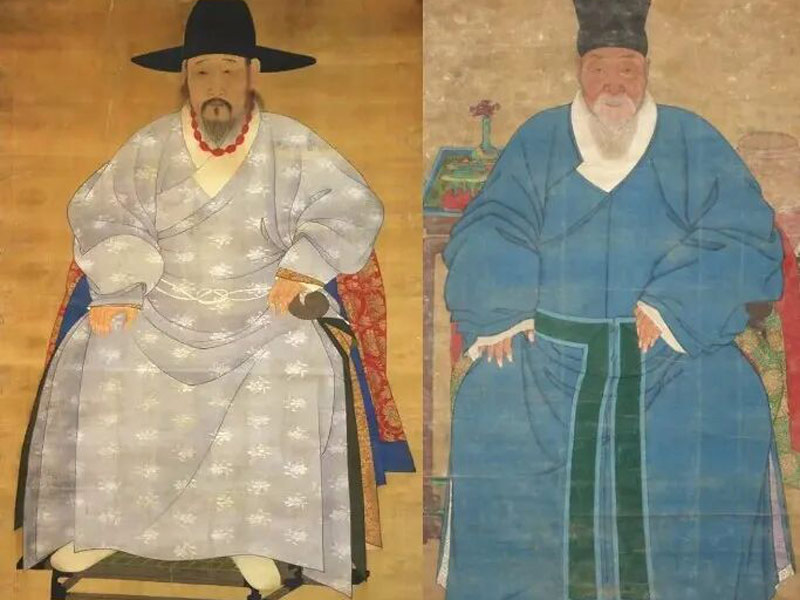
Ming portraits often show a white rim around the neck. The rim sits exactly where Lin Jinqi’s white strip appears. These rims were not sewn permanently into the robe. They could be taken off, washed, or swapped. Surviving objects and paintings point to two main materials: cloth and paper. Cloth guards were stronger. Paper guards were cheaper and faster to use. Both served the same task. They protected the costly outer collar from sweat, oil, and dust. For a costume designer today, the detail is useful. It adds a clean edge to dark fabric and gives the eye a place to rest. For a Ming wearer, it was simply practical.
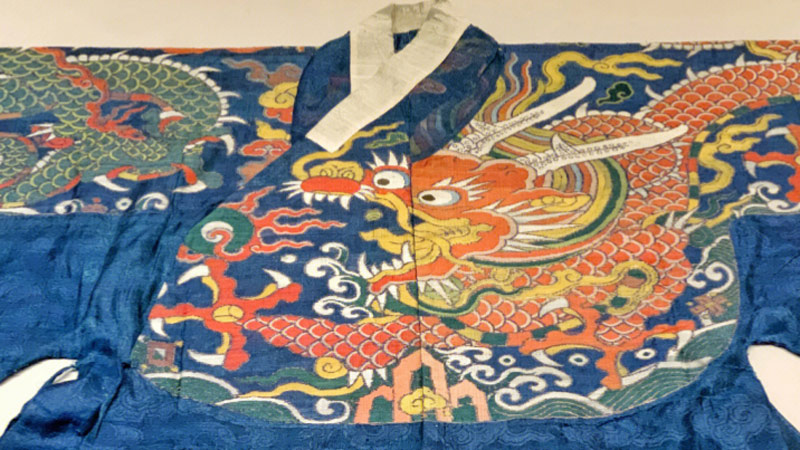
Paper guards were disposable. A person tucked one inside the collar, fixed it in place, and removed it when soiled. There was no need to wash it. Court women used this type often. Jie’an Laoren Manbi (戒庵老人漫笔) notes their paper collar guards. Cloth guards worked differently. They could be washed and reused many times. A loose stitch held them in place. Only a few points were sewn, so the guard could be cut free without damaging the robe. Most surviving examples are white. White may seem risky because it shows dirt, but that was the point. A guard is meant to show dirt before the collar does. White cloth was also cheap and unlikely to fade. In a world of dark robes, it offered a clear, honest signal: this part can be replaced.
Why It Worked
Ming crossed collars often sat high and close to the neck. That cut looked formal, but it caused problems. Speaking, turning, and nodding made the collar rub against skin. Sweat and body oil reached the edge quickly. If the robe had to be washed often, the fabric and dye suffered. A detachable guard solved this. A wearer could remove the dirty strip, wash it alone, or put in a fresh one. The main robe stayed clean longer. This was not vanity for its own sake. It was a smart response to a fitted collar shape. The white strip on Lin Jinqi’s neck follows that logic. His dark military robe looks severe, but the guard keeps the neckline under control.
Ming taste also favored plain order. Dark clothing with a narrow white edge looked neat and calm. Scholars liked this effect. A clean white line around the neck made a person appear tidy and modest. It did not need embroidery or bright color. The contrast did the work. In Against the Current, the same idea helps the character. Lin Jinqi has just returned from duty. He should look disciplined, not flashy. The white guard gives him a quiet point of order. It separates his face from the heavy dark cloth. It also makes the costume feel lived in rather than purely ceremonial. A tiny white band can say more than a large ornament.

Paper production helped make these guards common. In the Ming, papermaking reached more workshops and more users. The Exploitation of the Works of Nature (天工开物) describes the full process. With more paper available, courts could cut waste. A paper guard could be changed without sending a whole robe to the laundry. Cloth guards offered a longer-term version of the same savings. Both reduced wear on outer garments. This mattered in large households and palaces, where clothing was costly and cleaning was labor-heavy. The guard was small, but its economy was real. It turned a vulnerable collar into a replaceable edge. That practical appeal explains why the white rim appears so often in Ming images and why it fits this drama’s world.
On screen, the white guard does more than protect. It creates a visual stop at the neck. Liu’s dark body could swallow his face in shadow, but the white line keeps the two areas apart. Close shots show a clearer jaw and looser facial features. Wide shots keep his upper body from blending into walls, banners, or background crowds. The guard also adds a layer without bulk. It gives the costume a top and bottom, a hard edge and a soft one. So the white cloth is not strange. It is a Ming solution, a costume choice, and a camera aid. Once you know its name, the collar no longer looks like a mistake. It looks like a quiet piece of design doing three jobs at once.