When leaked photos from the upcoming drama Lai Zhan (来战) surfaced online, fans noticed something odd about Ju Jingyi’s (鞠婧祎) costume. Over a pale green floor-length gown, she wore a shorter green skirt that wrapped across her chest. The double-layered silhouette looked like two skirts stacked together, an unusual sight in period dramas that typically feature either a single long dress or a separate top-and-skirt combo. Was this a costume department experiment, or did it have roots in history? As it turns out, that mysterious outer layer has a name and a story stretching back over a thousand years.
A Brief History
The garment draped over Ju’s chest is called a Mofu Qun (陌腹裙), a type of short skirt that saw its heyday in the early Tang Dynasty. Its name derives from the Mofu, a belly-covering undergarment worn since the Han Dynasty. Unlike the long, flowing skirts worn over it, this piece was short and narrow, covering only the area from the chest down to the waist. Historical texts from the Qing Dynasty even compared it to a Dudou (肚兜), the traditional Chinese bellyband, underscoring its origins as intimate wear rather than outer clothing.
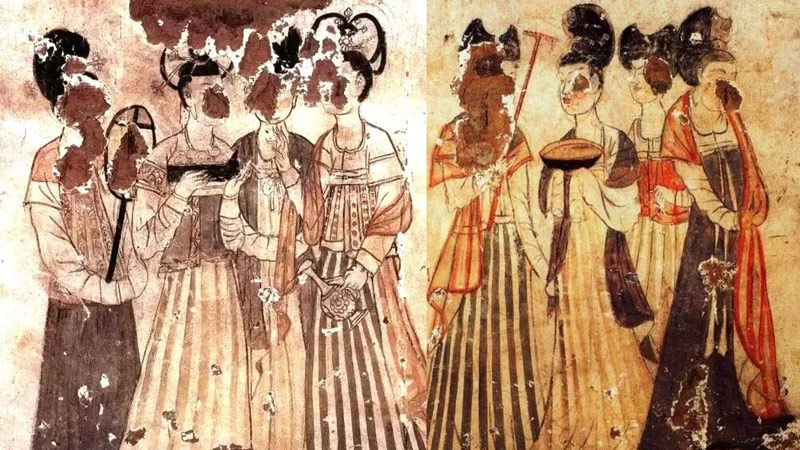
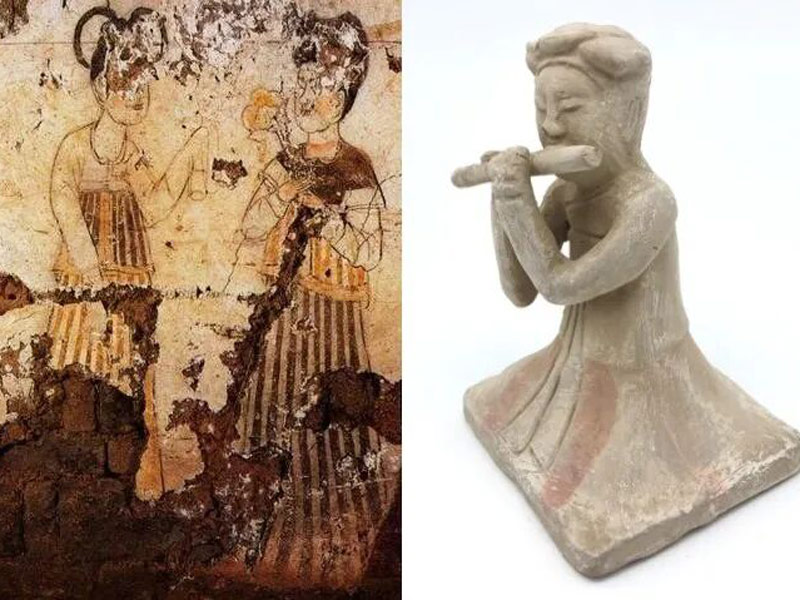
By the Sui and early Tang periods, a new style emerged: a short skirt designed to be worn directly over a chest-high gown. It stopped at the waist, creating a distinctive layered effect. While the term “Mofu Qun” does not appear in ancient records, scholars believe it was coined later to describe this garment’s resemblance to the original Mofu undergarment. Murals from the early Tang Dynasty, including those in the tomb of Princess Xincheng, depict women wearing this exact layered arrangement, confirming its historical authenticity.
How did an undergarment become outerwear? The answer lies in a broader trend. In ancient China, the boundary between inner and outer clothing was not as rigid as it is today. The Liangdang (裲裆), a sleeveless vest-like garment, began as underwear during the Han Dynasty before evolving into a visible outer layer during the Wei, Jin, and Northern-Southern Dynasties. The Mofu Qun followed a similar path, transforming from a practical belly warmer into a fashionable statement piece.
Practical Elegance
The popularity of the Mofu Qun in the early Tang Dynasty can be attributed to three intertwined factors. The first was sheer practicality. Wearing a short skirt over a long chest-high gown served multiple purposes: it pressed down the waistband of the inner skirt, provided an extra layer of warmth, and protected the long gown from dirt and wear. In an era without modern laundry conveniences, this kind of protective layering was a smart solution for women who wanted to keep their expensive silk garments clean.
The second reason was aesthetic. Early Tang fashion favored slender, elongated silhouettes. Women wore striped skirts made from alternating colored panels, and the Mofu Qun added a horizontal element that broke up the vertical stripes while creating a visual effect that made the wearer appear taller and more graceful. The short skirt functioned as a design tool, not just a practical addition.
The third factor was the era’s love of layering. Tang women approached dressing as an art of accumulation. A fitted blouse went on first, then a striped skirt, then the Mofu Qun, and finally a shawl draped over the shoulders. Each layer introduced a new color and pattern, creating a rich visual texture. Because the Mofu Qun sat right at the chest and stomach area, the most prominent part of the body, aristocratic women would embroider it with floral motifs or trim it with woven silk borders, turning a functional garment into a canvas for personal expression.
Taste in Transition
The Mofu Qun’s decline came with a shift in aesthetics. After the Wu Zhou period, women’s fashion moved toward fuller figures and bolder, more confident styles. Open necklines and low-cut designs became popular, replacing the more modest layered look. Skirts transitioned from multi-colored stripes to solid colors, and the layered Mofu Qun gradually fell out of favor. What had been everyday wear in the early Tang became a rarity, which explains why modern audiences find the style so unusual when they encounter it in dramas today.
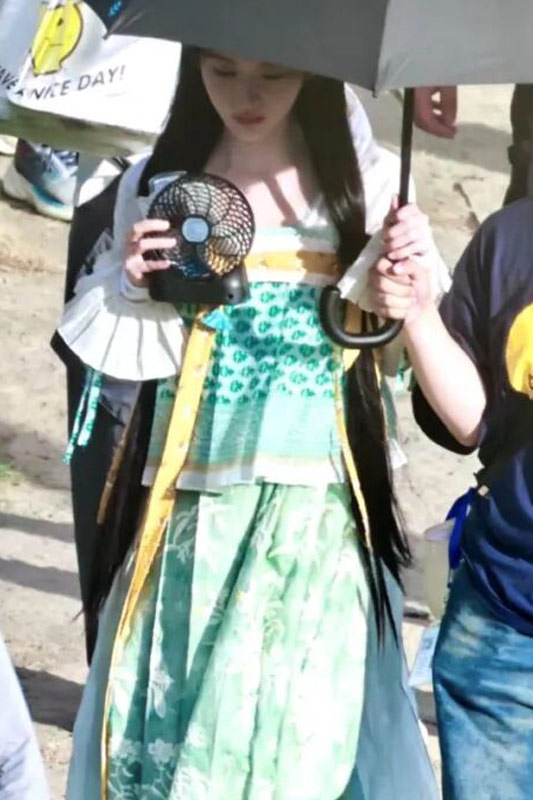
Contemporary Tang-era costume dramas typically feature only single-layer chest-high skirts, rarely attempting to recreate the Mofu Qun layering. The costume team behind Lai Zhan made adjustments to Ju Jingyi’s outfit as well. Their version is looser than the form-fitting historical original, featuring a light green base with small floral prints and bright yellow ties, giving it a livelier, more contemporary feel. Yet the core structure — a short skirt wrapped across the chest over a longer gown — remains faithful to the early Tang prototype.
Ju Jingyi’s layered green look may have puzzled viewers at first glance, but it is far from a costume designer’s whim. It is a glimpse into a moment when Chinese women dressed in layers not out of excess, but out of a practical elegance that balanced function, aesthetics, and self-expression. Sometimes the most unfamiliar silhouettes carry the most interesting stories.