At a recent event inside Tsinghua University, a photograph moved quickly through social media. Weng Fan (翁帆), widow of Yang Zhenning (杨振宁), stood at a podium in a plain black outfit. It was not a stage costume. It was not a historical reenactment. The garment carried the clean lines of Hanfu, especially its cross-collar, right-lapel shape. Beside rows of dark suits, her look felt calm, precise and unmistakably Eastern. Many viewers called it beautiful. Fewer noticed the older rules folded into that simple collar. That is where the real story begins.
A Simple Entrance
The first surprise was restraint. Weng Fan wore no bright embroidery, no heavy crown, no layered sleeves. The fabric was black, soft and well cut. It fell straight instead of wrapping her in volume. A narrow line of pearl trim along the front edge gave the only shine. That detail did not shout. It simply caught the light when she moved. In a room built for lectures and serious talk, the outfit read as respect—not performance.
This matters because public images of Hanfu often lean toward festival stages. People see wide sleeves, rich patterns and elaborate hair. Such looks are lovely, but they can make the clothing feel far from ordinary life. Weng Fan’s choice offered another path. She kept the recognizable collar and the quiet dignity of the form, then removed what would distract. The result was formal enough for a university podium, yet light enough for a modern body.
Her appearance also invited a question: can tradition enter a room without turning into a display? The answer, in that photo, was yes. She did not ask the audience to travel back in time. She brought one old idea—order expressed through dress—into the present. The black cloth, the straight fall, the single pearl edge: each choice said less, not more. And because it said less, people looked longer.
The Collar Code
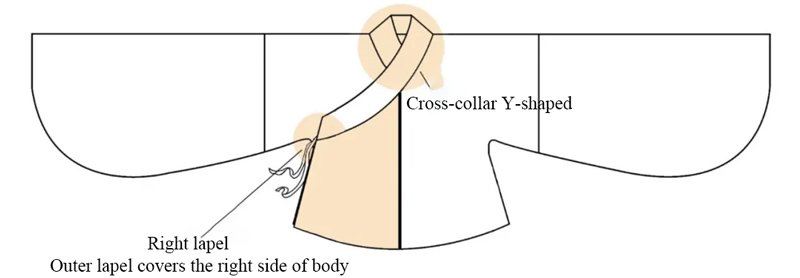
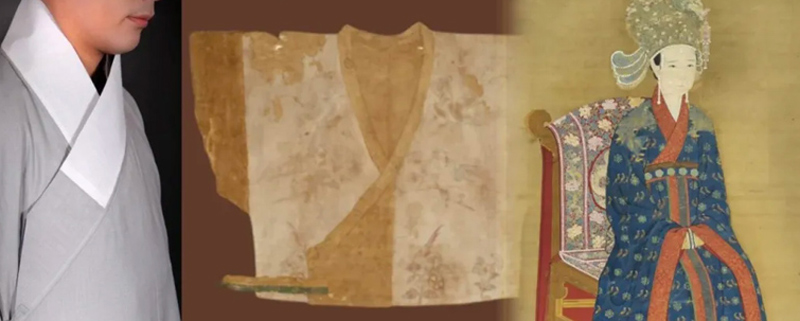
The center of the outfit was the collar. In Hanfu, the cross-collar, right-lapel style is not a random design. It creates a natural Y shape at the chest. The left panel crosses over the right, a rule known as cross-collar right-lapel style. For centuries, this closure marked Han Chinese dress and separated it from other clothing systems. It also carried a moral language: balance, order, and the proper place of things.
That may sound abstract, but the eye understands it at once. A suit jacket has its own grammar: sharp shoulders, straight lapels, a certain authority. The Hanfu collar speaks differently. It softens the neckline while keeping the body upright. It suggests ease, but not looseness. Weng Fan’s version followed that grammar closely. The line was clean, the opening exact, the fabric controlled. Nothing was left to chance, yet nothing looked stiff.
This is why the detail matters beyond fashion. A collar can be copied as a shape, but the meaning lives in how it is worn. When the right-lapel rule is respected, the garment belongs to a long conversation about identity and manners. When it is ignored, the result may still be pretty, but it becomes costume. Weng Fan wore the rule quietly. She did not explain it. The collar explained her.
Everyday Confidence
Perhaps the strongest message was practical. Hanfu does not have to wait for a holiday. A modified cross-collar piece can work for a lecture, a panel, a formal meeting, or a serious interview. The flat-cut shape can fit modern bodies. Clean lines can suit modern rooms. The key is not to pile on ancient symbols. The key is to keep the bones of the form and let daily life shape the rest.
That approach weakens ceremony and strengthens use. It also answers a common complaint: traditional clothing feels too heavy, too wide, too strange for a normal day. Weng Fan’s black outfit did not fight the modern world. It joined it. The pearl trim was small. The silhouette was simple. The confidence came from fit and posture, not from decoration. In that sense, the look was not a retreat into the past. It was a modern woman using an old form on her own terms.
Real inheritance is not copying every ancient rule. It is taking the spirit and letting it live now. For Hanfu, that means respecting the collar, the closure, and the calm line, while allowing new fabric, new cuts, and new settings. Weng Fan showed that this can be done without noise. Her outfit did not demand attention. It received it. Would you wear a piece like that—not as a costume, but as yourself?