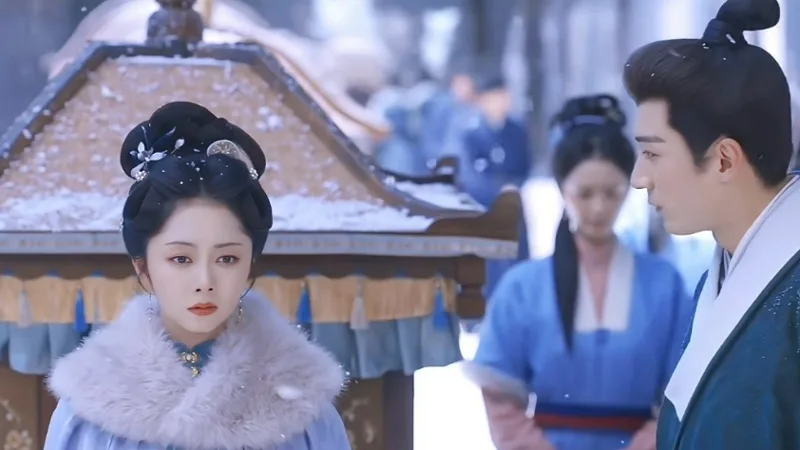
The quietest wound in Against the Current (兰香如故) does not come from a villain. It comes from a woman who learns that saying one true sentence could destroy the man she loves. Xu Lanxiang (许兰香) slaps Lin Jinqi (林锦岐) in front of wedding guests, and viewers cheer. Later, after he is beaten and falls asleep, she sits by his bed and whispers that he never understood her mind, yet still dared to marry her. The line sounds like anger. It is a confession. The drama wraps romance inside survival, and asks a sharper question than who loves more: who has the right to speak love without turning it into a weapon?
Stolen Name
Long before the wedding, Xu Lanxiang was not Xu Lanxiang. The Shen family is destroyed, and the women choose silence and death rather than drag their clan into disaster. The camera refuses spectacle: no wailing, no slow motion, only final choices. She escapes as the only living remnant of a Grand Secretary’s household. Her foster parents give her the identity of their dead daughter, and she becomes a third-class maid. She scrubs corridors, washes clothes, checks accounts, blends incense. Each task is a small proof that she is alive. But that life is borrowed. Her foster parents gained a daughter only because their real one was gone. Once survival becomes debt, love feels like a risk she cannot pay.
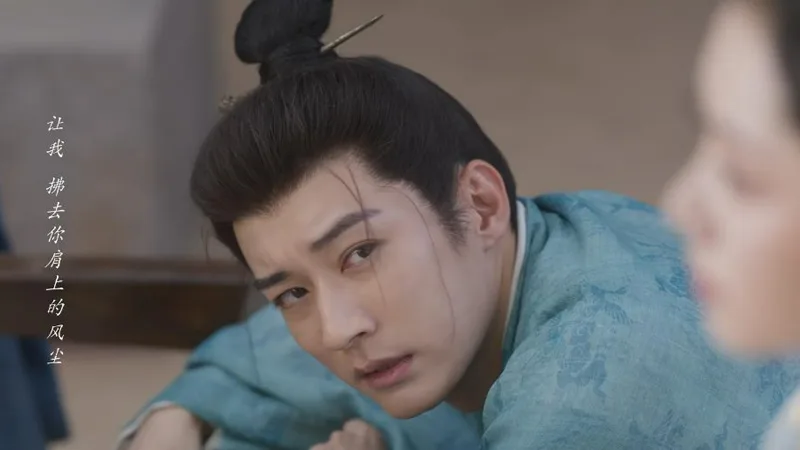
When the Lin family sends a broken engagement letter, Xu Lanxiang is still clawing her way out of ruin. She sees wedding cakes from the Lin family’s new match. After the Shen fall, the Lins walk away. Then Lin Jinqi trades six years of military merit for an imperial marriage decree. He pulls her back from another suitor and from the family that once discarded her. To outsiders, this is devotion. To her, it is an edict that rips away the fragile safety she built with years of endurance. The slap lands because power has returned in the shape of love. She cannot explain. If she says Shen Jialan (沈嘉兰), Lin Jinqi becomes a witness, and the Lin family becomes a harbor for a wanted criminal. So she uses coldness, distance, rejection. She is not refusing love. She is keeping it from becoming his weakness.
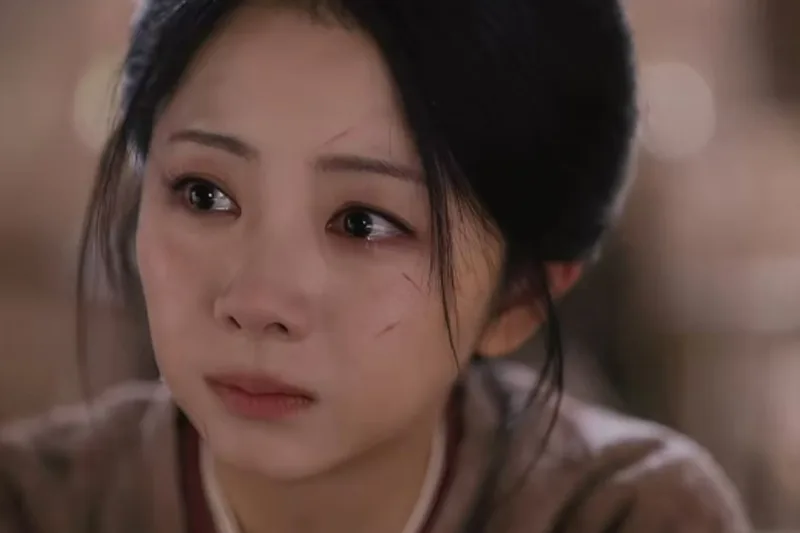
Director Huang Yingxiang (黄颖湘) chose Tan Songyun (谭松韵) not for traffic or beauty, but for a soft surface over a stubborn core. Tan can carry long silences and let the audience read what no line says. When Xu Lanxiang is in danger, she does not scream or tremble for the camera. She flees like a startled cat. That choice tells us something essential: this character’s strength is not explosive. It is compressed. Words held for twenty years finally slip out only when no one can hear them. Lin Jinqi’s tragedy is simple and cruel. He loves Xu Lanxiang, but he does not know that beneath her name lives Shen Jialan. He loves the woman he can see and misses the woman who survived.
 T
T
Two Kinds of Courage
Near death, Lin Jinqi ties a red thread and speaks to Yue Lao (月老). He says that at engagement she was Shen Jialan, at marriage she was Xu Lanxiang, and the red cord must bind the same person. Only later does he learn why. By then Xu Lanxiang has walked beside him for twenty years. She fills gaps in his ledgers, investigates stolen goods, exposes poison inside the household, and holds up the Lin family’s public face. She does everything a wife should do, except say “I love you.” Douban (豆瓣) gives the drama 7.2, and unhappy reviews keep repeating one complaint: the forced marriage feels uncomfortable. If you see only force, you read the whole relationship backward.
Lin Jinqi’s courage is reckless. He acts alone, wraps obsession in love, and charges forward because he believes feeling deeply is enough. Xu Lanxiang’s fear is clear-eyed and heavy. She pulls back because she has watched a family die for one connection. One person runs toward a future. The other drags the past behind her like a locked door. It takes twenty years for them to reach opposite ends of the same sentence: “You have some nerve.” What she means is: do you know how terrified I am of ruining you? Her dream is modest. Earn enough merit to leave servitude, live quietly, honor the Shen dead, and repay the foster parents who saved her. Lin Jinqi blocks that road, then plants his whole life across it.
His six years on the frontier buy him a wife, but not a person who can be protected without cost. His love is heavy, boundary-breaking, and leaves no room to breathe. It is also honest, and that honesty cannot be dismissed. In the comments, viewers fight over whom to pity. The argument never ends because both sides are right. They ache over two faces of one pain: one loves too directly, the other loves from hiding. He is bold because he does not understand what frightens her. She is silent because she fears that if he knew, he would stop daring to love her at all. That is the real tragedy of Against the Current: not a marriage forced open, but a heart kept shut to keep someone alive.
The title Against the Current suggests orchid fragrance remaining as before, but the story refuses easy sweetness. What remains is not innocence. It is endurance. Xu Lanxiang’s love smells of medicine, ink, dust, and fear. Lin Jinqi’s love smells of gunpowder and stubborn hope. They are not enemies. They are two people injured by the same cruel timing. He wants to rescue her. She wants to keep him from being buried with her. When the final whisper comes, it is not a victory. It is a door opening after everyone has already grown tired of knocking. The audience can pity him, pity her, or finally pity the silence that raised them both.