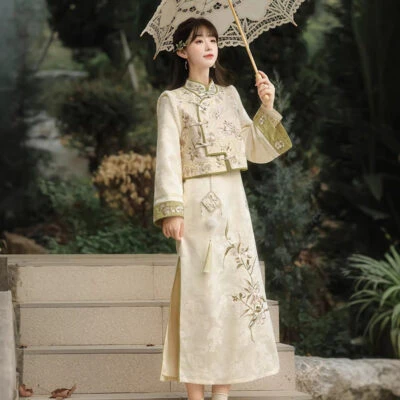
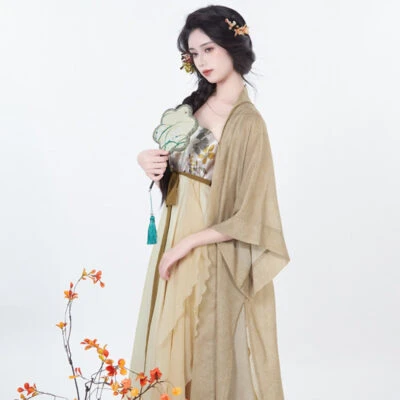
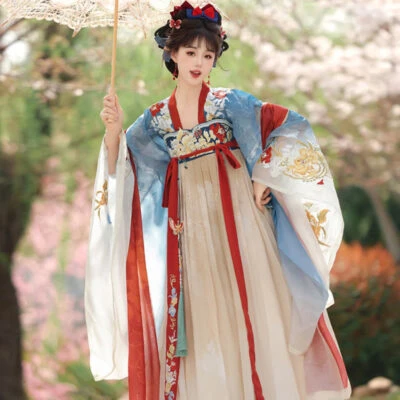
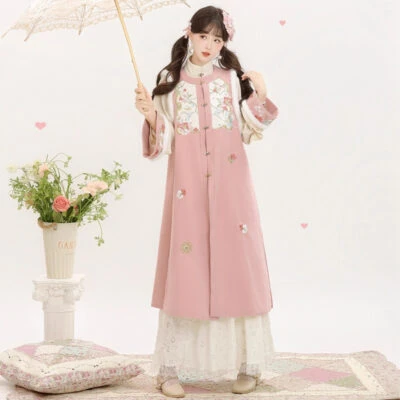
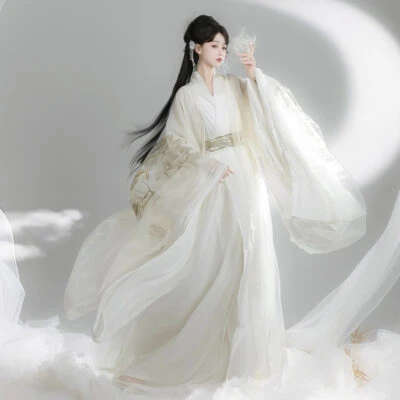
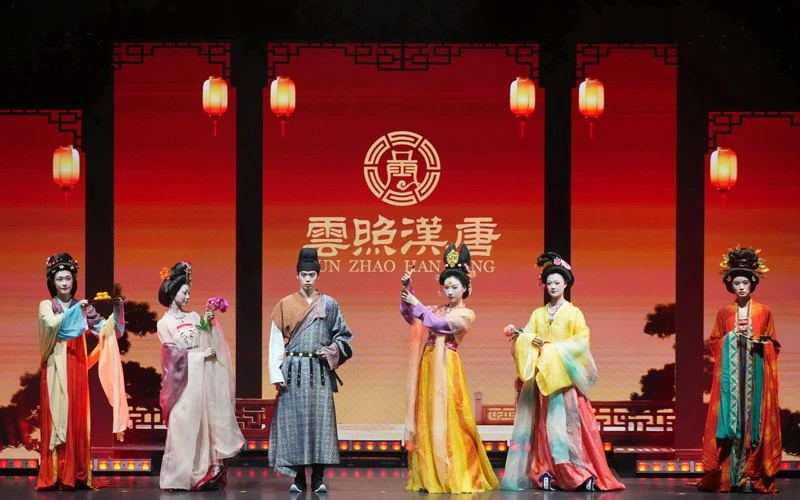
The textile relics committee of the China Cultural Relics Academy held its ninth academic symposium in Shamian, Guangzhou, on 14 November, gathering archaeologists, dress historians and conservators for a day of papers. The same evening, more than 60 reconstructed costumes from successive dynasties went on stage at the Guangdong Cantonese Opera Theatre under a programme titled “Light of Chinese Dress”.
| Date | 14 November 2026 |
| Venue | Shamian, Guangzhou; evening showcase at the Guangdong Cantonese Opera Theatre |
| Host body | Textile Relics Committee, China Cultural Relics Academy |
| Papers | Five keynote reports, four thematic panels |
| Showcase | More than 60 reconstructed costumes, Sanxingdui opening |
| Publication | First volume of Textile Relics Studies presented to members |
Five Reports, From Han Gauze to Lingnan Brocade
Five papers went on the table in the keynote session, chaired by Wang Shujin. Zhang Qianyi analysed Han dynasty gauze weave and the construction of dance robes. He Yang spoke on activating traditional ethnic dress techniques. Zhu Tianshu traced the round-collar robe through Tang, Five Dynasties and Liao. Sofia Shashunova, a Russian scholar, followed the large-sleeve women’s robe across the Mongol empire and its successor states in the thirteenth and fourteenth centuries. Li Yun closed with the reconstruction and revival of Guangduan (广缎), the heavy silk brocade woven in Lingnan.
Read together, the five show where the field weighs most. Two papers went down to weave structure, two followed a garment form across dynasties and state boundaries, and one mapped a route from excavation to living use. All five rest on the same method: object, text and image have to agree. A single excavated robe cannot settle a question of form, and a documentary reference cannot reconstruct a cut on its own.
Four Panels, From Sanxingdui to Dingling
Four panels filled the afternoon, on cross-disciplinary research, textiles and ritual regulation, comparative craft between China and its neighbours, and conservation with digital reconstruction. Case studies ranged from bronze-age dress fragments to a Qing empress’s jewellery, which is a wider span than a single committee usually covers in one day.
| Panel | Theme | Objects and questions |
|---|---|---|
| One | Cross-disciplinary research | Sanxingdui dress, Chu and Han xiezhi caps, Mawangdui robes, Tang lamellar armour, Dingling jewellery |
| Two | Technique and ritual order | Ming kesi imagery, dynastic mianfu regulation, princely ceremonial dress, Qing children’s headwear |
| Three | Comparative craft | Murong Zhi tomb robes, Jin prince tomb gauze headwear, Yuan-era yisan and tieli |
| Four | Conservation and digital work | Bamboo garment recognition, colour reconstruction, measurement standards |
Panel three carried the sharpest methodological point. Murong Zhi’s robes, the Jin prince’s gauze headwear and the Yuan yisan and tieli all belong to northern peoples, and the discussion turned on names rather than aesthetics: what each piece is called, in which dynasty that name held, and where the structure came from. Misnaming sounds academic until a reconstruction begins, because a wrong name puts the panels in the wrong place.
Conservation specialists pushed the problem into instrumentation. Excavated textiles oxidise within minutes of exposure, and photographic white balance plus case lighting can shift the same fragment across a wide range of readings. Without a shared measurement standard, colour-based dating and regional attribution lose their footing, and two labs can publish incompatible descriptions of one object.
Sixty Costumes and a Guangduan Jacket
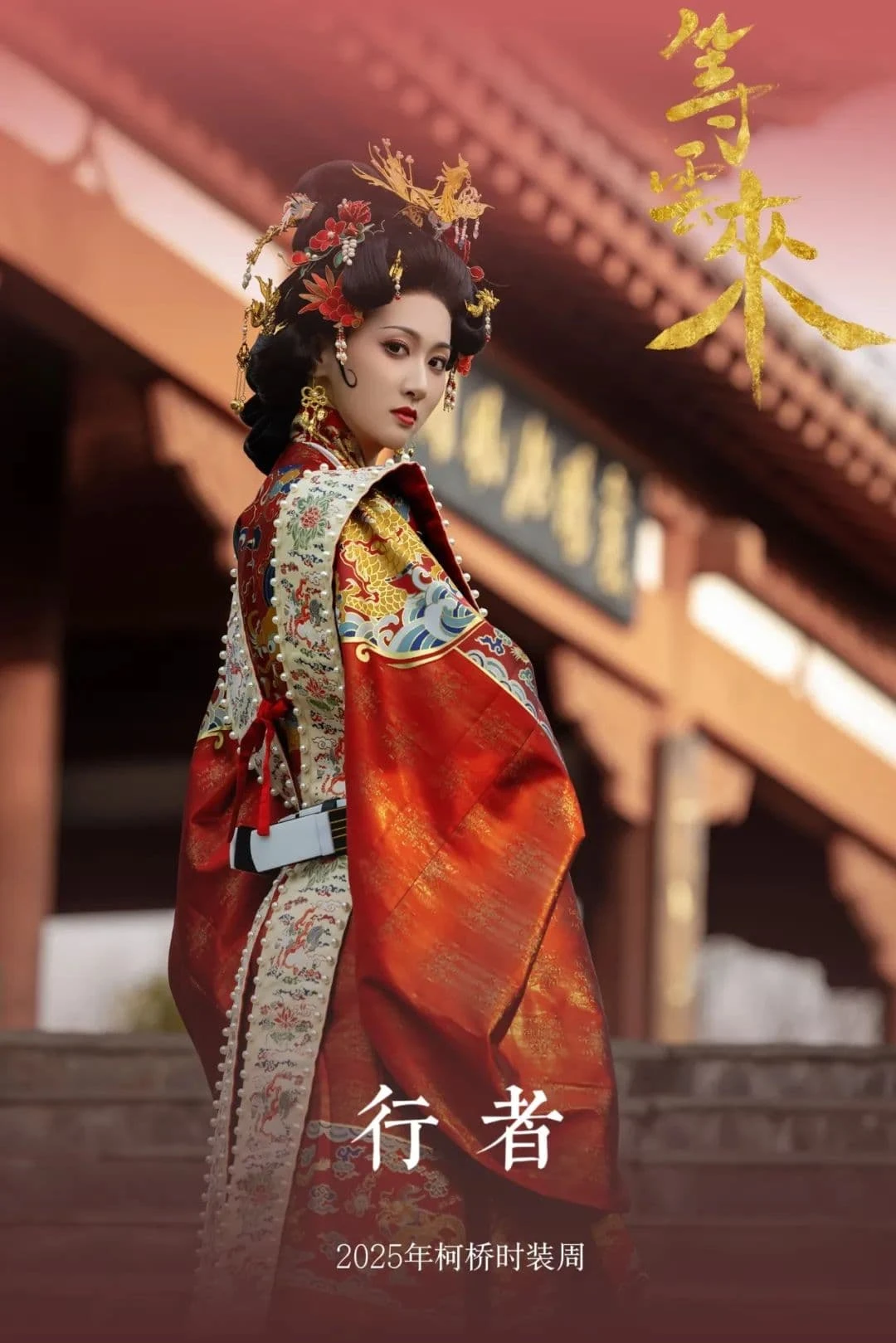
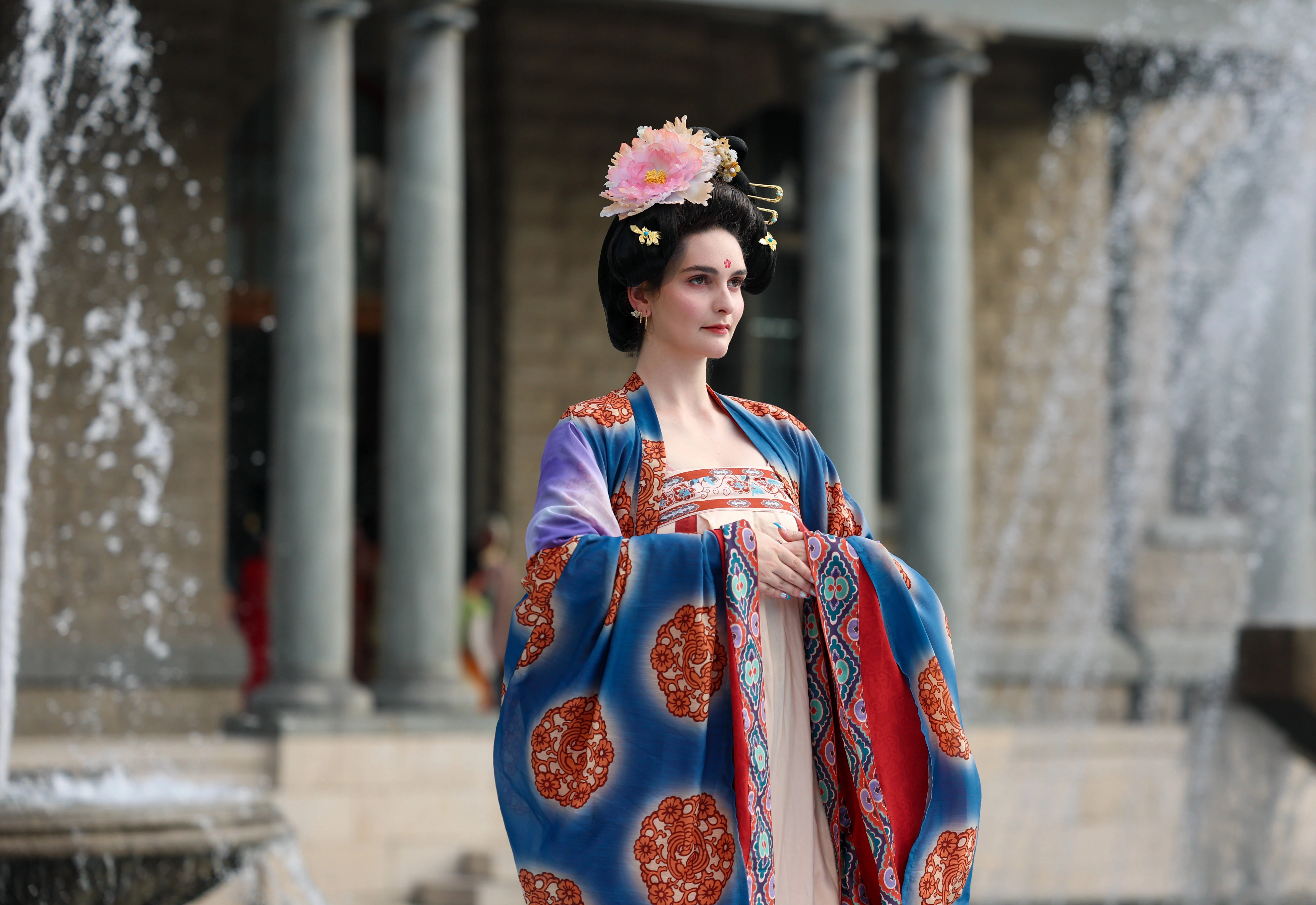
The evening ran as a sequence rather than a parade. A model in the bronze figure’s dress from Sanxingdui opened the show, followed by Warring States deep-robed figures, a Tang round-collar brocade robe, Song dynasty clothing in the form of a Beizi over Xiapei, and Ming dynasty clothing in the form of Aoqun and Mamianqun. Sixty-plus reconstructions, ordered by period, and not a single label read aloud.
Sanxingdui was the hardest entry. The figure’s hands grasp nothing and its garment is ornate, yet the cut is still disputed and the colour scheme rests on reasoned inference. Beijing Institute of Fashion Technology, the Southern University of Science and Technology and the Chengdu Shu Brocade and Embroidery Museum have all worked on the problem, and the Guangzhou team built its version after repeated consultation with relics specialists. Among the types of Hanfu on show, this is the one where the sources disagree most.
A Ming-style jacket in rebuilt Guangduan sat at the quiet centre of the show, a weft-faced silk that needs a drawloom and two operators, one lifting pattern threads and one throwing the shuttle. Its motifs are small and dense, flowers, butterflies and scrolling vines packed across the ground, set against high-contrast reds, pinks, oranges, greens and lotus purple.
Guangduan’s commercial history outruns its craft history. A company ship bought in Guangzhou for 32,000 francs in 1691 sold in Europe for 97,000, a return near one hundred percent after costs. By 1878 silk and silk goods accounted for 8.5 million of the 15 million customs taels shipped through Canton. The trade supported thirty to forty thousand workers at its height, and a Guangduan length in the Palace Museum still carries the name of the Canton customs superintendent who sent it for the Empress Dowager’s birthday in 1885.
Restoration differs from most conservation because a textile is not finished when it is stable. A bronze vessel is restored and that is the end of it. A garment has to be worn before the work can be judged, since shoulder lines and armholes only reveal themselves in motion. The organising team describes four stages, from documentary argument through craft reconstruction and public presentation to everyday use, and the last stage is the hardest because daily wear demands cost, durability and comfort, none of which a museum brief ever asks for.