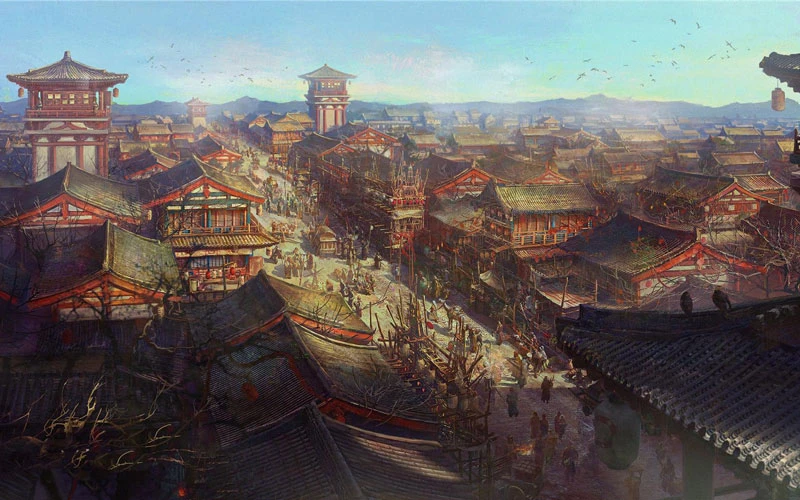
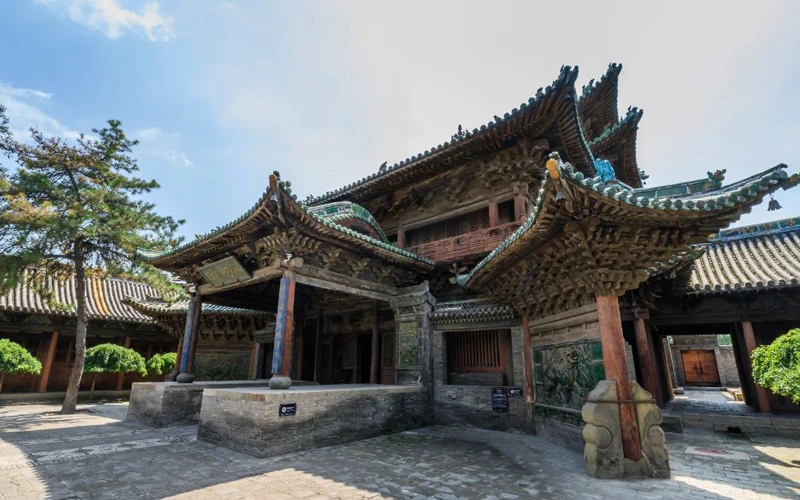
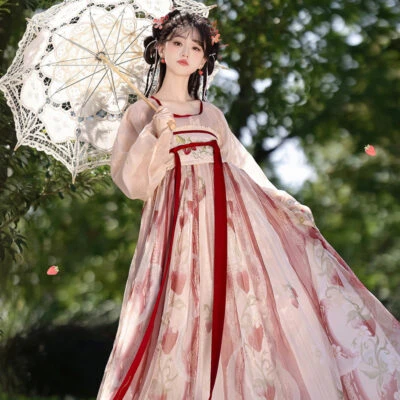
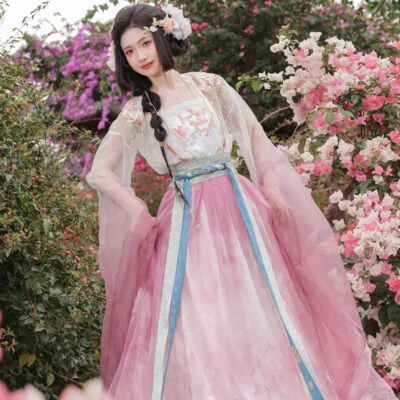
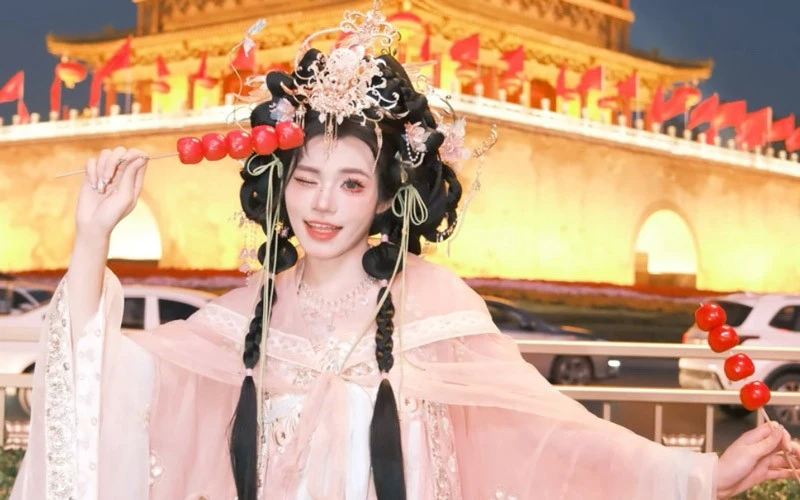
Luoyi Ancient City after dark is a queue of photographers. Red lanterns, rebuilt Tang towers, and tourists in Qiyao Ruqun (齐腰襦裙) holding their place at a doorway while a stylist fixes a hairpin. Luoyang counted 18 Hanfu rental shops at the end of 2022. It counts more than 1,600 now, and the city’s own figures put the trade at over six million visits a year, more than 30,000 jobs and 2.58 billion yuan in spending.
Price is where that growth is now being tested. Shops in Luoyang are required to post a price list inside the store. In Xi’an the same street sells an 800 yuan package at the front and a 200 yuan one behind it. What follows is the structure those numbers sit on, and the lines inside a package that were built to be marked up.
What a Hanfu Photoshoot Price Usually Includes
A Hanfu photoshoot price in mainland China is a package price that bundles four services: costume rental, hair and makeup, a photographer’s hours on location, and edited delivery. Shops quote one figure. That figure carries four separate sets of conditions, and comparing two quotes without splitting them tells you almost nothing.
Splitting the package is the only way to compare. A 199 yuan offer and a 699 yuan offer in the same city usually differ in three places: how much of the costume rack is open to you, whether hair padding and ornaments are included, and how many edited frames come back. Xi’an’s own consumption check, published on 8 November 2026, found an 800 yuan tier on the main commercial street and a 200 yuan tier one block behind it.
Where the Money Actually Goes
Break a package into its parts and the markup points become visible. Cheap packages are rarely cheap in the middle. They are thin at the back end, and the difference is recovered through add-ons: an item that was never on the price list, priced at the counter.
| Cost line | What it usually covers | Where the extra charge appears |
|---|---|---|
| Costume rental | One set plus basic accessories | Whether heavyweight styles, capes and special shoes sit outside the package; how the cleaning fee and deposit are calculated |
| Hair and makeup | Face, hairstyle, basic ornaments | Hair padding, headdress and lashes billed separately; restored-period looks priced as an upgrade |
| Photographer | The shooter’s hours and the locations | How hours are counted, the overtime rate, entry tickets and transport to an outside spot |
| Delivery | Number of raw frames, number of edits, turnaround | Whether all raw photos means every digital file; price per extra edit; rush fee |
Items that never appear in the headline price matter most. Deposit, cleaning fee, entry tickets at the shooting location, transport to an outside spot, and overtime. The Xi’an check found the same street pricing drinks at roughly half the main-street rate 200 metres away, and it listed costumed mascots charging 25 yuan for a photograph as one of two complaint categories at the site. The pattern indoors is identical: what is not written down is where the margin sits.
The 79 Yuan Package That Became a Complaint Magnet
Workers Daily traced the model in an investigation published on 27 October 2026. Shops used a 79 yuan “makeup and hair included” offer to pull customers in. Some then cut styling time, switched to cheaper cosmetics, and priced hair padding and headdresses as separate items. Customers posted warnings on social platforms afterwards, and the warnings piled up faster than the shops could answer them.
Demand changed first. Wang Yuan, who runs the Suyuan Yishang styling studio, said early shops could profit on novelty, when a visitor was pleased with any costume and any face. Customers now arrive with screenshots. “People order with a picture,” she said, naming a restored Tang look or a Song-style set as the usual request.
Cost sets a floor under all of it. Li Huili, who manages the Qingshan Xihai Hanfu shop, put the entry ticket for a small Hanfu shop near a scenic area at close to 100,000 yuan, a mid-sized one at several hundred thousand, and a leading store at over a million. “The traffic looks big, but the operating threshold is not small,” she said. The photographer Haozi described the same squeeze from the other side: more shooters every season, falling rates, and image quality as the first casualty. Over this year’s National Day holiday, Luoyang had about 5,000 stylists on duty, each finishing six sets a day, with roughly 680 location photographers working the sites.
Luoyang Posts Price Lists, and Enforces Them
Regulation arrived as a list on a wall. Luoyang set up a Hanfu industry association and a photography alliance, ran certified training in traditional chinese makeup, hair and shooting, and required rental businesses to post a price list covering every service in a visible place. It launched a booking platform, Luoyi Yuepai, to standardise on-site shoots, cut shop registration from five working days to one, and adopted a complaint channel promising a reply in five minutes, a meeting within 30, and closure within 24 hours. Advance compensation is being piloted.
Individual businesses felt the change quickly. Fangfang opened her first store two years ago and served seven or eight customers a day; she now runs four shops across Luoyang and Kaifeng. “With the market regulated, there is less cut-throat competition,” she said. She has also watched the customer base broaden, with families booking alongside groups of young women. Xuanxuan, a stylist who moved across from beauty salons in 2023, said a good peak day brings in more than 1,000 yuan. A mature shop now staffs a manager, stylists, pattern makers, hair teardown hands, ornament makers, reception, customer service and livestream hosts.
Above the shop floor, the city has moved into standards. The Luoyang Hanfu Research Institute published two documents, Hanfu Terminology and General Rules for Hanfu Design, and is pushing design houses into a model it calls design output plus targeted production, with fabric and accessory suppliers working from the same drawing. Lü Qiong, a deputy director at the institute, listed the steps between a sketch and a finished garment: fabric selection, pattern making, cutting, embroidery, sewing. The stated goal is a four-stage chain, with design and production upstream, experience services midstream, derivative products downstream and brand communication at the end, so that Hanfu is sold as an experience rather than as a garment.
What to Confirm Before You Pay a Deposit
Order matters more than the number. Ask first which costumes are open to you and whether heavyweight pieces sit outside the package. Ask next whether hair padding, ornaments and lashes are included, and whether a restored-period look costs extra. Ask then for the photographer’s hours, the overtime rate, and who pays entry and transport. Ask last for the number of raw and edited frames, the delivery window and the per-frame price for extras. Deposit, cleaning fee and next-day return belong on the order in writing. The padding and ornaments that traditional chinese hairstyles depend on are the single most common line to be billed separately.
Luoyang’s price lists do that checking on the customer’s behalf. When 1,600 shops post the same structure, competition moves to what a list of numbers cannot show: restoration accuracy, formal correctness, and whether the stylist’s hand is worth the difference. A package that survives comparison is one in which every line can be pointed at.