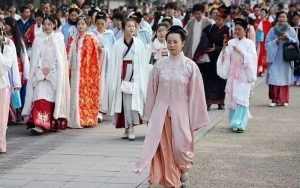
Jiayu county in Xianning, Hubei, began its seventh Jingchu Rural Culture and Tourism Festival on 6 November with a procession that filed out of Erqiao Park and turned along the ring road beside the lake. Three days of performances, markets and cooking contests follow at the park and three satellite sites.
| Dates | 6 to 8 November 2026 |
|---|---|
| Venue | Erqiao Park, Jiayu county, Xianning, Hubei. Satellite stages at Shanhu hot springs, Miquan Lake resort and Liujianghu Chuangge Island |
| What it is | A rural culture and tourism festival themed “A Rural Pact With Jingchu, Southern Jiayu”, mixing stage shows, a night parade, farm produce stalls and cooking contests |
| Scale | About 500 marchers, five staged checkpoints along a road of more than a kilometre, and a market drawing 17 Hubei prefectures plus Aksu in Xinjiang |
| Hours | Opening performance 19:30 on 6 November; street parade 20:30 the same night and 10:00 on 7 November; market 10:00 to 21:00 daily |
| Tickets | Free at Erqiao Park; the three satellite sites charge their own admission |
| Getting there | Roughly 90 minutes by car from Wuhan on the Wushen expressway |
A Cast Chosen From Chu Legend
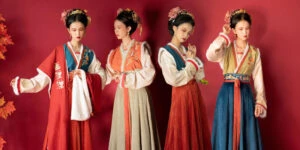
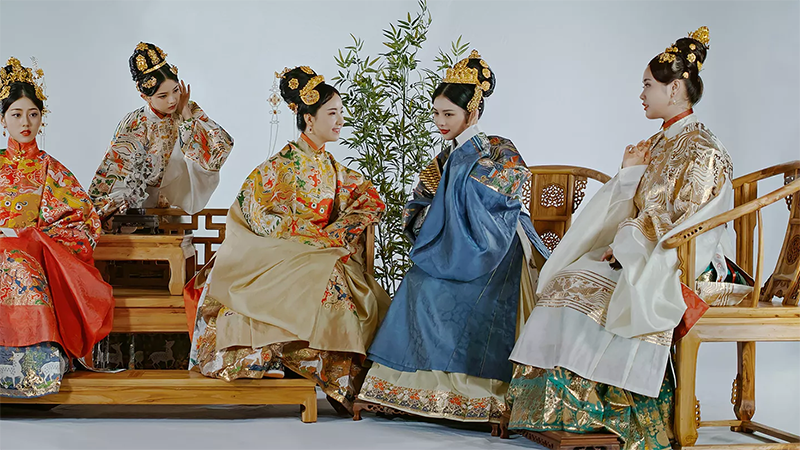
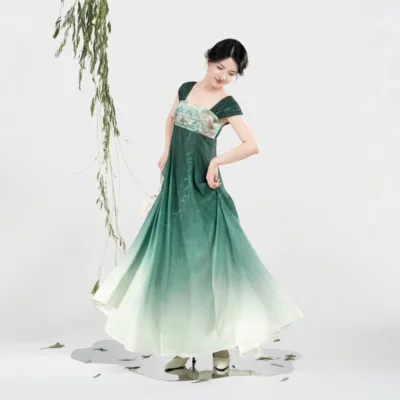
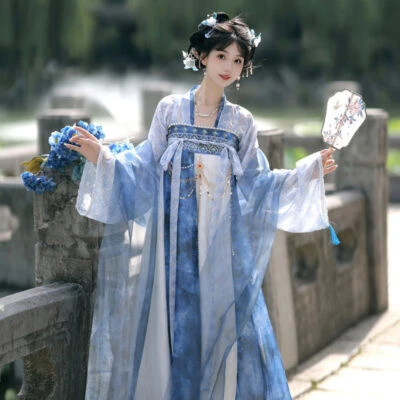
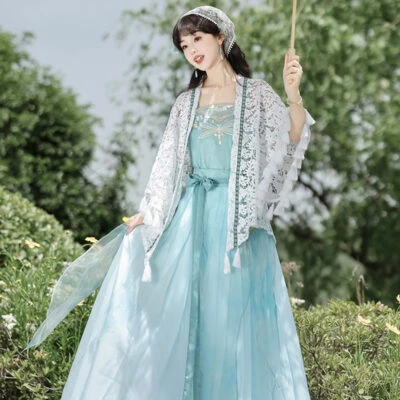
Organisers put the procession ahead of the stage programme, and the route shows why. Marchers in Hanfu and other traditional Chinese clothing leave the park, move along the lakeside road while performing, and stop at five checkpoints for short scenes of a few minutes each. The three formations carry separate content: Three Kingdoms Winds, A Hundred Folk Arts, and Chu Elegance.
The choice of figures reads as a map of the region. Yandi, the Yan Emperor, stands for farming and medicine; Qu Yuan for the Chu poetry and the statecraft that runs through it; Wang Zhaojun for Xingshan, the Hubei county she was born in. The Qiao sisters and Zhuge Liang pull the cast toward the Three Kingdoms narrative, and Jiayu calls itself the home of the Qiao sisters, which is where Erqiao Park takes its name. Three of the five headline figures sit in that later layer; the other two reach back to the older Chu culture.
Seventeen Prefectures Under One Market Roof
Local and outside pair up again inside the market. All 17 Hubei prefectures send tourism boards and producers, Xianning’s own counties fill additional stalls, and Aksu in Xinjiang travels in with its own goods. Craft pieces, packaged food and design objects share the ground with itinerary desks. A separate online shopping season started on 18 October and runs to 18 November, with livestreamers selling scenic-area tickets, hot-spring and ski packages, farm produce, and the Xinjiang lines.
Competitions fill the last two days. A public stage on the evening of 7 November hands over to square-dance, choir and folk-performance teams from across the province. On the morning of 8 November, two smaller troupes travel to the hot springs and to Miquan Lake. The fish banquet contest starts at 09:00 the same day, with cooks given 60 minutes to plate two dishes from Jiayu freshwater fish and aquatic vegetables, after which judges name ten signature fish dishes and ten vegetable dishes. A homestay cooks’ contest follows at 14:00 with 16 village kitchens working from fish, lotus root and kohlrabi, scored by a professional panel and by visitors who taste and vote.
Why the County Builds Its Menu Around Water
Jiayu sits on the south bank of the middle Yangtze, and its lakes supply the everyday table: freshwater fish, lotus root, kohlrabi. The 60-minute limit in the contest is not a television device. Local cooking runs on short heat and a clear broth, and a long simmer would work against both. What such a contest produces is not a ranking but a written menu, a list of dishes that can be repeated by cooks who did not grow up beside the water.
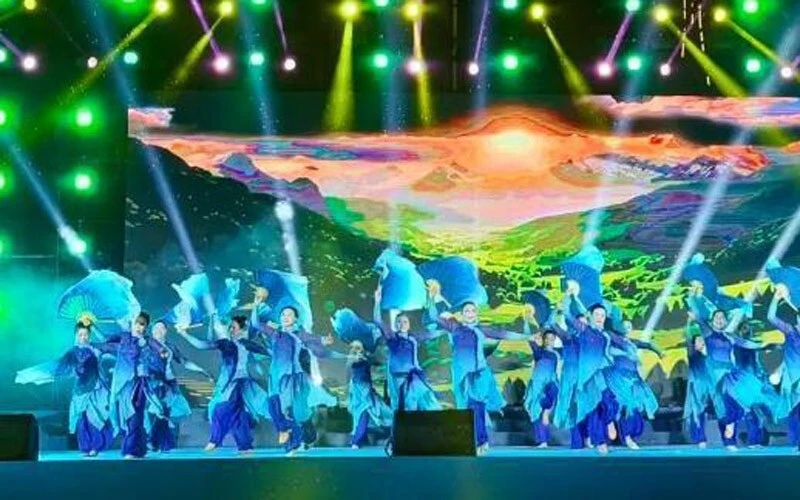
Two instruments came before anything else on the programme, and neither belongs to a concert hall. The rice-planting drum came first, then the wudu, a clay vessel flute kept alive in Jiayu and played mostly for neighbours rather than audiences. Placing them ahead of the opera segment, which ran through Chu opera, Huangmei opera, Peking opera and Sichuan opera, sets the order of the evening: the sound of field work first, then the theatre built on top of it.
Halfway through, the register changes. A Xianning folk-song medley gives way to a fashion show staged by new-generation farmers, then to a rock act built around farm tools, before performers from the province’s Xinjiang and Tibet aid programmes close the evening alongside the costumed cast and a square-dance choir. Whether a hoe belongs on a rock stage is a matter of taste. What the running order does is keep the county’s own material, its tools, crops and work songs, in the headline slot rather than in a heritage corner.
Three days can be walked in a set order. The opening show and the first parade take the evening of 6 November; the market and the public stage fill 7 November; the fish contest and the homestay contest take the morning and early afternoon of 8 November. Miquan Lake and Chuangge Island run an autumn-harvest night tour from 2 to 30 November, with these three days as the peak window, so a visitor can see the park by day and the water after dark without changing hotels.