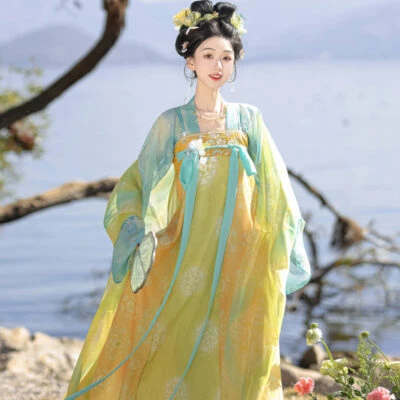
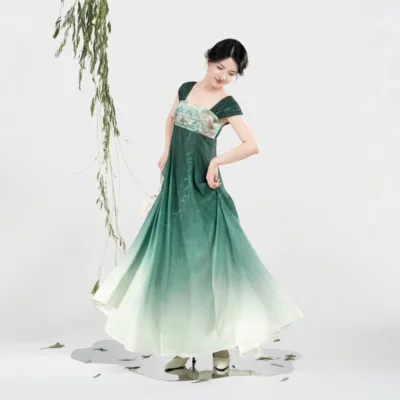
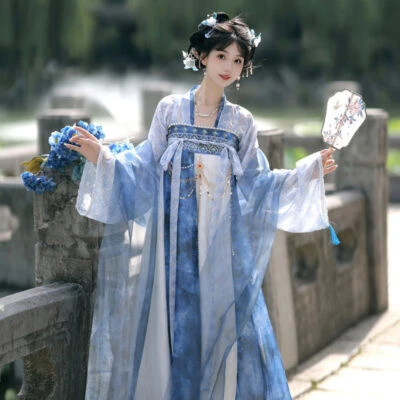
Hanbok Is Korean Dress; Hanfu Is Han Chinese Dress
Hanbok is the traditional dress of Korea. Hanfu is the historical dress of the Han Chinese, worn across roughly three thousand years of dynastic change. The two names arrive in English as near-homophones, and that is a translation accident rather than a claim about the garments: the character behind Hanfu is the one for the Han people, while the character behind hanbok means Korea. The same romanisation fog thickens every comparison built on it, including Hanfu vs kimono. The collision is close to total in Mandarin, where the two names differ mainly by tone on the first syllable and by nothing at all once the tone is dropped into Latin letters.

None of which is the question here. A feature-by-feature contrast of cut, hem and sleeve belongs to a different page, and the internet has no shortage of them. What this page tracks is the layer above the garment: the shelf. On a shopping platform the name a dress carries is decided by a category tree, and that tree is filled in by a merchandising team months before any customer types a query.
That arrangement is invisible until it fails. In February 2024 it failed loudly enough to be reported in two countries, and the reporting is unusually specific about the mechanism, because the complaint was not about a photograph or a price. It was about a filing.
AliExpress Put Hanfu on a Hanbok Shelf
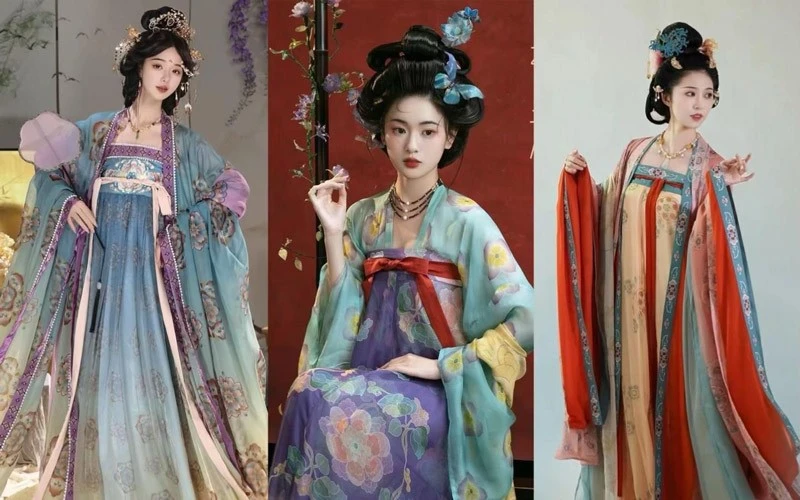
The trigger was a report in the JoongAng Ilbo, which found Hanfu for children and adults on sale at AliExpress and Temu while the listings sat under a category labelled Chinese hanbok. AliExpress maintained a dedicated shelf carrying that label. Chinese cross-border trade press carried the story within days, and the detail that survived translation was the category name rather than any product shot.
That shelf had an audience worth arguing over. WiseApp put AliExpress monthly active users in Korea above 7 million and Temu above 3.5 million in November 2023, which made both platforms large enough that a category label functions as a public statement rather than an internal filing decision. Seo Kyoung-duk, a professor at Sungshin Women’s University, said the classification was misleading to Korean shoppers, and put the problem in terms of what a search returns.
Read as merchandising rather than as history, the choice is legible. A marketplace names a category for the person typing a query, not for the person compiling a catalogue. A shelf called Chinese hanbok is a bet about what shoppers in Korea and in English-speaking markets actually type, and the bet was placed by people whose job is conversion, not attribution. The bet also has a cost the merchandiser cannot see from the dashboard: once the shelf exists, every garment filed beneath it inherits the label.

What the Back-End Category Asks a Seller
For a seller the shelf is a form field, and the form is longer than buyers imagine. Publishing guides written for Chinese merchants describe the AliExpress path as apparel, then ethnic dress, then Chinese Hanfu, with dynasty style and occasion as required attributes once the leaf node is chosen. Silk items trigger a category audit that asks for test reports and labelling documents before the listing goes live, a step that sellers of polyester costumes never see.
Those fields do work a product title cannot. A buyer who wants a Ming-style cut has to be inside a shelf that offers the filter at all, so a seller picks the nearest leaf node that carries the attributes the buyer will filter on, whether or not that node is the most accurate description of the garment. Cost sits at the same layer: seller guides put apparel commission on AliExpress at 5 to 8 percent, against 15 to 20 percent on Amazon, which is a strong argument for staying on the platform and living with its taxonomy.
| Layer | Who sets it | What it decides |
|---|---|---|
| Platform category | Marketplace merchandising team | Which shelf the item can be found on, and which query that shelf accumulates |
| Leaf-node attributes | Platform taxonomy | Whether a buyer can filter by dynasty style or occasion at all |
| Product title | The seller | Ranking inside the shelf, not across shelves |
| Buyer query | Whoever the first three layers convinced | Which shelf gets the traffic, and which name the buyer learns |
There is a cost to picking the wrong node that the dashboard hides. A seller in the wrong leaf node cannot be found by a filter the buyer is using, and moving later means relisting, which resets the accumulated reviews that made the listing worth moving. Most sellers therefore choose reach over accuracy on the first attempt, and the taxonomy absorbs the compromise.
The ordering matters more than any single row. A seller who writes a perfect title for a badly chosen node loses to a seller with a clumsy title in the right node, because the filter list is generated per node. This is the part of e-commerce that garment writing never covers: the taxonomy is upstream of the copy, and it is written by people who are not describing clothes.
Why a Shelf Outranks a Definition
Search behaves differently at each layer, and the difference explains the confusion that sends readers looking for a comparison in the first place. An explainer competes for the query it answers by being the most useful text about it. A category page does something else entirely: it collects every product filed beneath it and answers a much shorter query with a grid of images. A shopper who types traditional chinese clothing gets forty photographs and no sentence.
The English queries around these garments split along that seam. Comparative searches return explainers, because that is what the query asks for. Commercial searches return shelves. When Hanfu sits on a shelf named Chinese hanbok, the commercial query delivers the other garment, and no amount of accuracy in the product photograph corrects it, because the buyer never reaches the photograph.
There is a second-order effect that outlasts the news cycle. A shelf teaches vocabulary. Buyers who find what they wanted under one label use that label the next time, and the label accumulates the query it was never accurate about. That is how a category name stops being a filing decision and becomes a keyword with an owner, and it is why the dispute in 2024 was about a dropdown rather than about a hemline.
The Label Is a Shelf, Not a Verdict
For a buyer, none of this changes what the garment is. Hanbok remains Korean dress, Hanfu remains Han Chinese dress, and the shelf decides retrieval rather than identity. For a seller the practical lesson is narrower and more usable: find the shelf your buyer’s query already lives on, then let the attributes do the describing. For everyone else, the next time a search for one tradition serves up the other, the explanation is probably a merchandising decision taken years earlier in a form field by someone who never wrote a word about the past.