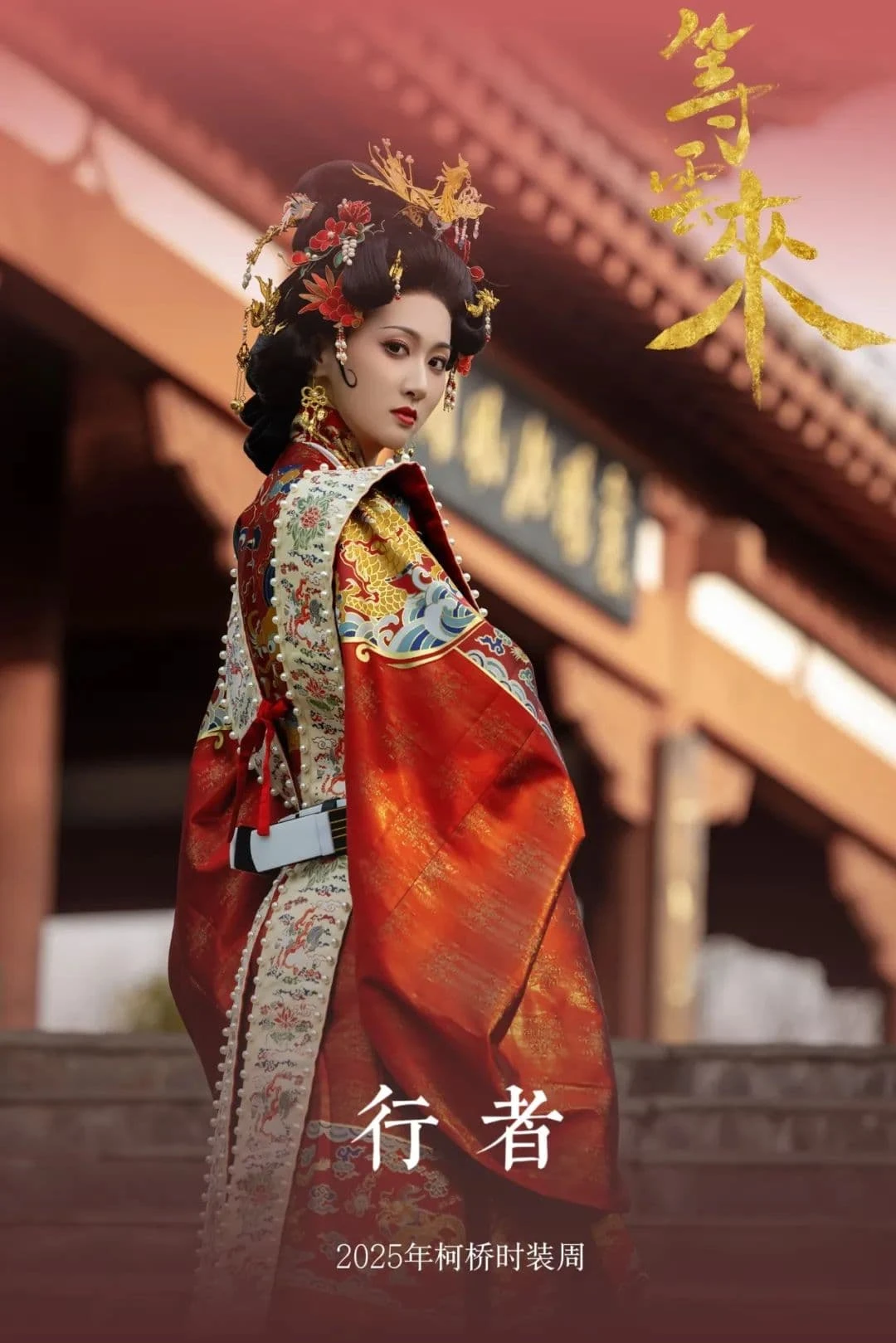
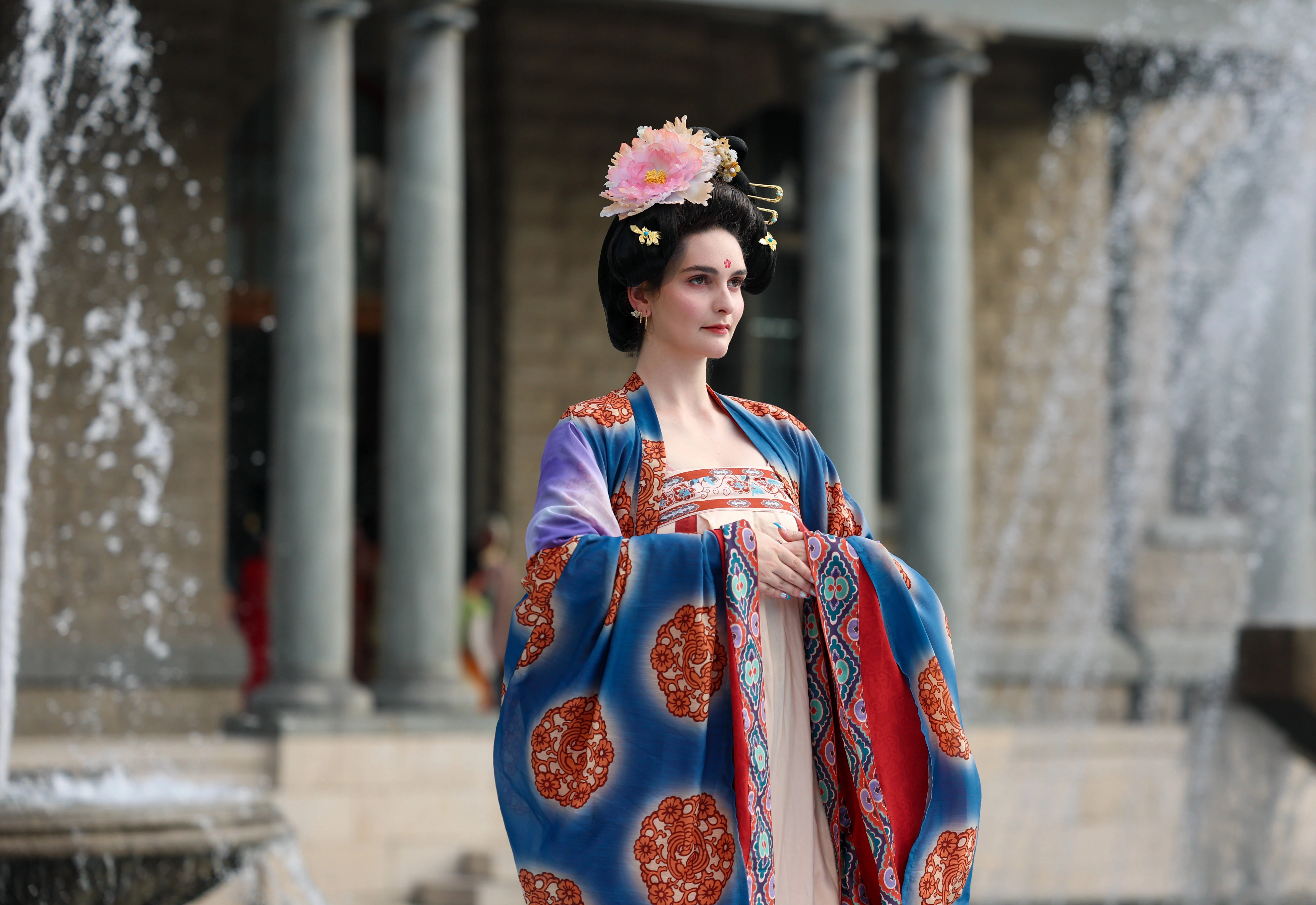
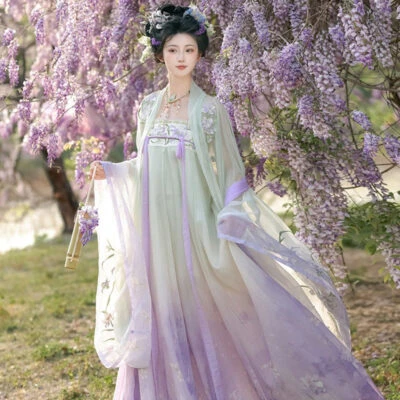
The 14th Xitang Hanfu Culture Week reaches its music day on 5 November, the sixth day of a nine-day run in the water town of Xitang, in Jiashan county, Zhejiang. Shangle, as the day is called, puts court-style ensembles into the covered lanes and along the canals after dark, and visitors are meant to find the performances by ear rather than by timetable.
| Dates | 31 October to 8 November 2026; the music day falls on 5 November |
| Venue | Xitang ancient town, Jiashan county, Jiaxing, Zhejiang |
| What it is | A Hanfu festival in its 14th year, with one main programme and three theme days |
| Theme days | Huanshang, 2 November; Fuyan, 4 November; Shangle, 5 November |
| Hours | Ticketing 8:00 to 17:00 on 2 to 6 November; 8:00 to 21:00 on 31 October, 1 November, 7 and 8 November |
| Tickets | 95 yuan for the day ticket, 60 yuan for the night ticket sold in the 17:00 to 21:00 window on the four long days |
| Included | The ticket also covers the West Garden, Zhang Zheng’s root-carving gallery and the Button Museum; boat services run later during the extended hours |
What the Music Day Adds to the Week
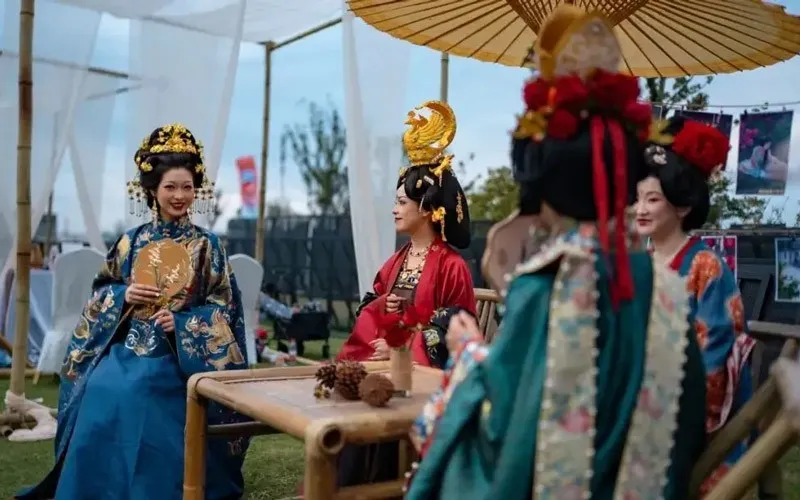
This is the first edition to run on a one-plus-three structure: a single main programme, then three theme days that each carry a different verb. Huanshang asks visitors to dress and be photographed, Fuyan asks them to eat, and Shangle asks them to listen. In fourteen years the week has never broken its programme into named days this way, and the change tells you what the organisers think their constraint is: not attendance on the opening weekend, but whether anyone comes back on a Tuesday.
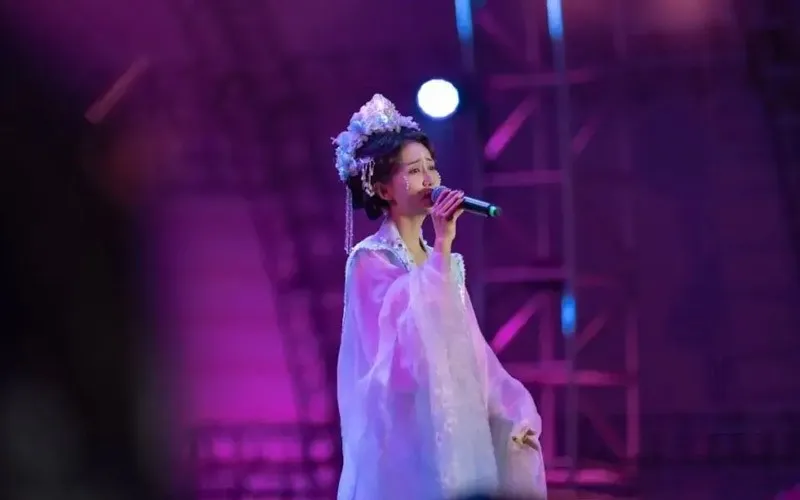
The official description of the music day is deliberately loose. Court music meets the old town after dark, the notes wake the night up, visitors follow the sound. The organisers add a line that matters more than the marketing: times, parade routes and performance points are subject to the arrangements on site. In practice that means there is no published set list to plan around, and a visitor who arrives expecting a ticketed concert at a fixed hour will be disappointed. The format is closer to street theatre, with short sets placed along the lanes and repeated.
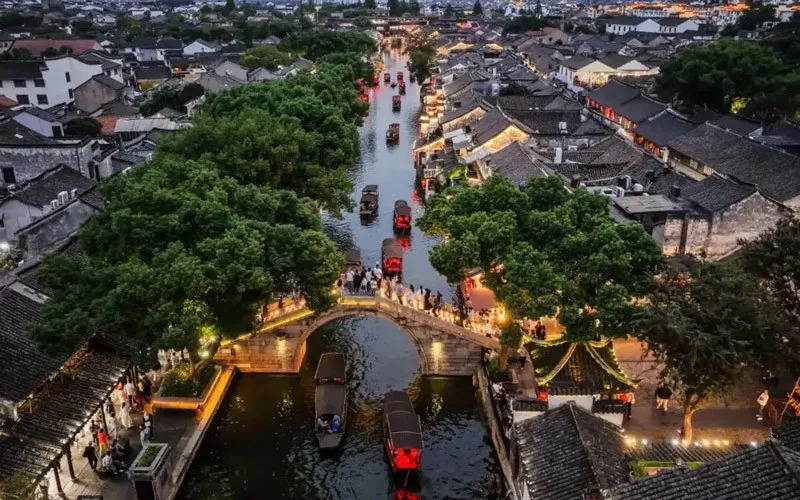
That looseness is workable because of the town’s scale. Xitang’s historic core is compact, and its covered corridors run along the canals for most of the length of the old streets, so a performance placed under a roof carries further than it would in an open square. Walking the main lanes after dusk and turning toward whatever is audible is a better plan than standing at one spot, and the night ticket window exists precisely for visitors who want the town after the day crowds have gone.
A Week Built on Repeat Visits
The main programme still does the heavy lifting, and most of it runs during daylight. The opening day put a dynasty carnival on the stage at the Yinchuang music camp from 9:30, with formations for the Zhou, Han, Jin, Tang, Song and Ming periods, a rolling survey of types of Hanfu, and added two new processions this year: one in which performers dress as museum objects, among them the Changxin palace lamp, the bronze galloping horse and a Tang tri-colour camel carrying musicians, and one in which figures from famous paintings hold a composition and then break it. Lanterns shaped as a fish-dragon and a giant peng cross between them.
Water carries the rest. Flower boats run the canals in the afternoon with period tableaux aboard, a traditional wedding is staged in the early evening and the couple then tour by boat, and an exhibition of armour opens at the Wang residence with a parade of armoured figures. After dark the opening weekend ran a Hanfu night, a birthday gathering for wearers and a new-product launch from participating brands.
Between the set pieces the town runs a standing programme that repeats daily, and on 5 November it is what fills the hours before the music starts. A twelve-hour check-in challenge sends visitors to marked points across the old streets; a Chinese-style market occupies Sandai Street and the Tangjia Lane wharf; board and dice games run at the wine culture museum; archery runs at Yunlan Bay; short flash performances appear at the Huanxiu Pavilion, Tawan Street and the West Street entrance through the afternoon. A skirt-canopy stage and several lantern installations give the photographers somewhere to work.
Why Court Music Fits a Water Town
Yayue (雅乐), the repertory the day is named for, is the formal music of court ritual and sacrifice rather than entertainment. Its ensembles are organised by the material of the instrument: bronze bells and stone chimes for the frame, clay ocarinas, hide drums, silk strings on the Guqin and the se, wood percussion, gourd mouth organs and bamboo flutes. Tempos are slow because the music is there to pace a rite, one section per stage of a ceremony, which is why it sounds sparse next to anything written for a concert hall.
That sparseness is an advantage outdoors. A single chime or a plucked string carries across water and reflects off a stone bank, and in a town where most streets are roofed, the covered corridor works as a long resonance chamber. Add darkness, which removes the visual noise of signs and crowds, and the sound becomes the principal way of reading the space. A town built on canals and galleries is one of the few places where this repertory does not need amplification to hold a listener.
It also explains the appeal of the format for the town itself. A nine-day run with three named days gives local hotels and restaurants three separate peaks instead of one, and gives wearers a reason to return in a different role: as subject of a photograph on the second day, as guest at a table on the fourth, as listener on the sixth. Whether the model holds will show in next year’s edition. For anyone going on 5 November, the practical advice is to buy the night ticket, arrive before dusk, walk rather than wait, and check the official accounts on the day, since the performance points are announced on site and not in advance.