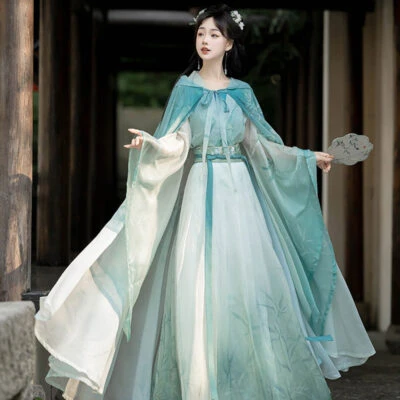
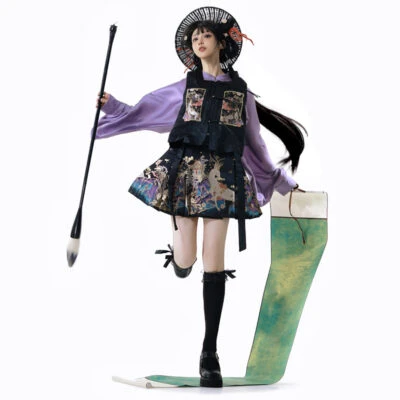
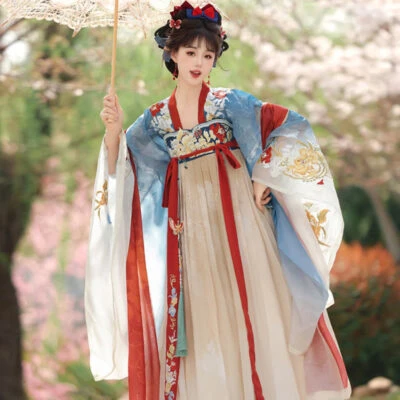
A market pairing Yunnan’s dyeing, weaving and embroidery with Vietnamese ao dai and folk painting opened on 4 November inside the terminal at Kunming Changshui International Airport, in Yunnan. Arriving passengers walk into it before they reach the exit.
Stalls Set Out by Sense: Eating, Smelling, Using, Playing
The floor is divided into four rooms, each built around a verb rather than a province. Eating gathers Vietnamese banh mi, Yunnan rubing cheese, flower cakes, wild mushroom snacks and spring rolls. Feng Juan, who runs a Vietnamese food shop, described her baguette in technical terms: no oil, no sugar, a hard shell that stays crisp and a crumb that breaks apart when it is loaded as a sandwich. The same room holds Duan Yinkai, a national-level inheritor of Bai tie-dye, folding and binding cloth for table mats, so the dyeing happens in front of the food.
Smelling sets tea against coffee. Bai Zaili of Lüchun county poured bamboo-tube tea and Mayu tea; Nguyen My Linh and Trinh Hong Linh of Giang Cafe in Vietnam whisked egg coffee; local wild-herb tea, jasmine and rose sat beside Vietnamese lotus tea and herb sachets. Jin Ruirui, who chairs the Yi embroidery association in Mouding county, used embroidered panels as the container for the sachets themselves. Using holds the garments: Huaning pottery under Wang Dawei’s hands, Yi embroidery, Bai tie-dye, and ao dai by the young designer Tran Thi Tu, who also brought photographs of Hanoi’s old quarter. Playing gives the last room to loom and brush, with Ben Bianmei of Qimaba township in Lüchun working Dai brocade at the loom while Tran Thi Cam Anh painted a Dong Ho picture beside her.
Why the Market Sits Inside a Terminal
Changshui is one of four corridors in a provincial programme that carries cultural activities along Yunnan’s border crossings and transport routes. Moving the format into an aviation hub removes the need for a separate trip: passengers land, and the market is on the way out. The provincial publicity department organised the event, with the regional international communication centre for South and Southeast Asia and the provincial aviation investment group as co-organisers.
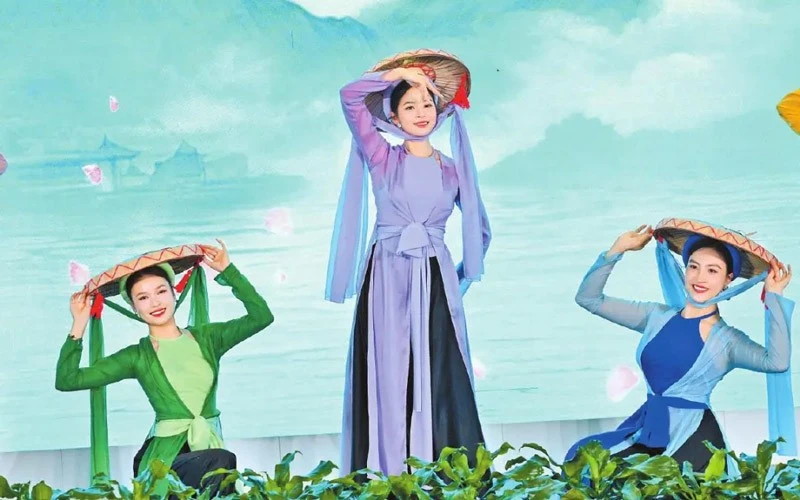
Reaction at the gate suggested the placement works. A Singaporean traveller surnamed Zheng came off a flight into a Yi dance flash mob and followed it with her phone. Luong Ngoc Anh, a Vietnamese blogger, met Bai tie-dye again after seeing the same craft in Dali in 2024 and said the blue-and-white cloth was what stayed with her. She added that the two countries share more than proximity, pointing to food, daily habits and especially handwork. The opening ceremony put Li Huaixiu, a provincial inheritor of Haicai mountain singing, and Li Huaifu on stage for a Yi song, followed by a Vietnamese dance troupe and a joint puzzle assembled from the two countries’ produce and spice charms. Yi tobacco-box dance, Huayao Dai dance and the Left Foot Dance of Mouding ran as flash mobs through the building.
Four Ways to Make a Patterned Cloth
Set side by side, four traditions that feed Chinese traditional dress separate by method rather than by region. Bai tie-dye works by resist: thread binds the cloth, the dyebath reaches everything except the bound sections, and the pattern’s edge is decided by how tight each knot was pulled, which is why two runs of the same design never match exactly. Dai brocade is woven, with the pattern generated on the loom as warp and weft cross, so image and ground are one fabric and no finishing step is needed. Yi embroidery adds thread to a finished ground, and colour and relief arrive at the needle. The ao dai is cut, a long tunic over trousers with a fitted waist and side slits, where the silhouette comes from the pattern block and ornament stays restrained.
Each route carries its own bottleneck. Tie-dye depends on dye stability and on controlling a pattern that resists control; brocade depends on the weaver’s memory of the motif; embroidery depends on hours of stitch practice and an eye for colour; tailoring depends on matching cloth to block. That is why the four demonstrators were doing four unrelated things at the same table, one binding, one throwing a shuttle, one threading a needle, one checking a pattern. A seminar on the five tastes follows, and the Vietnamese delegation travels on to Dali for a craft and food visit.