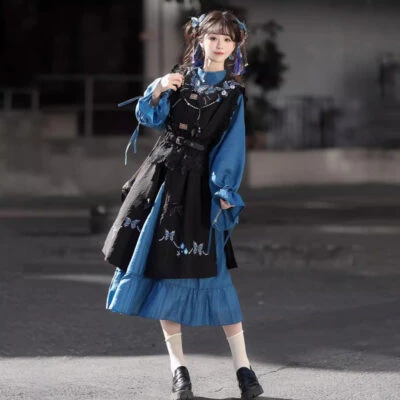
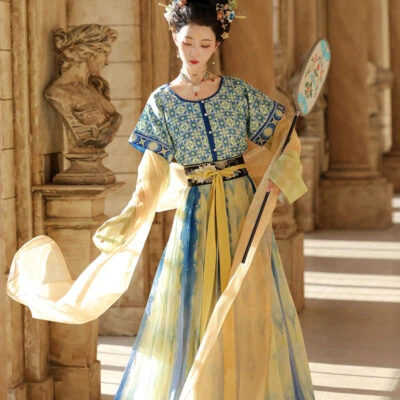
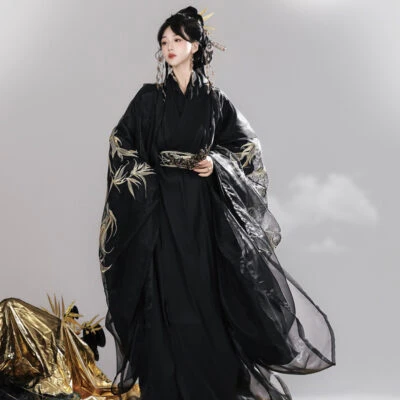
A touring exhibition of Chinese dress opened on October 2 at the Lantern Culture Hall on Réunion Island, the French overseas department in the Indian Ocean. The show is the third stop for the project, which began in Sweden and then in the Netherlands, and the first time it has reached France. More than two hundred garments and objects are on view until October 31.
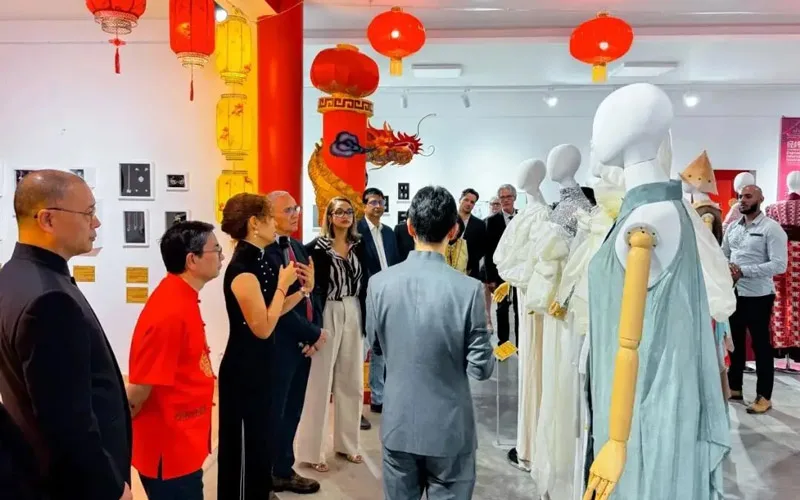
The Beijing Institute of Fashion Technology organised the tour under a 2026 grant from the China National Arts Fund, with the institute’s Museum of National Costume and the Réunion Overseas Chinese Cultural Association as co-hosts and the Chinese Consulate General in Saint-Denis supporting the French leg. Consul General Chen Xiaolei, regional and departmental councillors, two mayors and about three hundred guests attended the opening, which included a qipao runway and a short performance programme.
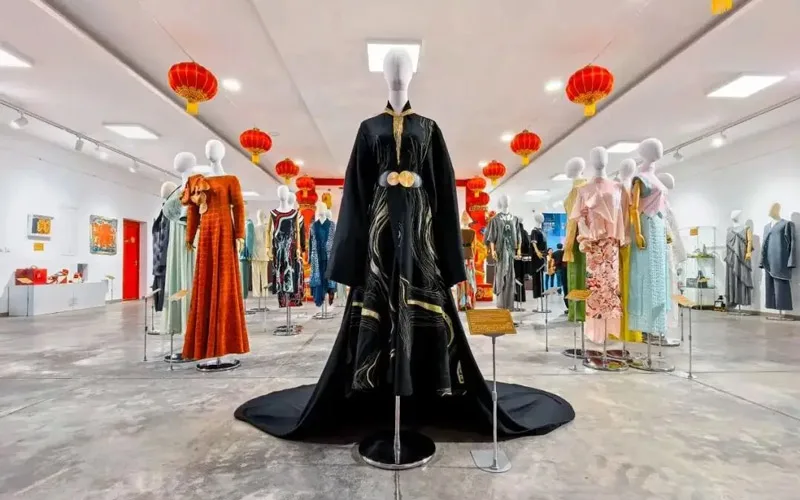
Traditional Chinese Dress, Rehung as Four Units
Chinese dress heritage is treated here as a working grammar rather than a costume archive: the cut, the weave and the closure of a garment are the units that get passed on, and the exhibition regroups its material around that claim. The curators frame the show on two axes. Jing, the warp, runs through time and carries the making principles of traditional dress. Wei, the weft, runs across space and carries what contemporary design and technology have done with them.
That framework produces four sections rather than a dynastic sequence. The names have shifted slightly as the tour has moved, which is unusual enough to be worth recording: at The Hague in September the sections were listed as Encoding, Recoding, Re-weaving and Symbiosis; on Réunion they appear as Encoding, Translation, Weaving and Symbiosis. Two of the four names changed between stops.
| Section on Réunion | Name at The Hague stop | What the label points to |
|---|---|---|
| Encoding (编码) | Encoding | The making principles carried inside traditional garments |
| Translation (转译) | Recoding | Historic forms re-cut in contemporary design |
| Weaving (织就) | Re-weaving | Craft technique applied to new material and new use |
| Symbiosis (共生) | Symbiosis | Coexistence with other textile traditions in the host setting |
What the Two Hundred Garments Actually Are
The inventory is broader than a Hanfu survey, and that breadth is the argument. Four groups sit side by side without a chronological spine: traditional dress from several ethnic groups, contemporary design built on historic colour and pattern, uniforms made for state and sporting occasions, and objects that pair a craft technique with an industrial one.
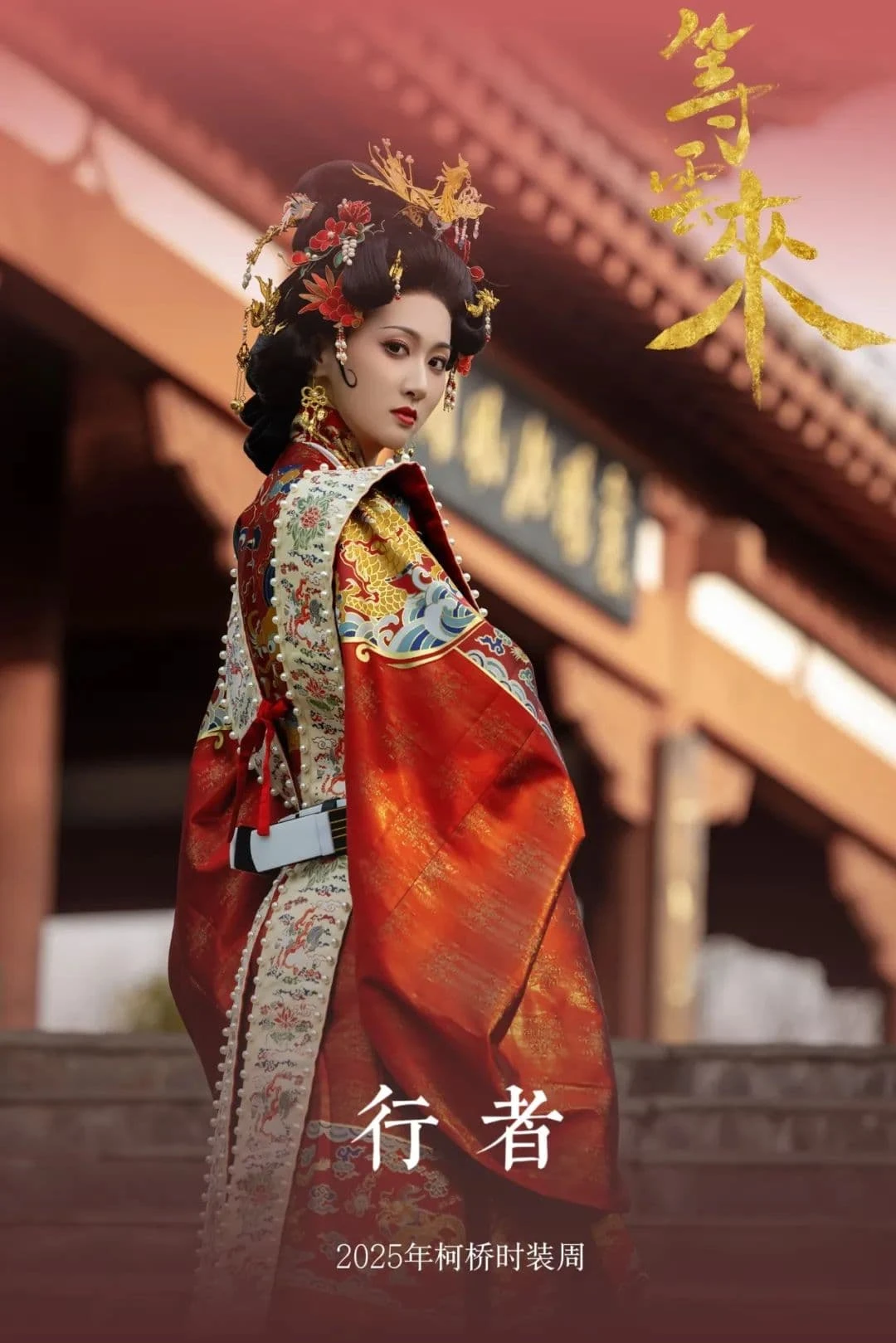
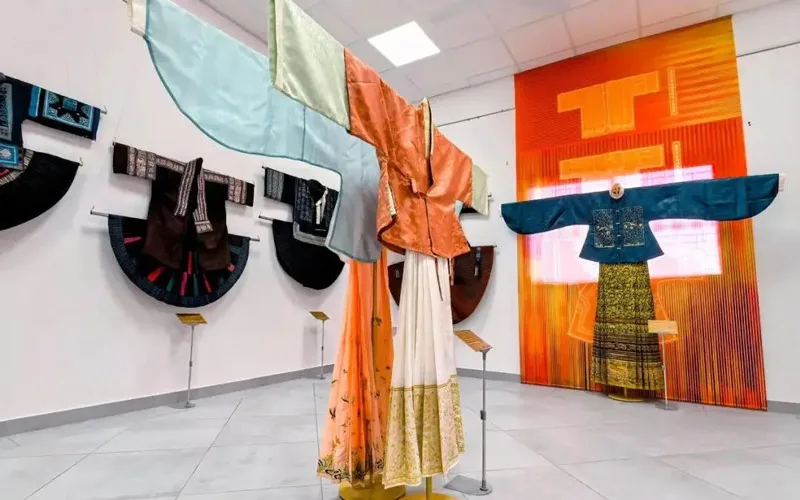
- Traditional dress: a red damask silk Mamianqun (马面裙) with embroidered floral motifs, a Huaxi Miao festival ensemble, and a Puding Buyi women’s festival dress.
- Contemporary design: the Juese Dunhuang line, which rebuilds Dunhuang mural pigments and motifs into modern cut.
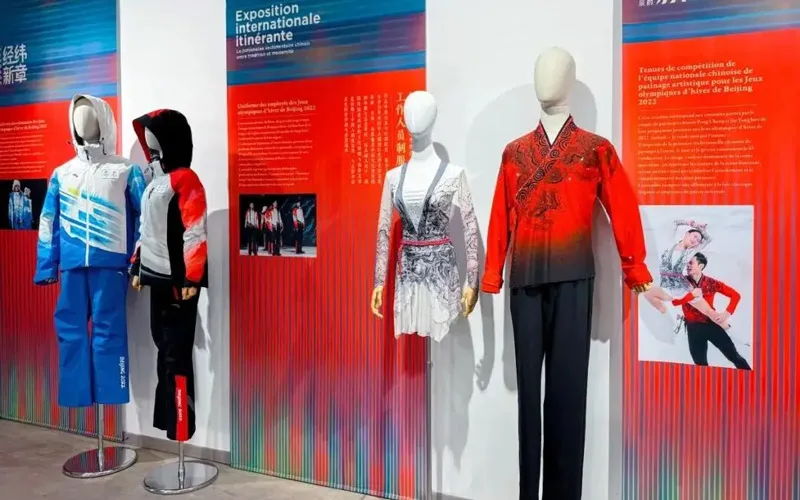
- Occasion dress: the uniforms made for the 2022 Beijing Winter Olympics and the competition suits of the national figure skating team.
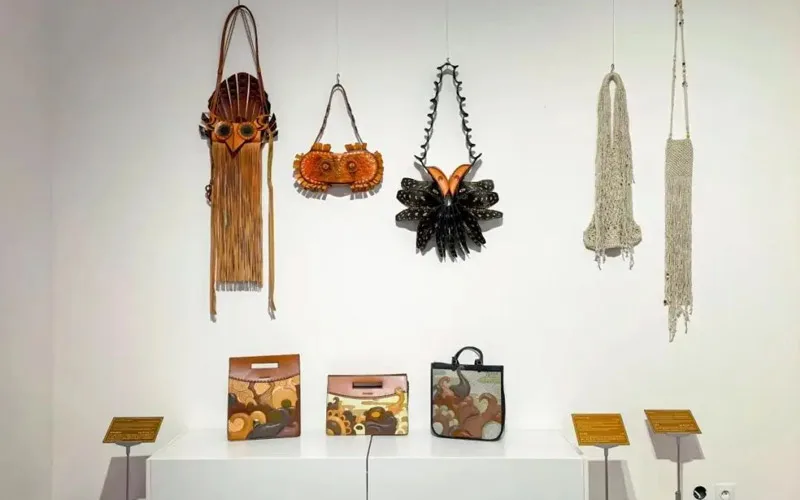
- Craft and technology: lacquer work combined with 3D printed jewellery, a collaboration between tin embroidery and handmade leather shoes, and kintsugi-repaired porcelain shards reset as pendants.
Read together, the groups make a specific claim about what survives. A pleated skirt, a festival jacket and an Olympic uniform do not share a silhouette, but they share decisions about panel construction, closure and reinforcement, which is what the exhibition means by a gene. The Mamianqun guide sets out the panel and pleat logic behind the skirt on show; the Miao embroidery tradition in the second group is traced in our piece on Miao embroidery in contemporary design.
Chinese Clothing in a Creole Setting
Placing the French debut on Réunion rather than in mainland France follows from the fourth section. The island has been a meeting point of African, Indian, Chinese and European populations for well over a century, and its Chinese community has kept dress rituals while adopting local ones. Symbiosis is easier to stage where that negotiation is a living fact rather than a theme.
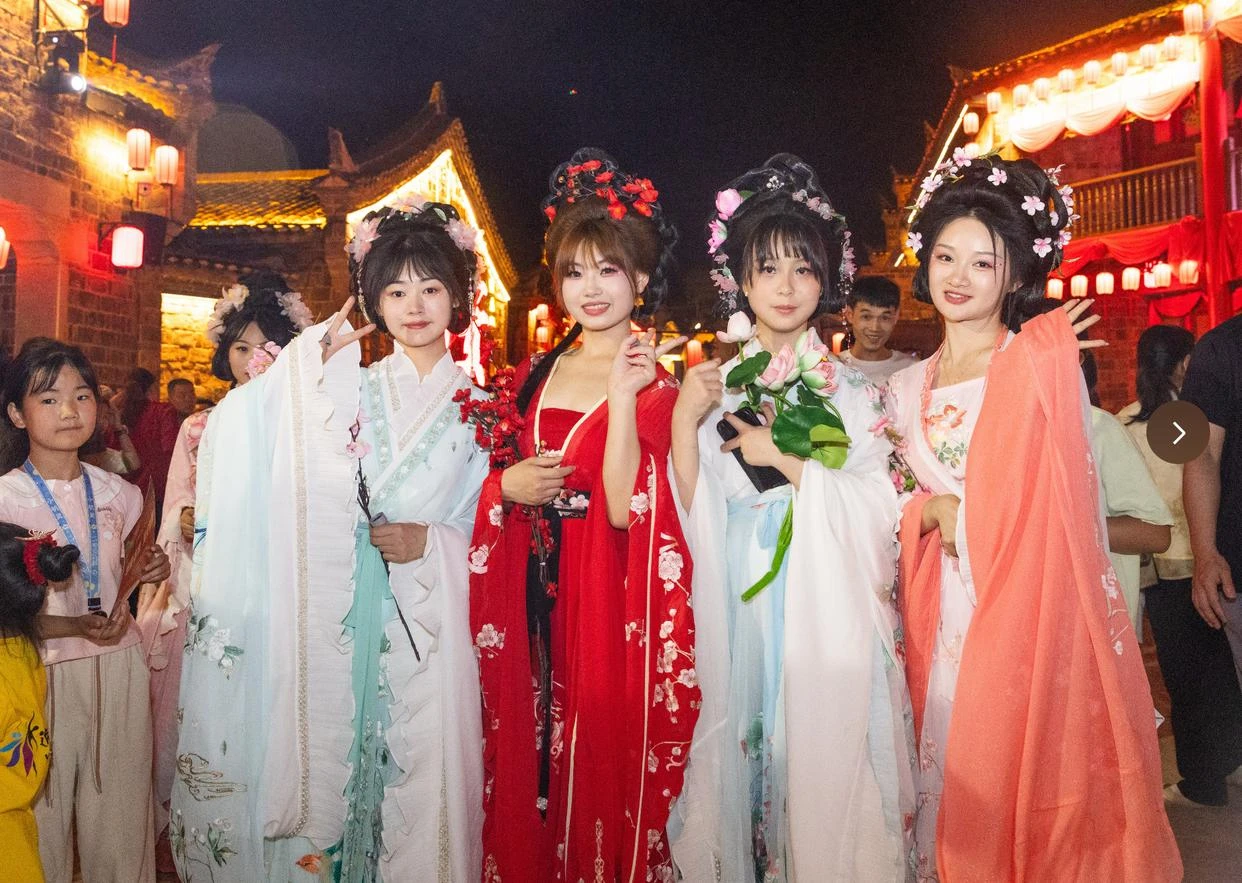
The opening made the point visually. A qipao runway ran inside an island whose everyday dress vocabulary is Creole, and the same garments that read as formal heritage in a European museum read as family dress for part of the audience. The qipao guide covers the regional variants that travelled with migrant communities, and our report on overseas interest in Hanfu tracks how that audience has grown outside China.
The Names Behind the Garment Types
Naming is the least visible part of a touring show and one of the most consequential. A section called Recoding tells a European museum audience that something is being converted; Translation tells an audience in a French department that the material is being carried across a language. The shift is small on paper and does real work in the room, because the labels are the first thing a visitor reads.
The same attention to naming ran through the Dutch stop. Yuan Zonggang, deputy director of the Museum of National Costume, described Chinese dress at the September 9 opening in The Hague as a history book you wear, and the researcher Hu Xiaomei gave a lecture titled The Way of Warp and Weft, on Chinese making principles and the ethic of not wasting material. Both formulations travel better than a dynasty list, which is presumably why they were kept for the French leg.
For readers who come to the show from the garment side, the useful entry point is the vocabulary itself. Mamianqun, Ruqun, Beizi and Qipao name construction types, not decorative styles, and mistranslating one as another is the most common error in English-language coverage of Chinese dress. Our overview of the major Chinese embroidery types covers the technique names that appear in the labels.
After the Opening: Workshop, Lecture, Reception
The delegation’s programme extended past the opening. Because the visit coincided with the 77th anniversary of the founding of the People’s Republic, the team was invited to the National Day reception held by the Chinese Consulate General in Saint-Denis, where the exhibition was also presented. Guan Lixin, dean of the School of Fine Arts at the Beijing institute, introduced the museum’s collection and research to an audience of about two hundred, and the team staged a qipao runway for the reception.
A second session took the material to students. At the Lycée professionnel Isnelle Amelin, the team gave a lecture on combining Chinese handcraft with contemporary design and ran a workshop making origami sewing kits, a folded-paper case for needles and thread. The format matters for a show of this kind: a vitrine asks a visitor to look, a sewing kit asks them to fold, stitch and close a seam.
What remains after October 31 is the reference material. The tour continues to be documented stop by stop, and the Beijing organisers have kept the same two hundred plus objects moving while the section names and the surrounding programme adapt to each venue. For a project funded as cultural exchange rather than as a museum loan, that adaptation is the deliverable.
Co-organisers of the French leg include the Beijing institute’s schools of fashion art and engineering, fashion communication, and fine arts, together with its costume culture research institute. Hongguan Qipao and Beijing Tangyu Culture Development supported the presentation.