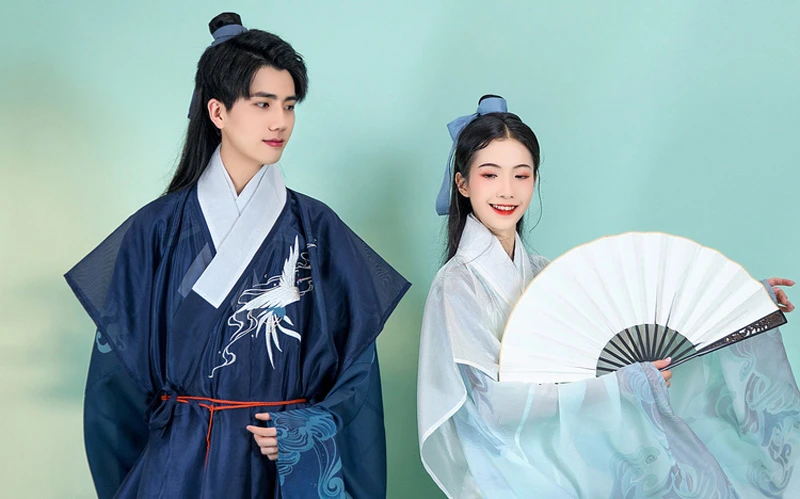
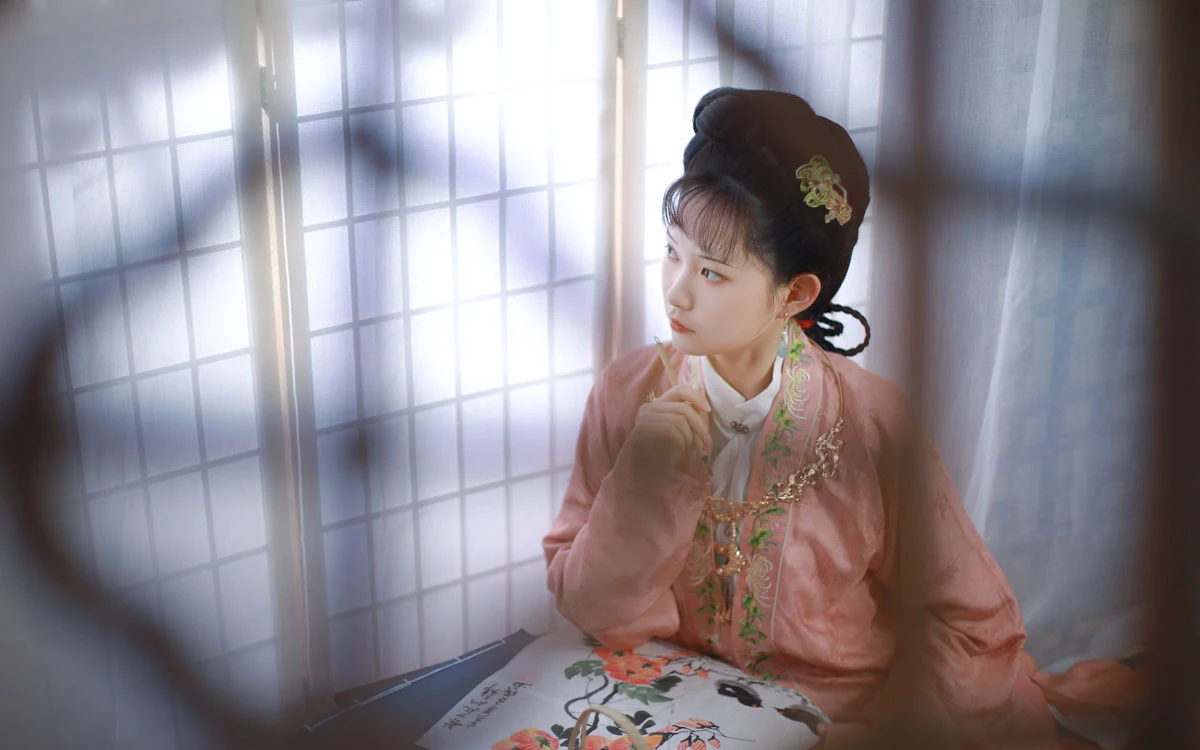
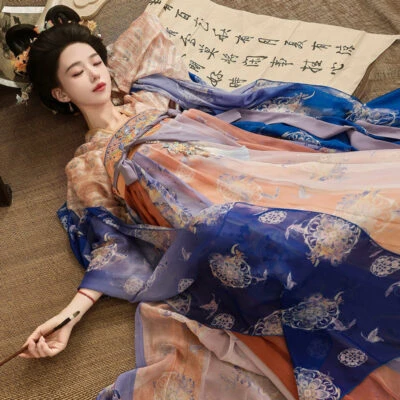
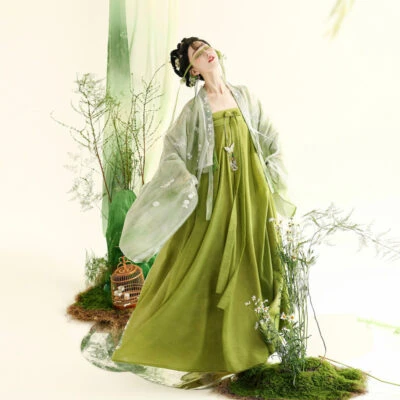
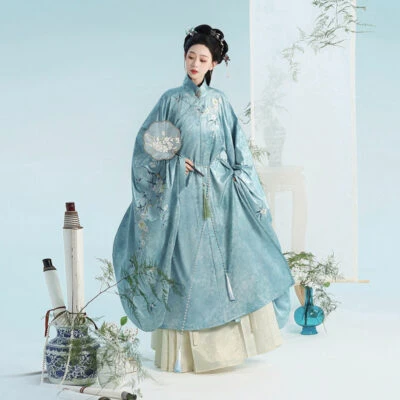
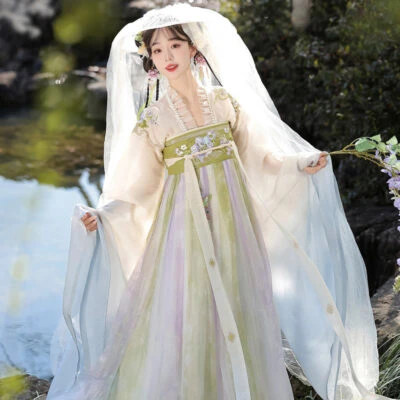
At the peak of the National Day holiday, about five thousand people were working as makeover stylists in Luoyang, the city in western Henan known for its Tang-era monuments and, more recently, for its Hanfu trade. At an average of six full looks a day and seven to nine hairpins per look, the arithmetic runs past two hundred thousand pins placed in a single day.
Luoyang Net put those figures in a commentary published on October 16 and treated them as a footnote to the city’s Hanfu boom. The numbers are worth reading as production data: a look is not one decision but a sequence, moving through base makeup, brow shape, Huadian (花钿), the bun, the pins, the Pibo shawl and the sash before the customer is handed to a photographer waiting at the door.
Three Thousand Shops in Three Years
Three years ago the old city district had fewer than twenty Hanfu rental shops, and a visitor hunting a well-cut Ruqun had to walk most of a street to find one. The district now counts more than three thousand, and the surrounding trade covers design, production, rental, makeover work and photography. Business registrations linked to Hanfu in the district rose seventy-five fold over three years, according to district figures.
The same figures put cumulative Hanfu experience visits above eleven million and associated spending at 1.645 billion yuan. Homestays in the district grew from thirteen to nine hundred and thirty-seven, and the district reports an average monthly income gain of more than three thousand yuan for people working in the trade. Makeover artists, photographers and pin makers are counted among more than thirty thousand new jobs. Annual Hanfu experience visits citywide are now above six million.
A shift in 2022 tied the district’s planning to the Hanfu wave and to the costume drama Luoyang, which had put the city’s Tang-era sets in front of a national streaming audience. Luo Tao, deputy director of the district’s culture and tourism bureau, told reporters that Luoyi Ancient City held daily footfall of fifty to sixty thousand through the summer, with shops around it handling as many as fifteen thousand costume changes a day. Visitors, he added, no longer come only to photograph the scenery; they come to walk through it dressed.
How Pins Carry the Dynasty
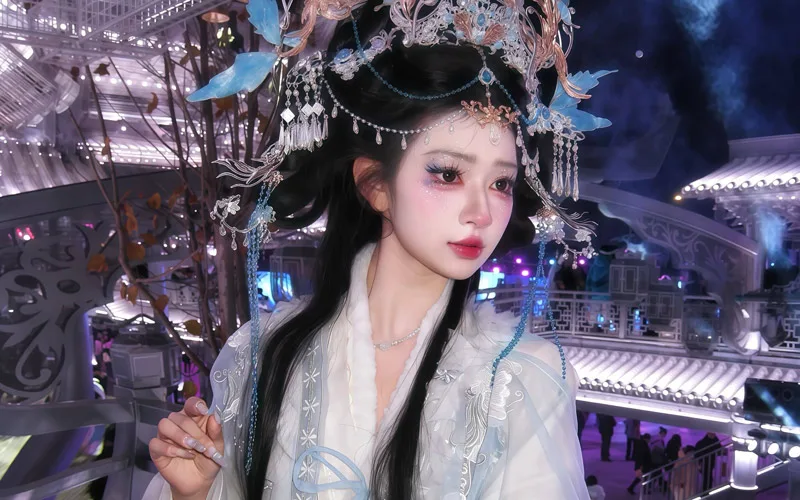
Seven to nine pins per head is not ornament for its own sake. In a traditional updo the pins do structural work first, holding the mass of hair in place, and referential work second, marking which era and which rank the look belongs to. A Buyao that trembles with each step and a Huadian on the brow are signals, and the density of both is what separates a Tang look from a Song one.
On the streets of the old city, the local shorthand is three princesses and five imperial consorts in every few steps. The distinction is not carried by sequins. Tang styling runs to a fuller face, a high piled bun and warmer, heavier colour; Song styling runs lean, with a lower bun and a lighter hand on the cosmetics. Pin placement and cosmetic weight do the work that a costume label would do in a museum case.
The repertoire behind the counter keeps changing with the market. The Mamianqun wave pushed pleated skirts into the rental racks, summer brought lighter “flower goddess” cuts, and a recent trend has men booking full women’s styling. Each shift resets what a stylist has to be able to finish inside the turnaround time a shop can afford.
The Boom Moves Into the Mountains
Outside the old city, the next stage is already visible. Luoyang Net’s article noted Hanfu crowds on Laojun Mountain, where visitors photograph themselves against the ridge lines, at Chongdugou, where young visitors wear zanhua hair ornaments beside the waterfalls, and at Baiyun Mountain, where snow and heavy coats made the combination a staple of winter photography. County attractions have the scenery and the seasons; what they lacked was the styling and photography layer.
That layer is what the old city spent three years building. During the National Day holiday Luoyang appeared on three separate top-ten lists covering short-haul destinations, long-haul travel and city experiences. Visitors paying for a costume rental are also paying for the labour behind it: the six looks a day, the eighty or so pins a stylist places before dinner, and the queue of customers waiting to be turned into someone from a tomb mural.