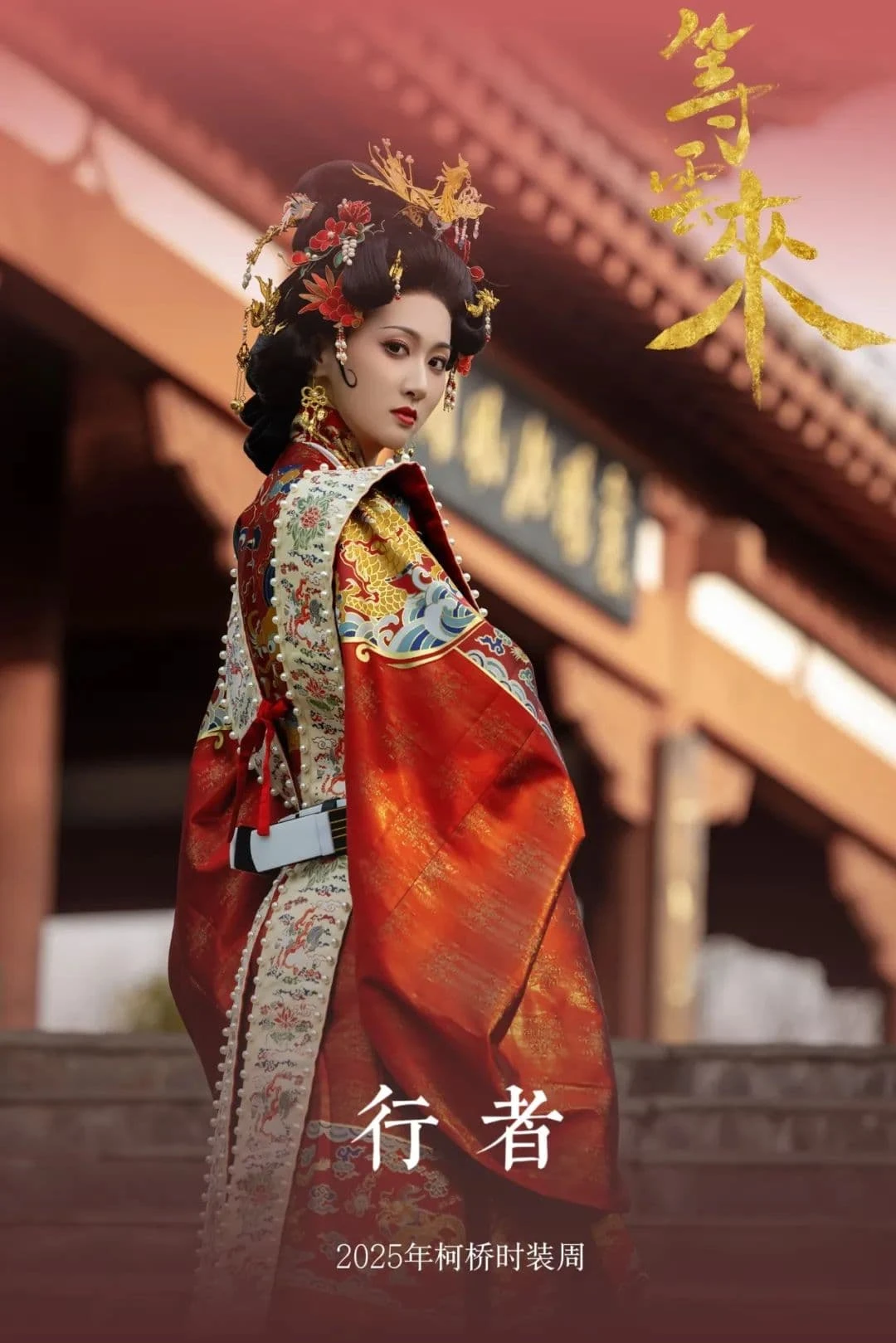
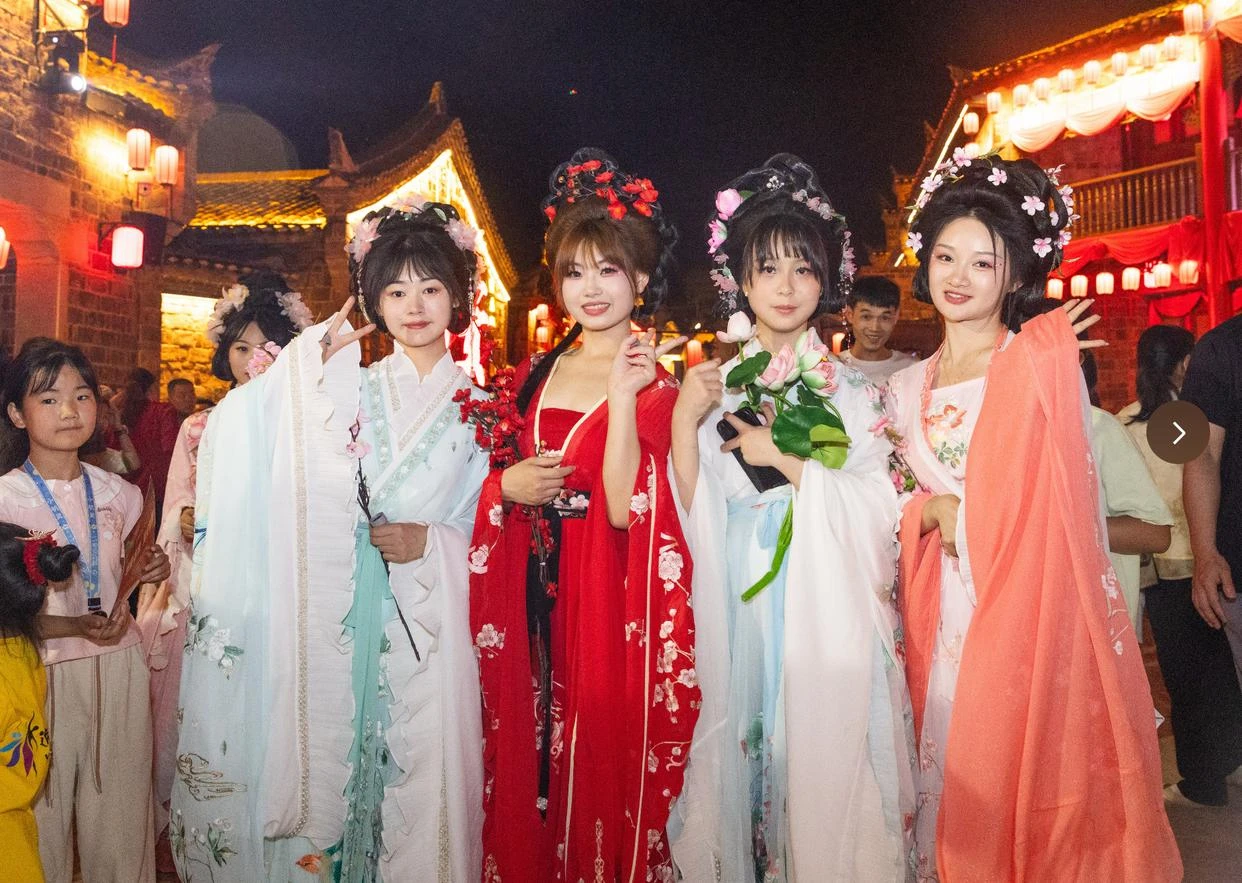
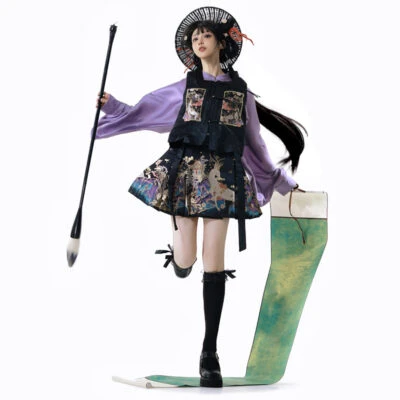
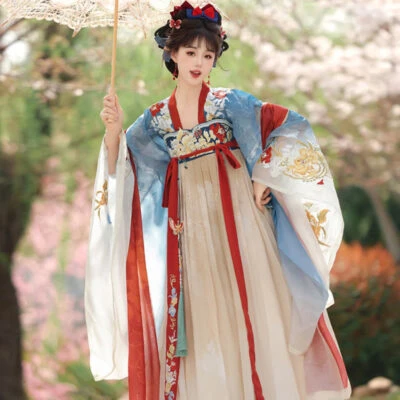
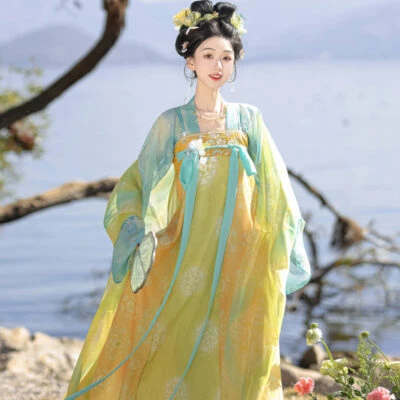
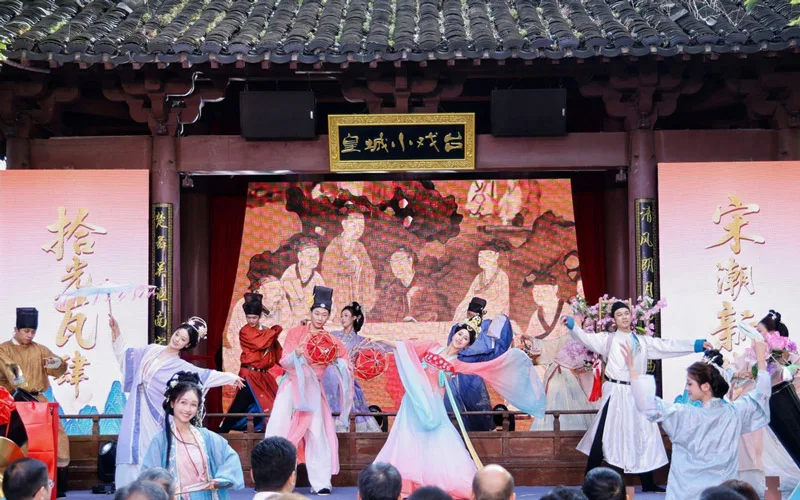
On the afternoon of October 16 the tenth Wasi culture series opened at the foot of Wushan in Hangzhou, in front of Wangxian Pavilion, with dancers in Song-style dress coming down the pavilion steps and into the crowd. The programme runs to October 18 and strings together Wangxian Pavilion, Zhongshan South Road and Shiwukui Lane so that the twenty-three lanes around them work as one open-air theatre.
A Wasi (瓦肆) was the entertainment quarter of a Song-era city: the place where storytelling, acrobatics, music and food stalls shared the same block. The theme chosen for this edition pairs gathering light with a renewed Song style, and the opening number made the argument in movement rather than in a speech: the dancers walked down from the pavilion, and the audience stood where the stage would normally be.
Ten Years Outgrowing One Pavilion
The series began in 2017 on a small patch of ground beneath Wangxian Pavilion. Yu Xiaofang, a retired teacher from the community college and one of the first participants, recalled that the site was tiny and that the dragon and lion dance was enough to bring every neighbour out. Ten editions later, the footprint runs the length of the twenty-three lanes and the audience includes visitors from across the city.
During the opening, a segment was built around that distance. Four people described as companions of the Wasi, a retired teacher, a culture and tourism official, a community volunteer and a shopkeeper on the street, were interviewed on stage, and one of them remarked that the stage had grown larger while the audience had come closer, because the Wasi lives inside ordinary neighbourhood life rather than beside it. Five representatives then sealed written wishes into a box to be unsealed in 2027.
Music was staged to keep the street involved. The ensemble Bantang Huanxi spread its players through the pavilion, the crowd and the lanes for a suite titled Heyi Ge, with guzheng, pipa, bamboo flute and erhu answering each other from different directions, and a dance adapted from an award-winning piece followed, performed by local amateur teams rather than a professional company.
The Street Programme, Hour by Hour
Two remaining days run on a fixed clock, which is useful if you are planning a visit. The market around Wangxian Pavilion opens from 10:00 to 20:00 with food stalls, craft demonstrations, young artists, traditional medicine and neighbourhood services, plus anniversary merchandise. The pavilion stage holds opera and narrative song at 14:00 and a themed night programme at 19:00, rotating Yue opera, quyi and variety bills.
Shiwukui Lane carries the daytime street programme from 10:00 to 16:30, with a set piece every few doors: traditional conjuring, crosstalk and storytelling, and acrobatics. From 18:00 to 19:00 Zhongshan South Road switches to a night street format with bands, close-up magic, folk music and a pedlar scene. A stamp booklet issued for the anniversary can be filled across the sites and exchanged for a food box or merchandise, and shops along the route are running their own discounts.
What the Lanes Do With a Costume
Hanfu here is not confined to a stage slot. During the evening street programme, the flash-mob segment is scheduled alongside the bands and the magic acts, which means visitors in Song-style dress and visitors in ordinary clothes occupy the same pavement at the same hour, in front of the same teahouses. The costume does not mark a performance boundary; it is one of several things happening on the street.
That arrangement is what the district presents as the local application of Zhejiang’s Song-era culture programme, which until now has mostly appeared in museums, theatres and scenic compounds. A neighbourhood version looks different: a retired teacher recalling a small crowd under a pavilion in 2017, a shopkeeper keeping the lights on for three nights, a stamp booklet that sends people down lanes they would otherwise walk past.
What the tenth edition leaves behind is a schedule and a set of habits. The pavilion stage, the lane performances and the market are all temporary, but the route they describe is the same one the district has been extending for a decade, one block at a time.