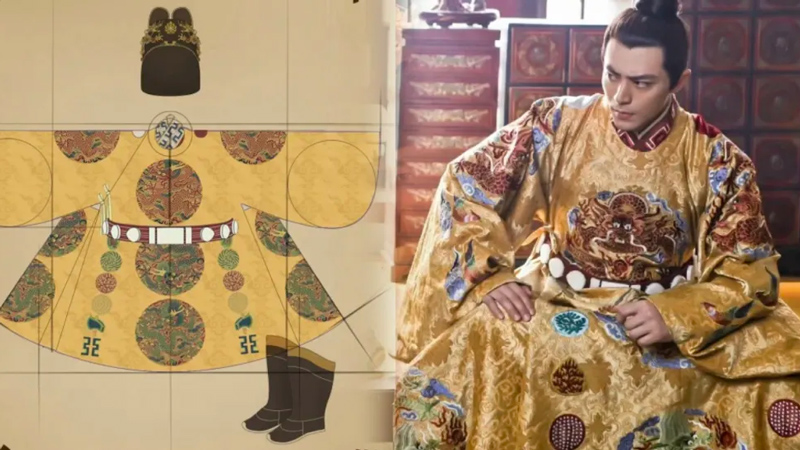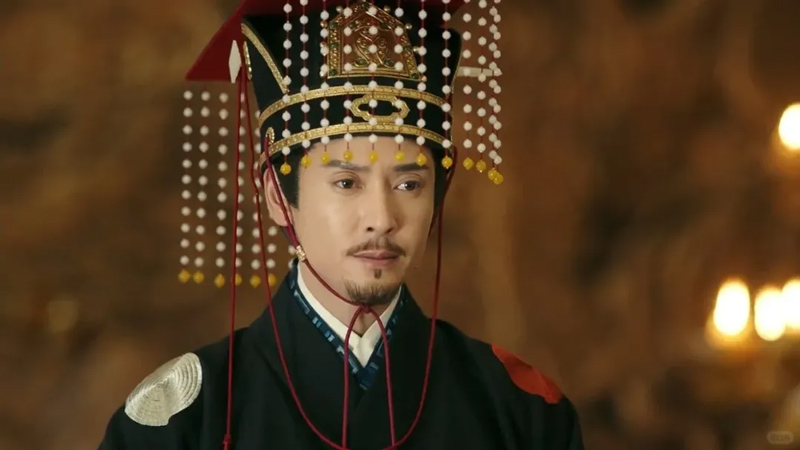
A sharp-eyed viewer pauses an episode of The Road to Splendor (花开锦绣). Two colored squares sit on the emperor’s robe. Are the producers broke? Did the Son of Heaven mend his sleeves? No. Those squares are not patches. They are sun and moon emblems on a ceremonial robe called Mianfu (冕服), the highest dress code in ancient China.
The two marks often differ in color because one stands for the sun and the other for the moon. The confusion is easy to understand. Streaming dramas compress ritual into seconds. A costume that once carried court politics, sacrifice, and cosmology becomes visual noise. But once you know the rules, the “patch” turns into a calendar, a moral code, and a map of the universe. The emperor is not poor. He is wearing power, stitched with meaning.
Ritual Robe System
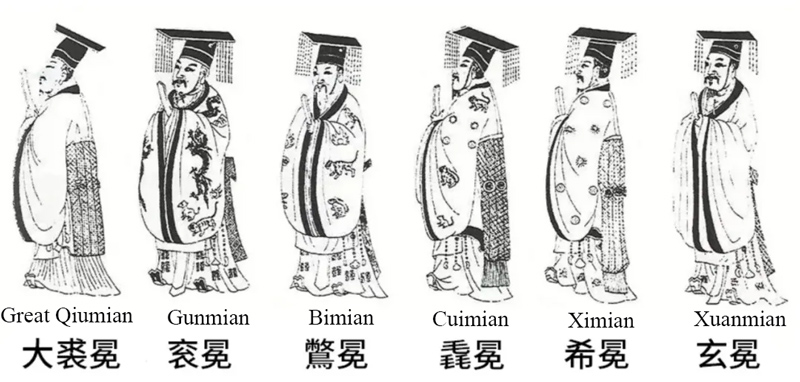
Mianfu was not one garment. It was a system. Its early forms appeared in Shang (商) times. By Zhou (周), it grew into a full court dress code that later dynasties copied. Zhou officials even created a robe office, called Sifu (司服), to match the king’s clothing with each sacrifice. The Rites of Zhou (周礼) lists six ceremonial robes, known as the Six Mian. They included the Great Fur, the Dragon, the Pheasant, the Hair, the Embroidered, and the Dark. Each had its own rank, occasion, and mood. This was not fashion for vanity. It was government on fabric.
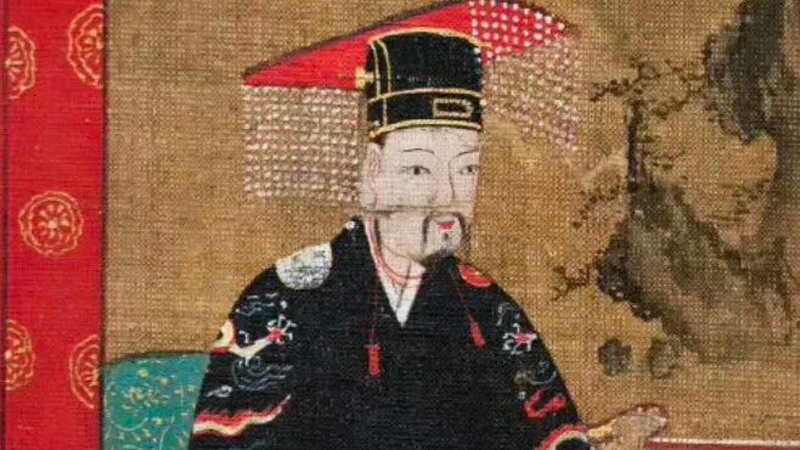
The rules went down to beads and stitches. The hanging strings on the crown, called liu (旒), changed in number. So did the embroidered symbols. The Great Fur robe for heaven had no beads and no symbols. The Dragon robe for former kings carried twelve symbols and twelve bead strings; in Tang times, nine. The Pheasant robe had seven symbols. The Hair robe had five. The Embroidered robe had three. The Dark robe had one. Only the Dragon robe wore the full Twelve Symbols. A wrong number could make a ritual invalid. A right number could make the wearer look like the center of a cosmic order.
History did not move in a straight line. Qin rulers favored practical control. They removed the Six Mian and kept one plain black sacrifice robe, called Junxuan (袀玄). The Book of the Later Han (后汉书) records this break with older ceremony. In 59 CE, Emperor Ming of Han ordered a return to Zhou models. The court again used graded robes for different sacrifices. Later dynasties changed collars, sleeves, and layers, but they rarely threw away the symbolic core. The robe survived because it did more than cover a body. It explained why a ruler ruled.
Twelve Symbols
The Twelve Symbols were the heart of the design. They were sun, moon, stars, mountain, dragon, flowery bird, ancestral vessel, waterweed, fire, rice grain, axe, and the interlocking fu pattern. Each one carried a lesson about order, food, water, fire, ancestry, or judgment. They were painted or embroidered into the robe, not sewn on as repairs. A robe with these images was a wearable argument. It told officials and subjects what kind of ruler the wearer claimed to be: one who respected heaven, remembered ancestors, fed people, and judged fairly.
Color deepened the message. The Five Colors were blue-green, red, yellow, white, and black. They matched wood, fire, earth, metal, and water. They also matched benevolence, propriety, trust, righteousness, and wisdom. The sun and moon stood for fire and metal, so red and white held special weight. Stars tied the five colors together. The Book of Documents says these five colors were displayed in clothing so a ruler’s character could be seen. In other words, the outfit was not decoration. It was a public examination of virtue, worn on the body.
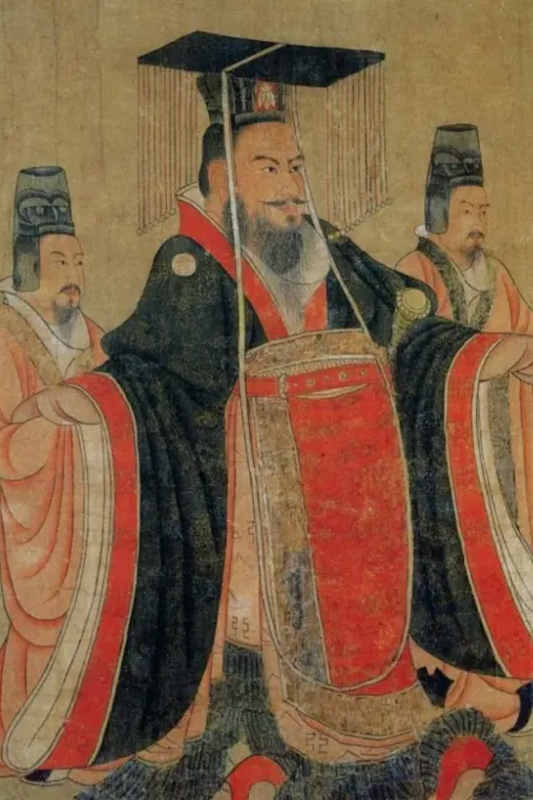
By Ming times, the Dragon Robe became a formal garment and a practical substitute for mianfu. Together, they were called Gunmian (衮冕). From Emperor Yingzong (明英宗) onward, the Dragon Robe also received the Twelve Symbols. Sun, moon, stars, and mountain sat on the shoulders, the back below the round collar, and nearby shoulder areas. Other symbols were woven in two facing rows on the front flap. He wore this for heaven sacrifices and festivals, often in red or yellow. It was more splendid than everyday dress, and far more controlled.
So the next time a costume drama shows an emperor with two colored squares, do not call the art department poor. That is not a repair. It is a ritual code, a cosmology, and a once-in-a-lifetime commission. A ruler did not mend his clothes; he wore the universe on his shoulders. The “patches” are not signs of a low budget. They are signs that someone, somewhere, read the rules.