Article
Search results:
-
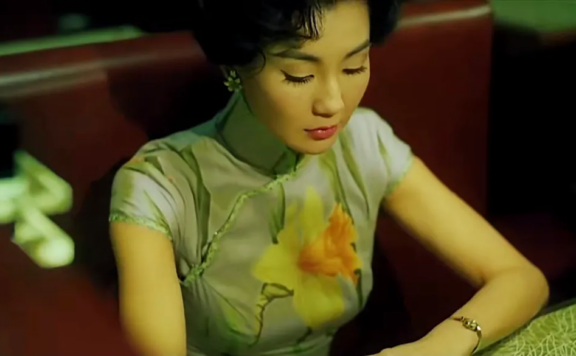
Su Lizhen: A Peak in the History of Chinese Cheongsam
Today, let's continue our special topic on In the Mood for Love and appreciate the beauty of Maggie Cheung's cheongsams. Before delving into the topic, let's talk about the behind - the - scenes details of this movie. Maggie Cheung changed into 23 cheongsams in In the Mood for Love, all designed by the Hong Kong art director Cheung Shu - ping himself. Some of the cheongsam fabrics were his personal collections over the years, and the patterns and fabrics were already out of print. So, it's almost an eternal regret that it's impossible to recreate Su Lizhen's beauty exactly. Then, these cheongsams were handmade by Hong Kong master Leung Long - kwong, who has over sixty years of experience in cheongsam making. As he said, "I've never changed my profession in my life. I earn money with my heart." For these 23 cheongsams, Cheung Shu - ping was mainly responsible for design, color matching and sourcing fabrics, while Leung Long - kwong was in charge of measuring the body, cutting and sewing. It can be said that without the seamless cooperation of these two masters, there wouldn't be this world - renowned Chinese masterpiece. The emergence of In the… -
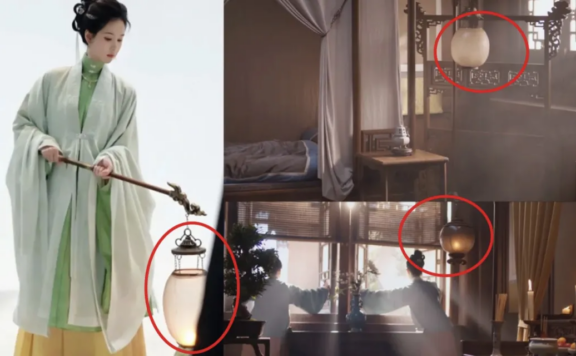
Why Are There So Many White Lanterns in Cdramas?
Why are there so many white lanterns in dramas like Yan Hui Shi, which references Ming Dynasty costumes? Even during festivals, white lanterns dominate. Isn't it considered unlucky to hang white lanterns at home? Let’s start with the conclusion. In traditional Chinese lantern culture, lanterns come in various colors, and white lanterns are one of them. Many ancient paintings depict white lanterns used in celebrations and rituals. People believed that lighting white lanterns at night could dispel darkness and convey blessings and good wishes. During festivals, households would hang white lanterns to express hopes for future happiness and prosperity. In daily life, white lanterns were also used for illumination, while other colored lanterns served as decorative accents. When lit, white lanterns emit a soft yellow glow, making them a common sight in ancient paintings. In Ming Dynasty-inspired dramas, aside from geometric-shaped lanterns (square, round, triangular) or those resembling animals and objects, we also see unique designs like horn lanterns, crimson gauze lanterns, and boneless lanterns. Among these, horn lanterns are one type of 'white lanterns' we often see. Similar lanterns include those made from sheep horn or the more expensive rhinoceros horn. Though they appear white, they are closer to… -
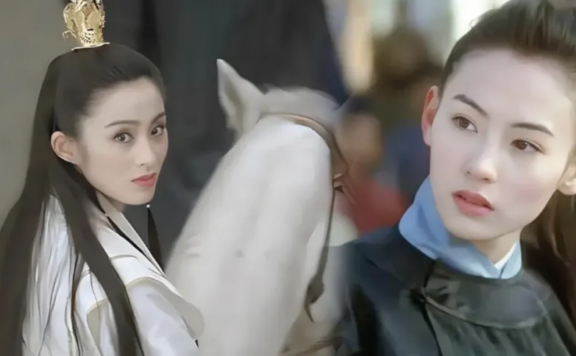
Is Cross-Dressing Real in Historical Dramas?
Is Cross-Dressing in Historical Dramas for Real? In many historical dramas, we often see women dressing as men to navigate various social settings. While modern audiences might view clothing as a matter of personal freedom, in ancient times, women wearing men's attire was far from acceptable—it was considered a breach of etiquette and societal norms. The answer lies in the rigid hierarchical systems of the past, where distinctions between age, gender, and social status were deeply ingrained. The idea of "separating men and women" wasn't mere moral policing but a means to enforce strict gender boundaries. As recorded in the Book of Rites: Internal Rules, "men and women shall not share garments." However, exceptions did exist. During the pre-Qin and Han dynasties, particularly in military contexts, women donning armor was a tactical move. For example, the Records of the Grand Historian: Annals of Xiang Yu recounts that Liu Bang deployed 2,000 women in armor to mislead Chu forces during a critical battle. Such instances, though rare, highlight the strategic use of cross-dressing. The Northern and Southern Dynasties saw legendary figures like Mulan, who famously took her father's place in the army, as immortalized in the Ballad of Mulan. Yet, as… -
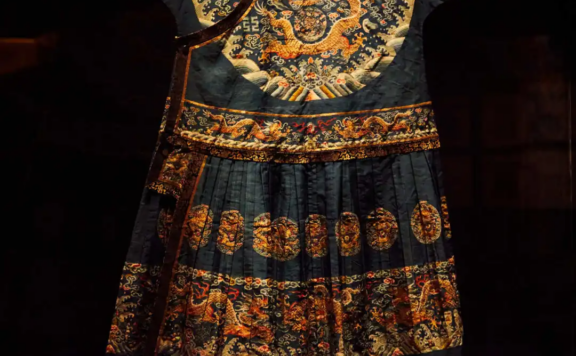
An Unmissable Exhibition of Qing Dynasty Court Embroidery
This is a rather special share today. Recently, at the Guardian Art Center in Beijing, there was an exceptionally rare and once - in - a - decade exhibition of traditional Chinese attire—the Qing Dynasty Court Embroidery Exhibition. The exhibition traces the timeline from the early to the late Qing Dynasty, focusing primarily on the royal attire of the Qing court. Through the passage of a thousand years and the morning mist of history, we witness the unparalleled heights achieved in fabric, color, patterns, craftsmanship, and aesthetic levels of royal garments. At the same time, we can admire the brilliance and splendor of the ancient silk industry and traditional plant dyeing techniques throughout the Qing Dynasty. The Qing rulers placed great emphasis on using colors and patterns to establish the order and rituals of the dynasty. Thus, different colors carry distinct cultural connotations, and various printing techniques conceal philosophical and ritualistic meanings unknown to us. Today, let us follow my footsteps to appreciate the beauty of Qing Dynasty attire colors. Sacrifices were the most significant duty of the ancient emperors—a religious ceremony to express reverence and gratitude to the heavens and earth, embodying the ancients' worship and respect for natural… -
Firearms in Ancient China
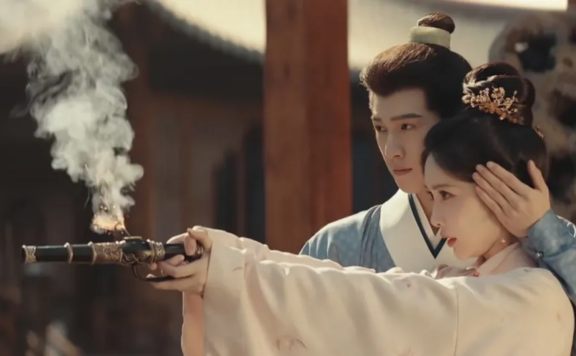
In the ancient - costume drama Yan Hui Shi (雁回时), when Zhuang Hanyan took out a fire - arm, I bet many people's hearts skipped a beat. Netizens wondered, "Where did Yanzi get this fire - arm? Did she borrow it from Fan Xian and Fan Ruoruo?" Actually, fire - arms have appeared in other TV shows like The Longest Day in Chang'an 2 and The Ninth Purple. Let's start with the conclusion: Our ancient ancestors were not only kind - hearted but also very cool. Fire - arms were first created in the Yuan Dynasty in China, evolved from the fire - lance of the Southern Song Dynasty. They were the world's earliest tubular metal shooting firearms. Yes, by the Ming Dynasty, China had already entered the age of firearms. At this time, you could shout, "My lord, the times have changed!" During the Yuan Dynasty, the technology of firearm casting had reached a high level. Metal barrels, usually made of bronze or iron, could be produced for firearms. Before Zhu Yuanzhang established the Ming Dynasty, fire - arms were already the main weapon in production. After the founding of the Ming Dynasty, the production of fire - arms… -
Why No Summer Hanfu Wear in Cdramas?
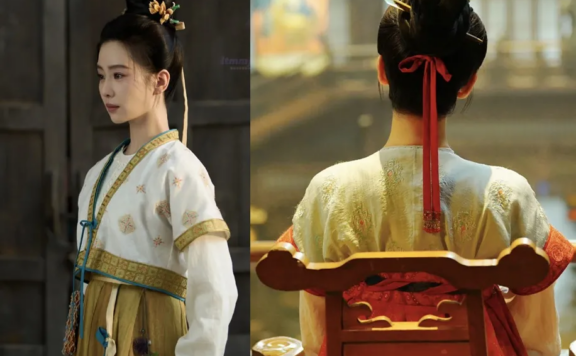
It's rare to see short sleeves in ancient costume dramas. Why is that? Did ancient people not have summer Hanfu? Wearing multiple layers must have been unbearably hot, right? Let's get straight to the point. How did ancient people stay cool and stylish? They weren't foolish enough to suffocate themselves in long - sleeved layers. Ancient vests came in short - sleeved, sleeveless, and even strappy designs. If you rummage through an ancient wardrobe, you’d find inspiration that defies our conservative stereotypes. For example, the 'vest' or 'Bijia' was a sleeveless, front - opening garment with slits reaching below the knees. Inherited from the Song Dynasty and popular during the Yuan and Ming dynasties, it usually reached the hips or knees, and some were even longer, less than a foot from the ground. It was often worn over other clothes, and could be worn alone at home when relaxing and enjoying the cool. In the Ming dynasty, such vests were also called 'Gua' or 'Bijia', referring to sleeveless tops of various collar styles. At home, without an undergarment and with lightweight fabric, 'wardrobe malfunctions' were common. No wonder outsiders were barred from the inner quarters! Short sleeves, known as 'Banxiu'… -
When Qipao Meets Traditional Chinese Red
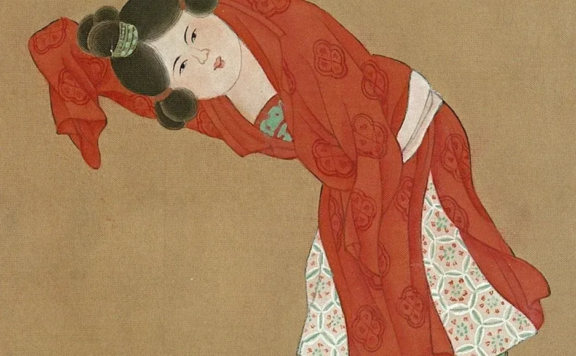
When Qipao meets traditional Chinese red, each piece is a true masterpiece! The fusion of gardenia and jasmine scents creates an unforgettable beginning. Today, I’m sharing about red Qipao. Among all colors, red is undoubtedly the star of Qipao. It's not only associated with wedding attire but also deeply rooted in China's historical and cultural symbolism. Red embodies the soul of Chinese culture, symbolizing auspiciousness, celebration, eternal brightness, warmth, hope, vitality, and prosperity. In Chinese history, the five colors—white, blue, black, red, and yellow—were linked to the Five Elements (metal, wood, water, fire, earth) and virtues (benevolence, righteousness, propriety, wisdom, trust). Starting from the Zhou Dynasty, red was revered as a symbol of power and nobility, gradually becoming a staple in both royal and common households. By the Tang and Song Dynasties, red was widely adopted in daily wear and weddings. In the Tang Dynasty, the fourth - rank officials wore dark crimson, and the fifth - rank officials wore light crimson. The popular colors at that time were crimson, purple, bright yellow, and green. The combination of crimson and green was commonly used for women's clothing, and this color scheme was also applied in weddings, with grooms in red… -
The Diverse Charm of Qipao Beauties, How Could She Be Missing!
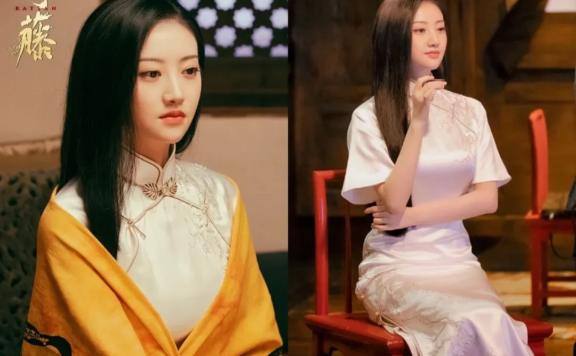
In previous features, we discussed the unsurpassable peak in Qipao cinema history—In the Mood for Love. Today, I want to focus on Qipao appearances in TV dramas, highlighting those classic moments where Qipao beauties shone. Each of these beauties has her unique charm, and the Qipao they wore were equally distinctive. In the vast ocean of Qipao styles, external beauty is secondary; the key lies in wearing the Qipao with personal flair and character. First, let's talk about a widely recognized Qipao beauty from recent years—Jing Tian in Rattan (2021). Her portrayal of a vine spirit, set in the Republican era, featured numerous Qipao styles that redefined elegance. The satin Qipao, primarily in pearl white, with its high side slit, atmospheric connected shoulder sleeves, double-round front placket paired with delicate piping and inlaid silk hard flower buttons, exuded both nobility and grace. It was not only light and smooth but also convenient for movement. Paired with Jing Tian's long hair like satin, it combined sexiness and cold beauty. The lace-embellished Qipao in pale blue highlighted her delicate features. The lace perspective showed the female's graceful figure in a hazy and implicit way. With exquisite bead embroidery printing and a small… -
Why Costume Dramas Feature Loose Hair?
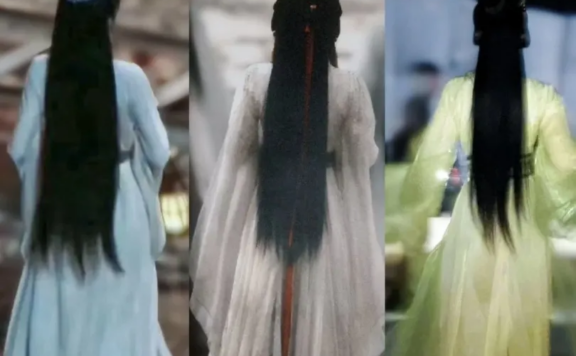
Why Do Costume Dramas Always Feature Loose Hair? In TV dramas, we often see characters with 'loose hair' styles, including half - down hairstyles. For ancient people, when was it necessary to tie up their hair? What were the customs around this? The conclusion is that both men and women were expected to tie up their hair in public after reaching adulthood. Many dramas wrongly assume that unmarried women can have loose hair and married women should tie it up. According to traditional etiquette, hair should be tied up after coming of age. Ancient coming - of - age ceremonies were closely related to hairstyles. For men, it was 'Guanli (冠礼)', and for women, 'Jili (笄礼)', also known as 'Shangtouli (上头礼)'. Records show men had Guanli at around 20, and women had Jili at about 15. For women, the Jili, also called 'Jiaji (加笄)' or 'Shangtouli', involved parents or elders tying up their hair and adding a hairpin, symbolizing adulthood and eligibility for marriage. As Confucian texts state, 'A woman promised in marriage is honored with Jili and given a courtesy name.' In Confucian ideology, wearing loose hair after adulthood was seen as barbaric or a disregard for rituals. The… -
Why Are the Pillows in Period Dramas So High?
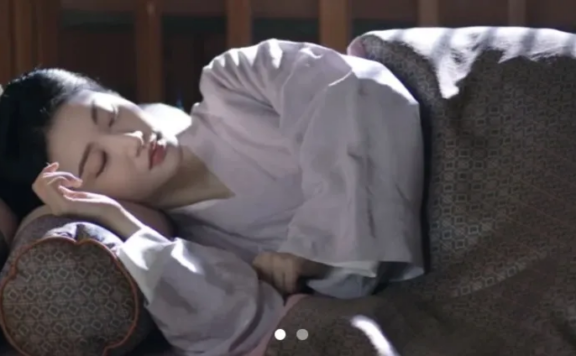
Isn't It Uncomfortable? In period dramas, we often see these hard pillows. Even in museums, most pillow artifacts are made of wood or ceramic, making one wonder if they were truly this uncomfortable. The answer is that ancient pillows came in various forms, including silk, cloth, ceramic, wood, and even jade. However, softer pillows like silk or cloth ones didn’t preserve as well, so most surviving artifacts today are hard pillows. The Chinese character for 'pillow' (枕) has a 'wood' radical, suggesting that early pillows were primarily made of materials like wood or dried grass. The ancient text 'Shuowen Jiezi' defines a pillow as 'a support for the head during rest.' Some also used stones as pillows, especially in hot summers, as the coolness could relieve discomfort. As living standards improved, pillows diversified. For example, a silk pillow was unearthed from the Han Dynasty Mawangdui Tomb—a soft pillow! This rectangular pillow, embroidered with 'longevity patterns,' was stuffed with Eupatorium leaves, known for their aromatic and medicinal properties. The pillow’s ends were adorned with raised brocade, and its sides featured fragrant silk embroidery. This wasn’t just a silk pillow but also a medicinal one, proving that nobles had access to soft… -
Hanfu: Sloping or Square Shoulders?
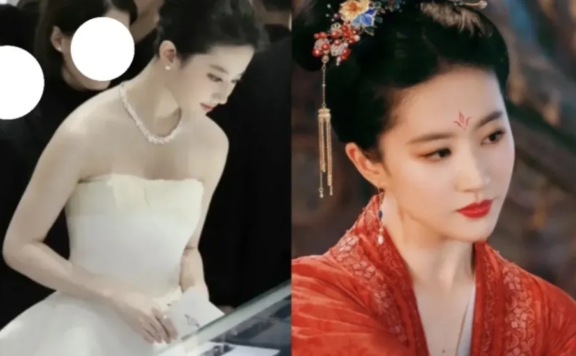
Whether watching period dramas or wearing traditional Hanfu, the topic of posture often brings up sloping shoulders, with Liu Yifei being a classic example. So, does classical aesthetics truly equate to sloping shoulders? A recent article on Ming Dynasty undergarments sparked a lengthy debate about the classical aesthetics of sloping versus square shoulders. Today, let’s dive into this discussion. First, the conclusion: Are square shoulders unsuitable for classical attire? Not necessarily. Traditional clothing’s flat - cut structure naturally accommodates the shoulders, creating a softened, secondary shape. The discomfort or visual awkwardness some perceive often stems from posture—some people unconsciously stiffen their shoulders when puffing their chests, while extreme thinness can disrupt visual balance, making the clothes appear oversized. Another factor is tailoring. Many period dramas incorporate structured cuts at the shoulder seams, leading to a constrained look. Style Comparison Hanfu’s flat - cut design allows extra fabric at the shoulder area, creating a graceful curve that enhances the upper body’s fullness and grandeur. While flat - cutting dominates, traditional Hanfu also includes localized structured adjustments like inset panels or darts. However, many period dramas, despite appearing flat - cut, use structured shoulder seams for a modern, fitted look. This results… -
Why Are the Sleeves So Big in Cdramas
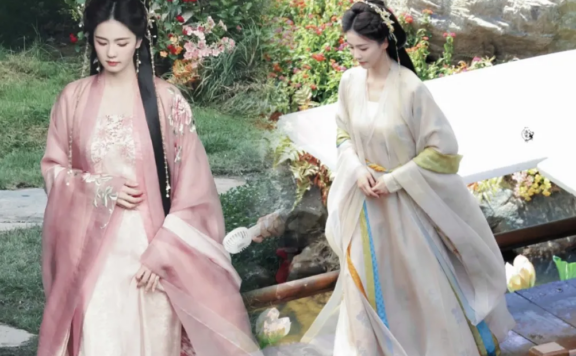
Sometimes, it feels awkward to see characters in TV dramas wearing large - sleeved outfits for outings, meals, dates, fights, or even sleeping. Were ancient clothes really all about big sleeves? How inconvenient would it be to use the restroom? Are historical drama sleeves getting even larger these days? One netizen joked: 'So big you could fit a person inside!' Let's get straight to the point. While we often describe Hanfu as 'wide robes and large sleeves', it's important to note that this is a characteristic of formal Hanfu, used to show the wearer's social status, like the historical Dashu Shan (大袖衫) or Gongfu (公服). People rarely wore such exaggerated sleeves outside ceremonial occasions. Let's break down Hanfu sleeve styles. There are many suitable for daily life. Narrow sleeves are practical for labor or martial arts; Chuihu sleeves (垂胡袖), Pipa sleeves (琵琶袖), and straight sleeves are for non - labor daily wear; short sleeves can be casual outer layers or summer homewear. For example, the Quju (曲裾) and Zhiju (直裾) unlined gauze robes, common in the Western Han Dynasty, had sleeve openings around 29 cm wide. Modern fashion sleeves average 10 cm, with looser ones at 15 cm. So, 30… -
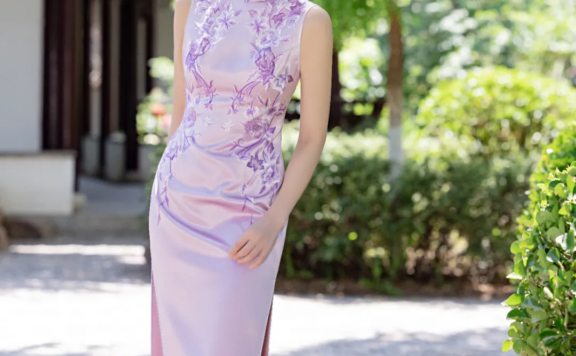
The Beauty of Cheongsam Skirts in the Wind
When the wind blows the hem of the cheongsam, the swaying figure is truly beautiful. Today, I'd like to talk about the cheongsam skirt, that is, the skirt style of the cheongsam. Why this detail? Because when we choose a cheongsam, we must pay special attention to it. Selecting a skirt that suits us, looks good, and has a strong modifying effect is the key to choosing a cheongsam. When choosing a skirt, options like A-line, wide swing, fishtail, straight tube, and various lengths can be dizzying. So today, I'll discuss the different styles of cheongsam skirts, their characteristics, and which body types they suit. Straight Skirt The straight skirt is the most common basic style in cheongsam patterns. It features a straight-up-and-down design. The H-shaped vertical effect makes the skirt fall straight and neatly, making the cheongsam look extra long, upright, and slender. This is why most people choose straight-skirt cheongsams. It suits all body types, has a daily style, and can be worn on various occasions, with a natural sense of dignity. There are usually three lengths for straight skirts. The first reaches the calf. This length is more convenient and daily, with less of the cheongsam's charm… -
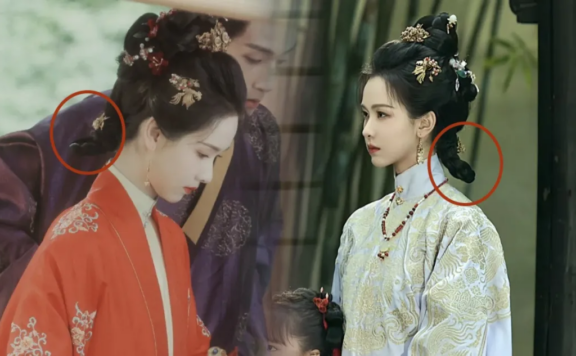
Chen Duling's Cdrama Hairstyle - Marriage Look
In the Cdrama When the Wild Geese Return, Chen Duling's post - marriage hairstyle surprised viewers: 'Why is this married hairstyle so odd? The ends just stick straight up!' In fact, this is the Sanlvtou (三绺头), a style popular among Han women in the late Ming Dynasty. The hairstyle features a 'wild goose tail' at the back, looking more dignified and steady. The Sanlvtou divides the hair into three sections: front, middle, and back. Each section is braided and gathered in a distinct way, thus getting the name 'Sanlvtou'. However, this hair - combing method can be traced back even earlier. For example, in the second act of The Box of Toiletries by an anonymous writer of the Yuan Dynasty, there is a line: 'Who would have thought that Kou Chengyu, a woman with the Sanlvtou hairstyle and two - piece clothing, has such loyalty.' Specifically, the Sanlvtou has two side strands called 'Lvebin (掠鬓)'. They frame the face like delicate clouds or cicada wings, so they are also poetically named 'Cloud - Like Hair' or 'Cicada - Wing Hair'. The front section of hair can be swept back, laid flat, or slightly raised, then tied with a red ribbon… -
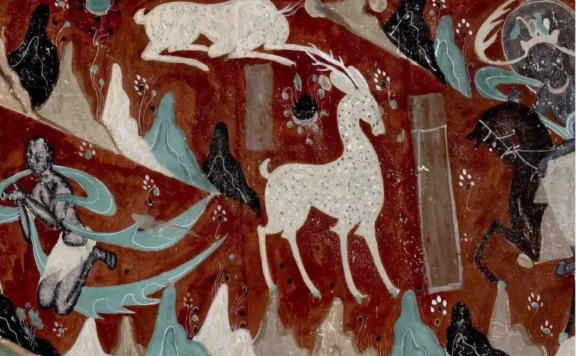
When Qipao Meets the Magnificent Chinese Green
The encounter between Qipao and the magnificent Chinese green creates unforgettable masterpieces. Green symbolizes the vastest and most touching freedom on earth. As writer Li Juan once said, 'When we see green, we always think: nothing will ever end, right?' This interpretation, though not as romantic or unique as others, perfectly captures the essence of green—its freshness and vitality that bring hope and life from spring to summer. It's no wonder so many people adore and continuously fall in love with green. This love has persisted since ancient times. Starting from the Han Dynasty, influenced by Taoist and Confucian philosophies, green became widely popular in both culture and aesthetics, admired for its natural and serene beauty. Beyond clothing, green was also prominently used in architecture, as recorded in Zhang Heng's 'Ode to the Western Capital.' In ancient Chinese art, green flourished in paintings, particularly in the Dunhuang Mogao Caves during the Wei, Jin, and Southern and Northern Dynasties. The harmonious blend of green with colors like earthy red, lapis lazuli blue, and black showcased its elegant and rich beauty. By the Tang and Song Dynasties, green became a staple in landscape paintings, symbolizing the vibrant life and artistic refinement of… -
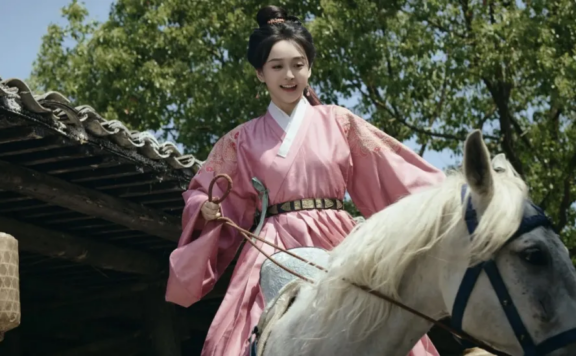
Pink Puffy Dress in a Period Drama?
Too Ahead of Its Time! In the period drama When the Wild Geese Return, the character Zhuang Yushan, the second young miss, often appears in a pink puffy dress. People wonder if ruffled dresses existed in the Ming Dynasty, finding it incredibly fashionable. Let’s start with the conclusion. This style is called Tieli, and a similar one is Yesa. Both were influenced by Yuan - Mongol styles and were popular during the Ming Dynasty. Yesa and Tieli are quite alike, but the most obvious difference is that Yesa has a smooth front panel like a horse - face pleat, while Tieli is fully ruffled. According to Ming Palace History, 'Yesa has an unbroken back panel with side pleats and a front panel divided into two sections with horse - face pleats extending outward.' These styles were mainly men's wear, and women usually wore them for cross - dressing. Does it sound familiar? The once - popular 'Feiyu Fu' (Flying Fish Robe) in dramas, paired with the imposing Xiuchun Dao, is actually this style. 'Feiyu' refers to the pattern, which resembles a python but has a fish tail. Common 'Feiyu Fu' includes both Tieli and Yesa styles. Yesa not only has… -
Spring Cheongsam: A Vivid Palette of Spring Colors!
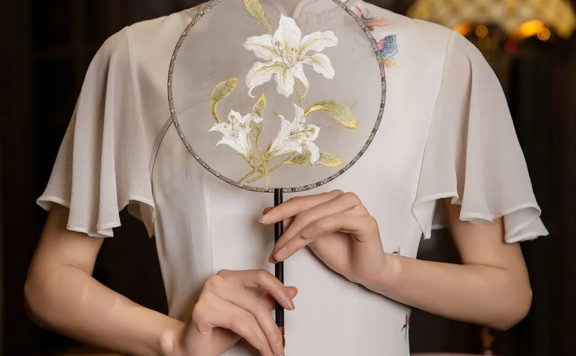
After the beginning of spring, everything comes back to life. In this season when spring sets the tone and all things harmonize, both people and beauty are blessed. That's why there are poems like 'the wind carries the fragrance of flowers, the rain washes away the dust of spring, and people thrive with the season.' As Yu Guangzhong described, 'I don’t know how spring crossed the border, why customs couldn’t stop her, only that she arrived in a lively, bright procession with colorful banners.' Shi Tiesheng also explained the essence of spring: 'The entire spring, until summer, is a season where life enjoys its own charm.' This charm is not only the calls of emerald birds after winter hibernation and the flitting of delicate butterflies but also you and me finally shedding thick clothes to step into spring in light dresses. Today, let's focus on cheongsams that embody the beauty of spring. In such a vibrant season, how can we lack colorful companions? White Cheongsam Although defined as white, this cheongsam is closer to the traditional Chinese beige, with a slight yellow tint adding warmth to the translucent white. Paired with silk crepe de chine fabric, it has a soft,… -
The Master of Gong Er's Beijing-style Cheongsams
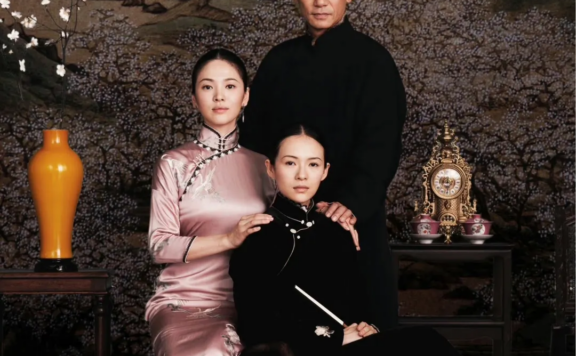
"There is a Western writer (was it Bernard Shaw?) who once complained that most women choose their husbands far less attentively and carefully than they choose their hats. Even the most heartless woman speaks with affection when she talks about 'that brocade-lined robe from last year.'" This passage is from Eileen Chang's Record of Changing Clothes, with Ms. Chang's usual sharp and incisive writing style and unique perspective. Women's love for clothes seems to be innate. The colors, patterns, and styles of clothes are not only a source of beauty in women's lives but also reveal the diverse and rich inner worlds of their souls. For women, clothes not only enhance and reflect beauty but also relate to a person's deeper inner operating rules and aesthetic creative desires. In other words, they are the visible external features of a person's inner self. This is true for people, and even more so for a film with extremely high artistic value. For a director like Wong Kar-wai, who has an almost extreme pursuit of audio-visual language, women's clothes are the second language in his films. So, in In the Mood for Love, the cheongsam is the most direct manifestation of Su Lizhen's… -
Ju Jingyi: Versatile Shoulder Straps
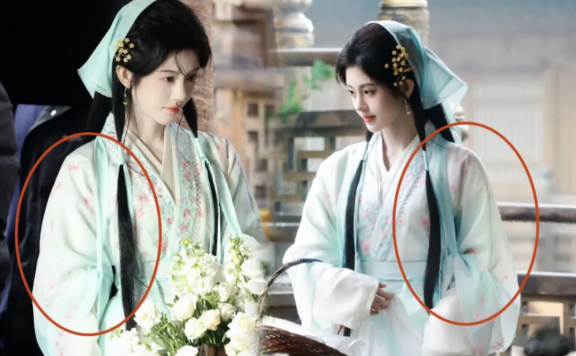
Ju Jingyi: Who Knew a Shoulder Strap Could Be So Versatile? Recently, a behind - the - scenes photo of Ju Jingyi in a drama role surfaced online. She wore a cross - collar dress with a strap tied around her shoulder, paired with a headscarf and a Panbo (襻膊), instantly evoking the imagery of a farming - themed story. Netizens were amazed: 'Who knew the Panbo could serve this purpose too?' In ancient times, a simple rope could solve many problems, especially in labor - intensive settings. For example, the Panbo was used to roll up oversized sleeves, a waistband kept skirts from unraveling, and wrist wraps secured sleeves during martial arts practice. Now, it has a new role: a must - have accessory for the 'farming heroine' aesthetic. Adding a strap not only creates layers in the outfit but also enhances approachability. The Panbo, specifically designed for rolling up sleeves, was commercialized during the Song Dynasty. Shen Congwen noted in Research on Ancient Chinese Clothing that Song laborers often tied their sleeves with ropes around their necks to keep them rolled up, officially termed 'Panbo'er'. Zhou Mi's Old Stories of Wulin·Small Businesses also listed 'Panbo'er' among street vendors'… -
Why Chen Duling's Corset Is Unique?
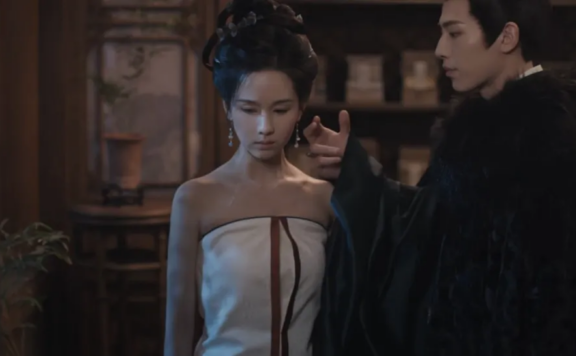
Some attentive netizens noticed: Why does Chen Duling's corset in When the Wild Geese Return have a front opening? What's the purpose of the split - like opening? Let's get to the point. In fact, front - opening corsets like this existed as early as the Ming Dynasty, known as Zhuyao (主腰). They were quite popular during the Yuan and Ming periods and were also called Hehuanjin (合欢襟). Their most distinctive feature was the front - opening, which could be fastened with ties or buttons. Some people also referred to Ming - Dynasty undergarments as Zhuyao instead of Moxiong (抹胸), just a matter of terminology. Artifacts show this style could have shoulder straps or not, and the straps could be crossed or parallel. Those without shoulder straps could still be categorized as Moxiong. Common Moxiong during the Song and Ming Dynasties were usually one - piece wraparound styles with ties, while Zhuyao had a front - opening design. This one - piece Moxiong was a long strip of cloth with ties on both sides, often gathered in the middle. It was a classic Hanfu undergarment and remained popular for a long time. In some regions, it was used as a…
