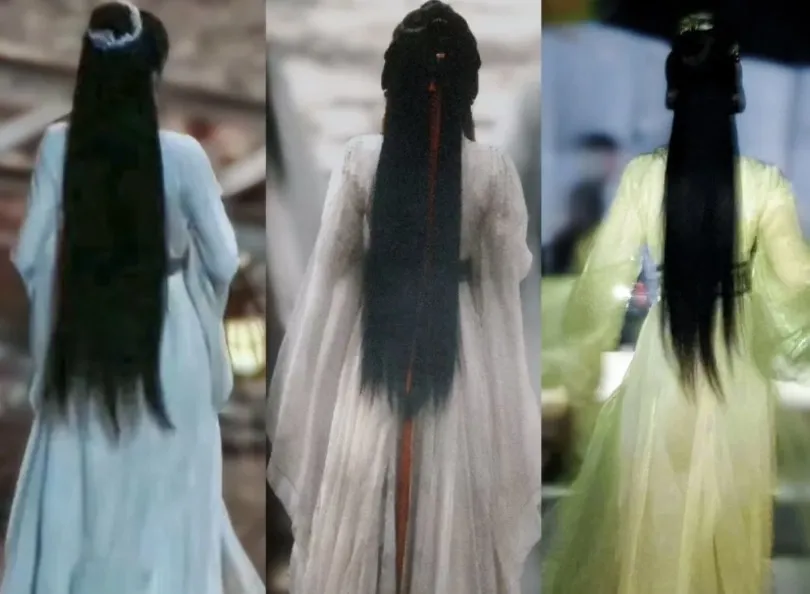
Why Do Costume Dramas Always Feature Loose Hair? In TV dramas, we often see characters with 'loose hair' styles, including half - down hairstyles. For ancient people, when was it necessary to tie up their hair? What were the customs around this? The conclusion is that both men and women were expected to tie up their hair in public after reaching adulthood. Many dramas wrongly assume that unmarried women can have loose hair and married women should tie it up. According to traditional etiquette, hair should be tied up after coming of age. Ancient coming - of - age ceremonies were closely related to hairstyles. For men, it was 'Guanli (冠礼)', and for women, 'Jili (笄礼)', also known as 'Shangtouli (上头礼)'. Records show men had Guanli at around 20, and women had Jili at about 15.
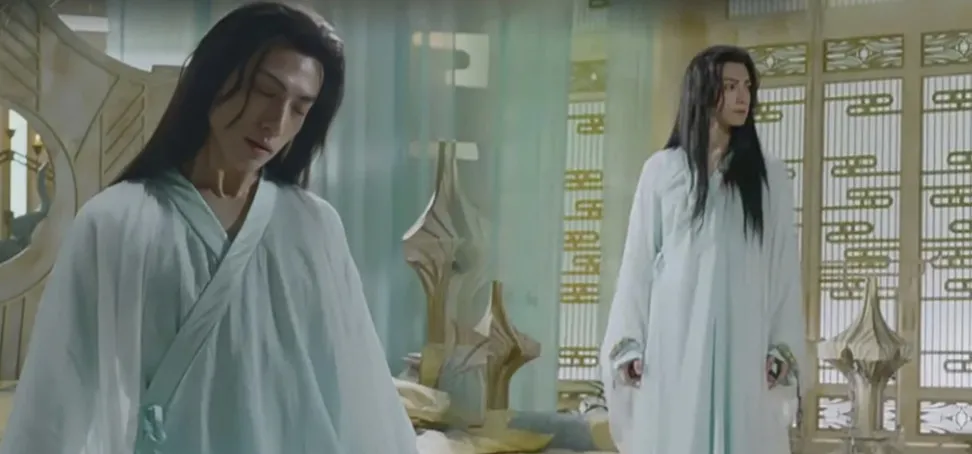
For women, the Jili, also called 'Jiaji (加笄)' or 'Shangtouli', involved parents or elders tying up their hair and adding a hairpin, symbolizing adulthood and eligibility for marriage. As Confucian texts state, 'A woman promised in marriage is honored with Jili and given a courtesy name.' In Confucian ideology, wearing loose hair after adulthood was seen as barbaric or a disregard for rituals. The Analects mention, 'Without Guan Zhong, we would be wearing our hair loose and folding our robes to the left.' For the Han people, tying up hair after adulthood was mandatory; failure to do so was like being 'uncivilized'.
Even children didn't wear their hair completely loose. Once their hair grew long enough, they'd tie it into small buns or 'Yaji (丫髻)', with partial hair left down in public. Some Han Dynasty styles had draped hair but were secured at the back. However, during the Wei - Jin era, free - spirited literati might wear loose hair in private gatherings.
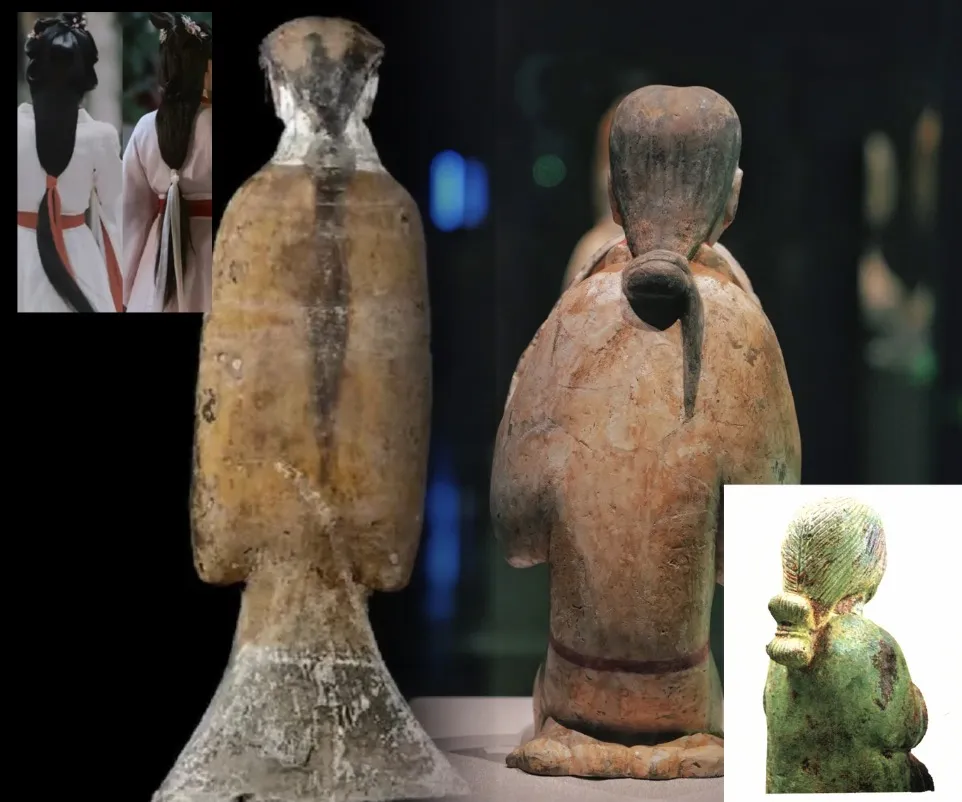
In traditional views, many frontier tribes with loose hair were seen as'savages', a biased view. Modern costume dramas commonly use four hairstyles: loose hair, buns with loose strands, braids, and tied - up hair. Braids were common in the Shang - Zhou periods and for children, sometimes representing foreign tribes. The 'bun with loose strands' is a variant of loose hair, often for girlhood. Traditional tied - up hairstyles are thought 'older - looking' for mature characters. But with proper styling, they can be lively. For example, 'Huanji (环髻)' can be made lively with layered curves, and adding rings to buns creates a playful effect.
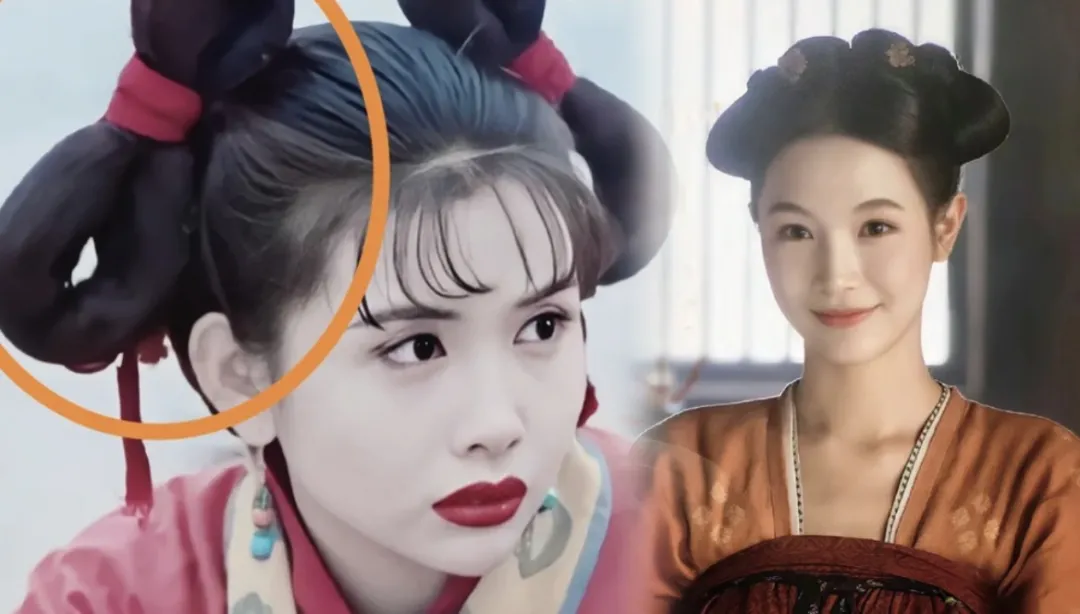
Yaji, worn on both sides of the head, resembles tree branches, hence names like 'Yatou (丫头)'. The term 'Yatou' for young girls comes from this. For underage girls, buns were lower on the sides, while adult women wore higher buns for a mature look, as seen in classical paintings. From left to right in the image, we see 'Huanji', 'Luoji (螺髻)' (single or double spiral), and 'Chuiji (垂髻)', evolving into adult styles. Hairstyles reflected a woman’s growth. Traditional tied - up hairstyles are diverse. Costume dramas need not focus on loose hair and can draw inspiration from traditions.