Article
Search results:
-
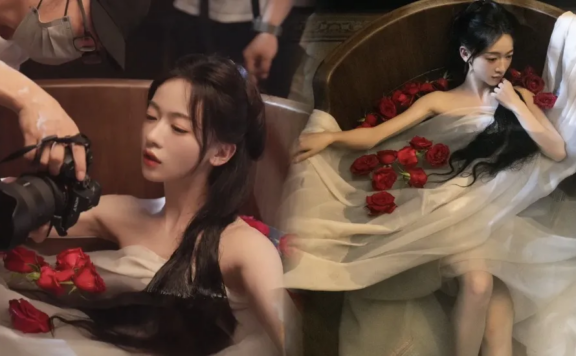
Explore the Bathing in Historical Cdramas
Who in Their Right Mind Takes a Bath with Clothes On? In current historical dramas, bathing scenes often show characters entering the bath fully clothed, with just a tub in sight. Does it mean ancient people just rinsed off? Netizens note that earlier films and TV shows depicted bathing more realistically, while modern ones seem overly reserved. It's not only about clothing; the bathing set - ups are also disappointingly simplistic. Let's clarify: bathing wasn't as basic as it's often shown. Besides the tub, ancient bathing rituals involved tools like scrubbing cloths and herbal cleansers. Cleanliness was more than a quick rinse. Earlier productions, whether ancient or modern, often followed visual logic. Actors wore undergarments and used petals or other coverings to maintain modesty. Though mocked, these scenes created many iconic moments. In ancient times, bathing was not just for hygiene; it was a sacred ritual. As the saying goes, "One who washes their hair must tidy their hat; one who bathes must freshen their clothes." The term "沐浴" (bathing) was divided into "沐" (washing hair) and "浴" (washing the body). According to "The Book of Rites", people washed their hair every three days and their bodies every five, though… -
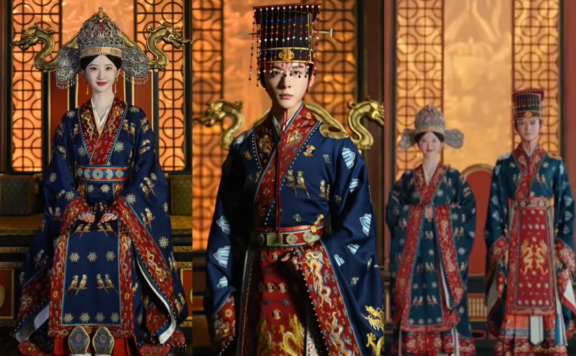
Costume Dramas: Incorrect Imperial Attire
Costume dramas need to pay more attention! In The Legend of Zhuohua, the ceremonial attire of Zhang Wanyi and Jing Tian as emperor and empress is confusing at first sight—almost like couple outfits. The much - praised imperial costumes are actually incorrect. By design, Jing Tian wears a Di Fu (翟服), and Zhang Wanyi wears a Mian Fu (冕服). Both have similar bird patterns, seemingly identical. Historically, the Di bird on the Di Fu and the Hua Chong (华虫) in the Twelve Ornaments of the Mian Fu were originally unrelated. Later, their designs merged, creating a beautiful 'mistake'—they look the same, and technically, they are. However, the emperor’s attire should be black (玄色), not dark blue. Distinguishing the Birds The Di (翟) is described in Shuowen Jiezi as a 'long - tailed pheasant,' referring to its feathers. In the avian hierarchy of Chinese motifs, if ranked, Hua Chong > Di > Phoenix, as the phoenix is usually considered highest, but Hua Chong and Di birds, for imperial attire, are often excluded from the general ranking. The Di is the highest - ranking motif for empresses and noblewomen. Following Tang Dynasty customs, the Song Dynasty mandated Di birds on noblewomen’s attire,… -
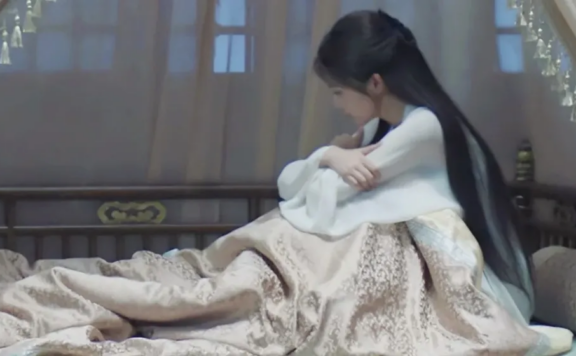
Inner Hanfu: Period Drama Sleepwear Reality
Finally, a period drama where characters don't sleep in their day clothes. Many period dramas show characters sleeping fully dressed, which makes netizens wonder: Why neglect such an important daily routine? Did ancient people not have their own 'sleepwear'? Ancient sleepwear was called 'Xieyi' (亵衣). According to Shuowen Jiezi, 'Xie' means private or intimate clothing. Some wrongly think Xieyi is the same as undergarments like breastbands. In fact, it's a close - fitting garment worn over underclothes. Shiming·Shi Yifu says, 'Zhongyi (中衣) is worn outside undergarments and beneath outer robes.' Zhongyi, also known as 'inner clothing,' emphasizes its close - fitting nature. Shuowen·Yi Bu explains, 'Zhong refers to inner Xieyi,' and Tang Dynasty annotations state, 'Xieyi is clothing worn close to the body.' So, Zhongyi and Xieyi are essentially the same. The most common sleepwear was plain, cross - collared Zhongyi and pants. Cross - collars were the most typical style, followed by front - opening and round collars. When wearing front - opening styles, a breastband might be visible. Sleepwear designs changed little across dynasties, only adapting to contemporary fashion. It was often white, which was versatile and easy to spot dirt. There were long - sleeve, short -… -
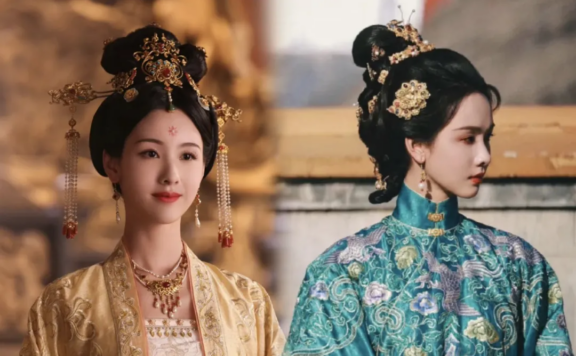
True Nobility in Period Dramas
The period drama 'When the Wild Geese Return' (also known as 'The Noble Lady') is a hit. But what was a 'noble lady' like in ancient times? Was she just decked out in gold and silver, flashy and ostentatious? The answer is no. Ancient 'noble ladies', mostly daughters of prestigious families, were defined by their status rather than blatant displays of wealth. This was in line with the aesthetic of the time - true nobility was understated, 'noble without being showy'. Let's take the Ming Dynasty, the backdrop of the drama, as an example. Nobility in the Ming Dynasty was often reflected in unassuming yet substantial details. The 'diji' (䯼髻), developed from the 'teji' and 'guanzi' of the Song Dynasty, was the main headwear for married women. It was usually woven from silver or gold threads, horsehair, bamboo strips, or even human hair (some were made from paper or fabric) and covered with black gauze, like a cone over the hair bun. Various hair ornaments were inserted into it, including a 'fenxin' (worn at the center), a 'dian'er' (at the base), a 'tiaoxin' (at the top), a'manguan' (at the back), 'caochongzan' (insect - shaped hairpins on either side of the… -
Do Ancient Sleeves Hold Things?
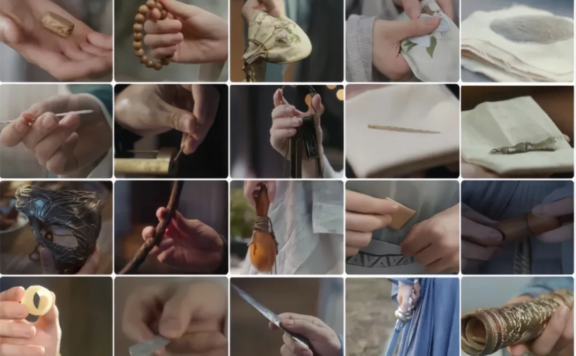
Did the ancients not worry about things falling out of their sleeves? In the historical drama Lotus Tower, the character Li Lianhua is nicknamed 'Lotus Pockets' by netizens. His role is like Doraemon, pulling out items such as secret letters, tokens, rings, water bottles, swords, and small objects from his sleeves. Could ancient people really stuff so many items of different sizes into their sleeves? Li Lianhua's sleeves seem incredibly capacious! Here's the conclusion: most sleeves that could hold items had cuffs. Unlike the wide - open sleeves used for ceremonial purposes, which generally couldn't hold things directly, and attendants often carried bags for them. Besides sleeves, ancient people also used handbags and backpacks. So, when you see characters easily taking out porcelain bottles or silver from their sleeves or belts, you might wonder—doesn't it hurt? More importantly, wouldn't things fall out? Sleeves with cuffs generally had two features: some were naturally gathered, like pipa sleeves or chuihu sleeves, forming a pouch - like shape. Others had hidden stitching inside wide sleeves to prevent slipping and hold lightweight items. However, carrying heavy or large items in sleeves would be noticeable. So, ancient people often carried small bags, either hidden in… -
Guli Nazha in Polo Shirts?
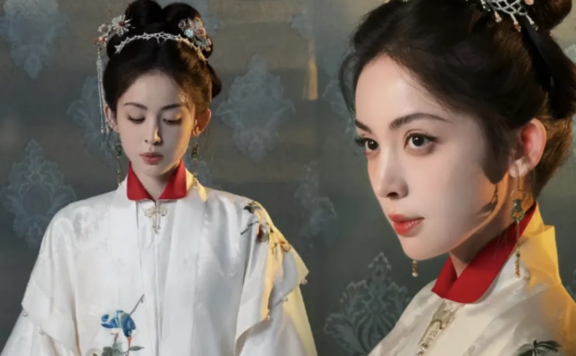
Recently, stills of Guli Nazha wearing Hanfu were released. Netizens noticed the trendy collar - turning style. Did the Chinese in the Ming Dynasty already have polo shirts? Let's start with the conclusion. It's an adjusted way of wearing a standing collar. Some previously criticized Ming - style Hanfu for not showing the neck well and making the face look bigger. This collar - turning method is a great solution. It offers more styling options and allows better ventilation in summer by unbuttoning the collar, killing two birds with one stone. The Ming Dynasty was a period when 'polo - shirt - style' clothing was very popular. A short - sleeved standing - collar diagonal - closure shirt was unearthed from a Ming tomb. The small white folded collars in ancient paintings might be the effect of wearing such short garments underneath. I initially speculate this short garment meets key criteria for innerwear: it's plain or light - colored, versatile for pairing with outerwear; it uses ties instead of buttons, not interfering with the outer layer. Recall our previous explanation about the Tang Dynasty's round - collar robes. Their innerwear was often half - sleeved. This shows why innerwear often… -
Hairstyles for Kids in Historical Cdrama
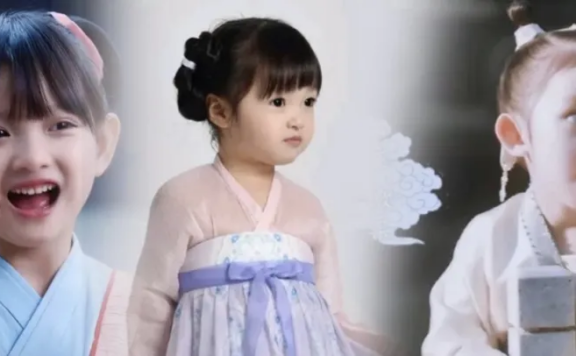
Finally, in historical dramas like 'Family Business,' 'National Beauty and Fragrance,' and 'Joy of Life,' the appearance of many child characters has sparked netizen discussions: 'So this is how ancient children looked!' Let's start with the conclusion. Ancient children generally went through stages of shaving, growing, and tying their hair. Their hairstyles varied, similar to how kids grow today. Parents, take note: children wearing Hanfu don't need adult hairstyles; it's not awkward at all. Did you also dream of dressing and styling like adults as a kid? But it was just a fantasy. Some historical dramas, for dramatic effect, often give children adult hairstyles and even add crowns, turning them into 'mini - adults' without childlike charm. Ancient children usually tied their hair into buns around ages 15 - 16, when boys reached 'weak crown' (coming - of - age) or girls 'hairpin' (adulthood). Before that, they mostly wrapped their hair in colorful cloth, showing their playfulness and cuteness. Let's explore further. At first, children's hair was mostly fine 'fetal hair.' They often shaved and regrew it, as seen in ancient paintings. The top hair was usually styled into an inverted triangle, called 'tiáo.' You can feel the scene of… -

Till the End of the Moon: Kill Her Fated Lover
When gods fail to stop evil, they send a mortal woman back in time to change fate. But what if the villain she's meant to kill is the man she's destined to love? In Till the End of the Moon, fate is a battlefield—where love, betrayal, and memory collide. The heroine must enter the past, play bride to the future Demon King, and stop him before his darkness devours the world. But every step closer to his heart is one further from her mission. Because stopping the monster might mean destroying the man. The Demon in Disguise (Episodes 1–10) The world ends in fire. Five centuries ahead, the Demon God Tantai Jin, born of the cursed Evil Bone, incinerates humanity. Desperate, the gods hurl Li Susu—a cultivator forged in celestial discipline—into the body of Ye Xiwu, a noblewoman whose cruelty once scarred the exiled Sixth Prince, Tantai Jin. Her mission is clear: kill him before the Bone awakens. But the past is a mirror cracked. The boy-prince she finds is not a monster but a ghost in chains, starved and beaten, his wrists raw from shackles even his bride once tightened. Li Susu's first act as Ye Xiwu is a… -
The Journey of Flower: A Deadly Destiny in Bloom
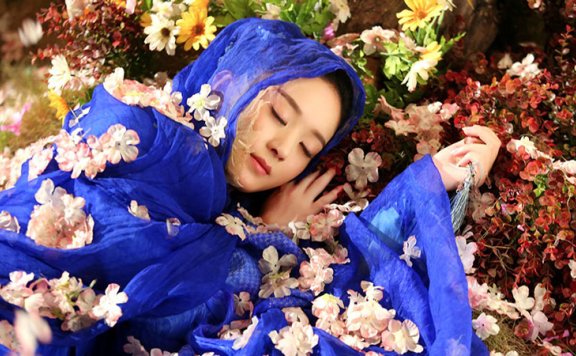
What if your very existence doomed the ones you loved? "The Journey of Flower" (花千骨) is not your typical xianxia fantasy. Yes, there are swords, immortals, and sect rivalries—but at its heart, it's a ticking time bomb of forbidden love and fated tragedy. Each episode peels back a layer of mystery surrounding one girl born under a deathly curse, and the immortal who dares to teach her. Ep 1–12: Cursed Beginnings Qiangu's birth under a lethal curse dooms every living thing that loves her—demons swarm at her scent, villagers shun her, and even the land seems to wither in her presence. Orphaned and alone, she survives by scavenging in Lotus Flower Village, her only comfort the belief that mastering immortal arts might free her from this fatal destiny. When bandits massacre her adoptive family, Qiangu unleashes a desperate burst of power—her blood disintegrates their weapons and halts their advance, marking her as both miracle and monster. Enter Bai Zihua, the aloof leader of the Chang Liu sect: bound by heavenly law to eliminate any threat, yet moved by Qiangu's sacrifice in saving his life from a venomous trap. He senses her unique aura—a fated calamity that prophecy warns will one… -
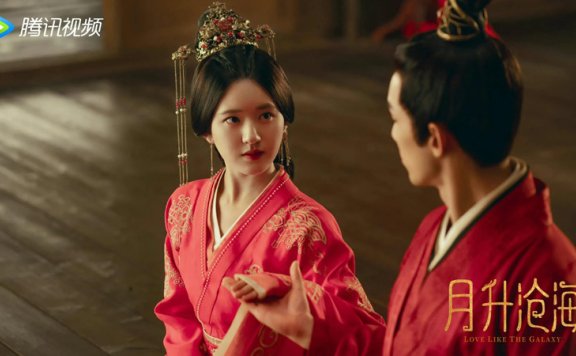
Love Like the Galaxy: A Journey of Choice and Redemption
From a broken girl to a cunning general's wife, here's how Ling Bu Yi and Cheng Shao Shang fell into a war of love and lies. Raised by Strangers (EP1–10) Cheng Shao Shang was born into glory but not into love. The daughter of Cheng Shi and Xiao Yuanyi—renowned war heroes sent to defend the empire's borders—she should have been cradled in honor. Instead, she was left behind as an infant, entrusted not to trusted hands, but to indifference masked as duty. Fifteen years passed before her parents returned, and in that time, she learned that family was a title, not a promise. Raised in a home where warmth was as scarce as fairness, Shao Shang becomes the scapegoat of the Cheng household. Her aunt views her as wild and ungrateful; her grandmother dismisses her as slow-witted and unworthy. Deprived of formal education and punished for her outspokenness, she survives by wit and will alone. Her cousins learn calligraphy and manners; she learns silence, subterfuge, and how to turn every insult into armor. By the time General Cheng and Xiao Yuanyi come back, they find not a pliant child but a girl forged by neglect. Her sharp tongue and guarded… -
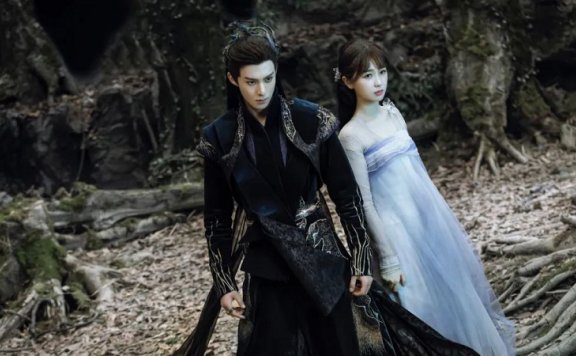
Love Between Fairy and Devil: A Dance Between Light and Darkness
What price would you pay for love that could destroy you? In Love Between Fairy and Devil (苍兰诀), the boundaries between love and revenge blur in a world of magic, betrayal, and dark desires. Dong Fang Qing Cang, a formidable devil consumed by hatred, is bound to a curse that fuels his vengeful heart. Enter Xiao Lan Hua, a pure-hearted fairy whose innocence and destiny are unknowingly tied to Qing Cang's dark past. Their fates collide in a tempest of emotions, where trust is fragile, and every choice carries irreversible consequences. A Forbidden Love Begins (EP1–10) The ancient Devil Lord Dong Fang Qing Cang, feared across realms for his ruthless domination, awakens from a 10,000-year imprisonment only to find his powers diminished and his vengeance against the heavens thwarted. His escape from the celestial prison unleashes chaos—and an absurd twist of fate. During a clash with celestial warriors, he accidentally swaps bodies with Xiao Lan Hua, a low-ranking fairy whose life revolves around nurturing flowers in the Destiny Temple. Bound by the unbreakable "Heartbond Curse," their souls become entangled: they share wounds, emotions, and even fleeting control over each other's bodies. For Qing Cang, whose strength relies on suppressing all… -

Ju Jingyi's Best 7 Characters in Costume Dramas
Ju Jingyi (鞠婧祎), a rising star in Chinese costume dramas, has carved a niche with her delicate visuals and evolving acting range. Known for roles blending elegance and resilience, she navigates genres from sweet romances to dark fantasies, defying criticisms of repetitive styling. While her early works leaned on "beauty-driven" tropes, recent projects like Hualing Ling reveal sharper emotional layers. This article explores her standout performances across seven costume dramas, highlighting how she balances ethereal charm with character depth—a journey from idol to actress. The Legend of White Snake 新白娘子传奇 Aired: 2019 Period Background: Mythological Southern Song Dynasty Genres: Fantasy, Romance, Mythology Main Roles: Ju Jingyi (Bai Suzhen), Yu Menglong (Xu Xian) Adapted From: Classic Chinese folklore Legend of the White Snake The 2019 reboot of The Legend of White Snake reimagines the classic Chinese myth of Bai Suzhen, a millennia-old snake spirit who descends to the mortal world. Departing from the 1992 version's focus on Bai's quest to repay a past savior, this adaptation centers on her serendipitous romance with Xu Xian, a humble physician. Set in the Southern Song Dynasty, the story explores Bai's dual identity as both a benevolent immortal and devoted lover. When celestial forces, led… -
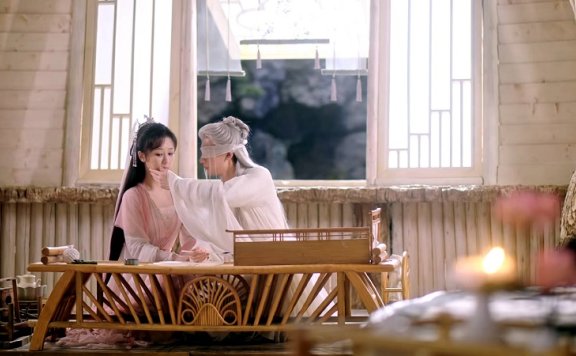
Immortal Samsara: The Love She Had to Forget
Before the tears, before the bloodshed, before the gods fell—she loved him. In Immortal Samsara, Yan Dan, a lotus fairy with the power to heal, makes one irreversible decision: to shatter her soul and erase her love for the celestial war god, Ying Yuan. No one forced her. He didn’t stop her. That choice becomes the engine of the entire story. Why would someone give up the memory of a love so deep? What did he do—or what truth was she running from? The story doesn’t begin with romance. It begins with a wound so deep, she’d rather lose herself than feel it. A Love Worth Forgetting (Episodes 1–18) She fell in love with a god. He chose duty over her. So she chose to forget. The story opens in the celestial realm—a place of radiant towers and shimmering order, but also a place where love is a sin and feelings are buried beneath rules. Yan Dan and her twin sister Zhi Xi are rare lotus spirits who ascend to the immortal realm after cultivating for thousands of years. They're supposed to devote themselves to virtue, discipline, and selflessness. But Yan Dan doesn’t quite fit the mold. She’s cheerful, curious,… -
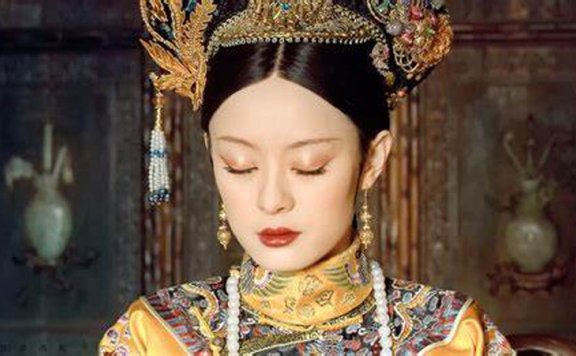
Empress in the Palace: Blood & Betrayal in the Forbidden City
The Forbidden City's gilded cages are ruled by poison, not prayer. Forget the condensed 6-episode U.S. edit—Empress in the Palace (甄嬛传) demands its full 76-episode canvas to unravel Zhen Huan's metamorphosis from naive concubine to imperial tactician. This isn't a romance; it's a masterclass in psychological warfare. Every smile is a blade, every ally a liability, and every royal birth a gambit in a game where emperors bleed and dynasties crumble. Episodes 1–10: The Illusion of Innocence Seventeen-year-old Zhen Huan enters the Qing court not as a conqueror but a casualty, her fate sealed by a twist of cruel irony: her face mirrors that of Emperor Yongzheng's long-dead true love, Empress Chunyuan. This resemblance, a haunting inheritance, draws the emperor's gaze during the concubine selection ceremony—but Zhen, determined to avoid the lethal spotlight of imperial favor, quietly prays to fail. Yet destiny mocks her caution. When a butterfly alights on her friend An Lingrong's cheap silk flower (a trick Zhen orchestrated to help Lingrong pass the selection), the emperor's attention locks onto the trio: Zhen, Lingrong, and their poised companion Shen Meizhuang. In this moment, the series' core truth crystallizes: the harem rewards neither virtue nor vice, but the ability… -

China's Top 7 Sci-Fi Anime Picks
Chinese sci-fi animation is quietly undergoing a revolution. No longer confined to tropes of myth or fantasy, a new wave of creators is tackling speculative futures with precision and boldness. These works don't shout for attention; they earn it through sharp world-building, unflinching themes, and a refusal to simplify humanity's relationship with technology. From crumbling post-apocalyptic cities to AI-dominated dystopias, these stories ask urgent questions: What does survival cost? Can humanity evolve without losing itself? The answers are rarely comfortable but always compelling. Below are seven essential titles that define this movement—not as "cultural milestones" but as raw, inventive narratives. They prioritize substance over spectacle, proving that Chinese sci-fi animation isn't just catching up—it's carving its own path. Ling Cage: Incarnation 灵笼 In Ling Cage: Incarnation, humanity's survival hinges on a brutal calculus: sacrifice empathy or perish. The floating fortress Lighthouse enforces a genetic hierarchy where "Uppercitizens" hoard resources while "Dust Citizens" endure dehumanizing labor and insect-based diets. This system strips away human bonds—exemplified by the Dawn Hall's emotionless breeding rituals—reducing life to a eugenicist project. Mark, a Hunter captain tasked with scavenging a monster-infested Earth, initially upholds this order until discovering the Lighthouse's darkest secret: a cult sacrificing children… -

Best 8 Romantic CN Anime List
Chinese romance animations thrive on bold storytelling and character-driven intimacy. Series like Fox Spirit Matchmaker hook viewers with immortal lovers defying reincarnation cycles, while No Doubt in Us reinvents relationship dynamics through a royal couple's body-swap chaos. These stories avoid tired tropes by grounding emotions in tangible stakes: a demon hunter's loyalty tested across lifetimes in Demon List, or a mortal girl unraveling celestial secrets in Contemplation of Affection. What unites them is razor-sharp focus on how characters earn love—whether battling societal expectations or their own flaws—making every confession or sacrifice resonate with raw, earned authenticity. Fox Spirit Matchmaker 狐妖小红娘 "Fox Spirit Matchmaker" redefines fantasy romance with its inventive premise of fox spirits bridging past and present loves. At its core lies the hauntingly beautiful saga of Dongfang Yuechu, a mortal warrior, and Tu Shan Honghong, a fox spirit matchmaker bound by centuries of duty. Their story isn't a straightforward courtship but a layered unraveling of identities—she must confront her role as an emotionless facilitator of others' romances while secretly yearning for her own; he grapples with fragmented memories of lives where their love repeatedly ended in tragedy. The series weaponizes reincarnation as both plot device and emotional catalyst. Flashbacks to past lives—as star-crossed lovers in imperial courts… -

4 Zhou Xun’s Iconic Period Performances
When Zhou Xun dons historical costumes, audiences hold their breath—this petite woman from Jiangnan watertowns carries half of China's epic history in her bones. As the soul-devouring fox spirit in Painted Skin, she laid bare human fragility beneath ethereal beauty; in Ruyi's Royal Love, her restrained sighs as an embattled empress turned palace intrigue into visceral poetry. From her deliberate whisper-pauses to the way her eyes flicker between vulnerability and cunning, we unpack how this actress bends time itself through roles that resonate across generations. Palace of Desire 大明宫词 Aired: 2000 Period Background: Tang Dynasty (618–907 AD), focusing on imperial intrigue. Genres: Historical, Romance, Political Drama Main Roles: Zhou Xun as Young Taiping Princess, Chen Hong as Adult Taiping, Gua Lunshu as Emperor Gaozong. Adapted From: Original screenplay by Wang Anyi. Palace of Desire traces the life of Taiping Princess, portrayed by Zhou Xun in her youth. The series begins with Taiping as a sheltered yet rebellious teenager, her curiosity clashing with the rigid imperial hierarchy. Her early escapades—sneaking into bustling markets, questioning court rituals—highlight her defiance against the suffocating palace life. However, her innocence shatters as she witnesses the ruthless political maneuvers of her mother, Empress Wu Zetian, particularly… -
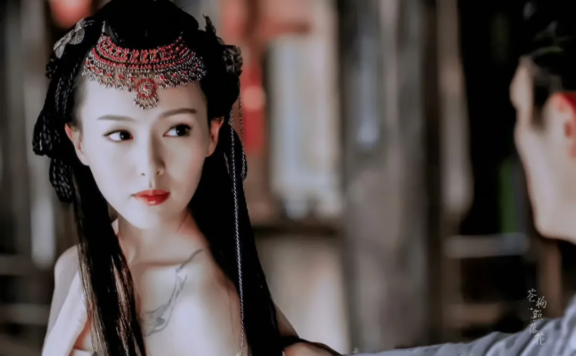
After 15 Years, Is Zi Xuan Back?
It's been 15 years since Chinese Paladin aired. Recently, Tang Yan's new drama look was unveiled, with her donning purple attire again. Netizens exclaimed, 'Time spares no one, but beauty endures—Zi Xuan is back!' For most, Tang Yan has an exceptional affinity for purple and forehead ornaments, largely because of her unforgettable role as Zi Xuan in Chinese Paladin. In the series, the primary colors of her character were purple and magenta. She wore a forehead ornament, complemented by pink accents. The play of color shades helped shape her character's adaptable personality, making purple and forehead ornaments a must - have for many when imagining a goddess. The forehead ornament stood out due to her prominent broad forehead, which conforms to the traditional aesthetic of a square and full forehead, exuding a sense of grandeur. Adding the ornament further enhanced her classical beauty. At that time, such a broad forehead was quite rare among female celebrities. Unfortunately, apart from the successful styling of Zi Xuan, Tang Yan rarely showed her broad forehead in later roles. She often chose bangs to cover it. Her subsequent styling continuously aimed for a youthful look, which influenced the style of her later characters. For… -
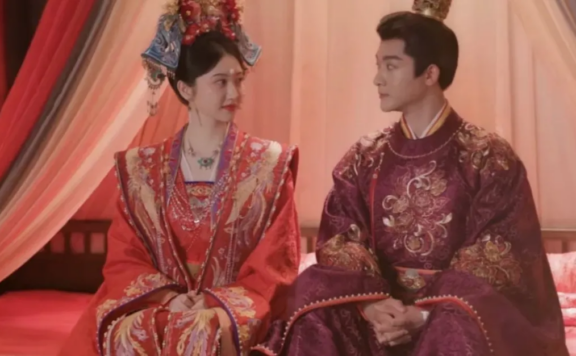
Jing Tian's Song Costume Headdress
In the historical drama 'Si Jin,' Jing Tian's wedding headdress has sparked an online debate. Many criticized it for resembling a Qing Dynasty 'qitou.' But is it really a Song Dynasty costume paired with a qitou? The answer is no. This headdress actually comes from the Song Dynasty's 'Chuijian Guan' (Drooping Shoulder Crown), a trendy accessory during the mid - to - late Northern Song period. As recorded in 'Chen Shi,' '...the longer corners droop down to the shoulders, hence called Chuijian.' Similar crowns were known as 'Dengjian' or 'Duojian,' with widths reaching up to two or three chi. People had to turn their heads sideways to enter a carriage because of the crown's width. The character 'Duo' means 'drooping.' Based on the round crown design, this accessory got its name as its sides drooped and were often adorned with gold, silver, pearls, or jade. For instance, Wang Churan's look in 'Serenade of Peaceful Joy' referenced this crown, which reflected her bold personality in the early part of the story. This crown was extremely popular at that time, imitated by people from the imperial court to commoners. 'Dream Pool Essays' described the attire of Li Shishi, a courtesan favored by… -
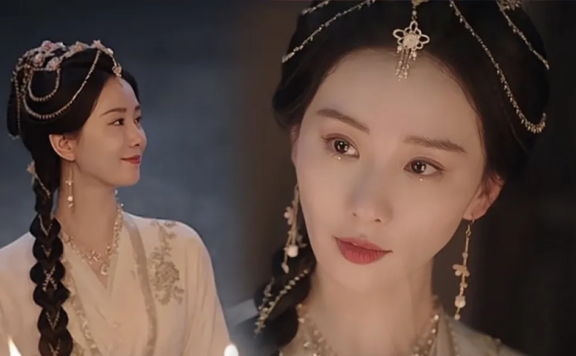
Name of Liu Shishi's Headdress
What is the name of Liu Shishi's beautiful headdress? The production team of Huai Shui Zhu Ting, in which Liu Shishi stars, recently released a video. In the footage, Liu Shishi appears wearing a pearl - studded headdress, presenting a unique blend of exotic and traditional Chinese beauty. Did such accessories truly exist in the past, and what were they called? To put it simply, similar ornaments were found in both the Central Plains and the Western Regions, belonging to the category of Yingluo (璎珞) headdresses. Their origins can be traced back to before the Warring States period, possibly due to East - West exchanges. Here, we'll focus on the Chinese names for such accessories: Luosuo (络索), Lianshu (帘梳), Zhuyingluo (珠璎珞), or Weiji (围髻). Let's take a closer look at these names. Luosuo Originally, 'Luosuo' meant 'rope,' and later it was extended to refer to hanging ornaments. According to Guangya·Shiqi, 'All connected ropes are called Luo.' Xilin Yinyi Volume 6 states that 'Suo is another name for rope.' Huang Geng of the Song Dynasty wrote in Gui Qing Xiao Xiang Lian Ti, 'The golden Luosuo with coral pendants, standing alone in the spring breeze admiring peonies.' The Southern Song engraved…