
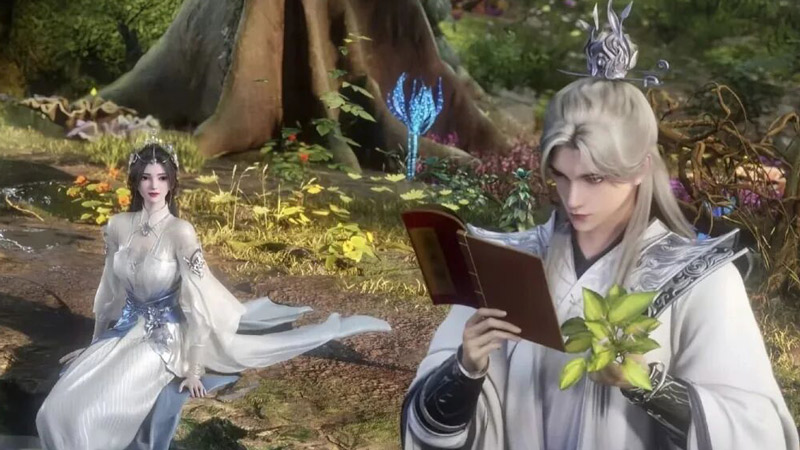
In the vast universe of Chinese animation, some characters shine so brightly that their light lingers long after the screen fades to black. They are the "white moonlight"—the pure, the kind, the irreplaceable ones whose stories often end not with a triumph, but with a tragedy that leaves the audience breathless. These deaths are not just plot points; they are emotional ruptures that define the narratives and haunt the heroes. While the promise of resurrection sometimes flickers on the horizon, it rarely heals the initial wound of their loss. This article looks at three such characters from recent years whose farewells have become legendary for their profound sadness and narrative impact.
1. Renegade Immortal (仙逆): Li Muwan (李慕婉)
In the cutthroat cultivation world of Renegade Immortal, where betrayal is the currency of survival, Li Muwan stands as a glaring anomaly. She is a beacon of selfless love in a realm consumed by selfish ambition. As the lifelong beloved of the protagonist Wang Lin, her very existence challenges the brutal norms of her reality. Her kindness is not a weakness but a quiet, devastating strength. When she had the chance to extend her own life by seizing the body of an innocent girl named Zhou Ru (周茹), she refused. The thought of extinguishing another soul to fuel her own was abhorrent to her, a line she would not cross even in the face of oblivion.
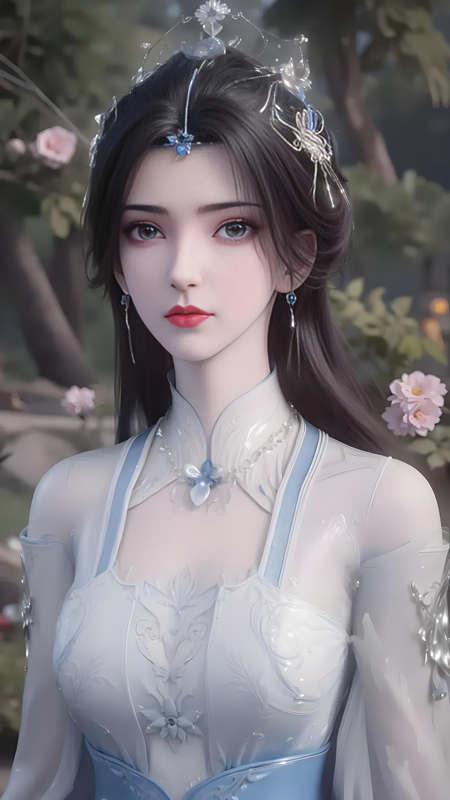
Her death scene is a masterpiece of heartbreak. Having exhausted her lifespan and cultivation base to aid Wang Lin, she breathes her last in his arms. Her sacrifice is a direct consequence of her love, a final gift to the man she cherished. It is a moment of such raw vulnerability that it drives Wang Lin to the brink of madness, his grief a palpable force that resonates deeply with the audience. He becomes a man possessed, vowing to traverse the heavens for three thousand years and countless reincarnations just for a single chance to hold her again. Li Muwan becomes more than a lost love; she transforms into an obsession, a "what if" that propels the entire narrative. She is the pure heart the story mourns, and her absence is a void that neither time nor power can fill.
2. Slaying the Gods (斩神之凡尘领域): Zhao Kongcheng (赵空城)
In a world teeming with superpowered beings known as Jinxi (禁墟), Zhao Kongcheng from Slaying the Gods possessed none. He was an ordinary Night Watcher, a simple soldier with a profoundly simple dream: to earn enough merit to finally go home and see his mother after years of service. In a mere handful of scenes, he etches himself into the viewer's heart as the guide and guardian of the young protagonist, Lin Qiye. He is the everyman, the human face of duty in a landscape of gods and monsters.
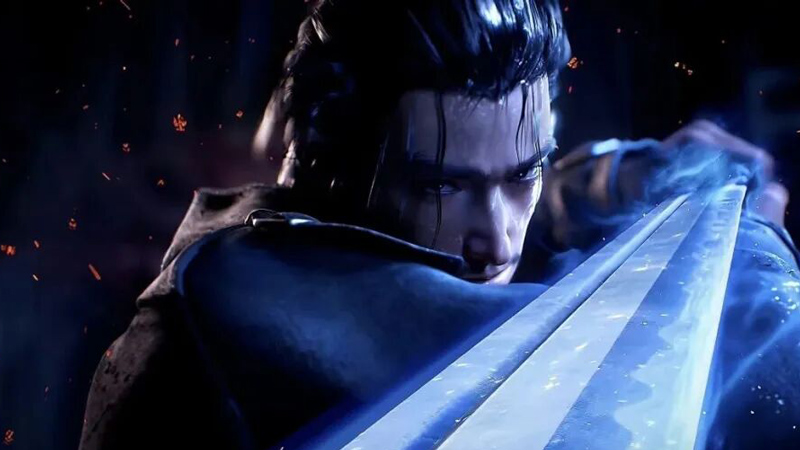
His end is as heroic as it is devastating. Facing a monstrous threat alone, his comrades urge him to retreat, rationalizing that the disappearance of a few civilians was a common, acceptable loss in their line of work. But Zhao Kongcheng, bound by an unshakeable sense of duty, chooses to stand his ground. Knowing he lacks the power to win, he finds a way to trade his life for the monster's demise. His final words to the stunned Lin Qiye are a promise and a lesson: "Watch closely, this slash... will be very cool." And it was.
In that moment, an ordinary man burned everything he had to deliver a strike of extraordinary courage, a single act that would forever alter the boy's future. The tragedy lies in the silence after the heroics. He never got to go home. The thought of his mother, waiting for a son who would never return, turns an already tear-jerking episode into a profound meditation on sacrifice.
3. The Demon Hunter (沧元图): Mei Yuanzhi (梅元知)
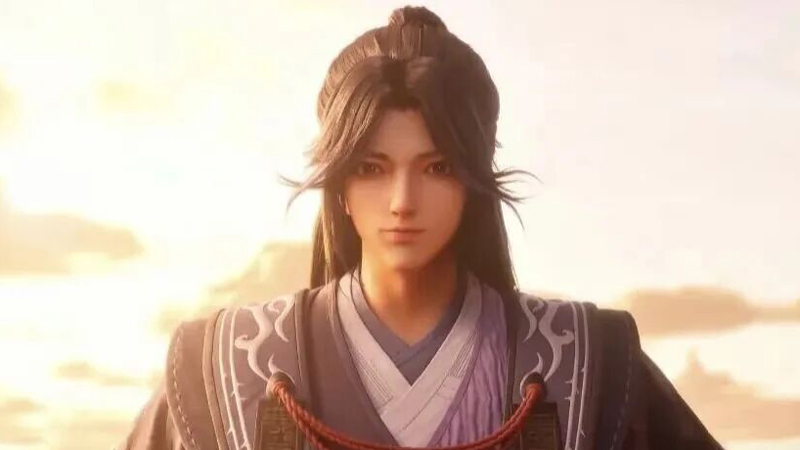
Perhaps no character embodies the term "white moonlight" with more tragic grace than Mei Yuanzhi from The Demon Hunter (沧元图). He was the pride of Dongning (东宁) Mansion, a genius who grasped secret techniques even before the protagonist Meng Chuan (孟川). Destined for greatness, he was the number one seed to ascend as a Deity, a future radiant with promise. He was gentle, righteous, and disarmingly cute—his adorably mispronounced apology to Meng Chuan, "Dui bu qi ya" (对不齐鸭, sorry about that), melting the hearts of viewers everywhere.
The tragedy of Mei Yuanzhi begins with his own goodness. Spared by a monster's plea for its child, he showed mercy, a decision that nearly cost him his life. He survived, but maimed—an arm and a leg gone, along with his chance to become a Deity. His fall from grace is a slow, agonizing tumble. Just as he finds the will to fight again, he is betrayed and suffers a fate worse than death: transformed by dark forces into the very monsters he swore to destroy.
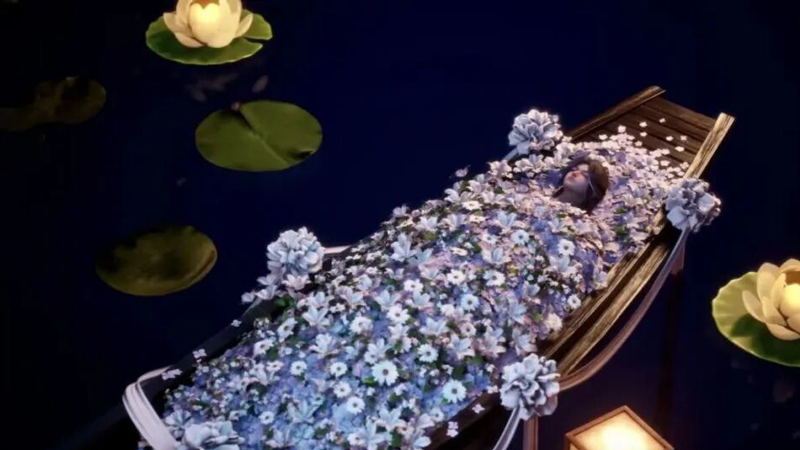
In his final moment of lucidity, he chooses to die by Meng Chuan's hand, reclaiming his human dignity in one last, noble act. The juxtaposition of his former brilliance and this cruel end is what makes his story so unbearably sad. The bullet comments on screen begged for his return, a collective wail of grief from an audience unwilling to let him go. Even if the story later brings him back, the memory of that first, brutal death—a pure soul snuffed out by an unforgiving world—remains an indelible scar on the heart.
