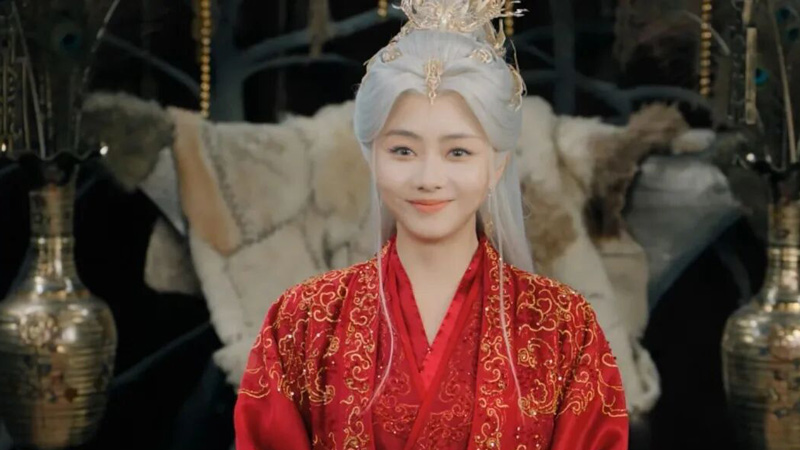
In the sweeping fantasy drama The Unclouded Soul (逍遥), the protagonist makes a journey not through space, but through time. He travels back ten thousand years, arriving not as a mere mortal but as Cang Long (苍龙), the supreme Azure Dragon of the mighty Dragon Clan. He is, by every measure, the apex being of his era, a creature of unimaginable power who views the world from an immortal's detached height.
Yet, this god-like entity finds his destiny irreversibly intertwined with that of a human prince named Hong Ye. Their story defies the logical order of power and species, becoming a poignant exploration of love that stubbornly persists across lifetimes. This is not a simple romance, but a profound bond that becomes the central axis around which fate itself turns, challenging the very fabric of history and testing the limits of devotion against impossible odds.
The Dragon's Solitude
Cang Long exists in a realm of absolute strength. As the pinnacle of the Dragon Clan, the most revered tribe among all Yao Zu (妖族, demon tribes), he faces no equal. His power is solitary and complete. This journey to the past was meant to be an investigation, a mission to uncover the truth of a great calamity. He anticipated observation, perhaps intervention, but never personal entanglement.
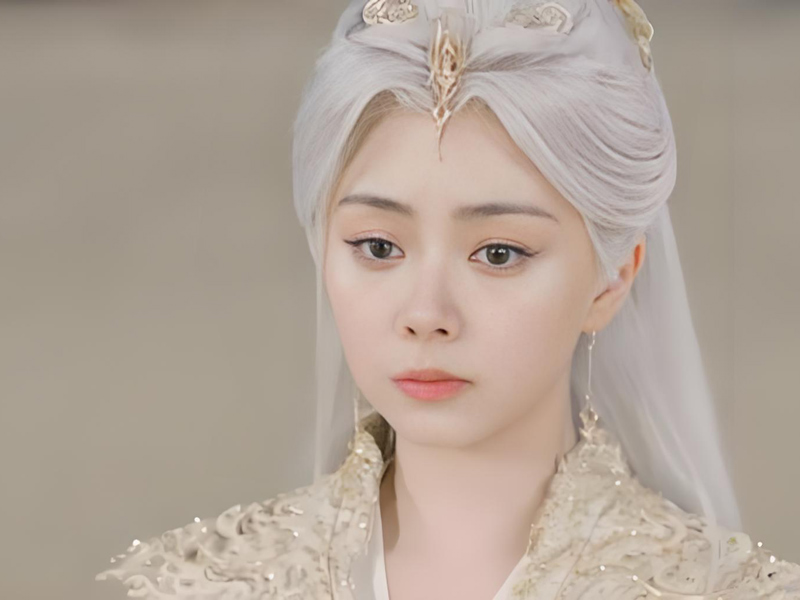
From his immortal perspective, the bustling affairs of humans and other tribes should have been fleeting, insignificant whispers against the roar of his eternal existence. His vantage point is one of cold mastery over the natural world, a perspective that leaves little room for the messy, passionate concerns of mortal hearts.
This solitude, however, becomes the canvas upon which a unexpected connection is painted. When he encounters Prince Hong Ye, the dynamic is fundamentally unbalanced. One is a cosmic force; the other, a political figure in a fragile, short-lived human kingdom. By any measure of their world, this connection should not occur. Yet, it is precisely Cang Long's detachment, his experience accumulated over vast stretches of time, that allows him to perceive something in Hong Ye that transcends mortal rank or temporary beauty. He sees a spirit, a familiar essence that calls to him across the millennia, disrupting his planned neutrality.
The prince carries an air of dignity and resolve that resonates deeply. For a being who has witnessed epochs rise and fall, surface appearances mean little. Hong Ye's character, his inherent nobility and strength of will, strike a chord that mere power cannot. Cang Long finds himself intrigued, then invested, in a way his role as an observer was never supposed to allow. The dragon's journey becomes compromised not by a weakness, but by the recognition of a quality that his immense power could never grant him: genuine connection.
A Bond Forged in Time
The relationship between dragon and prince is not a first meeting. Xiao Yao (肖瑶), the man from the future whose consciousness guides Cang Long, carries the echoes of two previous lifetimes and a deep, unresolved debt to Hong Ye. In his own time, Hong Ye was his crucial ally, a steadfast presence through great hardship. This prior knowledge colors every interaction, transforming curiosity into a driving sense of protectiveness and burgeoning love. The emotions are not born solely in this ancient era; they are seeds planted in the future, now taking root violently in the distant past. He loves not just the prince before him, but the memory of the friend he once knew.
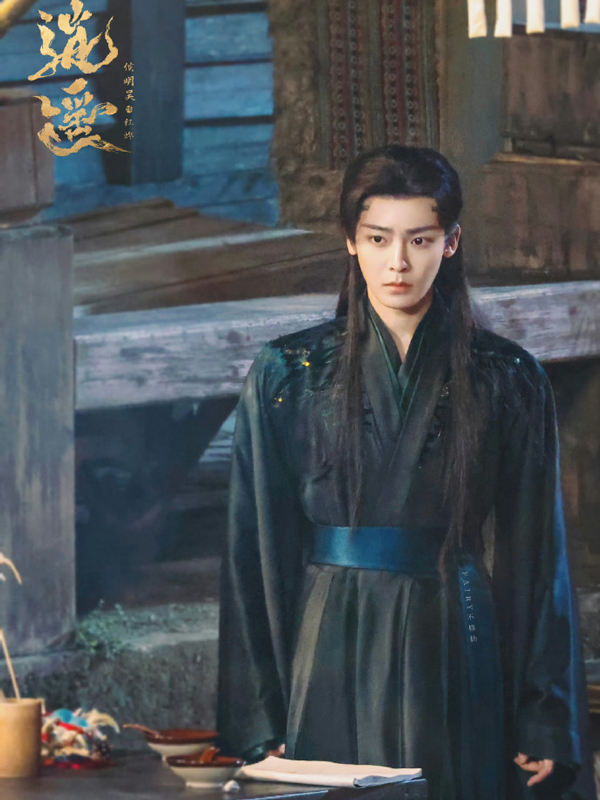
This complex layering of memory and present emotion creates a relentless drive. Xiao Yao, wielding the authority of Cang Long, is compelled to act. He seeks to alter the prince's fate, to shield him from the shadows of the coming catastrophe he knows lurks ahead. His quest to find the legendary Yu Li Shui (玉醴水, Nectar of Jade) for Hong Ye is more than a favor; it is an attempt to rewrite a painful history, to offer a gift that might change everything. His love is active, defiant, and deeply personal, pushing against the impersonal tides of destiny he originally came to study.
His actions inevitably draw conflict. Aligning with a human prince places Cang Long at odds with his own Dragon Clan and disrupts the delicate balance of power among the myriad tribes. The supreme being becomes a partisan, his divine strength now employed for a singular, human cause. This shift is monumental. It proves that the most potent force in this world is no longer raw magical power, but the commitment born from a love that has, quite literally, stood the test of time. He fights not for dominion, but for one man.
Love as the Ultimate Trial
The discovery of the Yu Li Shui does not bring the clarity or salvation Xiao Yao hoped for. Instead, it unveils harsh truths about the ancient calamity, truths that are inextricably linked to his own actions and his love for Hong Ye. He is forced to confront a devastating paradox: his attempt to save the prince might be part of the very tragedy he wished to prevent. The love that gives him purpose also becomes his greatest source of turmoil, a heavenly trial far more severe than any physical battle.
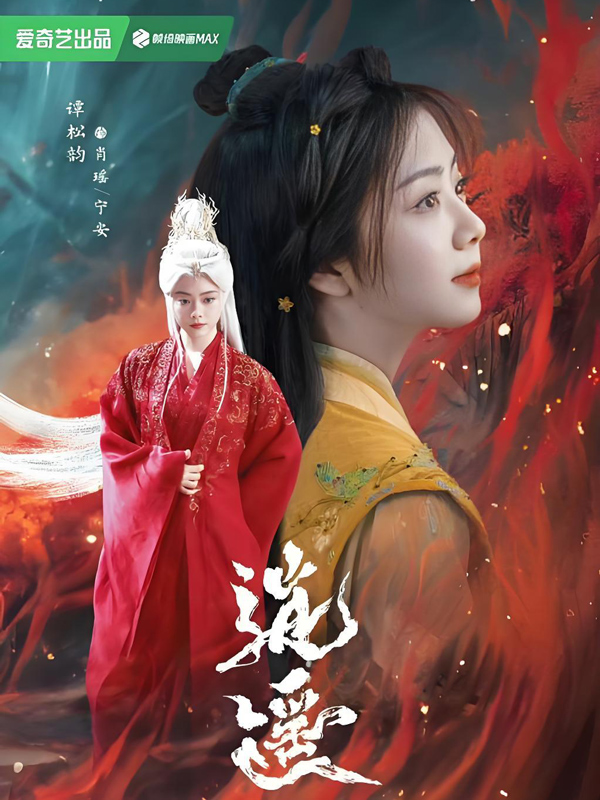
Throughout these revelations, the core of his feeling remains unshaken. From ten thousand years ago to the present day, across the gulf of multiple lifetimes, his devotion to Hong Ye is the one constant. It survives the shock of truth, the weight of guilt, and the opposition of the entire world. This persistence suggests something fundamental: their connection is not an accident of time, but a key component of the world's design. The prince is not just a mortal beloved; he is the dragon's anchor, his moral compass, and his ultimate vulnerability.
The drama posits that true power is not immunity to feeling, but the courage to endure it. For Cang Long, love is the "great tribulation." It is the force that strips him of his detached divinity, involves him in the suffering of the world, and demands the ultimate sacrifices. Yet, it is also the only thing that makes his eternal existence meaningful. In choosing love over dominion, he achieves a different kind of transcendence. The story concludes not with the triumph of power, but with the quiet, enduring victory of a bond that even time cannot erode, affirming that the most profound legacy is often written not in history books, but in the unwavering heart.