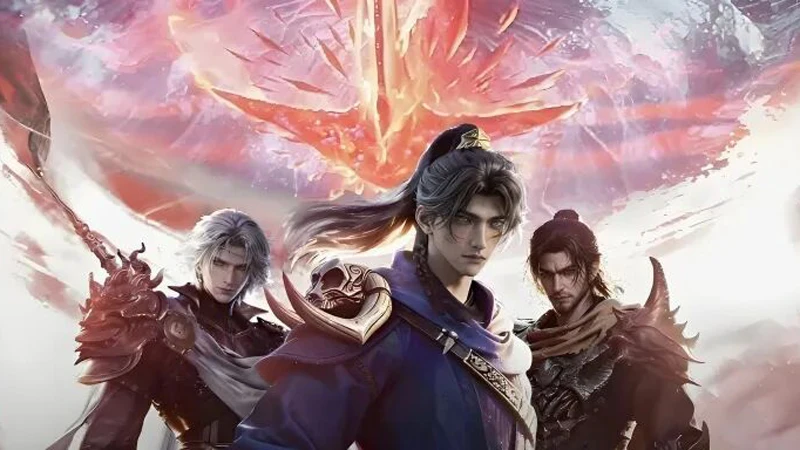
What if the most compelling hero in Chinese animation isn’t a chosen one, but a boy who learned to survive by fighting dogs for food? In a market flooded with handsome faces and divine destinies, Beyond Time’s Gaze (光阴之外) has introduced Xu Qing (许青), a character who is redefining what it means to be tough. The latest episode has shattered previous benchmarks for ruthlessness, presenting a protagonist whose blade is sharp, but whose heart—hidden beneath layers of thorns—might just be the real reason he has captured millions of fans.
The Logic of the Blade
Xu Qing’s violence is not born from anger, but from arithmetic. Growing up in the slums, he learned that in a wasteland, hesitation equals death. Unlike traditional protagonists who ponder the morality of a fight, Xu Qing focuses solely on neutralizing risk. This isn’t brutality for entertainment; it is the cold, hard logic of a survivor. When conflict erupts between the Water Division and the Dispatch Division, Xu Qing doesn’t wait for a dramatic monologue. He condenses water into a blade and ends the threat instantly. It is this efficiency—this absolute focus on outcome over appearance—that makes his aggression feel authentic rather than performative. He operates on a simple principle: if you are a threat, you are removed. There is no malice, just math.
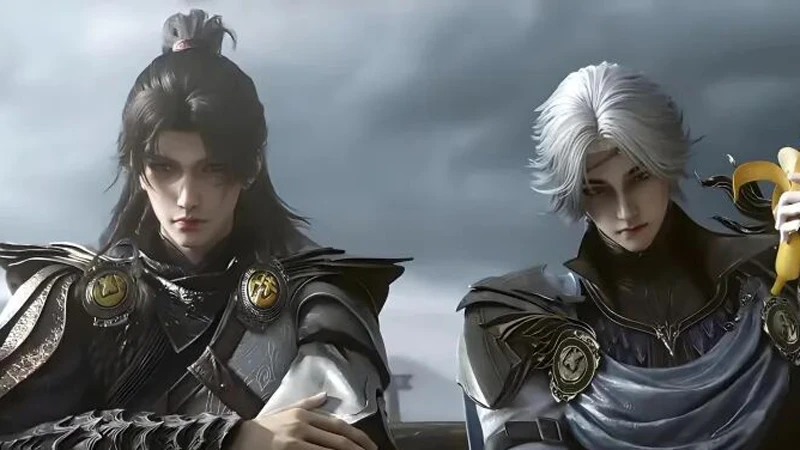
This survival instinct sets him apart from the wave of overly compassionate protagonists currently dominating the animation scene. His actions are driven by a past where weakness was exploited immediately. The audience isn’t asked to admire a flawless hero, but to understand a broken system that forged a perfect weapon. His “cruelty” is actually a form of honesty; he treats the world exactly as the world treated him. This stark realism resonates deeply. It moves beyond the fantasy of inherited power and taps into a grittier narrative: the fight for existence itself. Xu Qing doesn’t fight for glory; he fights because the alternative is extinction.
The Paradox of Tenderness
If his ruthlessness is the armor, his softness is the wound it protects. The most captivating aspect of Xu Qing isn’t the chilling precision of his attacks, but the jarring contrast of his daily life. Here is a man who can end a life without blinking, yet he finds himself completely disarmed by the persistent nagging of a friend. When Huang Yan (黄岩) pesters him, Xu Qing’s efficient logic of the battlefield fails him completely. He grumbles and resists, but ultimately, he surrenders—not to an enemy, but to friendship. He ends up in the kitchen, cooking dishes to accompany drinks. This shift from a cold-blooded killer to a reluctant chef is where his humanity shines brightest.
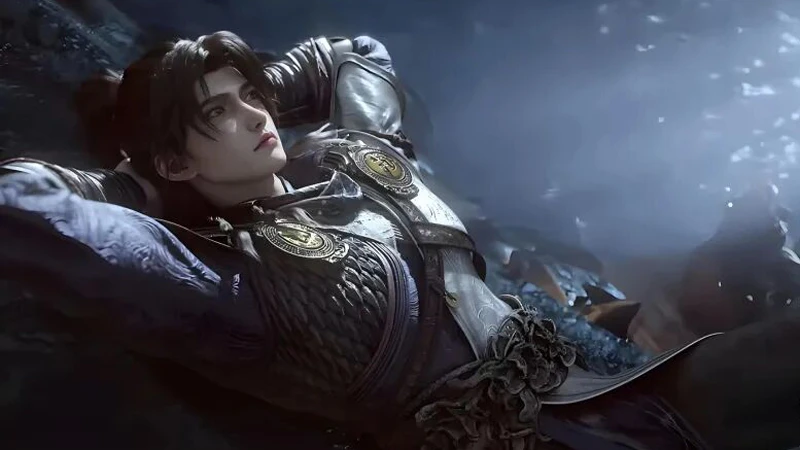
This “prickly on the outside, warm on the inside” dynamic creates a character with genuine depth. He maintains a strict boundary: the blade is for enemies, the thorns are for the world, but a quiet, stubborn loyalty is reserved for the few who matter. He isn’t a machine; he is a person who has learned to ration his warmth like a precious resource. In a genre filled with aloof gods and pre-ordained saviors, Xu Qing feels startlingly human. He reminds us that strength isn’t just about what you can destroy, but also about what you choose to protect. His softness isn’t weakness; it’s evidence that the wasteland hasn’t completely consumed him.
Breaking the Mold
Xu Qing arrives at a time when the Guochao (国潮) animation market desperately needs a disruptor. For too long, the landscape has been split between the invincible “dragon-tier” heroes and the saintly saviors who forgive all. These templates have grown stale. Xu Qing offers a third path: the boundary-conscious anti-hero. He has the looks to be a heartthrob, but he doesn’t rely on them. He has the power to dominate, but he doesn’t bully the weak. His morality isn’t black or white; it’s a gray area sharply divided by a line drawn in the sand. On one side are his enemies, who meet the blade; on the other are his friends, who meet the man behind the blade.
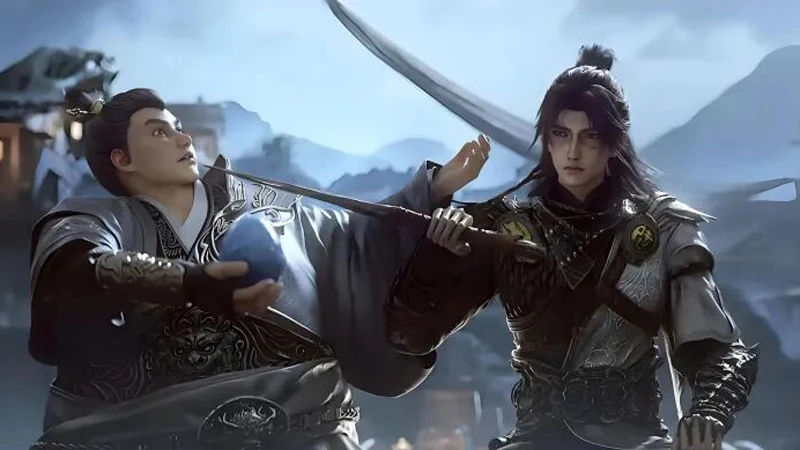
This duality is not a gimmick; it is a reflection of a more mature storytelling approach. The audience is tired of flat characters built by stacking popular tropes. They crave someone with flesh and blood, someone whose love and hate are clearly defined. Xu Qing’s popularity proves that viewers are hungry for authenticity. He is a “white moonlight” and a “red rose” rolled into one—a figure of pure admiration and passionate longing. His journey from an orphan of the ruins to a top-tier protagonist is a testament to the power of character-driven narrative. He isn’t just surviving; he is quietly defining what it means to be a man in a world that has lost its way, proving that the most interesting heroes are the ones who decide for themselves where their loyalties lie.