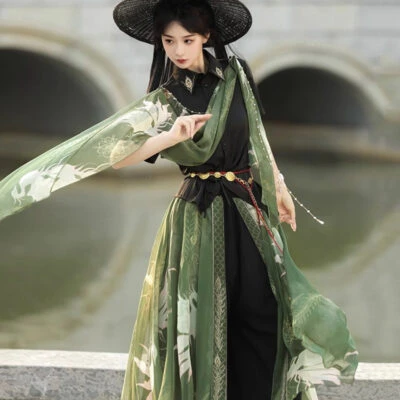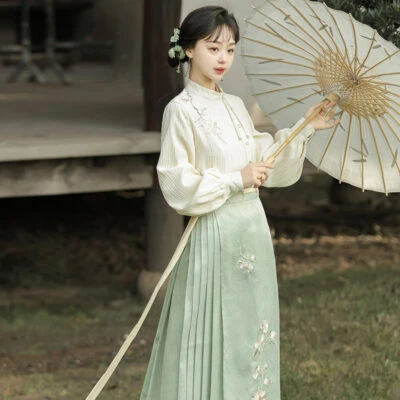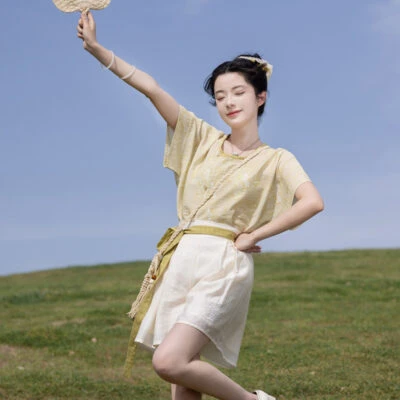
Walk through a museum, then walk through a luxury mall. A jolt may follow. A pattern on a ceramic bowl looks like a print on a scarf. A curve on a bronze mirror echoes a handbag clasp. In recent years, Dior faced anger over a skirt resembling the horse-face skirt, while Louis Vuitton drew attention for a persimmon-calyx motif. These cases are not lonely accidents. They are flashpoints in a longer conversation about credit, memory, and money. The question is not whether old designs can inspire new work.
The question is who gets praised, who gets paid, and who gets erased when China’s ancient beauty becomes a global trend. That tension is not abstract. It sits in shop windows, on social feeds, and in the quiet gap between a museum label and a price tag.
Old Patterns, New Bags
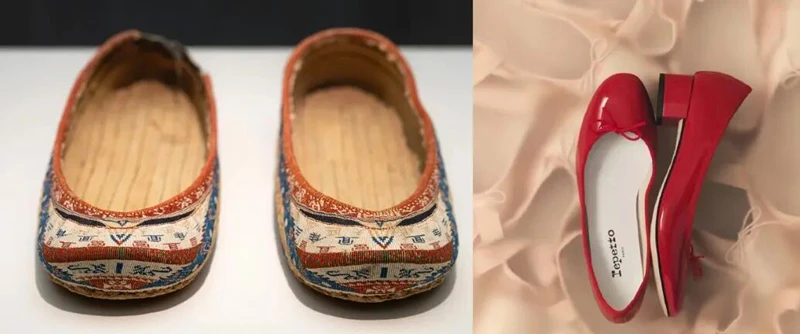
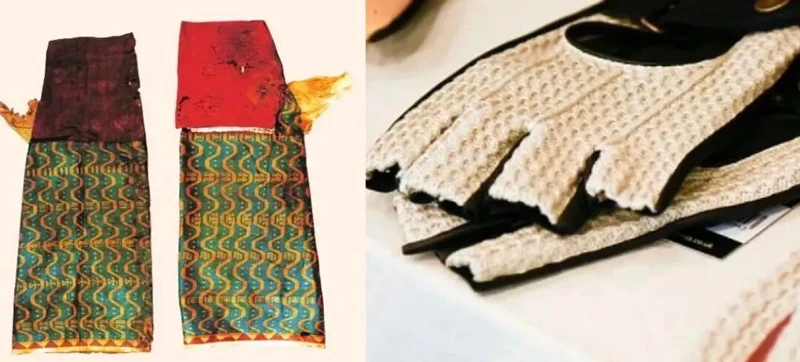
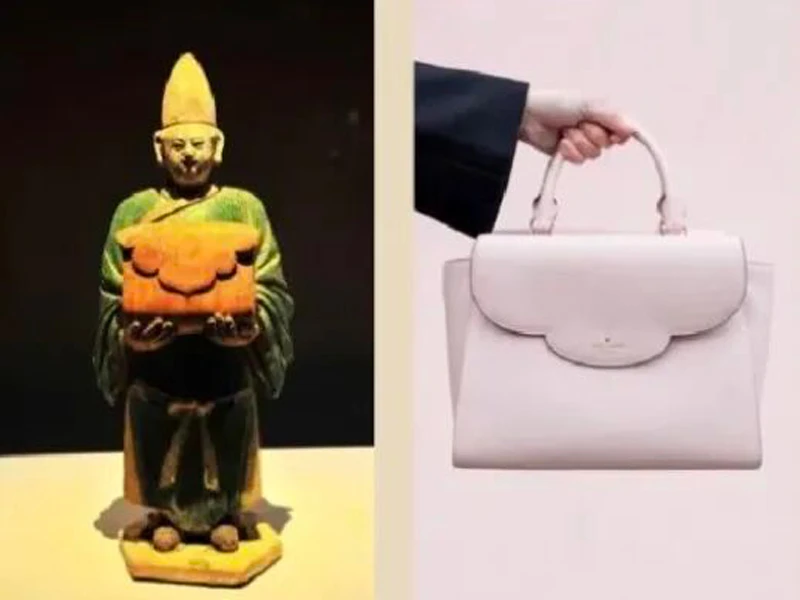
In Niya (尼雅), dry sand protected more than ruins. It kept leather bags, half-finger gloves, and shapes that feel shockingly current. Open a fashion magazine today, and you may see the same clean lines and practical cut. A round-toed ballet flat? Eastern Jin graves already held something close. A bracelet of two dragons chasing a pearl? Chinese artisans made that motif long before it appeared in a glass display case with a famous logo. The old objects are not sketches for modern luxury. They are finished works with their own logic, names, and stories. When their origins vanish, the objects become “mysterious inspiration” instead of Chinese invention. That shift matters. It turns living memory into decoration and lets the market applaud a copy while forgetting the source.
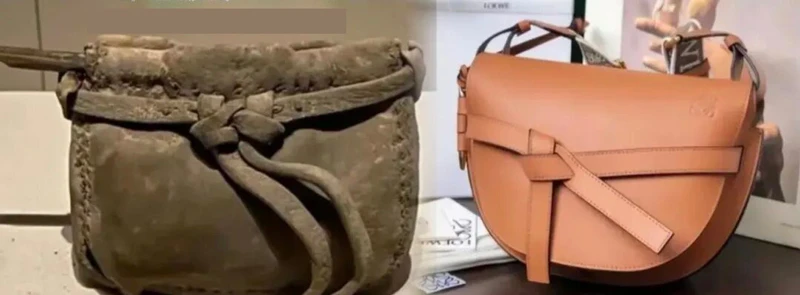
Patterns tell the same story. Diamond and geometric designs appear on objects from the Spring and Autumn and Warring States period. A dragon crossing a jade bi (璧) once carried a wish for immortality; later, the image became two dragons chasing a pearl. Some borrowed versions seem confused, even adding an extra pearl, as if a student skipped the first chapter. Then there is the panther bracelet pushed by a major house. Compare it with a tiger-head bracelet from the Wei-Jin period. The kinship is hard to miss. Such similarities may not always be direct copying. Designers absorb images without archives. Still, when the same ancient vocabulary appears again and again without credit, the silence grows loud. Museums hold proof; runways hold profit. The gap between them is where audiences feel a strange mix of pride and loss.
Makeup and color add more evidence. Song Dynasty women wore pearl makeup and tear makeup; one style is now called “goddess tears” on beauty pages. A soft, muted palette from Song aesthetics is renamed Morandi colors in Western fashion talk. On catwalks, “Aurora” makeup can look like a cousin of older Chinese facial art. None of this means cultures should never mix. Clothing, paint, and ornament have traveled for centuries. The problem is hierarchy. When a Chinese source is called primitive craft and a European rebrand is called genius, the story is not about influence. It is about power. The old work deserves a name, a date, and a place. Without them, beauty floats free, easy to sell and easy to forget.
Who Protects Them?
Legal protection is tricky. Ancient artifacts have no copyright. Their makers are gone, and their heirs are everyone and no one. That legal gap does not erase a moral claim. If a brand borrows a pattern, it can still honor the source. It can name the region, period, and meaning. It can collaborate with Chinese designers, museums, and craftspeople. It can pay for research and support living traditions. Too often, though, the market prefers vague words like “tribal,” “exotic,” or “oriental.” Those labels flatten thousands of years into mood. They also make it easier for buyers to think the idea came from nowhere. A label is not just a tag. It is a chain of custody for culture. When the chain breaks, everyone loses context, including the customer who pays a high price for a shallow tale.
Chinese consumers and creators are not helpless. Anger online can start a conversation, but it cannot finish one. The stronger move is to build. Domestic labels can stop treating Western houses as the only benchmark. They can study their own archives, not as costume drama props but as design systems. Museums can publish open, well-researched image libraries. Schools can teach pattern history beside math and language. Social media can make experts visible, not only influencers. A young designer who understands why a dragon crosses a jade bi can create work that feels new because it is rooted. That kind of confidence does not need to shout. It simply refuses to be anonymous. It says: this came from here, and here is what it means.
The old beauty was never a gold mine to guard by hiding it. It is a living language. If speakers stop using it, others will borrow words and change the grammar. If speakers keep it alive, the language travels with its accent, its jokes, and its history. So the task is not only to catch theft. It is to become better storytellers, better makers, and better buyers. Visit the museum. Read the label. Ask where a motif was born. Support designers who cite their sources. Wear old patterns with new pride. Our ancestors left an enormous vocabulary. We cannot lag behind them. We can speak it, remix it, and make sure the next global trend knows exactly where it learned to shine.