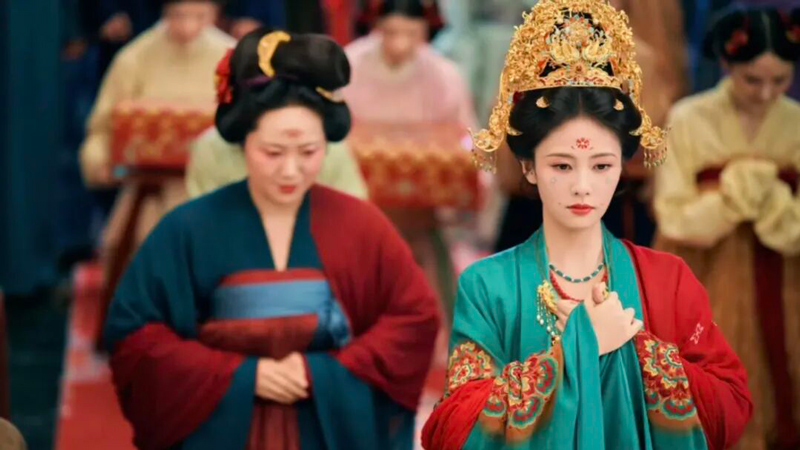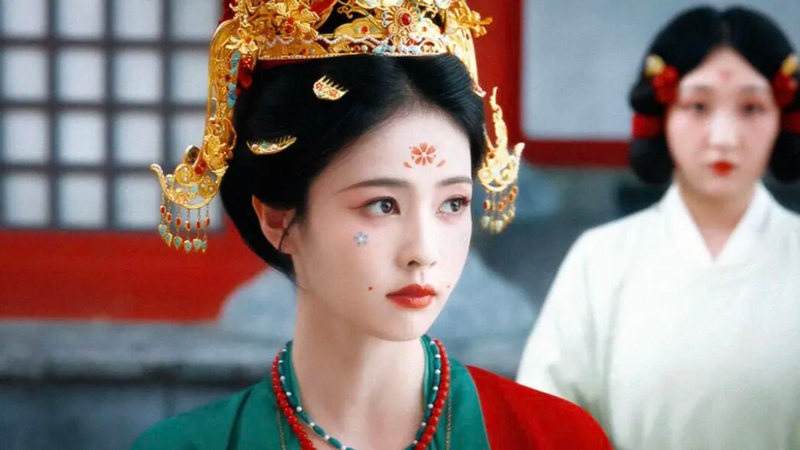
It is a common saying that the devil is in the details. This is particularly true for historical dramas, where the visual aesthetic is critical to the storytelling. The recent drama The First Jasmine (莫离) sparked debate when its wedding scene featuring actress Bai Lu (白鹿) began circulating online. While the overall look of the show is visually appealing, attentive viewers noticed something felt off about her Tang dynasty wedding outfit. It was not just the style but the fragmentation of history within a single frame that caused the dissonance. This phenomenon is not isolated; it reflects a larger issue in the industry where anachronisms are becoming the norm.
Many filmmakers prioritize spectacle over authenticity, creating a visual landscape that is a patchwork of different eras. This article will dissect the specific errors found in The First Jasmine, from makeup and headdresses to color palettes, and examine why these inaccuracies matter. It is not about criticizing the performers but about pointing out a recurring issue in period drama productions.
The Anachronistic Face
The most glaring issue begins with the makeup. In The First Jasmine, the character Ye Li (叶璃), portrayed by Bai Lu, wears a facial ornament known as Mian Ye (面靥), a traditional dot or flower applied to the cheeks. However, the style used is distinctly that of the late Tang dynasty and the subsequent Five Dynasties period. This era was characterized by a predilection for ornate, complicated decorations placed prominently on the cheek. This is a recognizable feature from pottery figurines and ancient paintings of that specific time.
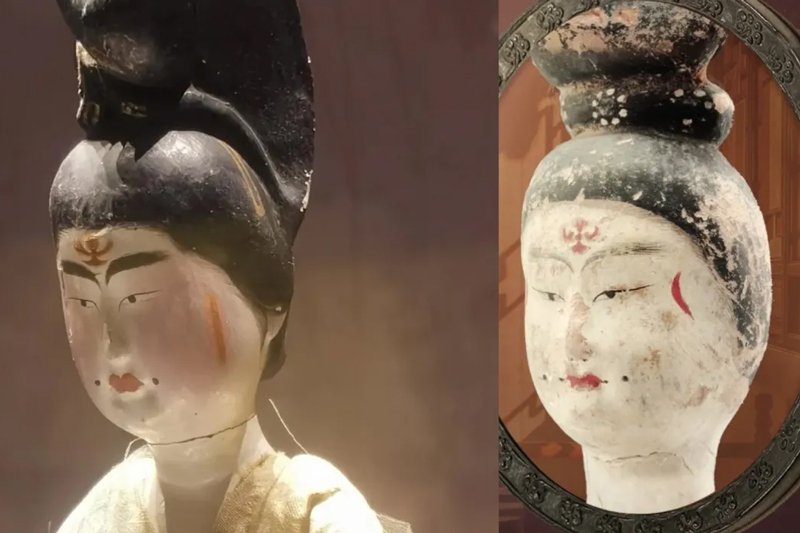
This choice directly contradicts the historical timeline within the show. The costume design suggests an early Tang or Wu Zhou (武周) period style for the character, but the makeup is from a much later era. During the early Tang dynasty, facial makeup was far simpler. Women typically wore small, delicate dots near the corners of the mouth, with long red accents on the cheeks and an elaborate pattern on the forehead. They did not use the large, flamboyant floral appliqués that define the Five Dynasties aesthetic. The shift reflects a societal change: the majestic and bold styles of the High Tang gave way to the more decadent and intricate looks of a declining empire. By combining these two, the show creates a visual contradiction that is immediately jarring to a trained eye.
The Mismatched Crown
The problem is compounded when looking at the headwear. The crown Ye Li wears for her wedding is a recreation of a ceremonial type that dates back to the Sui (隋) and early Tang dynasties. This particular style is characterized by its rigid, symmetrical framework and a formal, almost solemn arrangement of pearls and gold. A prime example of this is the crown of Empress Xiao (萧后) from the Sui dynasty. It is a design that conveys imperial gravitas and tradition.
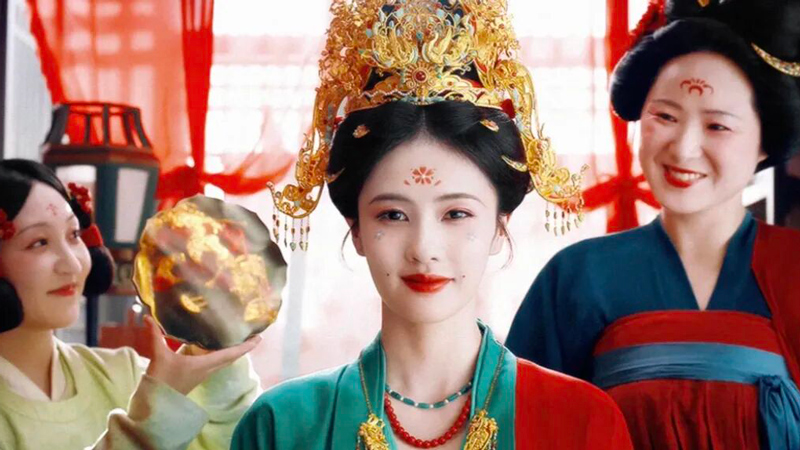
The issue arises because the rest of the styling, including the clothing, points to a period after the High Tang. A crown from the Sui or early Tang feels entirely out of place in a context that suggests a later era. By the High Tang, imperial headpieces had become far more elaborate. They featured intricate floral pins, dangling pendants, and a sense of lightness and luxury that moved away from the sturdier, plainer Sui designs. Using an archaic crown with a distinctly "modern" (for the time period) makeup style creates a sense of disjointedness. It is like placing a medieval helmet on a Roman soldier; both are historical, but they belong to different stories. This specific pairing of a very early crown with a very late makeup style makes the entire look feel unstable and historically inaccurate.
The Case of the Wrong Color
Perhaps the most significant and commonly misunderstood error is the color of the wedding dress itself. In the show, the gown is a bright, saturated green. Many online commenters might believe this is correct based on a well-known saying about ancient weddings, but the reality is more complex. The popular myth that brides wore green in the Tang and Song dynasties is a misinterpretation of historical records. The correct color for a legitimate wedding garment in those periods was Qing (青), which refers to a color we would associate with blue or a deep, rich blue-green, not the modern concept of green.
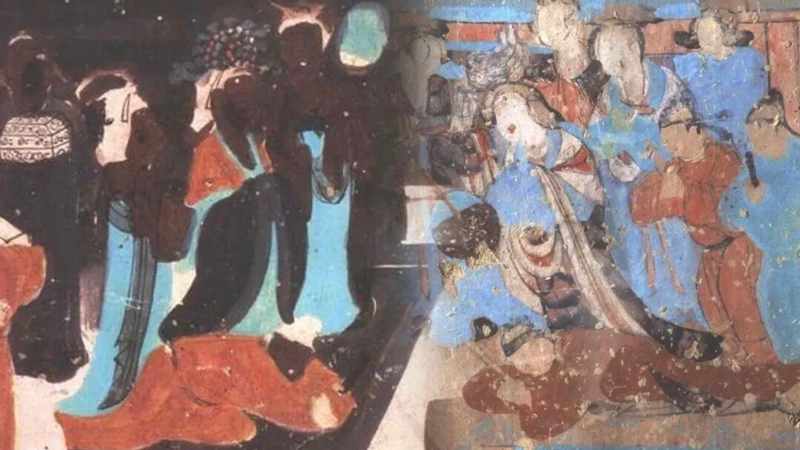
This distinction is rooted in the rigorous color hierarchy of ancient China. Qing is a primary or "right" color, which was reserved for formal and ritual attire. Green, on the other hand, was considered an intermediate or "secondary" color and was not appropriate for formal wedding rituals. The established rule for centuries was "red for the groom, Qing for the bride." This is documented in texts like Tang Liu Dian (唐六典) and various Song dynasty records. Frescoes from the Mogao Caves (莫高窟) confirm this, showing brides in blue-green dresses. By using a modern, high-saturation green, the production team has confused a profound cultural and linguistic concept, sacrificing a thousand-year-old tradition for a more visually striking but historically inaccurate aesthetic.