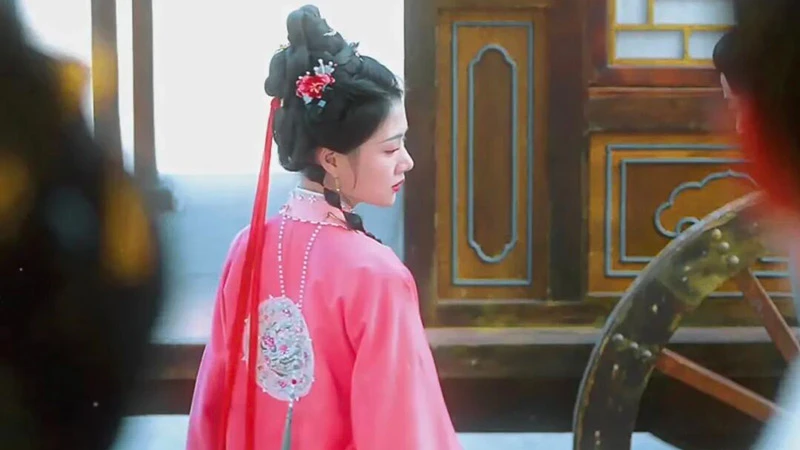
In the recent period drama A Splendid Match (良陈美锦), actress Ren Min (任敏) wears an elaborate necklace hanging down her character’s back. Viewers were puzzled: why wear a necklace backwards? At first glance, it looks like a Bei Yun (背云), the dangling pendant of a Qing dynasty court necklace. But is it really? The answer reveals a fascinating mix‑up between two very different ornaments—one strictly tied to imperial rank, the other a playful folk accessory. Let’s untangle this historical knot.
Bei Yun vs. Luo Zi
Bei Yun is a rigid, status‑loaded component of the Chao Zhu (朝珠), the official court necklace of the Qing dynasty. Worn only by emperors, officials, and their wives during formal ceremonies, it hangs from the center of the 108‑bead strand down the wearer’s back. Its material—often jadeite or fine jade—and its length were strictly regulated. It was never a standalone piece but an extension of the Chao Zhu, designed to balance the necklace and signal power. He/she would never wear it casually, especially not in daily life or as a young girl in a Ming dynasty setting.
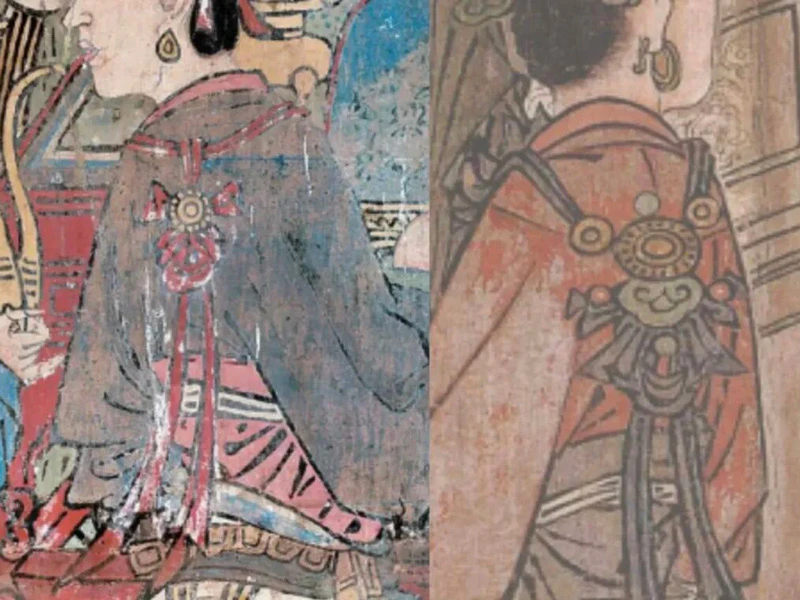
In contrast, the Luo Zi (络子) is a free‑spirited knot‑based ornament. Also called “Tao Zi” (绦子), it emerged from ancient Chinese knot‑tying culture. Made of colored threads, silk ribbons, and sometimes small beads, it carries no class restrictions. Children, ladies, and commoners all used it. It could hang on the chest, the back, the waist, or even the hair. Unlike the Bei Yun’s single chain, a Luo Zi often features intricate knots—like the lucky knot or the panchang knot—and may include jade pendants or tassels. Its structure is woven, not strung. That’s the core difference: Bei Yun is a serial pendant; Luo Zi is a knotted art piece.
Why does this matter? Because in A Splendid Match, the character Gu Jinchao (顾锦朝) is a young woman in the Ming dynasty. She would never wear a Qing court element. The show’s costume team borrowed the back‑dangling silhouette of a Bei Yun but missed its historical baggage. The result is a “fake” Bei Yun that looks elegant but is historically out of place. What she could have worn is a Luo Zi—a choice that would fit both her age, her gender, and her era perfectly.
The Humble Luo Zi: A Knot of Blessings
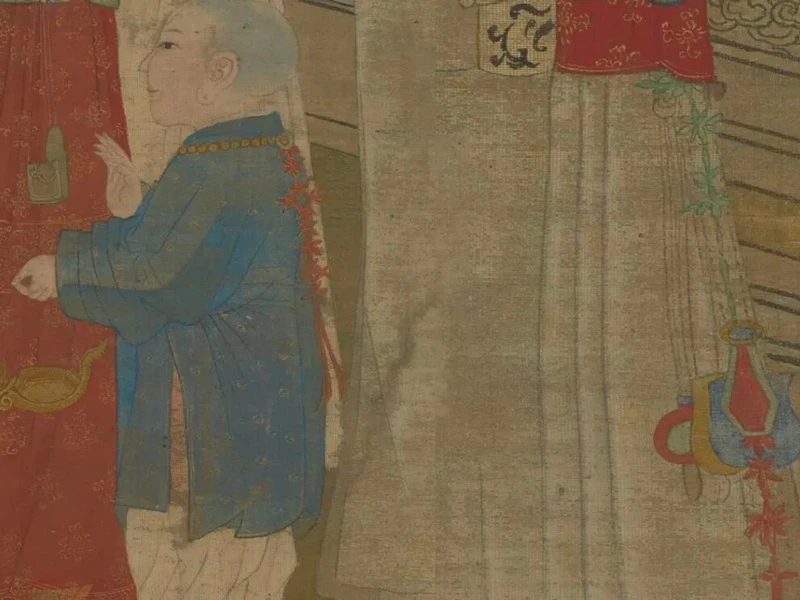
The Luo Zi’s history runs deep. It evolved from practical rope‑tying tools used to carry goods or fasten clothes. By the Ming and Qing dynasties, it had become a fashionable accessory. A famous scene in the classic novel Dream of the Red Chamber (红楼梦)—chapter 35—shows the maid Ying’er (莺儿) knotting a Luo Zi for young master Baoyu. The patterns she mentions—incense‑stick, plum blossom, willow leaf—were all popular. People would attach jade pendants, sachets, or fans to the knots. It was a unisex trend, loved by nobles and commoners alike.
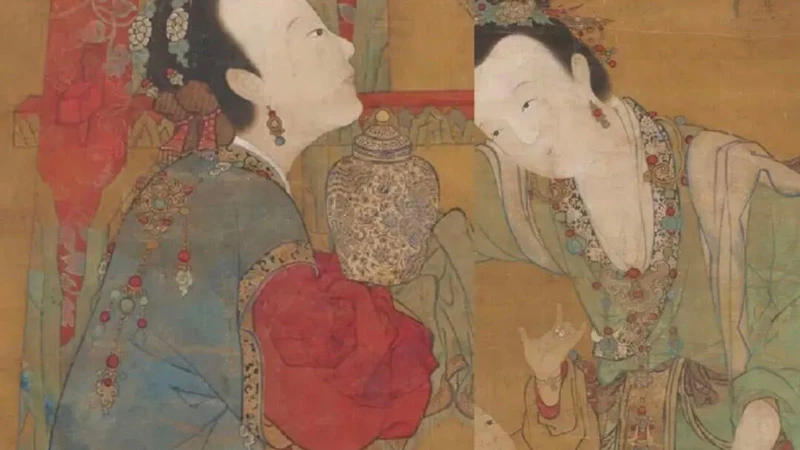
How was a Luo Zi worn? First, on the back or chest, especially for children and unmarried girls. Ancient paintings of children playing often show a colorful Luo Zi hanging down a child’s back. The knots symbolized protection and good fortune. The colors were bright, the beads playful. For young ladies, a Luo Zi could also hang from a neck collar at the front, interwoven with strings of gems—then it was sometimes called a “Yingluo” (璎珞). But note: that front‑chest style rarely had a single long chain down the back. Instead, the collar carried the weight, and the knots draped naturally.
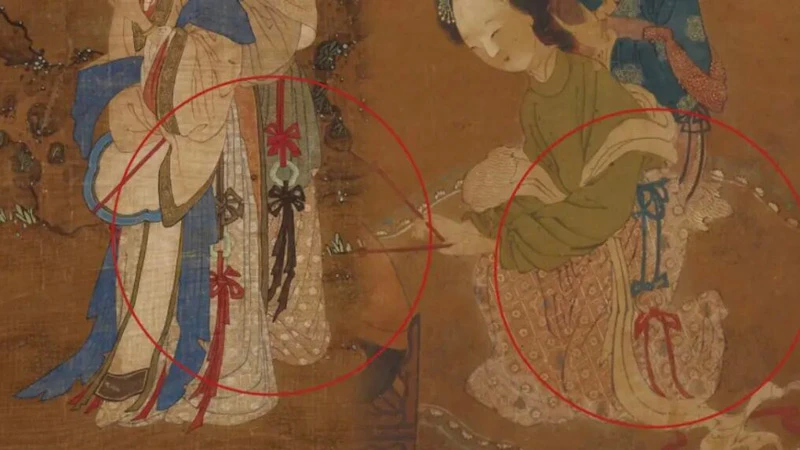
Second, adults often tied a Luo Zi at the waist as a “Gong Tao” (宫绦) or “Jin Bu” (禁步). These waist knots, dangling on the side or back, served to weigh down the hem of Hanfu or qipao, adding elegance while keeping the garment in place. Aristocratic women used gold threads and colored beads; commoners used plain silk in simple, graceful patterns.
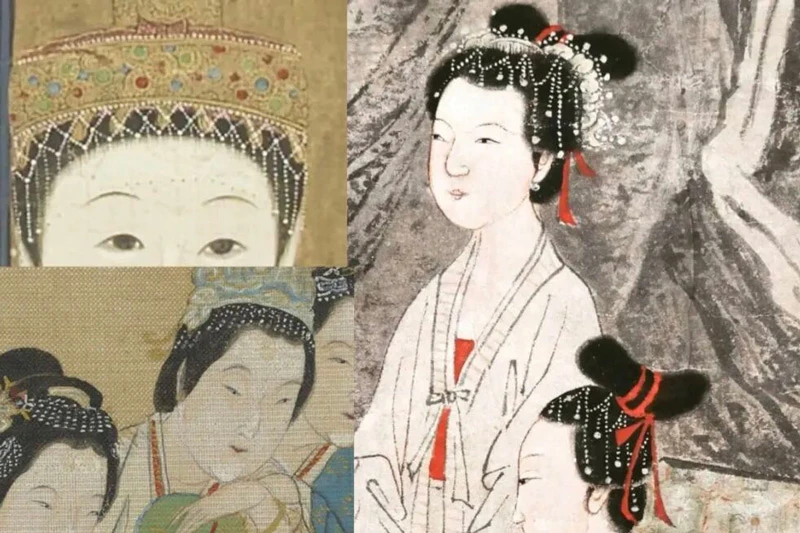
Third, a Luo Zi could be worn on the forehead or in the hair bun, as a decorative “Luo Suo” (络索)—a netted bead headpiece. So the Luo Zi was versatile, personal, and alive with meaning. It was never a rigid symbol of rank but a flexible token of beauty and blessing.
Getting It Right: Why Details Matter
So why does A Splendid Match get it wrong? Because many period dramas today—and even some Hanfu enthusiasts—blindly copy a “back chain” look without knowing its origin. They see a Bei Yun’s silhouette and think it’s just a pretty ornament. But history is not a costume box to mix and match at will. Placing a Qing imperial element on a Ming teenage girl is like putting a Victorian medal on a medieval peasant. It breaks the visual language of the era. A Luo Zi, by contrast, would have been completely natural on Gu Jinchao. It would tell a truer story: a young woman from a respectable family, adorned with hand‑knotted wishes for safety and happiness, not a usurped symbol of court power.
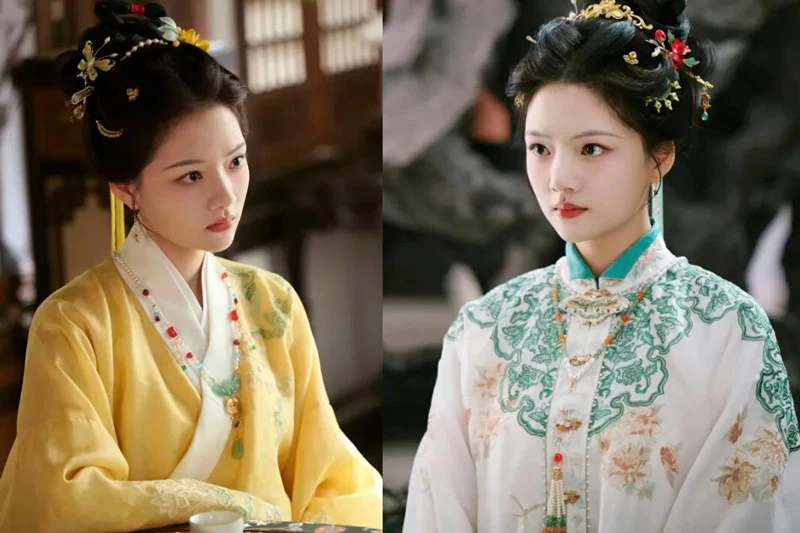
Interestingly, the confusion between Bei Yun and Luo Zi mirrors a larger problem in Chinese costume drama. Costume designers often take shortcuts, borrowing elements from different dynasties because they “look good.” But good drama requires authenticity—not absolute archeology, but a believable immersion. The recent trend of reviving traditional accessories, from Dream of the Red Chamber to A Splendid Match, is a welcome rediscovery of “Chinese aesthetics.” Yet it also demands responsibility. Every knot, every bead, every position on the body carries a historical echo. Getting it right enriches the story; getting it wrong breaks the spell.
What about today? The Luo Zi’s simple elegance and lucky connotations fit perfectly with modern Chinese style. Many Hanfu lovers and “neo‑Chinese chic” followers are already rediscovering it. Even Western period dramas have similar decorative knots (see comparison images). So next time you watch a period drama, look beyond the plot. Notice the small things: a necklace worn backwards might be a mistake, but it can also teach us a lesson. Would you prefer Ren Min’s beaded back chain, or a true Luo Zi knotted with colorful silk and good intentions? One is a borrowed status symbol; the other is a folk art full of life. The choice tells you what kind of story you want to see.