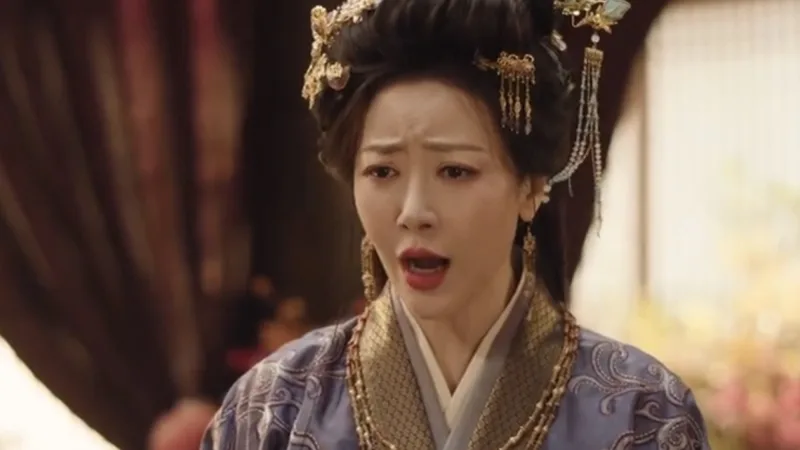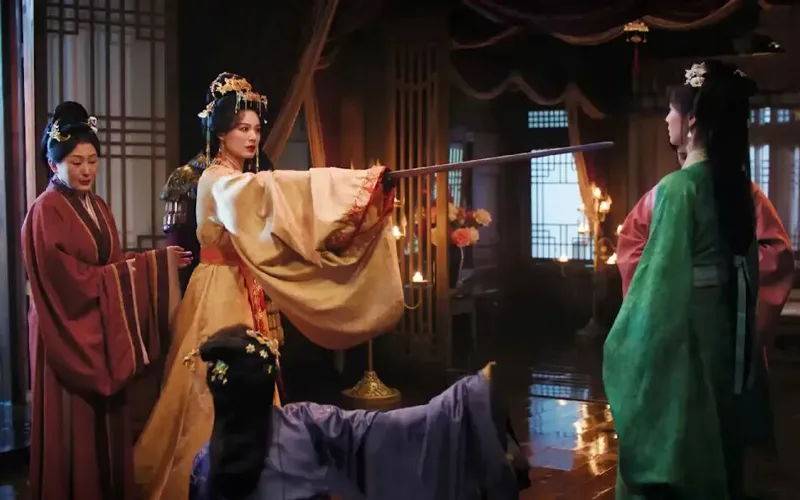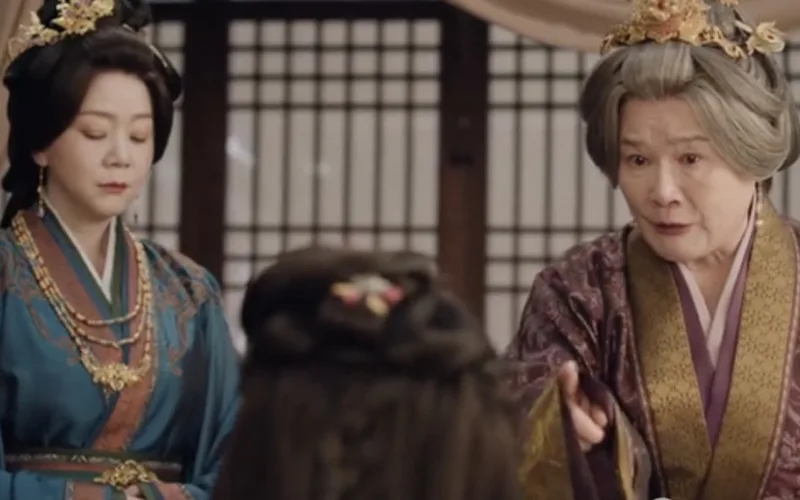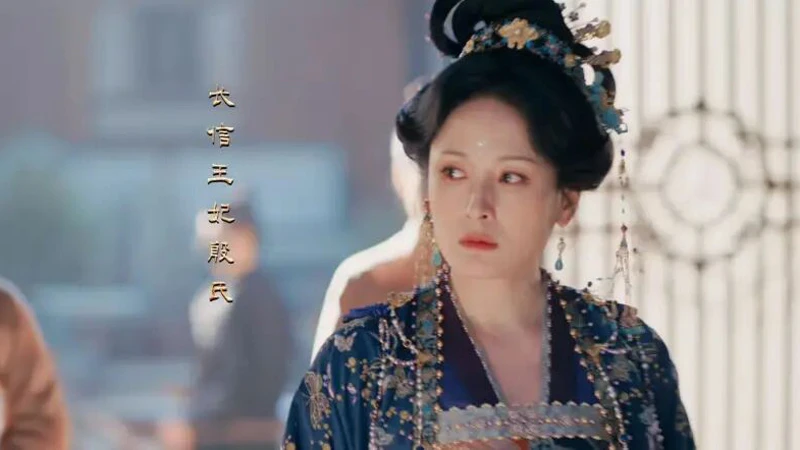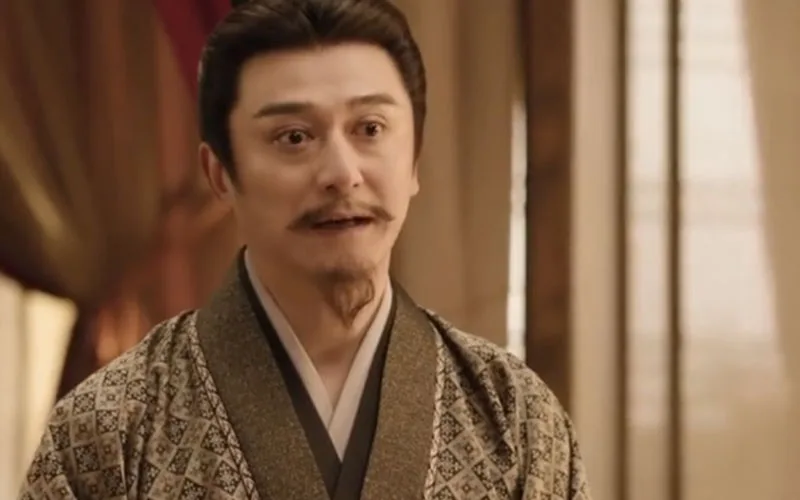
Episode 15 of Where the Mask Ends (嫁金钗) turns a family reunion into a Rashomon. Wei Rao (魏娆) carries old baby clothes and a longevity lock into a hall full of relatives. She expects Zhou Fu (周芙) to look at her and finally say, “You are my daughter.” Instead, the room fills with half-truths. Three middle-aged women—Wei Heng’e (魏恒娥), Guo Yufeng (郭虞凤), and Zhou Fu—each clutch a private wound. Their choices turn a simple proof of birth into a contest over status, memory, and revenge. The cruelest part is not the fake evidence. It is that a younger woman must pay for desires she never chose. The scene asks a sharp question: when adults refuse to face their own mistakes, how can a child ever win?
False Lock
Wei Rao brings relatives, old garments, and a lock. She thinks the truth will speak for itself. Wei Heng’e and Guo Yufeng build a different story. Bitao (碧桃) is pressed with threats against her family, then quietly swaps the recognition lock. Qiao (乔), Wei Rao’s foster mother, says A Chou (阿丑) was never her biological child. Zhou Fu stares at the false token and refuses to trust the woman before her. The proof is not missing; it has been poisoned by fear. Everyone in the hall sees a lock, but no one sees the girl who kept it as a child.
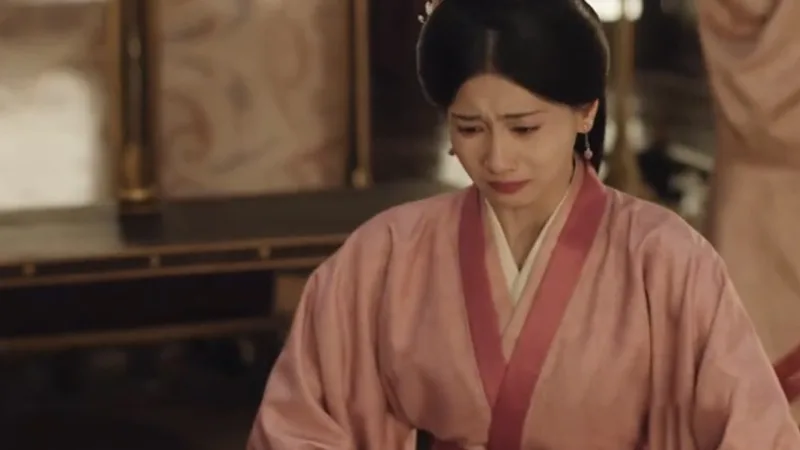
Wei Rao’s plea is plain and painful. One girl grows up in silk and warm rooms; another is pushed toward a cold brick kiln. Jun Dai (君黛) wears the title of Wei Fourth Lady, while Wei Rao survives on scraps of luck. Tears run down Wei Rao’s face as she asks Zhou Fu why she lost her own daughter. That question lands. For a moment, Zhou Fu’s certainty cracks. The scene does not need a grand speech. A mother’s hesitation is enough to show that memory can be awakened, but only if she stops defending the comfortable lie.
Then Jun Dai arrives with soft words and spoiled gestures. She pulls Zhou Fu back toward the role of protector. The recognition collapses. Wei Rao is not embraced; she is locked away. Li Zhaoyi (丽昭仪), Zhou Fu’s palace title, has a sharp mind, yet cleverness cannot rescue her from her own bias. She reads every clue through the fear of losing the daughter she thinks she has. The hall becomes a maze of versions, and each version serves an adult’s need. Wei Rao leaves with less than she brought: no name, no mother, only a louder silence.
Poisoned Cup
Jun Dai wants to keep the identity she stole. Guo Yufeng whispers advice, and a Nine-Turn Mandarin Duck Pot is filled with poison. Bitao is ordered to kill Wei Rao. But Bitao remembers her scarred face and Wei Rao’s small kindness: the return of her indenture paper. For the first time, Bitao chooses not to be a tool. She tilts the pot the other way. Jun Dai drinks from the cup meant for Wei Rao. She falls into the arms of the woman she wronged and whispers, “I had no choice in life or death… Wei Rao, I am so cold.” Her ending is not a triumph. It is a bill paid too late.
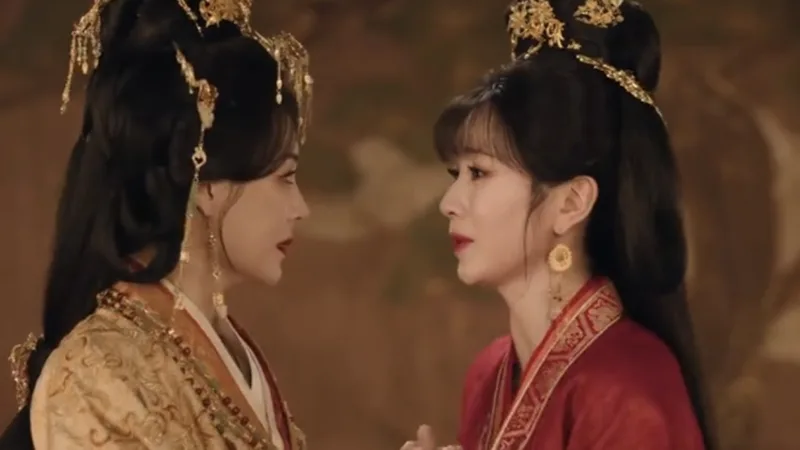
Wei Heng’e’s greed began with a wish to give her illegitimate daughter a soft life. That wish hardened into theft: another child’s place, another mother’s arms. Guo Yufeng’s anger lives in an old engagement. Wei Jin (魏谨) chose Zhou Fu and accepted forty lashes rather than marry Guo. Humiliation became her daily companion after she entered the Wei family as a second wife to his elder brother. She keeps arranging losses for Zhou Fu because she cannot bear the one loss she never chose. Zhou Fu’s obsession wears the face of love. Widowed, she leaves the household and enters the palace to build a future. Yet favor cannot replace presence.
Each woman fights a private battle. Wei Heng’e wants more for her daughter. Guo Yufeng wants payment for old shame. Zhou Fu wants to repair a missing bond. Their struggles are human, but their methods borrow other people’s lives. Jun Dai dies with a stolen name. Wei Rao lives with a truth that arrives too late. The story does not simply punish bad mothers. It shows how obsession becomes inheritance. A lock can be replaced. A title can be corrected. The wound between mother and daughter cannot be swapped back so easily. That is why the episode lingers: the adults call it love, while the child is left to carry the cost.