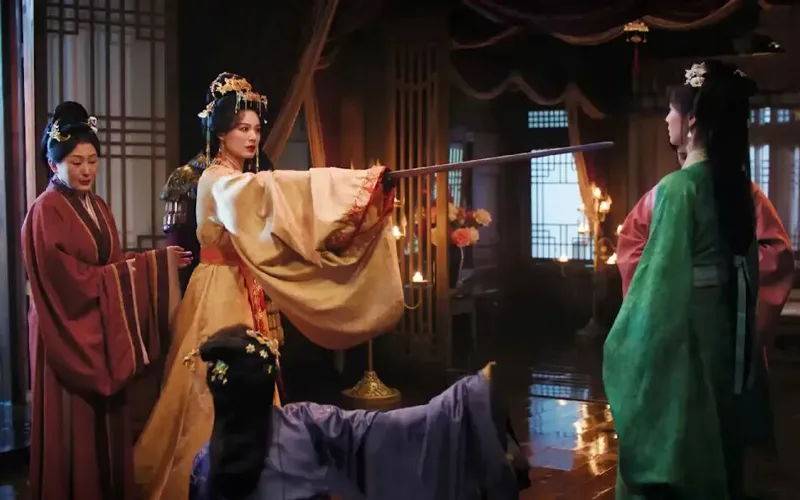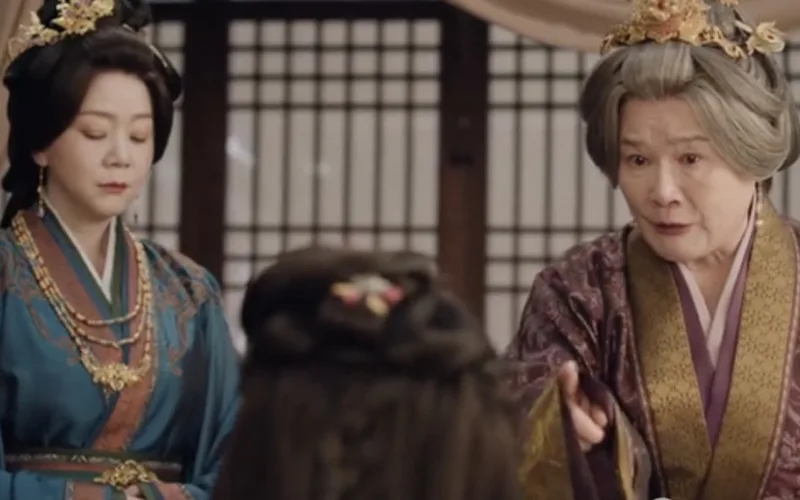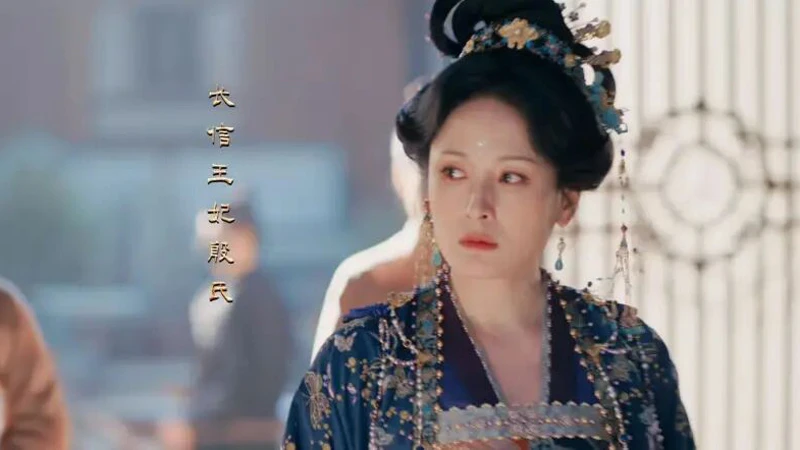
Jun Dai (君黛) has already done what many people in Where the Mask Ends thought impossible. She has stepped into Wei Rao’s (魏娆) name, calmed Zhou Fu (周芙), and gained a place inside the Wei family. Yet one person still spoils her perfect picture: A Chou (阿丑). The grandmother insists on shielding the girl, and that protection turns into a thorn in Jun Dai’s side. At first, the reason looks simple: she fears Zhou Fu will suspect the switch. But suspicion is not the real engine. The harder truth is that Jun Dai wants Lu Zhuo (陆濯) to give up on A Chou completely. She does not merely want the seat; she wants the heart that once belonged to her. That hunger makes her dangerous, because a rival can be hidden, but not forgotten.
Deadly Choice
Jun Dai could have kept her new life. If she played the obedient daughter, even a later discovery by the Wei family might not destroy her. But Jun Dai is not a patient woman. She is the kind of person who will cut herself if it helps her win, and anyone who offends her must pay. A Chou, protected by the grandmother, becomes more than a rival. She becomes proof that Jun Dai’s control is incomplete. A rival who is protected by family is harder to erase with a quiet lie. That is why the girl must be removed, not because of one suspicious mother, but because her existence keeps an old promise alive in Lu Zhuo’s mind.

The fear of Zhou Fu’s doubt is useful cover. Jun Dai can tell herself and others that she acts for safety. In truth, she cannot bear the thought of Lu Zhuo carrying A Chou in his heart. A living A Chou means a living memory: the woman he protected, hid, and loved. Jun Dai wants that memory erased. Only then can she walk back into the Lu household without feeling that another woman’s shadow sits beside her at the table. Her target is not just A Chou’s body; it is the affection that keeps Lu Zhuo from turning fully toward her. Each kind word he once gave A Chou becomes a nail in Jun Dai’s pride.
Pride makes the wound sharper. Lu Zhuo was Jun Dai’s fiancé first. In her mind, A Chou only reached him because Jun Dai “allowed” it. When she later tried to return to his side, he pushed her away with cold eyes. That rejection burned. Jun Dai is a spoiled young lady who believes every desire must be satisfied. She cannot accept that Lu Zhuo sees through her and still chooses A Chou. His love for A Chou is not a small obstacle; it is an insult to Jun Dai’s sense of worth. So she decides to end the competition by ending A Chou’s life.
Obsession’s Cost
Greed sits under the cruelty. Jun Dai already has shelter, a name, and a family that accepts her. Still, she is not satisfied. In her eyes, A Chou is an enemy who must vanish, because two women cannot share the same place in the Wei family or in Zhou Fu’s heart. If A Chou stays, Jun Dai fears the household will slowly lean toward the girl’s honesty and pain. That fear feeds her plot. She tells herself that one death will secure everything: the name, the mother, the servants, and the man. It is a tidy plan made by a mind that refuses to see its own rot.
She also cannot gamble on time. Jun Dai does not trust that Lu Zhuo will slowly learn to love her. Waiting feels weak. Removing A Chou first seems practical, and then she can work on his heart. But the plan turns against her. Her poor treatment of servants leaves her with no loyal ally; a maid finally betrays her and sides with A Chou. Even if the murder succeeded, Lu Zhuo would not soften. He would hate Jun Dai more deeply. Her cruelty would prove every bad thought he already holds about her.

Jun Dai loses either way. She may hold the title of Wei Rao, but she cannot hold love by force. Her story is a warning about leaving no room for mercy. Kindness is not weakness; it is a back road for the self. Jun Dai blocks every path with schemes and resentment, then finds herself trapped in the empty space she created. A Chou’s survival is not the only defeat. The real defeat is that Jun Dai destroys her own future while chasing a heart that was never hers to command. Her ending is not fate; it is the bill for every cruel choice.