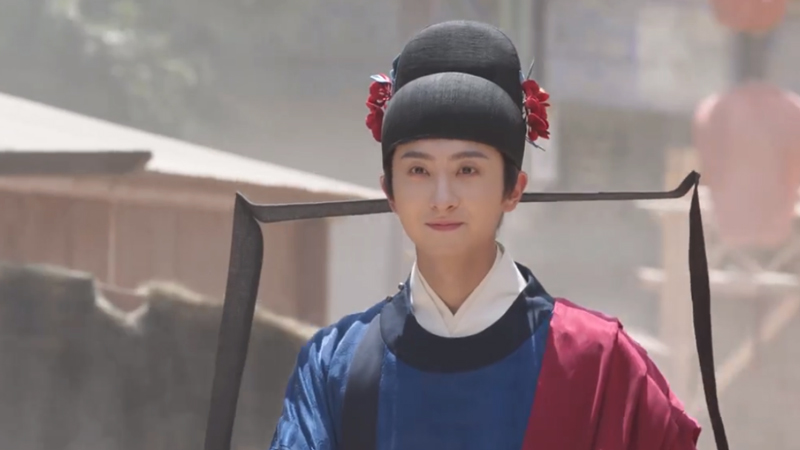
In Against the Current (兰香如故), a short parade becomes a visual event. Han Liang (韩梁) has just earned third place in the imperial exam. He rides through the street, and his hat does much of the talking. Its body is firm, almost architectural. Two long wings stretch sideways, and ribbons trail from their ends. Viewers who know historical costume may pause. This is not the familiar black official cap. It looks older, stranger, more ceremonial. Why would a new graduate wear such a thing?
The answer reaches into exam rituals, court rules, and the practical choices of television production. That small headpiece carries a large story about status, memory, and screen design. It also asks a simple question: how much history can a costume show before the story demands changes?
A Lost Cap
The cap resembles the Jinshi Jin (进士巾), a ceremonial hat for newly selected scholars in the Ming dynasty. It was not daily wear. A graduate could put it on for the imperial roll-call, a thank-you visit to the palace, or a ritual at the Confucian temple. After those events, the hat returned to the Imperial College (国子监). It belonged to the occasion, not the person. That rule alone explains its rarity. A hat tied to a few formal moments cannot become a common prop. On screen, it appears briefly, then vanishes. Its shape, however, leaves an impression: hard shell, short side wings, ribbons at the tips. For a scholar, wearing it meant years of study had finally produced public honor.
Its family tree begins in the Tang dynasty. New graduates attended banquets and left their names at the Wild Goose Pagoda. They wore soft Futou (幞头), a wrapped head covering shared with officials. The material was pliable, the outline simple. In the Song dynasty, candidates and scholars kept this soft-footed style. Exam days and result days called for it. Side wings had no single standard length. Local tailors and wearers made their own choices. Yet Song caps looked more ordered than Tang versions. The shape was becoming a visible sign of education, ambition, and belonging to a lettered class. The hat was not yet a fixed uniform, but it was already a social signal.
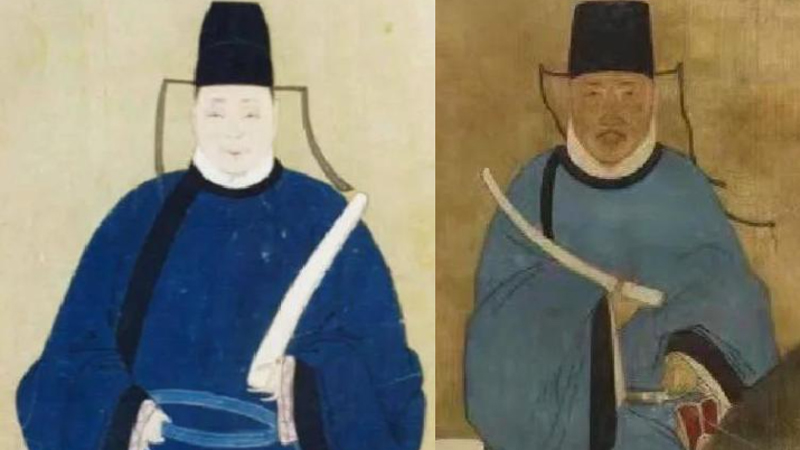
By the Yuan dynasty, a name appears in History of Yuan: Carriages and Robes (元史·舆服志): Tang Jin (唐巾). It imitated the soft Futou of earlier eras. Scholars and students wore it often. Some were made with soft corners; some had hidden bamboo or rattan inside to keep the crown upright. The two corners curled upward like cloud heads. That detail separated it from Song styles, which often lay flat or hung down. The Tang Jin felt literary, gentle, and self-possessed. It marked a man as part of a reading elite. When the Hongwu (洪武) Emperor reorganized dress rules, the court turned this cap into the sharper Jinshi Jin. The crown became hard and crisp. Side wings measured about five inches, with hanging bands. For a new Jinshi, the hat was a spotlight in cloth and wire.
Small Screen Choice
Why do modern costume dramas rarely show this hat? First, its use is narrow. It belongs to a handful of ceremonies. A character cannot wear it to dinner, court, or a market. Many plots about exams focus on the test cell, the reveal of results, or a romantic subplot. They skip the full ritual chain: roll-call, palace thanks, temple visit. Without those scenes, the Jinshi Jin has nowhere to live. A production may decide that one brief appearance is not worth the research, fitting, and explanation. The hat then disappears from the story, even though history places it right there. In Against the Current, it lasts only a few minutes, which makes the problem easy to see.
Second, other hats do the job faster. A standard Wusha Mao (乌纱帽) reads as “official” at a glance. A Zhuangyuan hat (状元帽) reads as “top exam winner” even to viewers who know little about Ming dress. The Jinshi Jin may appear for only a few minutes. Building a special mold for one scene costs money and time. Many teams avoid that expense. They reuse familiar caps or invent a bright substitute. The result is practical, but it also flattens history. A rare ritual object becomes another generic symbol of success. This is not laziness alone. Television moves fast, budgets are tight, and viewers need instant clues. A hat must speak before a line of dialogue explains it.
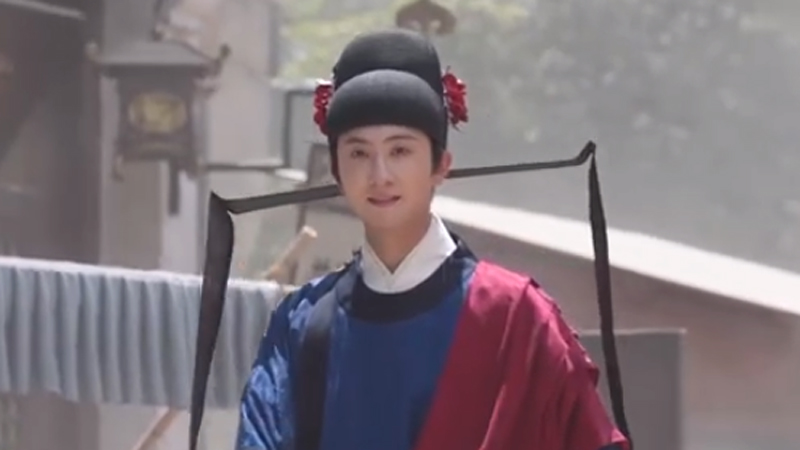
The show’s designers did not copy the Ming Jinshi Jin exactly. They lengthened the side wings until they almost match the spread of a regular official’s Wusha Mao. This change is not a scholarly reconstruction. It is a screen decision. Long wings create a wider silhouette. From a distance, viewers can see the hat’s outline before they see the face. The body looks more open, and the wearer gains presence. The parade becomes a visual peak. The added length also boosts the feeling of honor and impact. In a crowded street scene, that matters. A costume can be inaccurate and still tell a clear story about rank, joy, and arrival. Han Liang rides, the ribbons move, and the audience sees a man who has stepped into a new life.