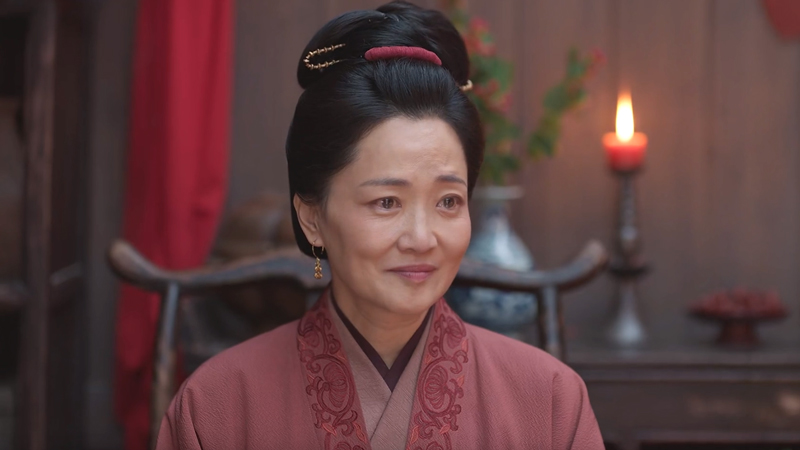
In Against the Current (兰香如故), Xu Lanxiang (许兰香) calls Xue Guihua (薛桂花) “Mama,” not “Mother.” Some viewers turned that word into a debate. The term “mama” appears in Guangya (广雅), and after the Song era it became common in plain speech; Dream of the Red Chamber (红楼梦) uses it too. Played by Guo Keyu (郭柯宇), Xue Guihua wears another detail that deserves more attention: two small gold hairpins with jointed shafts, like tiny bamboo stems. Are they a modern costume-team invention? Not at all. The pins point to a real Song fashion—one that was practical, modest, and quietly elegant. Once you notice them, they are hard to forget.
Not Just Decor
The accessory is a bamboo-joint hairpin. It belongs to the folded-prong family, usually shaped like a narrow U. To make the joints, a craftsman could hammer the metal from behind, a repoussé technique, or chase thin lines into the surface. Unlike a flower hairpin, it has no hanging beads, no gems, and no crowded decoration. The raised rings along the shaft are the ornament. That restraint is exactly what makes it noticeable in a close-up. It does not try to dazzle. It asks you to look twice.
Its roots reach the Han Dynasties. Early hair tools were mostly single-prong pins. Over time, double-prong forms appeared and held a bun more securely. These folded-prong pins were made of gold, silver, or bronze. They were tools first: keep the hair in place, keep the shape neat. Decoration stayed minimal, and bamboo joints had not yet become a common design. The focus was grip, balance, and daily use.
By the Tang Dynasty, folded-prong pins were widely used, from court ladies to ordinary women. Tang taste favored confidence and scale. The prongs often sat wide apart, while the bridge carried chased flowers, birds, and curling vines; some pieces even held stones. Yet among excavated Tang pins, bamboo-joint examples are missing. The fine, repeating pattern may simply have felt too quiet for that era’s louder style. Tang jewelry liked to speak before the wearer did.
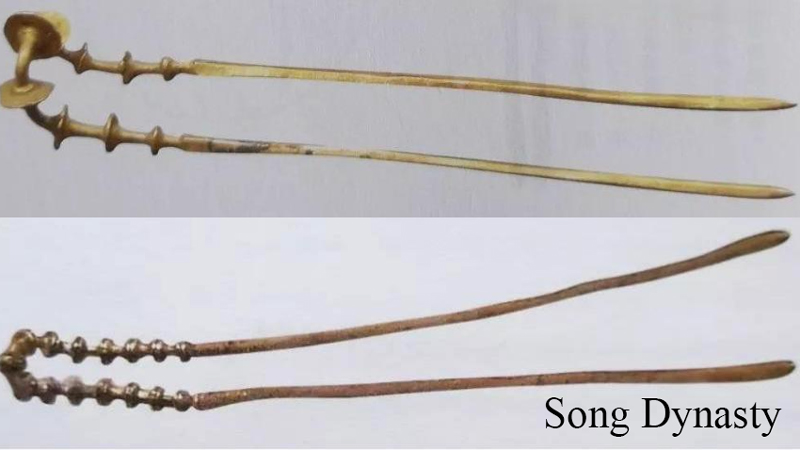
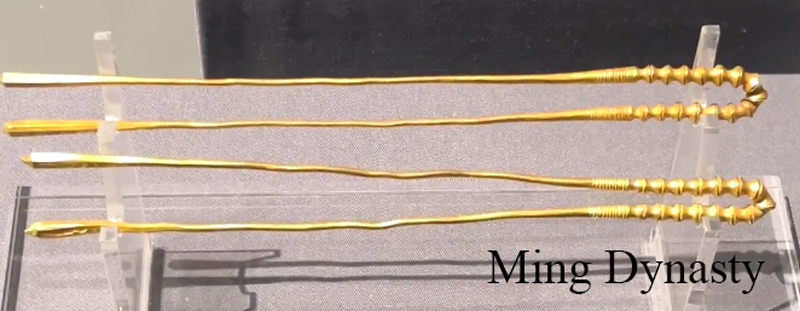
The bamboo-joint hairpin came into its own in the late Northern Song and Southern Song. Sui Jin (碎金) mentions it. Song pins were slimmer, with narrower gaps between prongs. Some had three or four joints in the middle; others covered almost the whole shaft, leaving only the feet smooth. Finds from Inner Mongolia, Jiangsu, and other regions show how far it traveled. The style lasted into the Yuan and Ming. Gold bamboo-joint pins from Ming tombs in Jiangsu and Guizhou resemble the one Xue Guihua wears. As elite jewelry became more complex, the simple pin stepped back from the center.
Why Bamboo?
Function explains much of its success. A smooth folded-prong pin can slip out of hair during the day. Raise bamboo joints on the shaft, and the uneven surface creates friction. The pin grips better. The joints also work like small ribs, making the metal harder to bend when it is pushed, pulled, or worn for hours. A plain pin may look clean, but it is less dependable. In a busy day, small details decide whether a hairstyle survives.
Social taste helped as well. Scholars held high status in the Song. In their eyes, bamboo stood for a gentleman: humble inside, principled outside, able to bend without breaking. Men painted bamboo and wrote poems about it. Women in scholar-official households could wear a bamboo-joint pin as a quiet nod to that character. Bamboo also carried lucky meaning, so the shape felt both refined and favorable. It linked personal style to admired values without shouting.
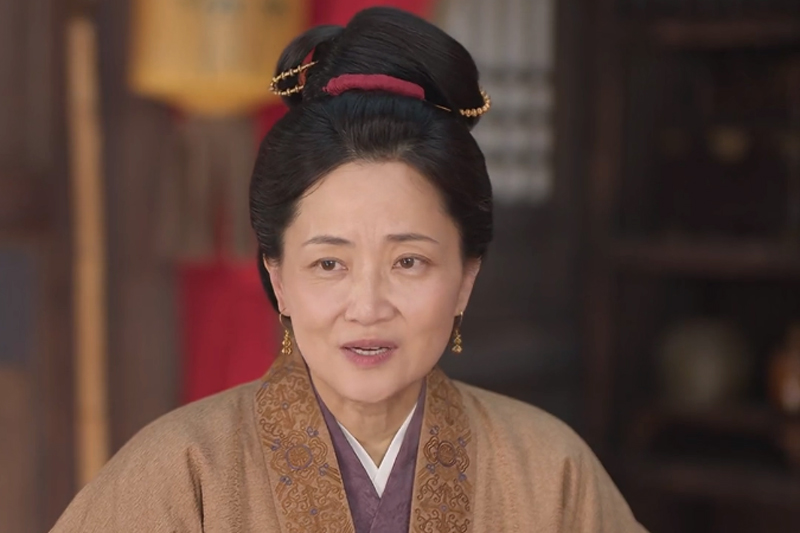
Dress rules gave the design another push. Song courts repeatedly tried to limit lavish headpieces among nobles and commoners. A bamboo-joint pin was plain, but not dull. Its even joints showed only when light touched them. It looked tasteful without announcing wealth, so it could survive rules that made flashier gold risky. Simplicity was not a compromise here. It was a safe, smart choice.
That is why the accessory in Against the Current feels strange at first. The costume team borrowed from a real historical type, but earlier period dramas rarely put it on screen. A small pin, once useful and fashionable, becomes a clue to Song daily life. Would you wear such a quiet bamboo-joint hairpin today?